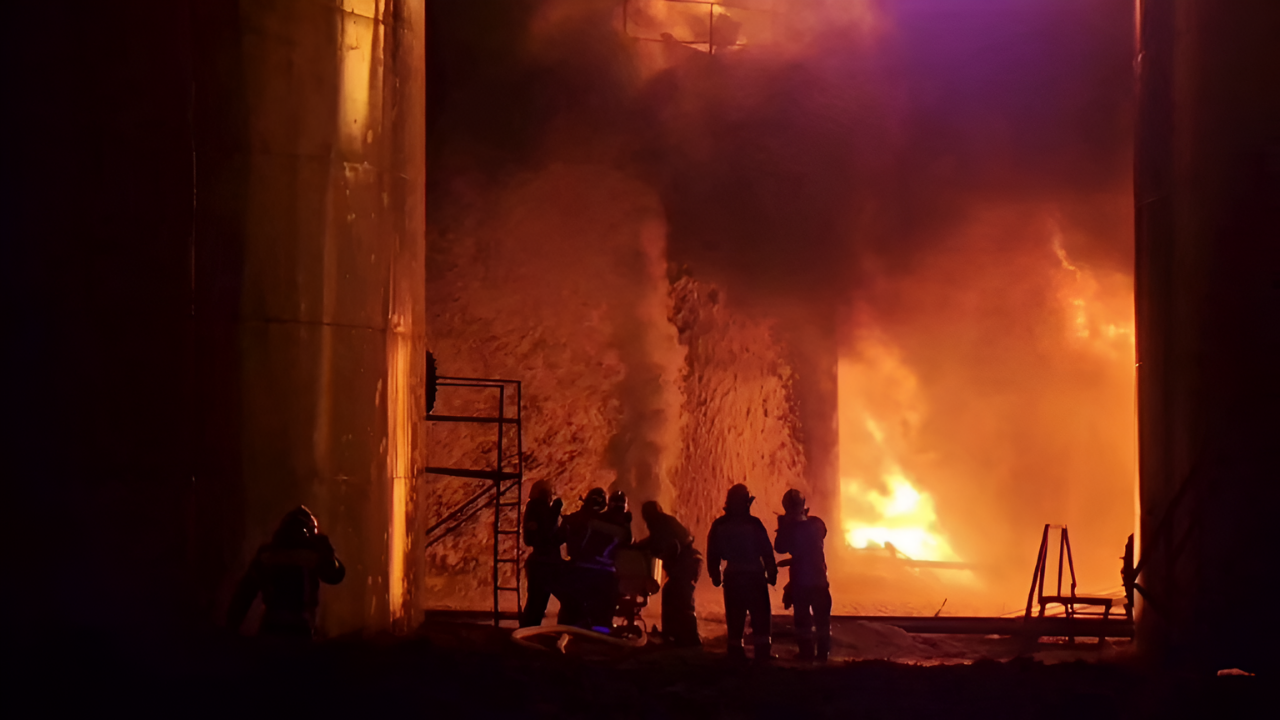
Ukraine’s precision strikes on Russian oil refineries have escalated dramatically, with a coordinated overnight drone operation against the Ryazan facility on November 14–15, 2025, marking one of the deepest penetration attacks of the conflict. Located roughly 470 kilometers from Ukraine’s northeastern border and about 120 miles (180 kilometers) southeast of Moscow, the refinery is a key supplier to the Moscow region and is often described by analysts as a Moscow-area or Moscow‑region refinery.
Russian authorities said their air defenses intercepted and destroyed 64 Ukrainian drones across multiple regions that night, including at least 25 over Ryazan Oblast alone. Ukrainian officials and independent military trackers see this strike as part of a broader pattern of “drone barrages” in late 2025, in which Russia has repeatedly reported overnight waves involving on the order of 100 drones or more across its territory. In this context, the Ryazan attack formed the centerpiece of a large-scale, multi‑region drone barrage that overwhelmed local defenses sufficiently to set one of Russia’s most important refineries ablaze.
The Ryazan refinery sustained serious damage to its primary crude distillation capacity, forcing a complete halt in crude processing. Industry sources say the main distillation unit hit in November handles around 8 million metric tons of crude a year—roughly 160,000 barrels per day and close to half the plant’s total throughput. At those rates, even a relatively short fire and shutdown can affect crude and product volumes on the order of tens of thousands of barrels. Analysts who track Russian refining losses note that a single incident of this scale can easily translate into an effective loss or write‑off of product in the range of 20,000 barrels or more when combining what is burned, vented, or rendered unusable while the unit is offline.
Rosneft’s Ryazan facility was expected to remain completely offline at least until December 1, 2025, with no firm restart date publicly announced. Such an open‑ended outage at a plant of this size represents tens of millions of dollars in lost revenue and adds further pressure to Russia’s already strained fuel market.
The Expanding Campaign Against Energy Infrastructure
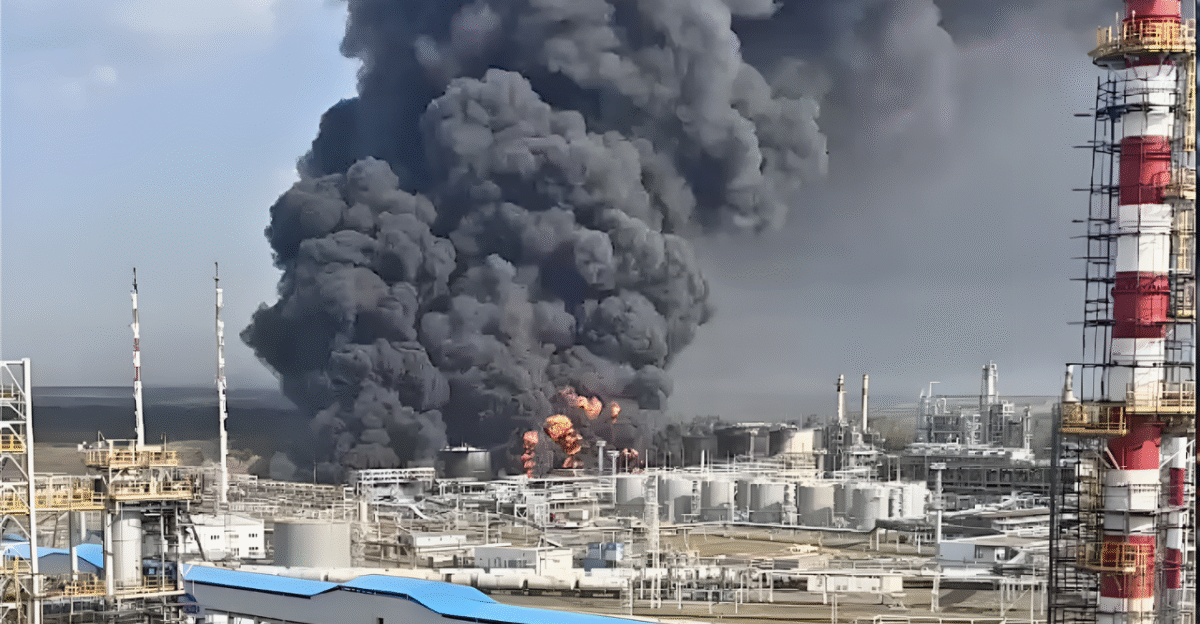
Ukraine’s aerial campaign against Russian energy infrastructure has gained unprecedented momentum throughout 2025. President Volodymyr Zelenskyy has publicly stated that Ukrainian strikes have removed an estimated 22–27 percent of Russia’s fuel production capacity as of late October, citing both internal assessments and independent expert estimates. The Ryazan attack joins a growing list of deep‑strike operations, with at least 17 major Russian refineries and associated facilities targeted this year as part of a deliberate effort to weaken the Kremlin’s war economy.
These strikes are designed to achieve two objectives simultaneously: degrade Russia’s military logistics and squeeze its civilian fuel supplies. Ryazan is central to that strategy. In 2024, the refinery processed roughly 13.1 million metric tons of crude and produced about 2.2–2.3 million metric tons of gasoline, 3.4 million metric tons of diesel, and over 4 million metric tons of fuel oil. Its output is critical both to Moscow’s regional fuel market and to the Russian military’s logistics chains.
By knocking out Ryazan’s main distillation capacity, Ukraine has temporarily removed a substantial share of one of Russia’s largest refining hubs. Even if some units restart, the loss of the primary crude distillation unit sharply curtails the plant’s ability to convert crude into finished products, forcing Russia to draw down stocks, divert flows from other refineries, or import refined products at higher cost.
Aging Soviet Infrastructure Proves Vulnerable

Russia’s refinery network, much of it built in the Soviet era, is increasingly exposed to modern long‑range drone warfare. Many of these plants rely on large, centralized crude distillation units and secondary processing units that are difficult to disperse and costly to replace. For decades, their distance from active front lines was assumed to provide de facto protection; the war has upended that assumption.
Advances in Ukraine’s domestically produced long‑range drones have extended operational reach deep into Russian territory, placing refineries like Ryazan—hundreds of kilometers from the battlefield—well within striking distance. The same geography that once insulated these facilities has become a liability, requiring Russia to stretch its air defenses across vast areas to cover critical energy assets.
During the November 14–15 operation, Russia’s Defense Ministry claimed to have intercepted 64 Ukrainian drones over at least nine or ten regions, with the highest concentration over Ryazan Oblast. Yet despite these interception claims, both the Ryazan refinery and the Novokuybyshevsk refinery in Samara Oblast suffered confirmed hits and fires. The scale of these multi‑target, multi‑region attacks is consistent with the “drone barrage” pattern that has seen Russia on other nights report around 100 or more Ukrainian drones launched against its territory in a single wave, underscoring the growing strain on its air defense doctrine.
The November Strike and Its Immediate Aftermath
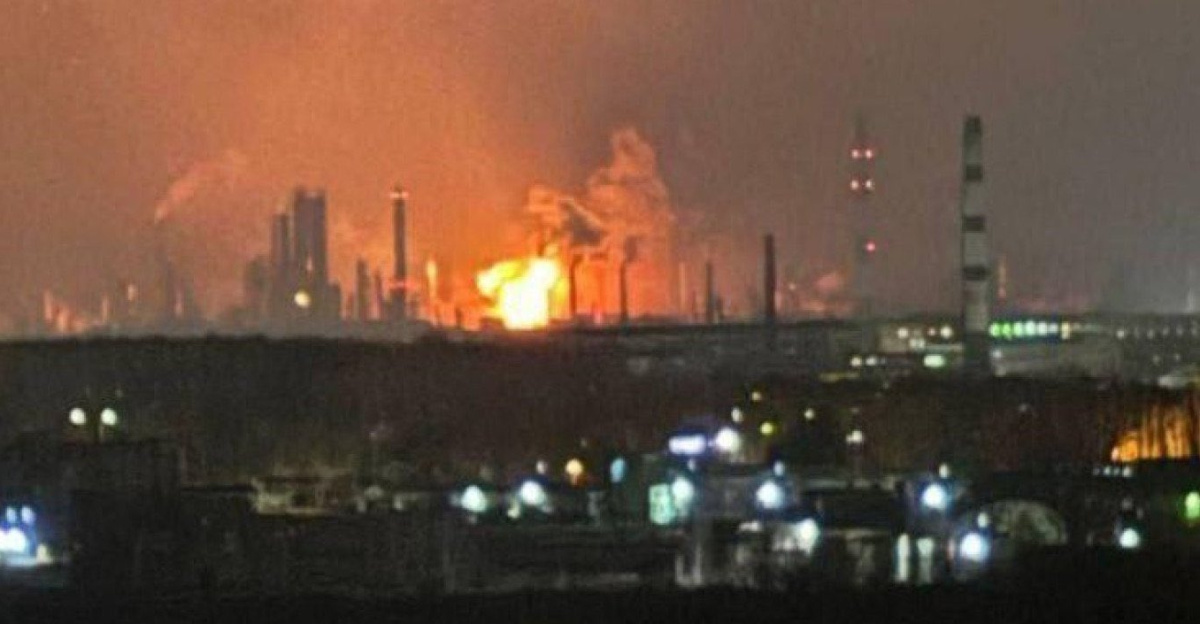
Ukraine’s Unmanned Systems Forces orchestrated the Ryazan attack during the night of November 14–15, coordinating it with other deep strikes against Russian energy assets. Ukraine’s General Staff and commanders of its drone forces publicly confirmed a successful hit on the refinery, accompanied by large explosions and a major fire in the crude processing area.
Russian officials, while downplaying Ukrainian responsibility, acknowledged that multiple drones were intercepted over Ryazan Oblast and that debris sparked fires at industrial sites. Satellite imagery and geolocated video circulating on independent channels, however, showed flames and smoke rising directly from the refinery complex itself.
The blaze engulfed the refinery’s main crude distillation unit, forcing an immediate halt to all crude intake and primary processing. Industry sources quoted in international reporting said the damaged unit alone accounts for roughly 48 percent of the plant’s throughput. As a result, Rosneft stopped crude processing at Ryazan entirely and diverted feedstock elsewhere, with expectations that full operations would not resume before at least the start of December.
Because large‑scale refineries are designed to run continuously, such abrupt shutdowns are particularly harmful. Equipment that cools down and then must be restarted “cold” is more prone to mechanical stress, cracking, and leaks. Even a 16‑day outage at a complex of this size forces costly inspections, repairs, and safety checks, and risks uncovering further damage that might extend the downtime beyond initial projections.
A Pattern of Persistent Targeting
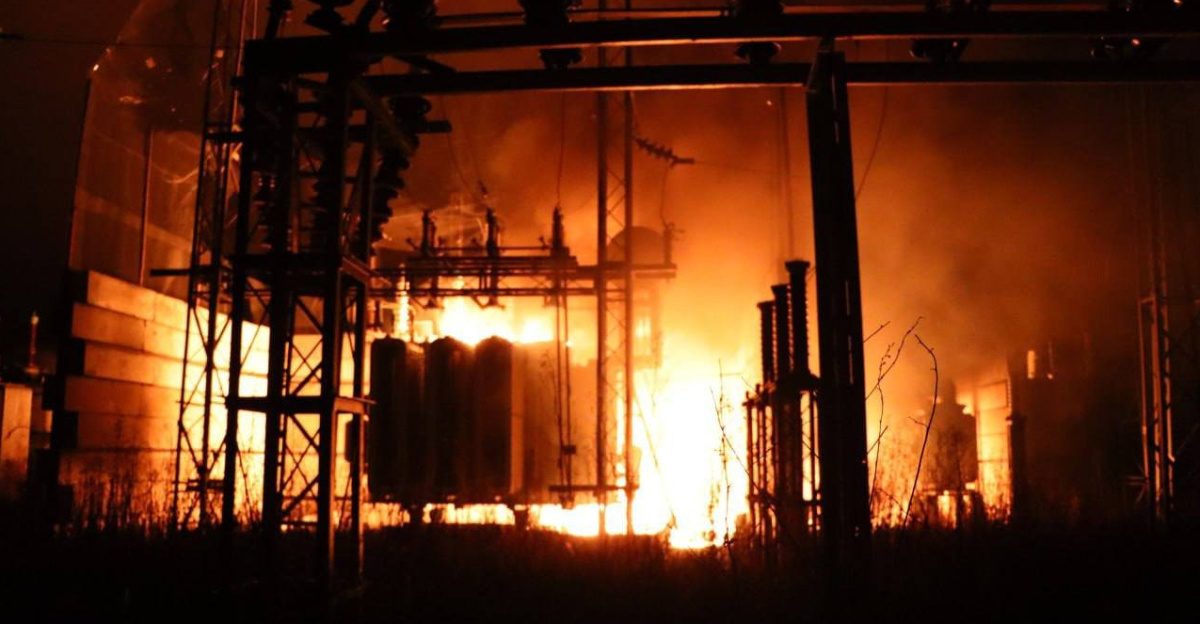
The November strike did not occur in isolation. Ryazan has become one of the most frequently hit refineries in Russia since the start of 2025. Ukrainian and Russian sources alike have reported multiple prior attacks:
- In January and February, Ukrainian drones damaged infrastructure associated with primary oil refining at the site.
- On September 5, a strike hit the ELOU‑AVT‑6 primary oil refining facility, one of the key units with multimillion‑ton annual capacity.
- On October 23–24, a separate attack ignited a fire in the CDU‑4 crude distillation unit, which processes around 80,000 barrels per day—roughly a quarter of the plant’s capacity—forcing a partial shutdown and rerouting of flows.
The November 14–15 strike hit while Ryazan was still recovering from the October damage, compounding the effects. Ukraine’s strategy appears to be to revisit the same high‑value targets repeatedly, striking before repair cycles are complete. This “persistent targeting” steadily erodes effective capacity even when Russia manages temporary restarts, and it forces costly, overlapping repair programs that strain industrial resources.
On the same November night that Ryazan was hit, Ukrainian forces also targeted the Novokuybyshevsk oil refinery in Samara Oblast, hundreds of kilometers further east. Russian officials and Ukrainian military briefings have acknowledged multiple previous attacks on that facility as well, indicating that it too has become a repeat target. The ability to hit both Ryazan and Novokuybyshevsk in closely timed strikes illustrates that Ukraine can now run coordinated, long‑range drone operations against multiple critical nodes in Russia’s energy system in a single barrage.
Cascading Consequences and Winter Pressures
The cumulative effect of Ukraine’s refinery strikes is felt well beyond individual fires or short‑term outages. International agencies and independent energy analysts estimate that drone attacks have temporarily removed several hundred thousand barrels per day of Russian refining capacity from the market at various points in 2025. Kyiv’s own assessment—publicly cited by Zelenskyy—is that roughly a quarter of Russia’s fuel production capacity has been degraded, at least intermittently, by the ongoing campaign.
Ryazan alone processed around 13.1 million metric tons of crude in 2024, equal to roughly 5 percent of Russia’s total refining capacity. Prolonged or repeated outages there therefore have a measurable impact on both domestic fuel availability and export flows. With Ryazan offline again in November and other refineries facing similar disruptions, Russia is pushed to:
- Re‑route crude to less efficient facilities,
- Import or swap refined products from foreign partners at higher cost, and
- Ration fuel between civilian needs (heating, transport) and military logistics.
These pressures are particularly acute heading into winter. Local communities around Ryazan face uncertainty over employment and income, as the refinery and its supply chain are central to the regional economy. Russian consumers in Moscow and surrounding oblasts, already grappling with price spikes and sporadic shortages earlier in the year, risk renewed fuel and heating constraints if outages persist or widen.
The Energy War’s Trajectory
As November 2025 draws to a close, the Ryazan attack stands as a vivid example of how Ukraine’s long‑range drone campaign has transformed the energy dimension of the war. By striking a Moscow‑region refinery roughly 470 kilometers from the line of contact and doing so as part of what both sides describe as large‑scale multi‑region drone barrages, Ukraine has shown that distance alone no longer guarantees safety for Russia’s core energy infrastructure.
The headline figures swirling around the Ryazan strike—a 100‑drone wave across multiple regions, tens of thousands of barrels of throughput effectively lost in a single night, and repeated hits on the same strategic complex—capture the scale rather than the precise numerics of this new phase of the conflict. What is clear from independent reporting and official statements is that:
- Major refineries deep inside Russia can be set ablaze despite substantial air defenses.
- The effective volume of crude and products destroyed, stranded, or delayed during such incidents is significant, even when expressed conservatively.
- The cumulative loss of refining capacity, measured in hundreds of thousands of barrels per day across multiple plants, is now a persistent feature rather than an anomaly.
In this “invisible” energy war, victory may ultimately hinge less on territory captured than on whose fuel system holds up longer under sustained, long‑range attack. With facilities like Ryazan repeatedly burning hundreds of kilometers from the front, Ukraine has demonstrated that it can impose real strategic costs on Russia’s war machine far beyond the battlefield itself.
Sources
Reuters Energy Desk November 2025 reporting; Bloomberg refinery tracking (Nov 16-17, 2025)
Ukrainian General Staff operational briefings; Ukrainska Pravda Nov 14-15, 2025 drone strike coverage
International Energy Agency (IEA) Russia Refining Capacity Assessment October 2025
Jamestown Foundation Russia refinery modernization analysis; Carnegie Endowment refinery damage assessment 2025