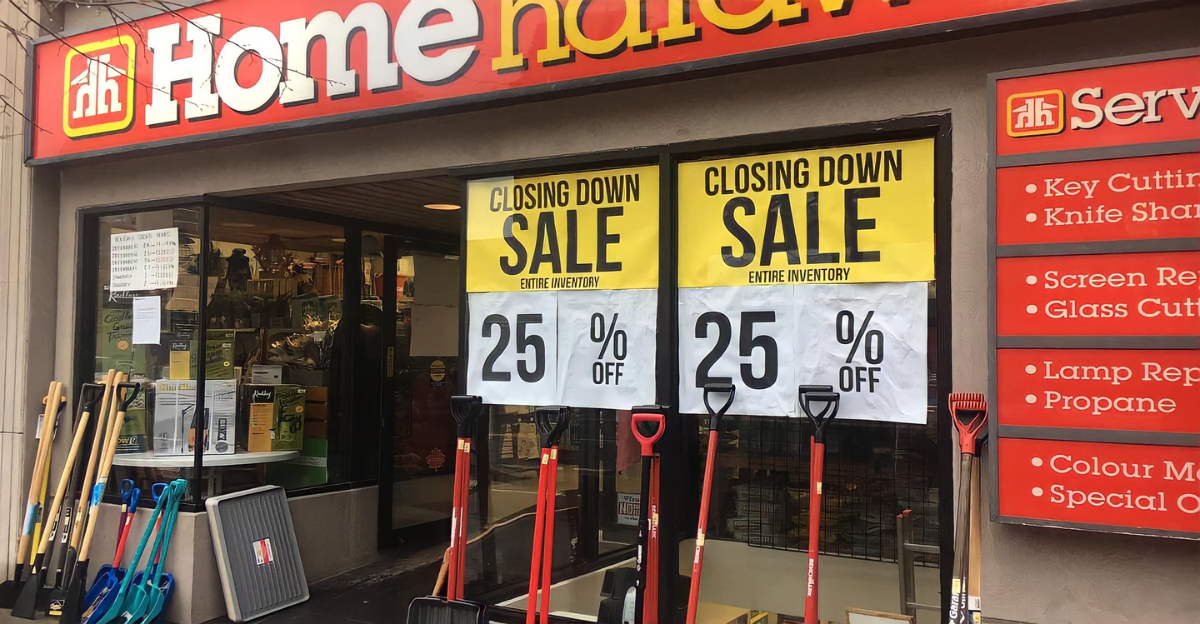
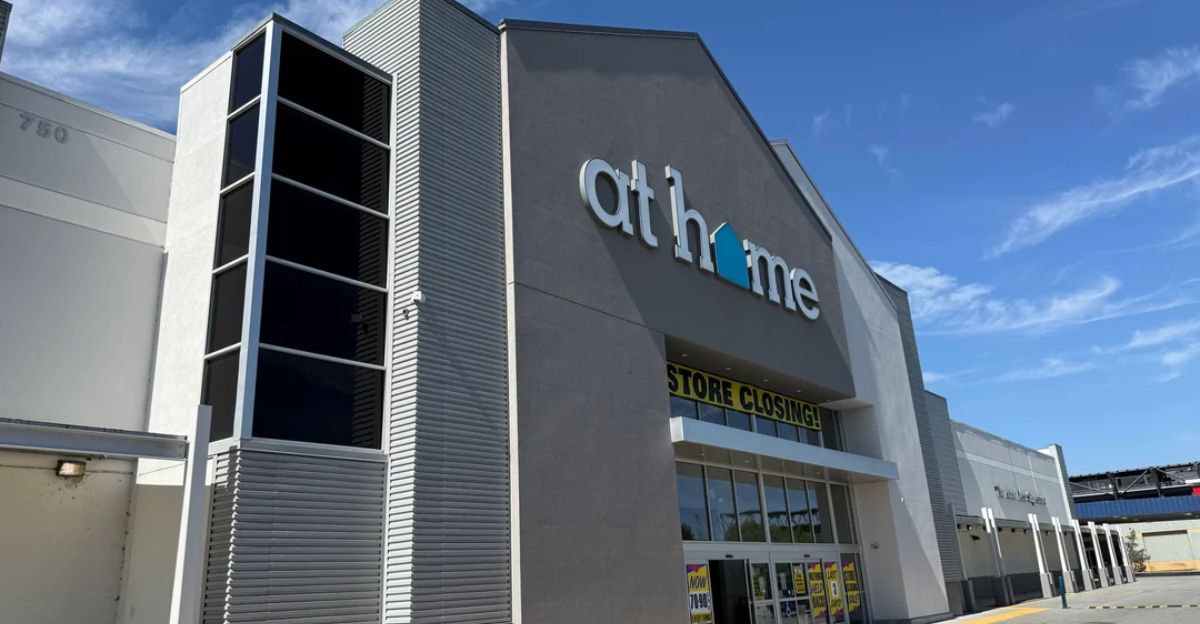
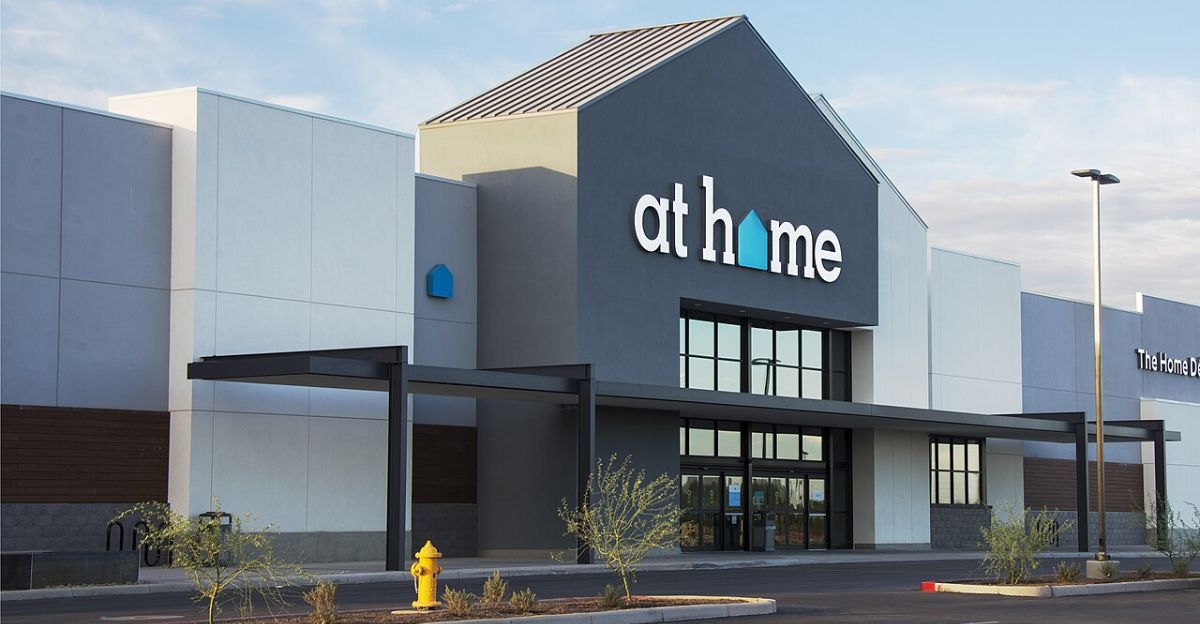
In 2025, At Home, a large home décor retailer with 260 locations across the country, plans to close 30 of its locations due to rising U.S. tariffs and a $2 billion debt load.
Citing unmanageable debt and the cost pressures imposed by tariffs on imported goods, particularly from China, where tariffs increased to 145% before recently being lowered to 30%, the company filed for Chapter 11 bankruptcy in June 2025. Declining consumer discretionary spending and fierce competition from industry titans like Ikea and Wayfair have occurred at the same time as these economic pressures.
The Historical Background of Debt and Growth
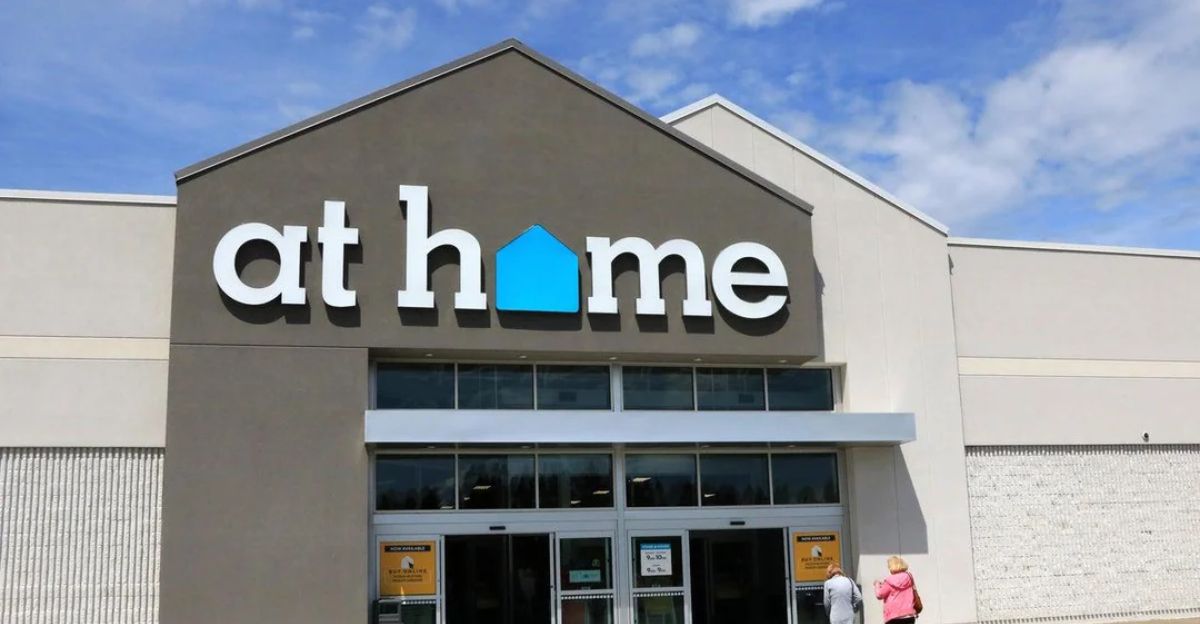
With the help of substantial debt financing, At Home grew quickly, reaching over 260 stores. Nonetheless, stable trade conditions and rising consumer demand served as the foundation for this expansion. As the economy changed, the company’s nearly $2 billion in funded debt became unmanageable.
Historically, when costs increase or demand declines, home goods retailers who took on excessive debt during prosperous economic times frequently experience harsh corrections.
The Effect of Tariffs on Prices and Profits

The Trump administration’s tariffs, which raised imports from China to 145% in 2025 before ending at 30%, significantly raised At Home’s cost of goods sold by at least $30 million. Supply chains were upset, inventory costs increased, and retailers were compelled to absorb costs or pass them on to price-conscious customers as a result of the tariffs. Margin pressures were exacerbated by At Home’s incapacity to raise prices sufficiently without reducing foot traffic.
Retailers who rely heavily on imported inventory suffer disproportionately from such tariff-induced cost inflation, which reduces profitability and drives highly leveraged businesses closer to bankruptcy.
Trends in Consumer Spending and Competition
After the pandemic, consumer discretionary spending on home décor has fluctuated due to inflation, stagnant wages, and unclear economic prospects. Foot traffic at At Home decreased by 24%, which was made worse by customers cutting back on non-essential purchases.
In the meantime, rivals like Wayfair and Ikea have made significant investments in experiential retail and omnichannel strategies, drawing clients with convenient and unique products. In the face of these competitive challenges, At Home’s “weak” market proposition and lack of consumer inspiration were unable to create the enthusiasm required to maintain or increase market share.
Closing Stores as a Strategic Restart
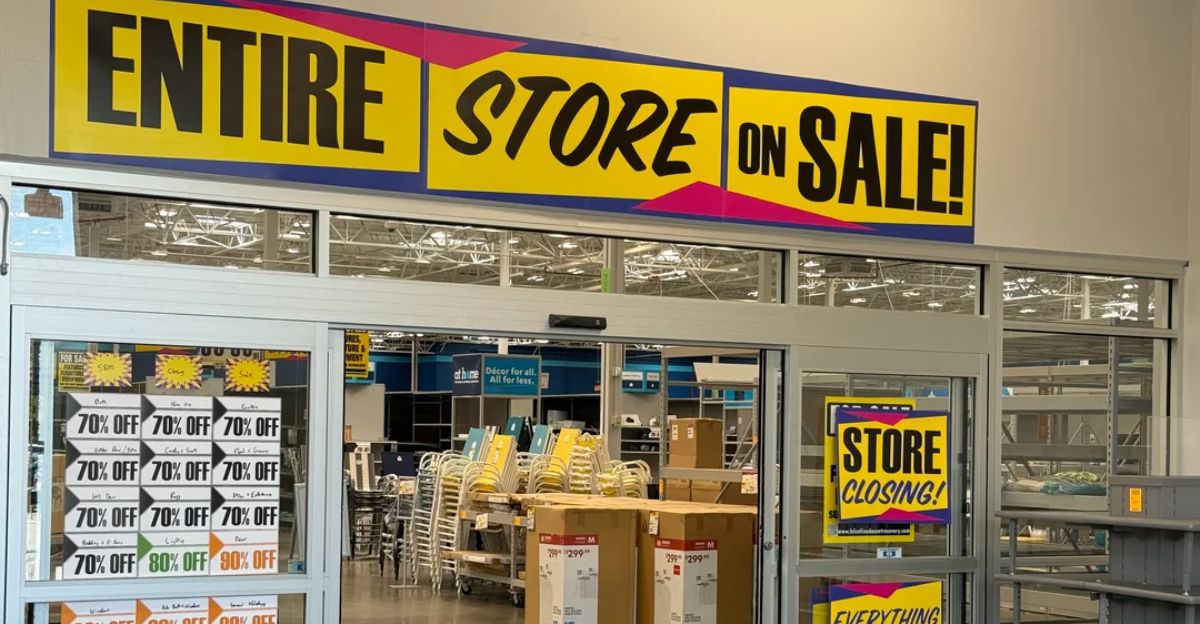
The choice to shut down 30 stores by September 2025 is indicative of a strategic move toward geographic rationalization and operational efficiency.
The company can reallocate resources to more lucrative formats and more promising markets by closing underperforming stores, which lowers fixed costs like labor, leases, and inventory carrying costs.
Using Bankruptcy to File for Renewal
At Home was able to negotiate a debt reduction and obtain $200 million in new funding thanks to Chapter 11 bankruptcy. The goal of this financial reorganization is not only to endure but also to come out stronger with a much better balance sheet.
By removing the majority of the $2 billion in debt, interest payments will be lower, freeing up cash flow for supply chain resilience and customer experience improvements. Although it is frequently seen negatively, bankruptcy provides a methodical route to strategic realignment and revitalization.
Lessons in Psychology and Strategy
Psychologically, At Home’s difficulties highlight the dangers of external shocks like tariffs that are beyond management’s direct control, as well as the peril of overconfidence during expansion phases. In volatile trade environments, strategic agility, including the ability to scale back and recalibrate, is crucial.
If the bankruptcy and store closures are openly presented as proactive steps rather than reactive failures, investor and customer confidence can be restored. Resilient corporate leadership is defined by the ability to handle complexity and uncertainty.
Retail Hybridization with Technology Integration

At Home could lessen its reliance on vast store networks during closures by utilizing hybrid retail strategies, which combine physical and online channels.
The shrinkage of the physical footprint may be compensated for by improved digital platforms that use augmented reality for furniture visualization, localized showroom concepts, or experiential shopping. Such innovation could transform a crisis into a chance for contemporary retail reinvention by drawing in tech-savvy customers looking for convenience and personalization.
Greater Economic and Industry Consequences
The story of At Home highlights more general retail themes, such as the importance of supply chain diversification, the speeding transition to omnichannel models, and the susceptibility of highly leveraged businesses to economic and geopolitical shocks.
Tariffs have repercussions that go beyond short-term cost increases, such as changes in consumer behavior and industry consolidation. This could signal more retail bankruptcies or forced strategic changes, which would alter the retail environment for home décor in 2025 and beyond.
Support Agreement Restructuring and Capital Injection
With a prearranged Restructuring Support Agreement (RSA), At Home Group filed for Chapter 11 bankruptcy on June 16, 2025, obtaining $600 million in debtor-in-possession financing, including $200 million in fresh capital.
In addition to facilitating an ownership transfer to significant lenders like Anchorage Capital Advisors and Farallon Capital Management, this agreement sought to reduce about $2 billion in funded debt. The restructuring gave lenders the majority stake in the business while wiping out current equity holders.
Effects of Ownership Transition and Debt Reduction
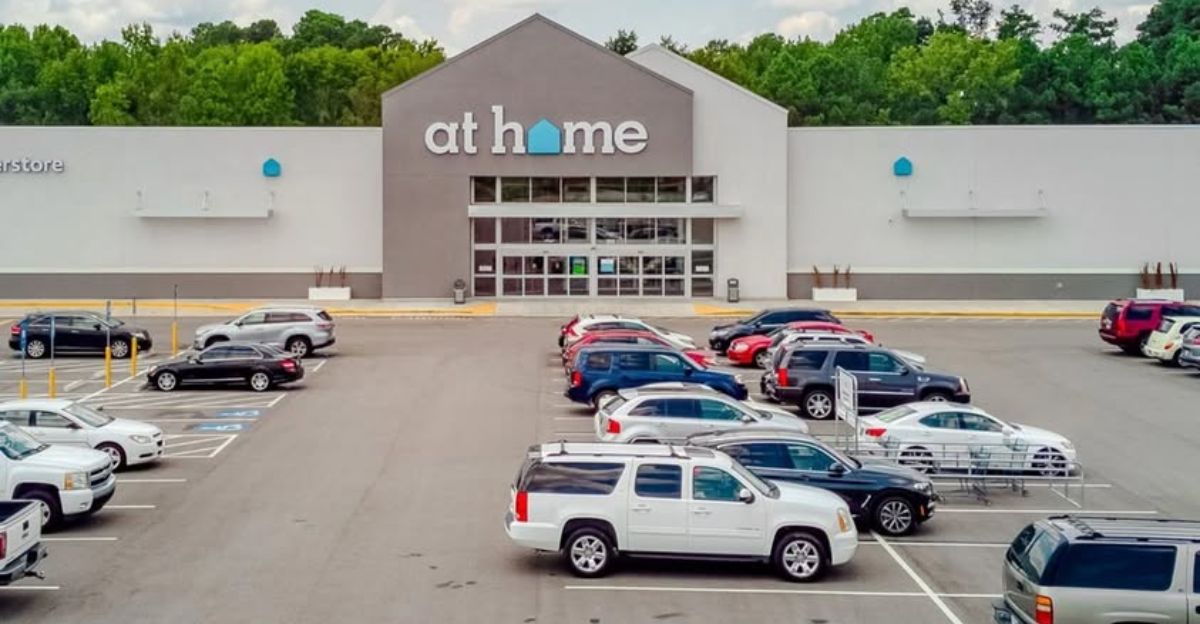
With smaller equity portions for other creditor classes, the restructuring plan approved in August 2025 gave 98% ownership to holders of super-priority claims. By drastically reducing interest payments, this debt reduction improves cash flow. At Home is able to reinvest in key business areas like supply chain optimization and customer experience enhancements thanks to the improved balance sheet.
More conservative financial governance is also implied by lenders’ control alignment, which lowers the risk of excessive future leverage, which is essential for a long-term recovery in a volatile retail environment.
Consumer Profiles and Market Priorities
With a significant following among Millennials and Gen X consumers in suburban and mid-sized urban areas, At Home primarily caters to middle-class households looking for reasonably priced home décor.
But in 2025, changing consumer preferences will place a greater emphasis on tech integration, sustainability, and customized experiences, trends that put At Home’s conventional business model to the test. Key customer segments could become alienated if these changing demographics are not fully accommodated.
Retail is Being Reshaped by Home Decor Trends 2025
Biophilic design, sustainability, and tech-enhanced items like brilliant furniture are popular. Higher customer engagement is seen by retailers who prioritize artisan craftsmanship, organic materials, and immersive shopping experiences.
At Home is at a competitive disadvantage because its prior inventory and store concepts did not fully capitalize on these trends. Consumer lifestyle values are creatively embedded by retailers who incorporate these elements, transforming purchasing into an emotional experience that is crucial for customer loyalty and business expansion in a digitally connected marketplace.
Trends in Retail Bankruptcy and the Risk Profile at Home
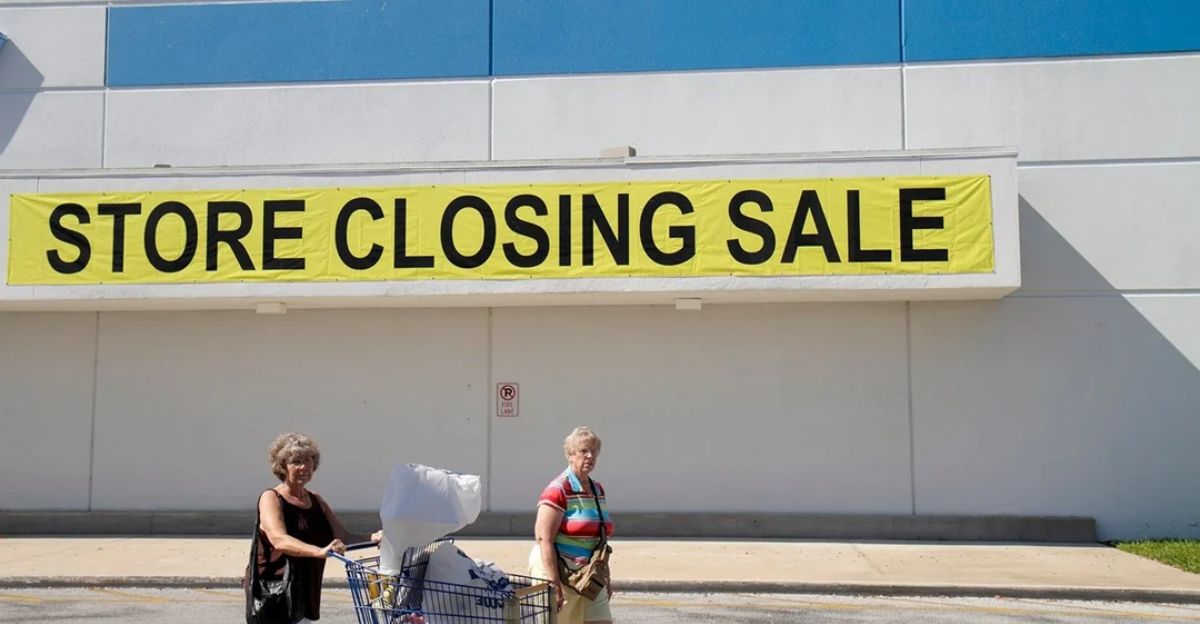
In the face of tightening credit markets, At Home’s bankruptcy is a part of a larger trend that affects retailers with high leverage and poor e-commerce integration. Similar outcomes await many mid-tier retailers in 2025, including competitors facing severe credit ratings and operational restructuring.
A combination of high debt, cost shocks brought on by tariffs, and a lack of an adequate online pivot makes the company vulnerable. Along with other struggling specialty retailers, At Home is highlighted in Moody’s and S&P ratings, highlighting systemic pressures that are changing the viability of retail.
Small vs. Large Retailers and Tariffs
Small and mid-sized retailers suffer disproportionately from tariffs because they lack the financial resources to absorb cost increases or make significant investments in local sourcing alternatives.
Despite being a major regional chain, At Home’s reliance on imports from China puts it at risk, just like smaller competitors. Reduced competitiveness and store closures have resulted from price increases, squeezed margins, and disrupted supplies for many of these retailers.
Modifications to the Supply Chain for Resilience
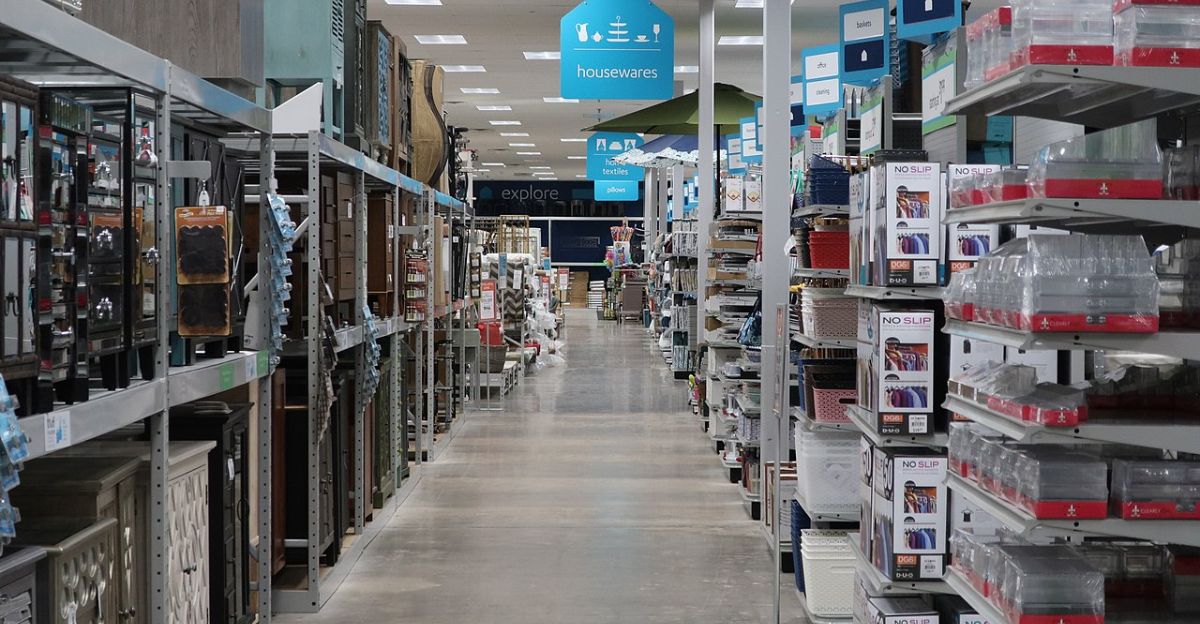
At Home is working to strengthen its supply chain resilience in the face of tariffs and market volatility by diversifying its suppliers, implementing advanced analytics, and utilizing more technology, including artificial intelligence (AI), to forecast demand.
These actions shorten lead times and enhance inventory management, both of which are essential for cost containment and meeting customer demand. Such changes, however, take time and money, which emphasizes how crucial it is to restructure successfully in order to finance these strategic goals and prevent the recurrence of previous operational rigidities.
Impacts on the Workforce and Community

Closing stores has a negative impact on local economies by lowering tax revenues and eliminating jobs, which hurts communities and employees who depend on retail employment.
Over 15,000 stores are predicted to close nationwide in 2025, and the 30 At Home store closures add to this trend. These losses highlight the societal cost of retail sector disruption beyond corporate balance sheets by forcing laid-off workers into new job markets and reducing local commerce vitality, which impacts small businesses and real estate values.
Strategies for Pricing to Fight Inflation
At Home has had difficulty striking a balance between the price sensitivity of its clientele and tariff-driven cost increases. Retailers can lessen consumer resistance to price increases by implementing tiered pricing, value bundles, and loyalty programs.
Digital tools that enable strategic dynamic pricing present chances to maximize profits without offending customers. Strengthening consumer willingness to pay is another way to reinforce value perception through sustainability claims and quality assurances.
In Conclusion
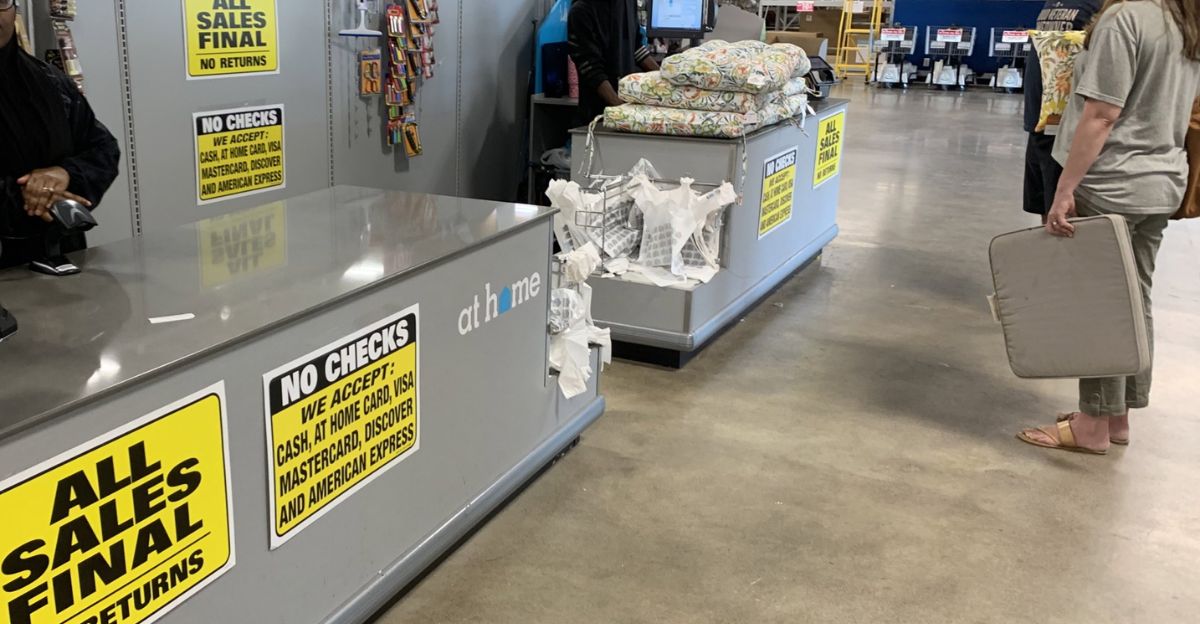
The painful but necessary response to a changing retail reality is At Home’s decision to close 30 stores in the face of crippling debt and tariff pressures. The company’s difficulties are representative of how external economic shocks, high debt leverage, and changing consumer dynamics interact.
At Home has set the stage for a leaner, more competitive, and more flexible future by employing bankruptcy as a tactical reset and concentrating on profitable operations while keeping an eye on hybrid retail innovation. Their story serves as a warning and a lesson in surviving and changing during difficult times.