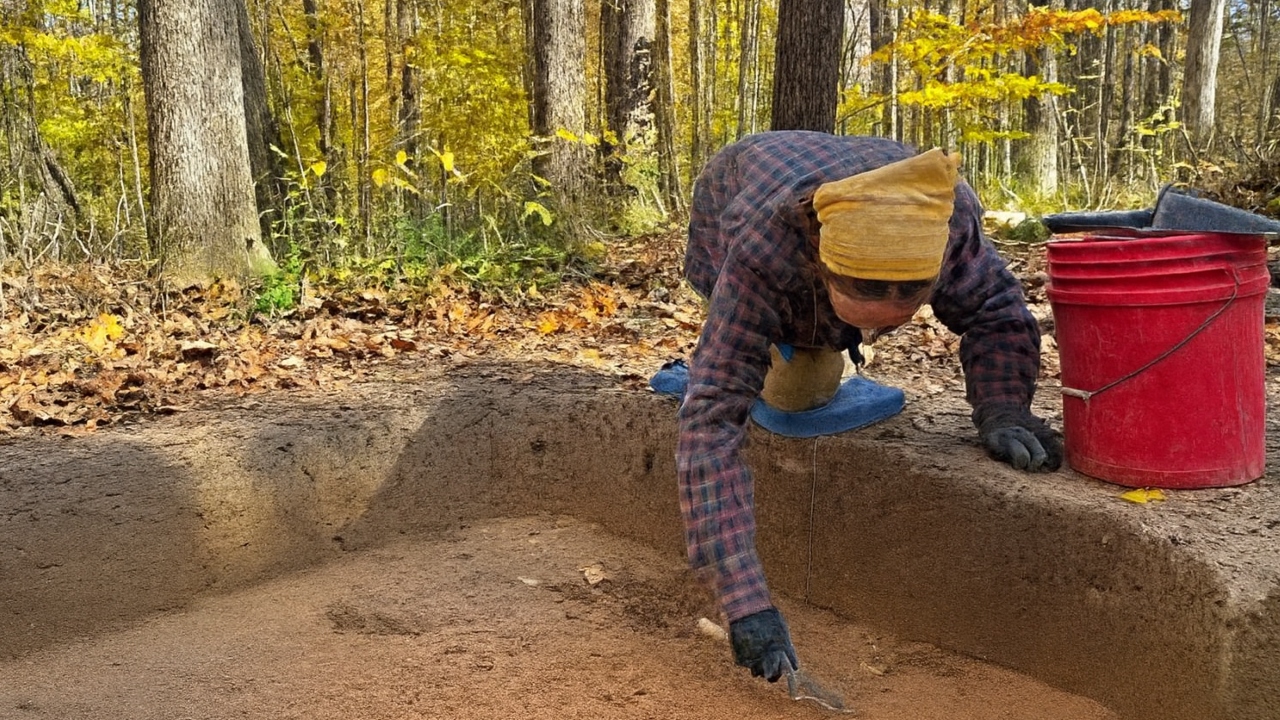
In the summer of 2024, excavations along Virginia’s Fones Cliffs unearthed approximately 11,000 artifacts—pottery shards, stone tools, beads, and pipes—confirming what the Rappahannock Tribe had maintained through oral tradition for centuries. Captain John Smith’s 1608 map had marked three Native American villages at this precise location, yet skeptical historians questioned whether the settlements truly existed. The archaeological discovery validated both Smith’s cartography and the tribe’s unbroken historical memory, arriving at a pivotal moment as the Rappahannock Nation has secured approximately 2,100 acres of ancestral land through multiple preservation and acquisition agreements, including conservation easements and partnerships with federal agencies.
Four Centuries of Dispossession
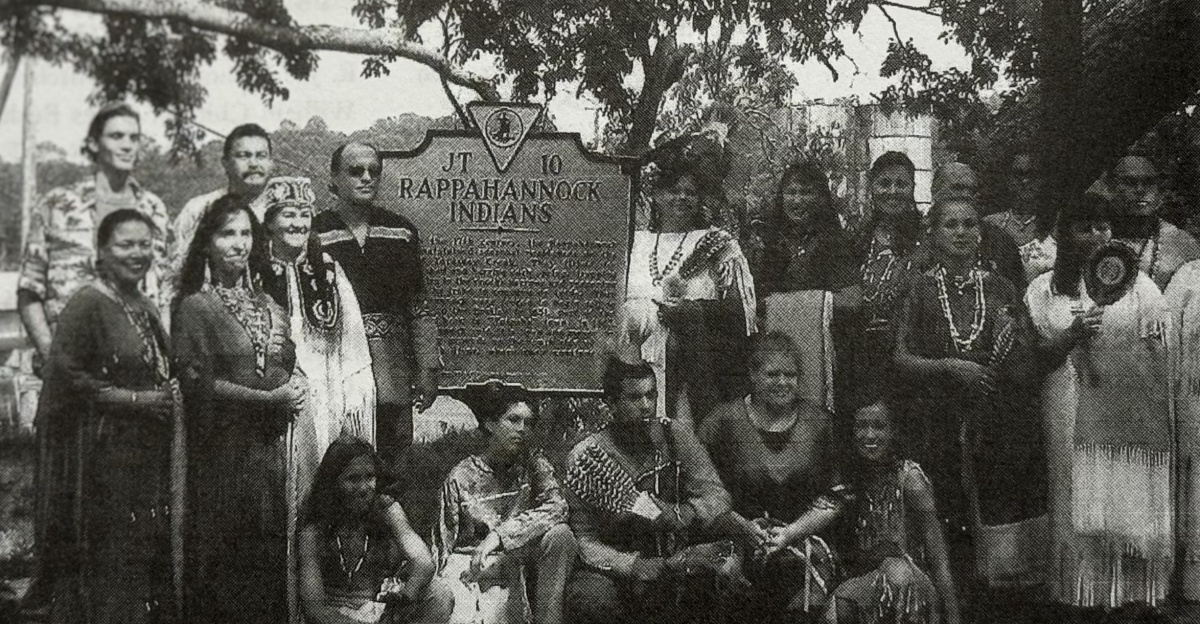
The numerical reality of colonial seizure remains stark. At their mid-to-late 1500s peak, according to tribal historical records and archaeological analysis, the Rappahannock Tribe controlled extensive territories across Virginia’s Northern Neck. Systematic dispossession followed: colonial land grabs in the 1640s, treaties that exchanged substantial acreage for minimal compensation in the 1660s, and the 1924 Virginia Racial Integrity Act, which legally erased Native American identity statewide by forcing all residents into a White/Black binary. By the 21st century, the tribe’s population had dwindled to approximately 300 members, denied tribal status and land rights for generations despite maintaining ceremonies, fishing practices, and ancestral knowledge on privately owned land they did not control.
Federal recognition finally arrived in 2018 through the Thomasina E. Jordan Indian Tribes of Virginia Federal Recognition Act of 2017, enabling formal land reclamation efforts and archaeological partnerships. The reclaimed and secured acreage, combined with conservation easements and federally co-managed parcels, represents a significant recovery after three centuries of displacement, signaling a turning point in the tribe’s ability to reclaim and steward its ancestral homeland.
Validating Indigenous Knowledge
Historians had long debated whether Smith exaggerated indigenous settlements or conflated different sites. Without archaeological confirmation, scholars could neither prove nor disprove his descriptions of three Rappahannock towns—Wecuppom, Matchopick, and Pissacoack—clustered at Fones Cliffs. The tribe maintained precise oral traditions pinpointing these locations, yet mainstream science demanded physical evidence for validation.
Excavations beginning in fall 2023 transformed this dynamic. St. Mary’s College of Maryland archaeologists, working alongside the Rappahannock Tribe and conservation partners, recovered beads, intricately marked pottery, stone tools, and pipes, with some pieces dating to the 1500s—well before English contact. Blackened dirt and rock formations suggested hearths where families once cooked and gathered. This material evidence finally confirmed Smith’s map with undeniable archaeological proof.
Chief Anne Richardson of the Rappahannock Tribe articulated the discovery’s deeper significance: “Indian people have long known of the land and our history and presence here. But so often things aren’t considered ‘real’ until they’re found or ‘discovered.’ This validates what we’ve long known.” Her words encapsulate a fundamental challenge—that Western science demands material proof before honoring indigenous knowledge preserved orally for millennia.
Collaborative Archaeology and Shifting Power
The Fones Cliffs excavation reflects a broader transformation in American archaeology: integrating tribal knowledge with academic methodology. Previously, archaeologists conducted independent digs without consulting descendants of the people they studied. This project reversed that dynamic. Oral histories and tribal guidance pointed researchers to precise dig sites, with the Conservation Fund and St. Mary’s College prioritizing collaborative frameworks that recognized Rappahannock elders’ accumulated geographic and cultural knowledge surpassed conventional survey techniques.
One particularly significant location, the “Indian Peter” site, yielded approximately 2,500 artifacts. Named after an 18th-century man born to an English father and Rappahannock mother, the site offers a micro-archive of early colonial-era indigenous life during the transition period. The concentrated findings suggest a focal point of habitation or community activity, enriching understanding of how Rappahannock families adapted through centuries of upheaval.
Reclamation Strategy and Public Vision
The tribe’s land acquisition strategy combines direct purchase, conservation easements with nonprofits, and partnerships with federal agencies. The U.S. Fish and Wildlife Service owns one Fones Cliffs parcel; the Rappahannock Tribe has secured two adjacent parcels through conservation agreements. This patchwork approach reflects pragmatic coalition-building rather than unified tribal ownership—a compromise many tribes accept to accelerate land return.
Chief Richardson and the tribal council have prioritized accessibility and education over exclusive control. Plans include a welcome center, walking trails navigating archaeological sites, and educational kiosks explaining artifact finds and Rappahannock culture. Schools could organize field trips, allowing visitors to encounter indigenous narratives firsthand rather than through colonial filters. This represents a strategic shift from passive recovery to active historical curation, generating economic benefit for the tribe while reclaiming control over how their history is told.
The Rappahannock discovery ultimately signals something broader than archaeological confirmation: the limits and possibilities of American reckoning with indigenous dispossession. As the tribe builds its welcome center and interprets its past, the larger question persists—whether America will fundamentally restructure its relationship with indigenous nations or whether land-back remains a corrective gesture within an inherently unjust colonial framework.
Sources
Washington Post, November 27, 2024
U.S. Fish and Wildlife Service, 2025
CNN, April 2, 2022
The Valentine (Richmond), May 23, 2024
Encyclopedia Virginia, August 25, 2024
Archaeology Magazine, November 2024 / January-February 2021
Rappahannock Tribe Annual Report, February 2024
St. Mary’s College of Maryland Archaeological Records