
As the critical holiday shopping season begins, a coalition of advocacy organizations is launching a coordinated boycott targeting Home Depot and other major retailers accused of enabling immigration enforcement operations. This multi-front campaign represents one of the year’s most significant retail activism efforts, mobilizing Gen Z activists, civil rights organizations, and immigrant advocacy networks.
Coordinated Campaign and Coalition Strategy
The boycott campaign, running from November 27 through December 1, 2025, spans Thanksgiving through Cyber Monday—a period representing 10-12% of annual holiday retail sales and among the year’s most critical shopping days for retailers. Organizers have strategically timed this window to maximize visibility and economic impact during the season when consumer spending is at its peak.
Beyond the Ballot, a Gen Z-driven advocacy organization, launched the initiative under the banner “Not With My Dollars: ICE Out of My Wallet.” The campaign has rapidly expanded to include a broad coalition: Black Voters Matter, Indivisible, and Until Freedom have joined forces under the parallel initiative “We Ain’t Buying It.” This multi-organizational alignment signals unprecedented coordination among immigrant rights, civil rights, and grassroots advocacy groups.
“We cannot out-organize a fascist administration while simultaneously bankrolling the companies profiting from its cruelty,” said Victor Rivera, executive director of Beyond the Ballot, in a statement. “Every dollar spent at a complicit corporation is a dollar funding the abduction and disappearance of our neighbors. It’s time to make corporate complicity unprofitable, for good.”
Home Depot: Central Target of Campaign
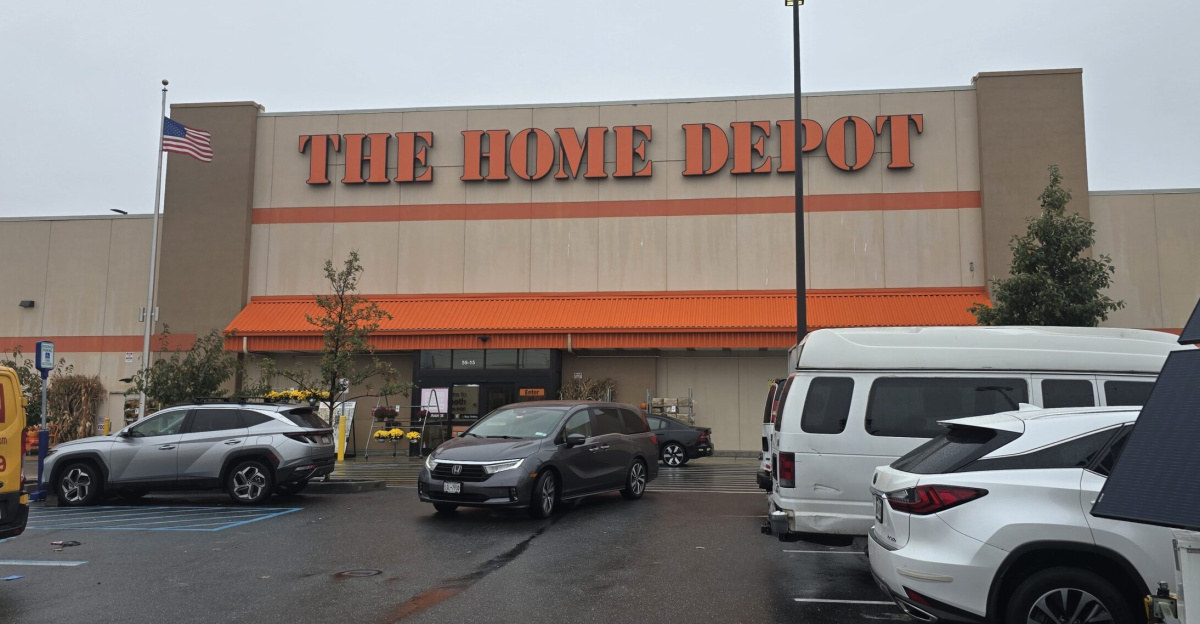
Home Depot faces particular scrutiny due to decades-long operations in its parking lots that have functioned as informal labor markets for day laborers, many of whom are immigrants seeking daily work. According to organizers, these same parking lots have become regular targets for Immigration and Customs Enforcement (ICE) operations, creating what advocacy groups describe as unsafe and discriminatory working conditions.
The campaign alleges that Home Depot has repeatedly allowed ICE agents to patrol, detain, and conduct enforcement operations in its parking lots and stores—often without presenting judicial warrants or establishing probable cause. These claims follow a specific tragedy that catalyzed heightened activism: Carlos Roberto Montoya Valdez, an immigrant day laborer, was struck and killed by an SUV in Monrovia after fleeing from immigration agents who were conducting enforcement operations in a Home Depot parking lot in mid-August 2025.
In response to these allegations, activist organizations including the National Day Laborer Organizing Network (NDLON) conducted a “buy-in” demonstration in late November 2025, in which nearly 100 protesters purchased low-cost items and immediately returned them to disrupt operations and demonstrate the economic contribution of day laborers.
Home Depot has formally denied these claims. The company stated: “We are not coordinating with ICE or Border Patrol, and we’re not involved in the operations. We aren’t notified that immigration enforcement activities are going to happen, and often, we don’t know operations have taken place until they’re over. We’re required to follow all federal and local rules and regulations in every market where we operate.”
Despite the company’s denials, controversy continues to intensify as activist groups maintain that permitting unchecked enforcement operations—whether actively coordinated or passively allowed—constitutes corporate complicity with government immigration policies.
Expanding Targets and Specific Allegations

The boycott has expanded well beyond Home Depot to include a diverse range of companies accused of supporting immigration enforcement infrastructure:
- Amazon and Whole Foods are targeted for their roles in providing cloud computing infrastructure. According to organizers, Amazon Web Services (AWS) functions as “the digital backbone of ICE’s machinery,” hosting the systems used to track and target immigrants for enforcement operations.
- Microsoft is targeted for its $19.4 million contract with ICE to provide artificial intelligence capabilities and data processing services.
- Dell Technologies is included for providing $18.8 million in support to ICE’s chief information officer through enterprise software licenses.
- Spotify faces boycott calls for airing ICE recruitment advertisements, a decision that prompted criticism from multiple activism groups.
- Target is targeted for its “broad range of cooperation with the Trump administration’s racist policies” and has been called upon to reinstate diversity, equity, and inclusion (DEI) programs.
Beyond the Ballot has emphasized that this campaign is designed for long-term pressure and escalation, not merely a symbolic gesture timed to the holidays. “Unlike other consumer boycotts, Not With My Dollars is designed for long-term pressure and escalation,” the organization stated. “To be removed from the boycott list, each targeted corporation must fulfill the specific demands outlined for its company. Anything less is not accountability, just more corporate PR.”
Values-Based Consumerism and Consumer Participation
The boycott campaign taps into a documented shift in consumer behavior. According to a LendingTree survey, 45% of Americans now research a company’s values or political stance before making a purchase—a significant increase reflecting generational changes in shopping priorities.
Historical data on boycott participation underscores the potential impact of organized consumer activism. A USA Today analysis found that 31% of Americans have boycotted a business due to its affiliations or practices, indicating that consumer activism has become a mainstream strategy for political expression and accountability.
The Thanksgiving weekend shopping period is particularly significant for this campaign’s timing. According to the National Retail Federation (NRF), Thanksgiving weekend shopping is expected to draw a record number of shoppers, with 70% of consumers indicating they plan to shop during the Black Friday period. This concentration of consumer activity provides a critical window for visibility and economic impact.
Broader Implications for Corporate Accountability
With the boycott officially launching on November 27, 2025, the effectiveness of this coordinated multi-organizational campaign will serve as a bellwether for the power of values-based consumer activism in the 2025-2026 period. The outcome could establish precedents for future grassroots movements, demonstrating whether consumer spending can function as an effective tool for political expression and corporate accountability on immigration policy.
The long-term framing of this campaign—extending well beyond the holiday shopping season—signals that organizers view this as the beginning of sustained pressure rather than a single protest moment. If participation reaches anticipated levels, this boycott could influence not only this year’s retail sales but also future corporate decisions about immigration policy partnerships and government contracts.
As consumer activism increasingly shapes corporate behavior, the “Not With My Dollars” campaign represents a defining test case for whether grassroots organizing can convert consumer spending into meaningful corporate and policy change on immigration enforcement.
Sources:
Beyond the Ballot campaign announcement: “Not With My Dollars: ICE Out of My Wallet”
Truthout article (2025)
Cronkite News (2025)
Newsweek (2025)
LendingTree Survey (June 2025)
CNBC (January 2025)