
In early 2024, a single Walmart store in suburban Missouri quietly tested a reversal of one of retail’s biggest trends. The Supercenter in Shrewsbury, just southwest of St. Louis, removed every self-checkout station and returned to fully staffed lanes. Within months, police calls tied to the store fell by 64%, and arrests dropped 55%. For local officials, the impact was immediate; for the retail industry, the experiment raised a broader question: how much does automation really cost when theft, policing, and community strain are added to the balance sheet?
High Costs Behind Automated Lanes
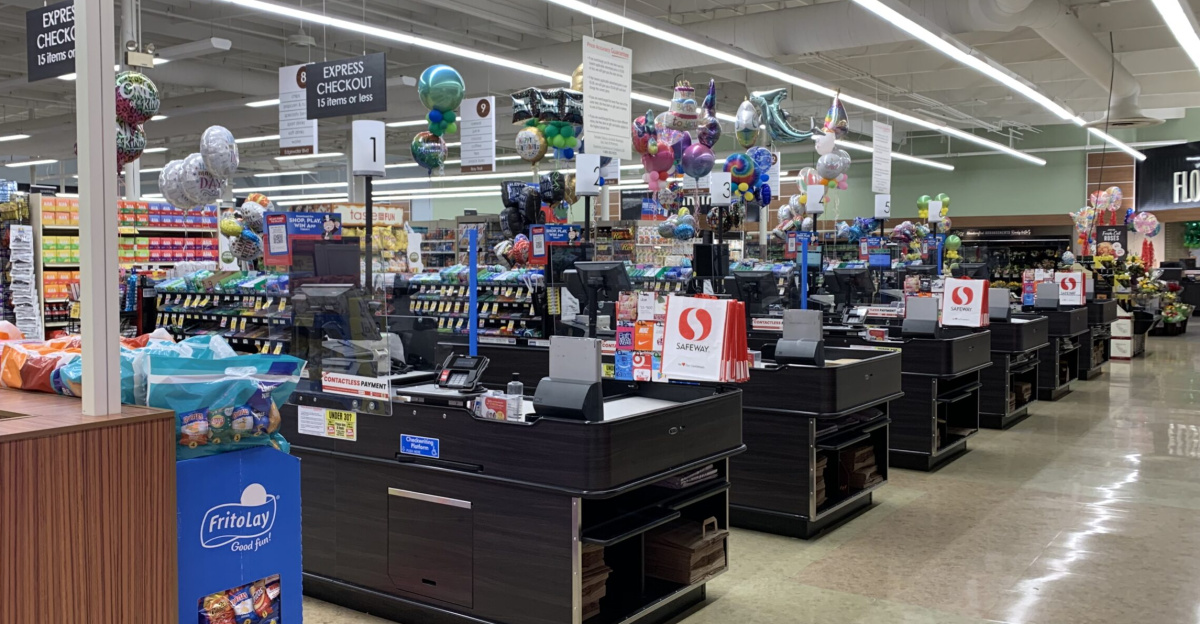
Across the United States, retailers are confronting rising losses from theft and other inventory discrepancies, often grouped under the term “shrink.” In 2024, those losses were estimated at roughly $45 billion and climbing, putting pressure on large chains to rethink how they protect merchandise and manage stores.
Self-checkout systems were originally promoted as a way to cut labor expenses and move shoppers through lines more efficiently. Walmart was among the most aggressive adopters, installing kiosks widely and pairing them with new surveillance tools. But over time, company data and outside research pointed to a problem: losses were consistently higher at self-checkout than at lanes staffed by cashiers.
By late 2022, Walmart CEO Doug McMillon publicly described shrink as a “major issue” and warned that theft could eventually force price increases or even store closures in some communities. At the same time, police departments in several cities reported that Walmart locations were generating a disproportionate share of calls for service, often related to shoplifting or disorderly conduct on store property. Those trends set the stage for the experiment in Shrewsbury.
Missouri Store Becomes a Test Case

In April 2024, managers at the Shrewsbury Walmart made the unusual decision to remove self-checkout entirely and rely on human cashiers for all purchases. Within a few months, the shift produced measurable changes in how often police were called to the store.
Between January and May 2024, before the full effect of the change, the Walmart accounted for about a quarter of all police calls in Shrewsbury. By the same period in 2025, after the store had operated for months without self-checkout, its share of calls dropped to around 11%. The number of arrests linked to the location also fell sharply.
Shrewsbury Police Chief Lisa Vargas publicly praised the move, describing it as “huge” for the city and its residents. With fewer theft and disturbance calls from Walmart, officers were able to dedicate more time to other priorities, easing a long‑standing strain on local resources. City leaders framed the results as both a crime‑reduction success and a step toward better community safety.
Shifting Strategies Across the Retail Landscape
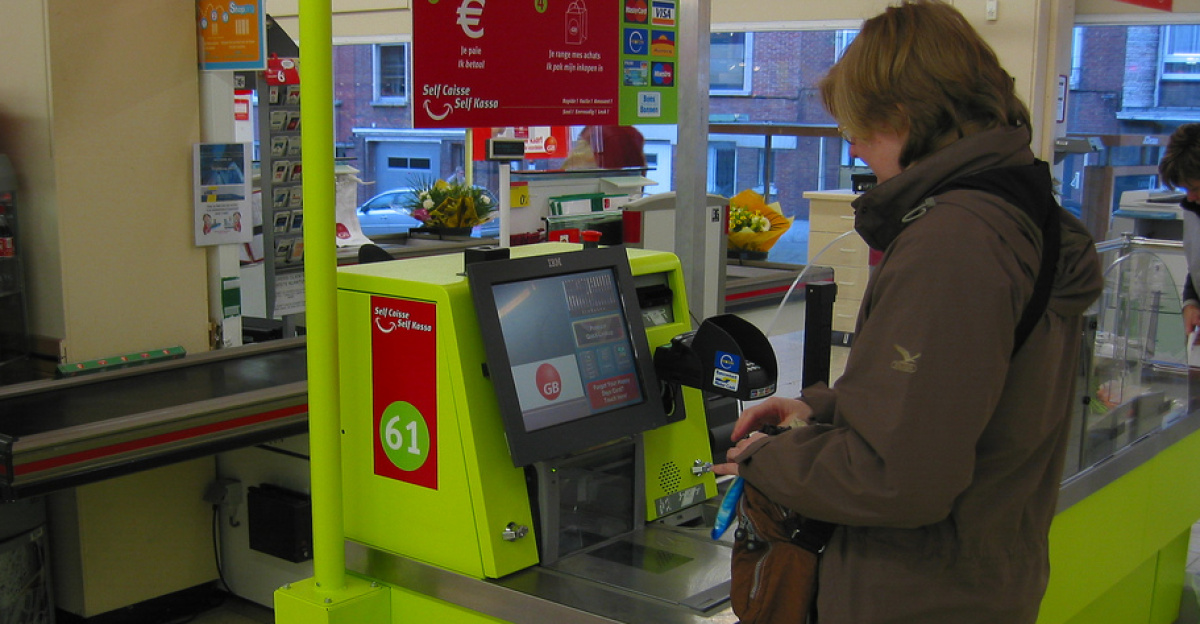
The outcome in Shrewsbury coincided with a wider reassessment of automated checkout in the retail sector. Dollar General, another major U.S. chain, removed self-checkout from roughly 12,000 locations after reporting increased theft and saw performance improve once staff again handled transactions more directly. At the same time, Walmart’s membership warehouse brand, Sam’s Club, has expanded its “Scan & Go” smartphone system, which lets customers scan items as they shop and pay through an app, a model the company views as carrying different risks than traditional kiosks.
Within Walmart itself, the response has not been uniform. The retailer has started pulling self-checkout machines from selected high-theft stores in places such as Cleveland, New Mexico, and Los Angeles. Those decisions are often made at the local level, with managers weighing loss-prevention data, security issues, and feedback from law enforcement. Yet the company continues to invest heavily in automation elsewhere, upgrading kiosks, rolling out mobile scanning features, and deploying artificial intelligence tools designed to spot missed scans in real time.
To support remaining self-checkout areas, Walmart and other retailers are expanding security layers. These include AI-powered video analytics, radio-frequency identification (RFID) tags to confirm that scanned items match what leaves the store, and additional staff assigned to monitor the zones where customers ring up their own purchases. Some locations also use off-duty police officers or private security guards to deter theft, further increasing the operating costs associated with automated checkout.
Broader Social, Legal, and Cultural Implications
The debate over self-checkout extends beyond corporate balance sheets. Studies in Florida, for example, have shown that Walmart stores can generate thousands of police calls each year, placing a significant burden on publicly funded law enforcement. When theft incidents rise—whether from deliberate shoplifting or mistakes at self-checkout—taxpayers effectively subsidize the resulting enforcement, court proceedings, and incarceration costs.
Criminologists have raised questions about the systems themselves. Research from the University of Leicester and consumer surveys in the United States indicate that a notable share of shoppers admit to taking items without paying when using self-checkout at least once. Some respondents describe the experience as less personal and more anonymous, blurring the social cues that discourage theft when a cashier is present. Even with advanced AI, experts argue that machines may not replace the deterrent effect of face‑to‑face interaction.
Legal consequences can also be severe. In states with strict theft statutes, relatively small incidents at automated lanes can lead to criminal charges, fines, or long‑term records, including cases where under‑scanning or mis‑scanning is alleged to be intentional. That reality has sparked criticism from some local officials and advocates, who question whether store design and enforcement policies are drawing people into the justice system over low‑dollar disputes.
Internationally, Walmart is still expanding self-checkout in markets such as Canada and Mexico, even as some foreign retailers scale back due to theft concerns. Against that backdrop, the Shrewsbury case is emerging as a reference point in global discussions over whether automation genuinely lowers total costs or simply shifts the burden from corporations to police, courts, and communities.
For now, Walmart has not signaled any plan to remove self-checkout across the board. Industry data suggests that kiosk use is still growing, and many retailers continue to see automation as central to their long‑term strategies. But the steep drops in police calls and arrests in Shrewsbury, and similar reports from other locations that have reduced or removed kiosks, are likely to keep the issue at the forefront.
As theft losses rise and public agencies push back on being used as de facto security forces, large chains face a pivotal choice. The next phase of automation in retail will be judged not only by how quickly it moves customers through the line, but also by how it balances labor savings, loss prevention, police workloads, and the day‑to‑day safety of the neighborhoods where these stores operate.
Sources
KSDK / 5 On Your Side (NBC St. Louis Affiliate)
CNBC Report: “Walmart CEO says shoplifting could lead to price jumps, store closures” (December 6, 2022)
The Tampa Bay Times Investigation: “Walmart’s Police State” (2016)
University of Leicester, Department of Criminology (Professor Adrian Beck)
LendingTree Consumer Survey: “Self-Checkout Users Think It Makes Stealing Easier” (November 2023)
Business Insider / CNN Business Reports on Dollar General (May/June 2024)