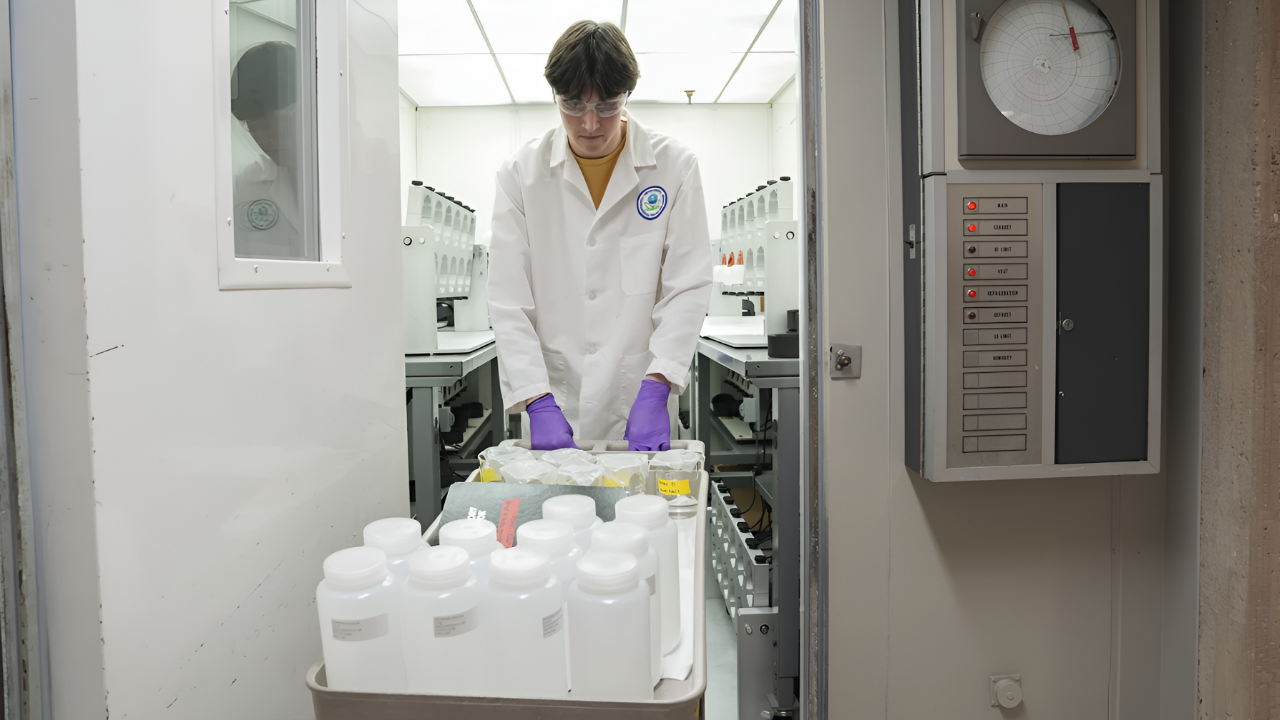
Three of four Georgia residents tested carry dangerously high levels of PFAS—industrial chemicals that don’t break down in the body.
Emory University researchers analyzed 177 blood samples from residents of Rome and Calhoun in June 2025, finding levels significantly above the national average.
Carpet factories upstream used these chemicals for stain resistance, then released them into waterways feeding the region’s drinking water.
Professor Dana Barr led this first comprehensive community health study.
What 76% Really Means
When researchers say 76 percent need cancer screening, they mean these residents meet clinical thresholds set by the National Academies.
Their PFAS levels fall between 2 and 20 nanograms per milliliter, triggering medical screening protocols.
Another 23 percent exceeded 20 ng/mL, requiring intensive testing. Most Americans have levels below 2 ng/mL.
Rome residents face dramatically higher exposure, activating clinical guidelines designed to detect cancers, thyroid disease, and kidney problems linked to PFAS.
Decades of Hidden Exposure

Rome and Calhoun residents unknowingly drank PFAS for decades through their main water source: the Oostanaula River.
Contamination began in the 1940s when Dalton, Georgia—50 miles upstream—started manufacturing carpet using PFAS chemicals.
After production, these chemicals entered sewers, flowed through wastewater treatment, and seeped into the Conasauga River, eventually reaching Rome’s water supply.
PFAS earned the nickname “forever chemicals” because they never break down in water or soil.
Residents who have been drinking this water for 40-60 years have accumulated dangerously high levels of contaminants.
The Carpet Industry Pipeline

Carpet makers Shaw Industries and Mohawk Industries used PFOS and PFOA chemicals to make products water-resistant and stain-proof.
These chemicals don’t disappear after manufacturing. Wastewater containing PFAS flowed into Dalton’s municipal system, where the local water utility’s treatment facility was unable to filter them out.
Instead, PFAS persisted and migrated through soil into rivers. Chemical suppliers 3M and DuPont sold these compounds to manufacturers.
This supply chain, involving multiple industries, later sparked one of America’s largest environmental lawsuits.
Emory’s HERCULES Initiative

Community concerns triggered the breakthrough study. In November 2023, Atlanta News First reported that residents had privately tested their blood and found elevated levels of PFAS.
Residents invited Dana Barr, an environmental health professor at Emory, to a community meeting.
Barr partnered with researchers Melanie Pearson and Noah Scovronick to secure grant funding through HERCULES, a research center studying how environments expose communities to chemicals.
Between January and May 2025, researchers collected blood samples from nearly 200 residents to test for seven PFAS compounds. Participants received results in early June.
Exposure Levels Exceed National Benchmarks

The results shocked researchers and residents. Of the 177 tested, 40.1 percent had PFOA (perfluorooctanoic acid) levels higher than those of 95 percent of all Americans.
Another 11.9 percent showed elevated PFHxS levels beyond the national average. Only one in twenty Americans typically exceeds these thresholds. Yet in Rome and Calhoun, roughly one in 2.5 residents surpassed the PFOA limit.
Dana Barr stated, “There were some that were quite high.” Notably, even newly relocated residents showed elevated levels, suggesting that PFAS exposure was widespread.
Cumulative Risk Over Time

A striking finding emerged: every ten years residents lived in the area, their PFAS blood levels rose 7.7 percent on average.
In Floyd County specifically, the increase jumped to 11 percent per decade. A 50-year resident would show roughly 38 percent higher PFAS than a 10-year resident.
This pattern reveals chronic, ongoing exposure rather than a single contamination event. Long-term residents face the highest chemical body burden and greatest clinical concern.
No safe timeframe exists for continued tap water use, but the pattern proves the water supply caused the exposure.
Clinical Guidelines & Screening Protocols

The National Academies published clinical guidelines in July 2022, translating PFAS exposure into medical action.
Patients with PFAS between 2-20 ng/mL warrant “prioritized screening” including lipid panels, blood pressure checks, breast cancer screening, and thyroid tests.
Those exceeding 20 ng/mL need all this plus kidney cancer assessment (ages 45+), testicular cancer screening (ages 15+), and ulcerative colitis evaluation.
Seventy-six percent of Rome residents in the 2-20 ng/mL range and 23 percent with levels above 20 ng/mL qualify for these science-based protocols.
The guidelines reflect proven links between PFAS and health, not speculation.
IARC Classification & Carcinogenic Evidence

In November 2023, the International Agency for Research on Cancer (part of the World Health Organization) convened 30 experts to evaluate PFOA and PFOS.
Their ruling: PFOA is “carcinogenic to humans” (Group 1), the highest certainty category available. Evidence shows PFOA causes kidney cancer and testicular cancer in exposed people and laboratory animals.
PFOS received a “possibly carcinogenic” (Group 2B) classification. PFOA alters gene expression and weakens immune function—pathways known to increase cancer risk.
For Rome residents, 40.1 percent carry elevated PFOA; this regulatory classification proves documented cancer risk, justifying the screening guidelines.
Protective Factor: Filtered Water Works

A crucial discovery: residents who drank bottled or filtered water showed measurably lower PFAS blood levels than those who drank tap water.
This held true even among long-term residents, proving water source choice reduces ongoing exposure.
Participants using activated carbon filters, reverse osmosis systems, or bottled water broke the accumulation pattern seen in tap-water consumers. The finding offered temporary relief while residents awaited municipal treatment.
However, it exposed inequality: wealthier residents could afford filtration or bottled water, while lower-income households remained exposed.
Dana Barr highlighted this as a public health justice issue. The finding validated water as the exposure source.
$280 Million Settlement Victory

Rome filed suit against carpet makers, chemical companies, and utilities responsible for PFAS contamination. FPC Litigation Group represented Rome against over 30 defendants for four years.
The lawsuit survived dismissal attempts, proving strong evidence against the industry. Before trial in 2024, defendants settled for nearly $280 million—the largest PFAS settlement in U.S. history for a single water authority.
Major defendants included 3M ($75 million), DuPont, Shaw Industries, and Mohawk/Aladdin, plus the local utility.
The settlement acknowledged decades of harm and funded infrastructure for prevention. Money couldn’t undo the bioaccumulation of PFAS, but it financed systems to prevent future exposure permanently.
Reverse Osmosis Technology & Specifications

Settlement funds were used to build a new water treatment facility utilizing reverse osmosis (RO) filtration. RO forces water through a semi-permeable membrane at high pressure, blocking PFAS and other contaminants.
The Rome facility removes 99.9 percent of all PFAS from drinking water. Even if upstream contamination continues, residents’ tap water would meet safety standards.
Construction was extended through 2025 as engineers addressed issues related to flow capacity, membrane durability, and waste management. RO produces brine containing concentrated PFAS, requiring proper disposal.
Once running, the facility stops future exposure. It’s a technological fix to an industrial problem: blocking polluted water at the tap rather than eliminating PFAS use entirely.
Implementation Timeline & Current Status

The reverse osmosis facility construction progressed through 2025. Design and permitting are expected to be finished by late 2024; equipment procurement and construction are scheduled to begin early 2025.
The city planned operational completion for late 2025 or early 2026, pending final testing and regulatory approval. Workers also replaced and flushed aging water pipes containing PFAS buildup.
Even treated water could leach chemicals from old pipes. The remediation required coordination among Rome utilities, state agencies, and federal EPA oversight. Residents faced continued exposure during construction—a harsh reality for those with the highest chemical burdens.
The city distributed bottled water to pregnant women, young children, and individuals with immunocompromised conditions, the groups at the highest risk of PFAS exposure.
Long-Term Health Monitoring & Follow-Up Studies

Emory researchers stressed their 2025 study measured exposure levels only, not health impacts in Rome residents. Dana Barr stated: “The first thing we wanted to do is see the level of exposure for the whole community, and if it was something to be concerned about or not.”
The answer was clear: serious concern was warranted. Researchers proposed follow-up studies comparing cancer rates, thyroid disease, kidney function, and other PFAS-linked conditions in Rome versus control populations.
The research demands extra grant funding and years of monitoring. Barr noted: “There are plans to come back and do additional studies if grant funding can be obtained.” This gap may take years and millions to close.
National Implications & Unanswered Questions

Rome and Calhoun are one visible case in a broader crisis. The European Commission identified nearly 23,000 PFAS-contaminated sites in Europe; the United States has hundreds more.
Manufacturing plants, military bases, landfills, and industrial sites create ongoing contamination hotspots. Urgent questions remain: How many U.S. communities have undetected PFAS?
How many residents carry elevated levels unknowingly? Why did journalist investigations and community action spark research? NASEM guidelines exist, yet many clinicians fail to adhere to them. Insurance rarely covers PFAS screening.
Most critically: do screening recommendations lead to actual treatment or just data collection? Rome residents now face a harsh truth: knowing their exposure and having medical guidance won’t reverse decades of PFAS accumulation.
For public health officials nationwide, Rome’s experience demonstrates that preventing industrial PFAS use, monitoring contamination, and maintaining transparency are more effective than expensive litigation and years of remediation.
Sources:
- European Commission, 2025
- WRGA News, October 23, 2025
- National Academies of Sciences, Engineering, and Medicine, 2022
- Emory University, June 2025
- FPC Litigation Group, April 2024
- Bloomberg, June 1, 2023