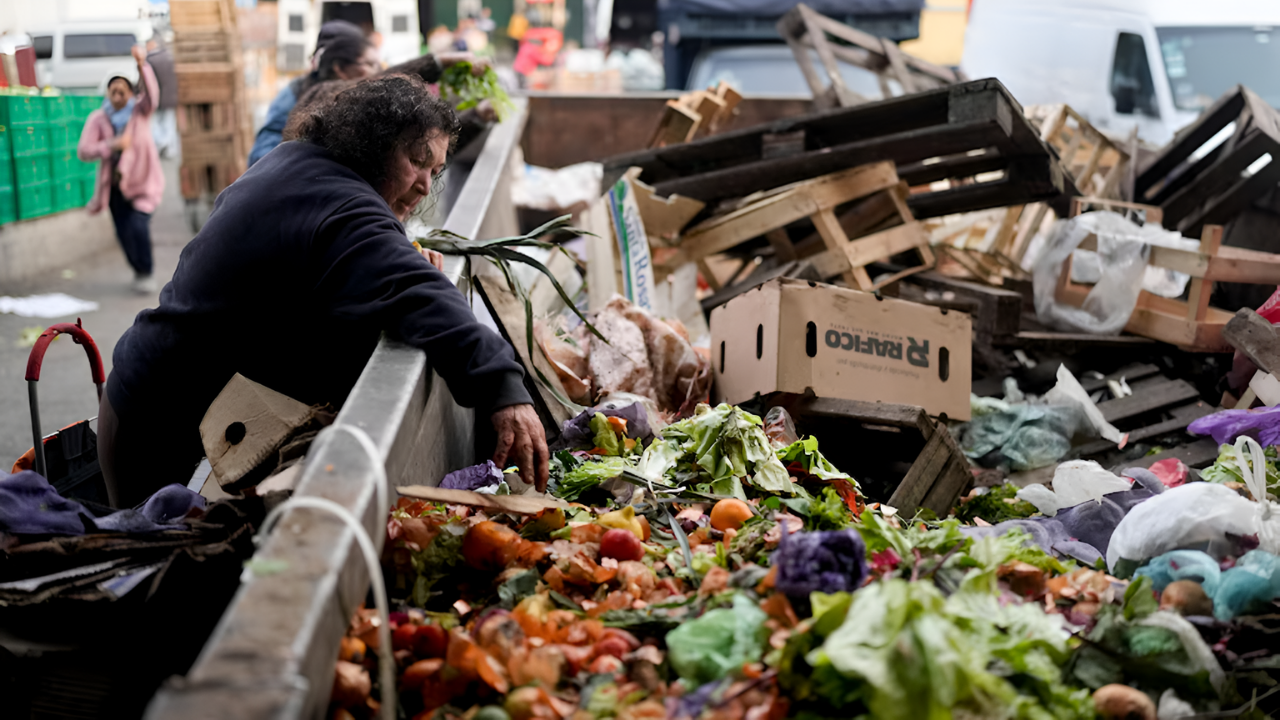
As you read this, a restaurant in Manhattan is quietly composting trays of untouched steak and salmon while the dining room lights go dark. Across the country, outside Atlanta, workers in a refrigerated warehouse are ordered to crush pallets of perfectly good fruit to keep prices high.
In the Bronx, a 63-year-old grandfather skips breakfast so his grandchildren can eat. This is not a story about scarcity. It is a story about deliberate waste in a country where neighbors starve within sight of an overflowing dumpster.
The Shutdown Moment That Broke Everything
November 1, 2025. The date will be remembered by food banks across America. For the first time in 60 years, SNAP—the lifeline keeping 42 million low-income Americans fed—stopped. No payment. No warning. No fallback.
According to the USDA, the government shutdown entered its second month, and with it came an unprecedented crisis. Federal Judge John McConnell ordered emergency funds released by November 3. The Supreme Court blocked him.
The Paradox That Reveals Everything
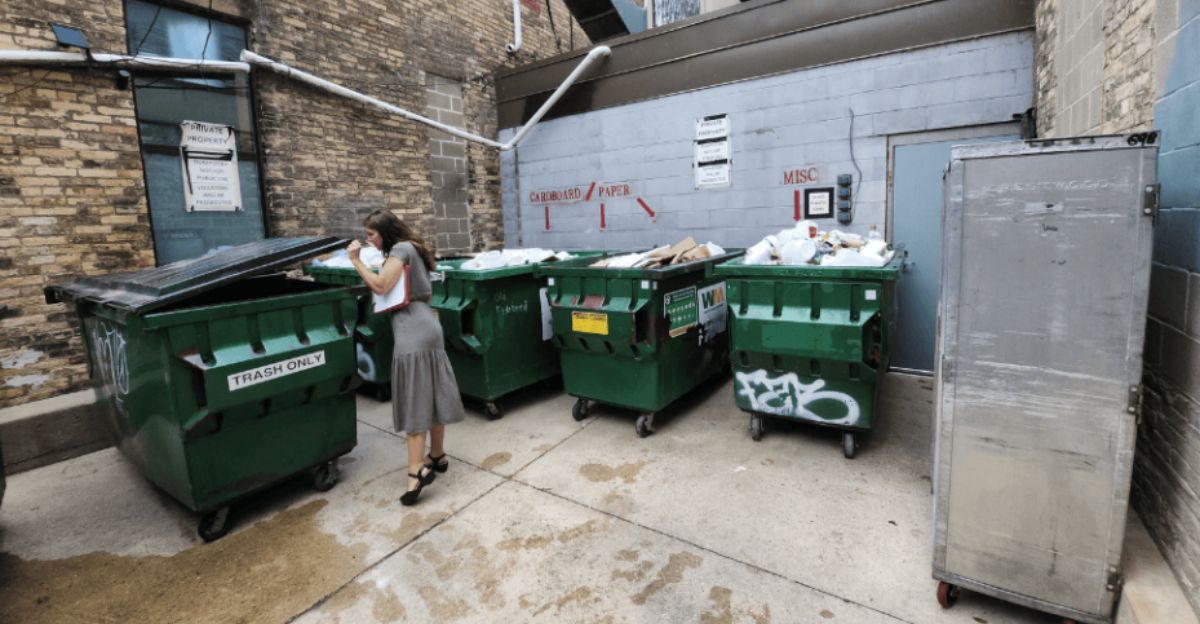
$382 billion. That’s the value of surplus food America generated in 2023 alone—food that never reached a plate. According to ReFED’s analysis, consumers also wasted $261 billion on groceries and restaurant meals they purchased but threw away.
Meanwhile, 42 million Americans depend on food stamps to survive. The math is grotesque: we waste enough to feed every hungry person in America nine times over.
The Global Context That Makes It Worse
This isn’t just an American shame. Globally, 40 percent of all food is wasted—that’s according to the EPA and FDA. In the U.S. alone, this translates to 60 million tons annually, accounting for 22 percent of landfill waste.
On average, every single American throws away 975 pounds of food per year. Now imagine being food insecure—skipping meals, rationing basics—while living in a nation that treats food as disposable.
What Every American Is Actually Paying
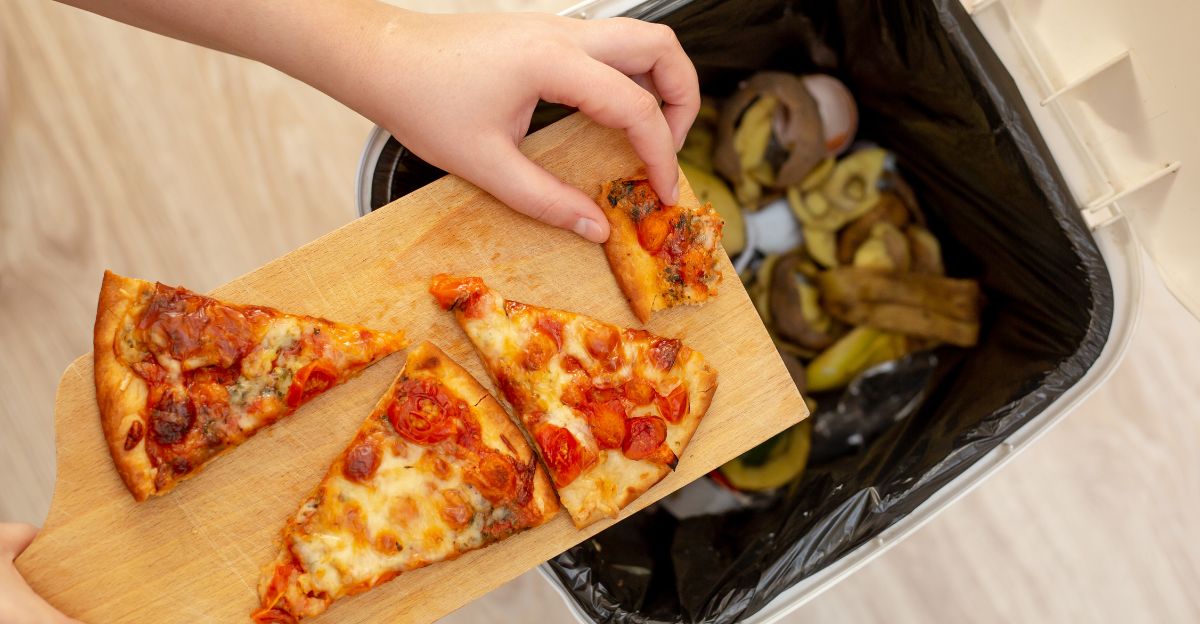
According to EPA research, the average American household wastes $728 per year on groceries and restaurant plates they never finish. Multiply that by 335 million Americans, and you get nearly $244 billion yearly vanishing from household budgets—separate from supply-chain losses.
Middle and upper-income families waste far more than working poor households. Those with plenty to spare often discard 40 percent of their groceries without a second thought.
Hunger Was Already Here Before the Shutdown

The crisis didn’t start in November. It was already metastasizing. According to the Capital Area Food Bank and NORC at the University of Chicago, 36 percent of households in Washington, D.C. faced food insecurity in 2025.
Nationally, Feeding America estimates that 47 million people are food insecure—that’s one in seven Americans wondering where their next meal will come from.
When the System Collapsed: Real Stories, Real Hunger

Then November arrived, and everything accelerated. Food pantries flooded with emergency calls. Federal Judge McConnell documented that the administration acted “arbitrarily and capriciously” in failing to distribute even partial benefits.
From New York to North Carolina, people lined up at dawn, desperate for answers. Some skipped buying medicine to afford food. Others depended entirely on food banks.
The Money Behind the Collapse

Forty-two million Americans typically receive approximately $350 per household per month—$8.2 billion in total. When the shutdown occurred, nearly $9 billion in November benefits were lost. Federal contingency funds were held at roughly $5.3 billion, but the administration initially allocated only $4.65 billion.
Judge McConnell ordered emergency funding from tariff revenue. The Trump administration appealed, arguing it violated the separation of powers.
The Bandage on a Broken System
Too Good to Go—a marketplace connecting restaurants and stores with consumers—rescues roughly 8 meals every second. That’s 252 million meals annually diverted from dumpsters. Customers grab “surprise bags” at 50-60 percent discounts, walking away with food that would have otherwise been destined for waste.
It’s also a damning indictment: we’ve turned food rescue into a marketplace when a functioning system should prevent waste from happening in the first place.
Where the Waste Actually Happens
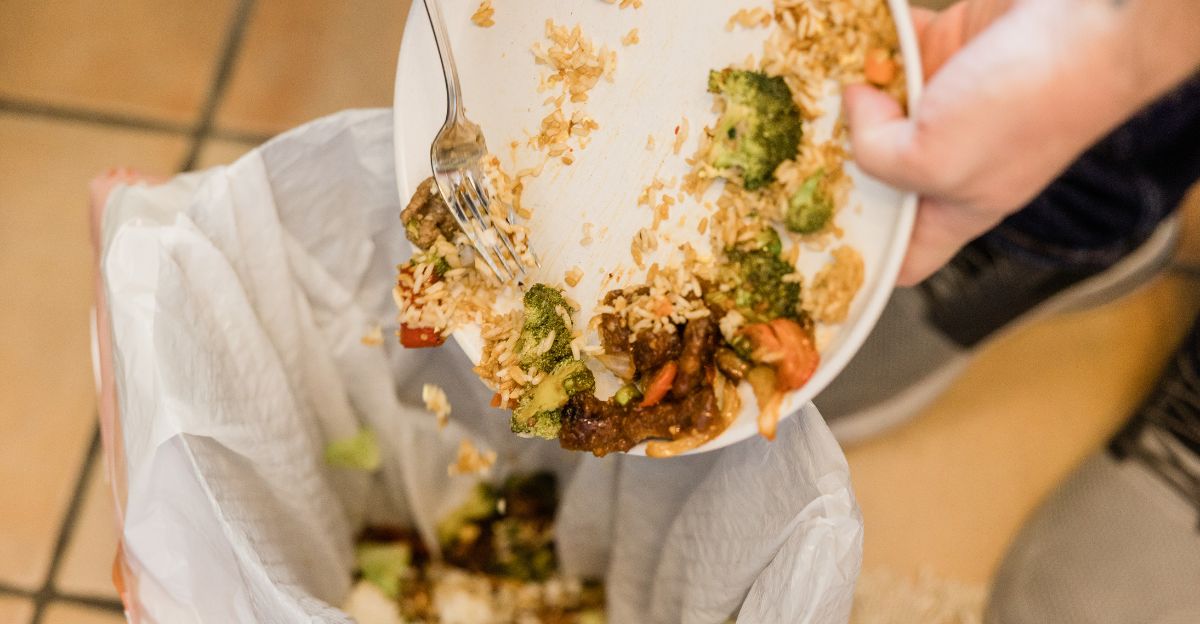
Understanding waste requires seeing the entire chain. According to ReFED, 30.4 percent originates from trimmings and byproducts, 23.6 percent from excess inventory, 19.7 percent from crops never harvested. Another 5.8 percent stems from arbitrary date labels, 2.4 percent from food safety fears, 2.2 percent from buyer rejections.
Consumer waste—groceries purchased then abandoned—represents an entirely separate hemorrhage.
The Uncomfortable Truth About Who Wastes

Here’s what research reveals and what makes us uncomfortable: Lower-income households waste dramatically less food than wealthy households. Families barely scraping by practice ruthless efficiency—using every ingredient, stretching leftovers into new meals.
Affluent households discard 40 percent of groceries without guilt or calculation. This inverted privilege—where wasting more is a symbol of wealth, and wasting nothing is forced poverty—exposes the system’s moral bankruptcy.
The Grandfather Making Impossible Choices

In the Bronx, 63-year-old Willy Hilaire faced November without fear—just resignation. Homeless, caring for two grandchildren, he made the only calculation he knew: go without so they wouldn’t. “I always tell them, ‘Grandpa is there for you. Whatever I have, I’ll give it to you,'” he said in November 2025.
His words carry the weight of a system that permits such choices to exist. Somewhere in this nation, restaurants discard entire dinners. Somewhere else, Willy Hilaire’s grandchildren go to bed wondering if breakfast will come.
Federal Workers Discover Hunger Too

In 2025, the government’s reduction-in-force (RIF) resulted in the elimination of thousands of federal jobs. Suddenly, families accustomed to stability found themselves in survival mode. According to the Capital Area Food Bank study, 41 percent of federal and contractor households experiencing job losses became food insecure by May 2025—more than double the rate of similar households with stable employment.
Two-thirds experienced severe food insecurity, skipping meals and rationing basics. These weren’t stereotypical welfare recipients. These were government employees, suddenly discovering that one paycheck stood between them and food banks.
The Moral Calculus That Breaks Your Heart

The math is unsparing: $382 billion in wasted food divided by 42 million SNAP recipients equals $9,095 worth of surplus food per hungry American each year. The nation wastes enough surplus food to provide every single food-insecure American with a year of groceries—nine times over. T
his isn’t a production problem. We grow enough. This isn’t a transportation problem. We could move it. This is a choice problem. A distribution problem. A moral problem.
The Court Ordered Help
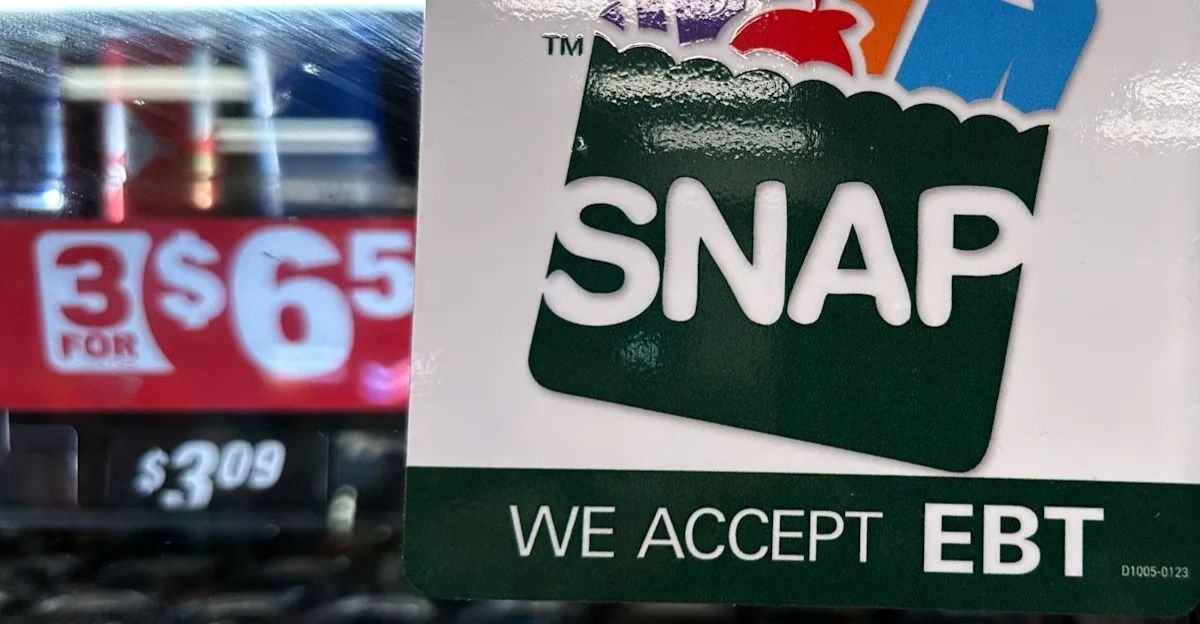
By November 7, Judge McConnell ordered the immediate release of full SNAP benefits. States like Pennsylvania, New York, and Massachusetts mobilized. Gov. Josh Shapiro announced full November payments would reach recipients by Friday. Hope flickered. Then, within hours, the Supreme Court granted an administrative stay.
Justice Ketanji Brown Jackson’s intervention halted implementation. Forty-two million Americans descended back into uncertainty. The legal chaos crystallized everything: an emergency need loses when it faces political will.
A System That Was Always Built This Way
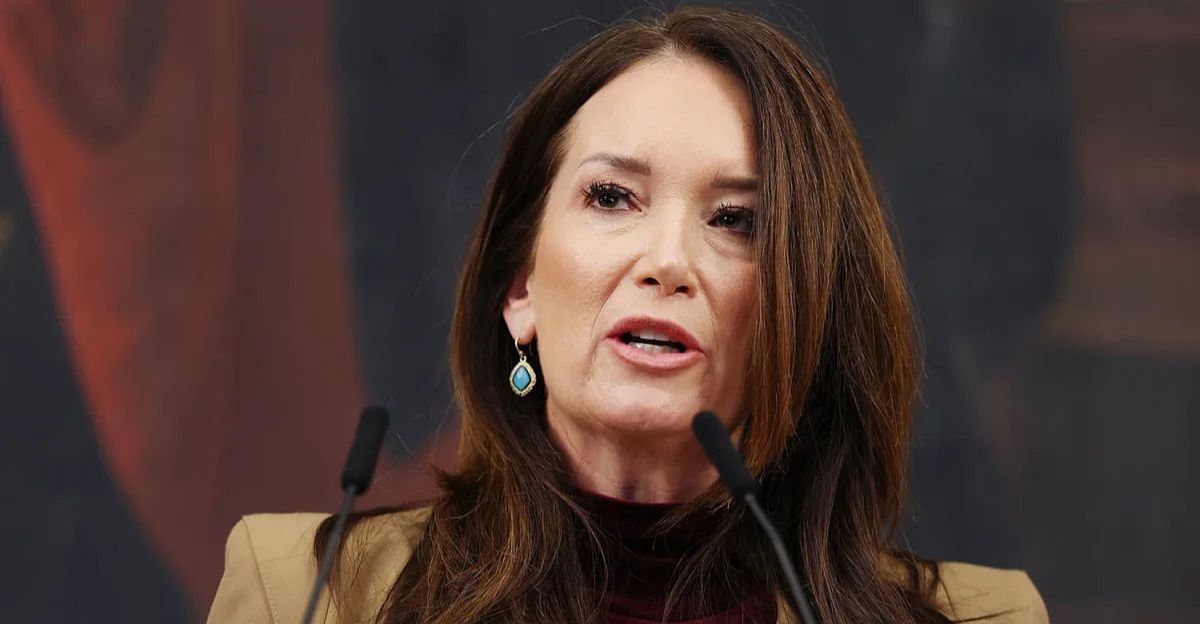
This catastrophe wasn’t accidental. It was architected. Tight budgets, centralized control, political gridlock—these created a system where hunger becomes a negotiating tool. Trump administration officials argued in court filings that Judge McConnell’s order would “create further chaos during the shutdown.”
Chaos already existed—in empty stomachs, in skipped medications, in children wondering about breakfast.
Solutions Exist. We Just Choose Not to Use Them.
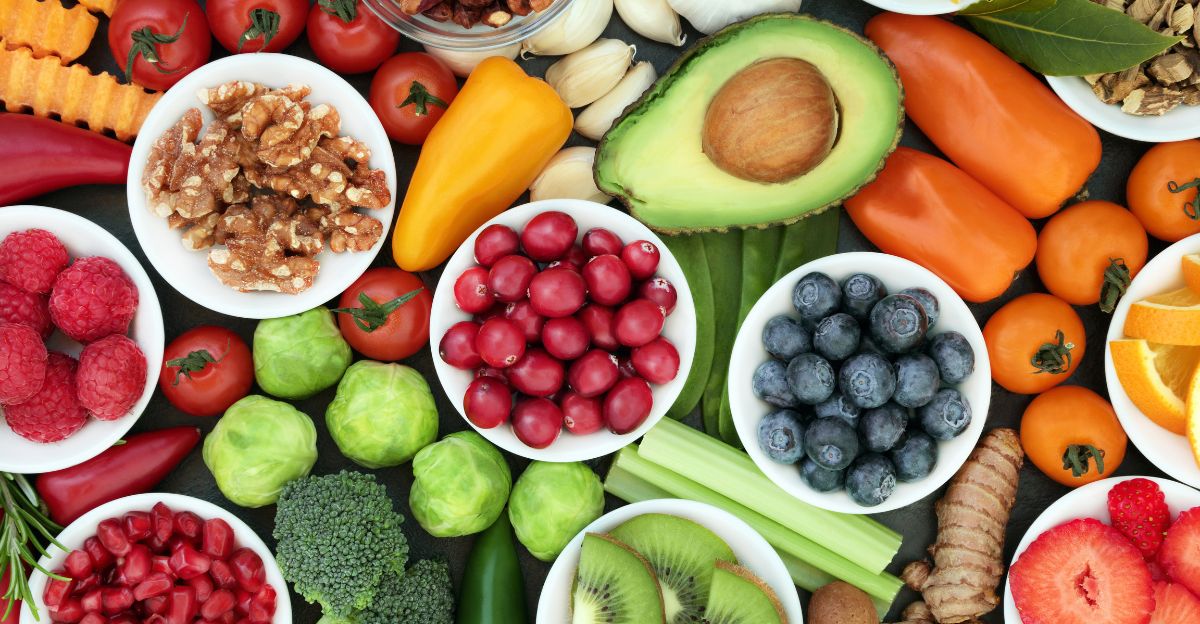
Reducing waste isn’t theoretical—it’s documented and replicable. Vermont’s organic waste ban resulted in a 13 percent reduction in landfill food scraps between 2018 and 2023. Fifty-four participating cities diverted 35,000 tons of food waste in 2024 alone through composting and donation networks.
In June 2024, the Biden administration released the National Strategy for Reducing Food Loss and Waste, targeting 50 percent reduction by 2030.
What We’ve Built, and What It Means
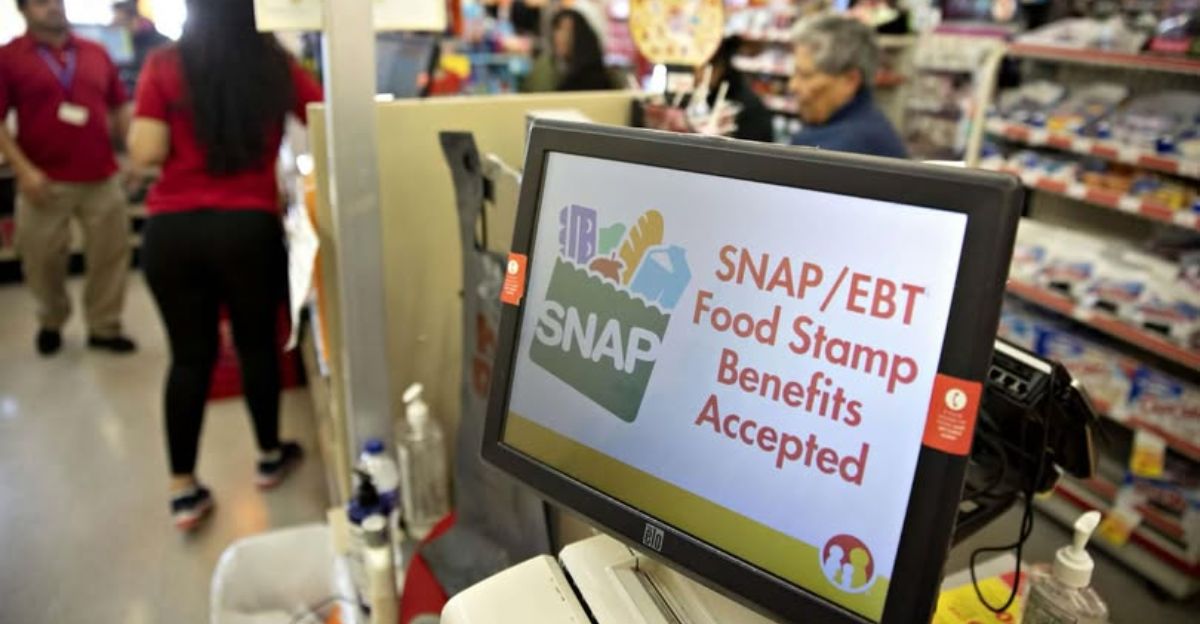
America has become expert at producing food and wasting it with equal efficiency. We generate $382 billion in annual surplus while debating whether to fund SNAP at all. We’ve built marketplaces like Too Good to Go to rescue scraps, yet we slash safety nets. We’ve become masterful at calculating waste, utterly apathetic about hunger.
The fundamental question we refuse to answer: Is food a right or a commodity?
The Crisis Deepens

As winter approaches, the battle continues. Legal wars persist over full SNAP restoration. The administration offers partial payments. Courts demand full funding. The Supreme Court intervenes with stays. Food pantries report record demand. Forecasts suggest that the crisis will worsen heading into the coldest months. Millions remain uncertain whether next month’s benefits will materialize.
Simultaneously, the nation discards an estimated $32 billion in food monthly—nearly $1 billion daily—while some among those 42 million skip breakfast, wondering if food banks will have enough.
The Question America Must Answer
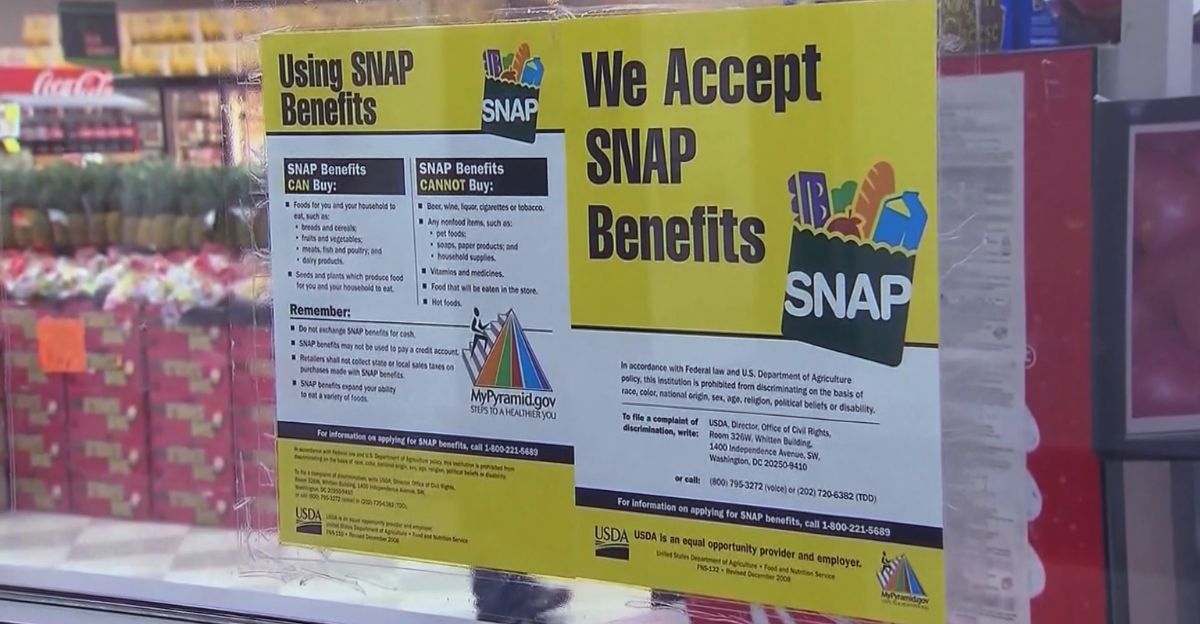
The paradox is no longer hidden. America simultaneously produces and discards food at historic levels while hunger reaches crisis proportions. The SNAP crisis of 2025 wasn’t inevitable—it was a policy choice. Fixing it requires acknowledging a fundamental truth: food waste and food insecurity aren’t separate problems.
They’re symptoms of the same underlying dysfunction. The food exists. The hunger is real. The only question left is whether America’s political will exists to bridge the gap. That answer will define who we are.
Sources
- ReFED Food Waste Report (2024): $382 billion surplus food (2023), $261 billion consumer waste, 73.9 million tons wasted annually
- USDA SNAP Data (2025): 42 million recipients, $350 per household monthly, first funding lapse in 60-year program history
- EPA & FDA Food Loss and Waste Estimates: 40% global food waste, 30-40% U.S. food supply wasted, 22% of landfill waste composition
- Federal Court Filings (November 2025): Judge John McConnell emergency orders, Justice Ketanji Brown Jackson administrative stay, Trump administration separation-of-powers appeals
- Capital Area Food Bank/NORC at University of Chicago (2025): 36% food insecurity Washington region, 41% federal job-loss households, severe food insecurity data
- Feeding America National Foodbank Network (2024): 47 million Americans food insecure nationally