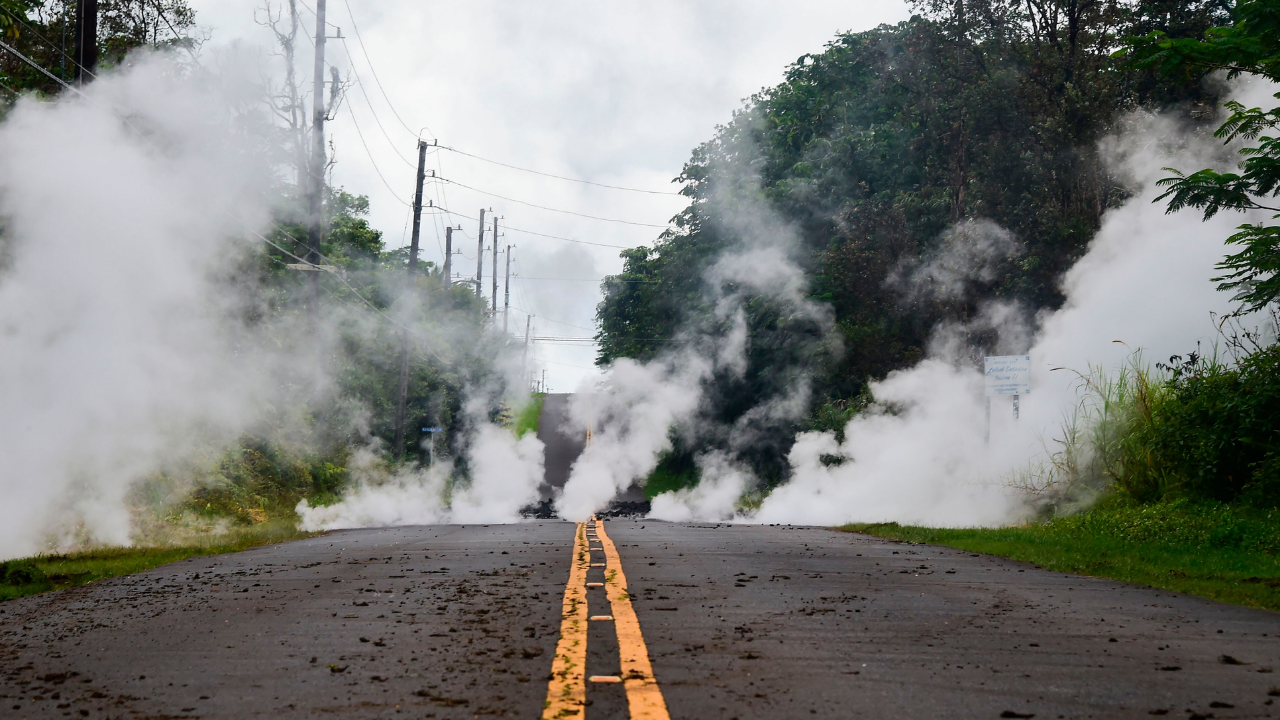
In early 2025, the Greek island of Santorini went through one of the most intense earthquake events ever recorded. Over just one month, scientists detected around 25,000 earthquakes, sometimes more than 1,000 in a single day. The largest reached magnitude 5.0, shaking homes and alarming people across the island.
Behind the fear and confusion, scientists made a groundbreaking discovery. The swarm of quakes revealed a huge underground system filled with molten rock (magma) that connects Santorini with a nearby underwater volcano called Kolumbo. Before this event, researchers thought these two volcanoes acted separately. Now it appears they are part of one massive, connected network. This finding reshapes how experts understand volcanic dangers not only in the Mediterranean but also around the world.
Santorini’s Violent Volcanic Past
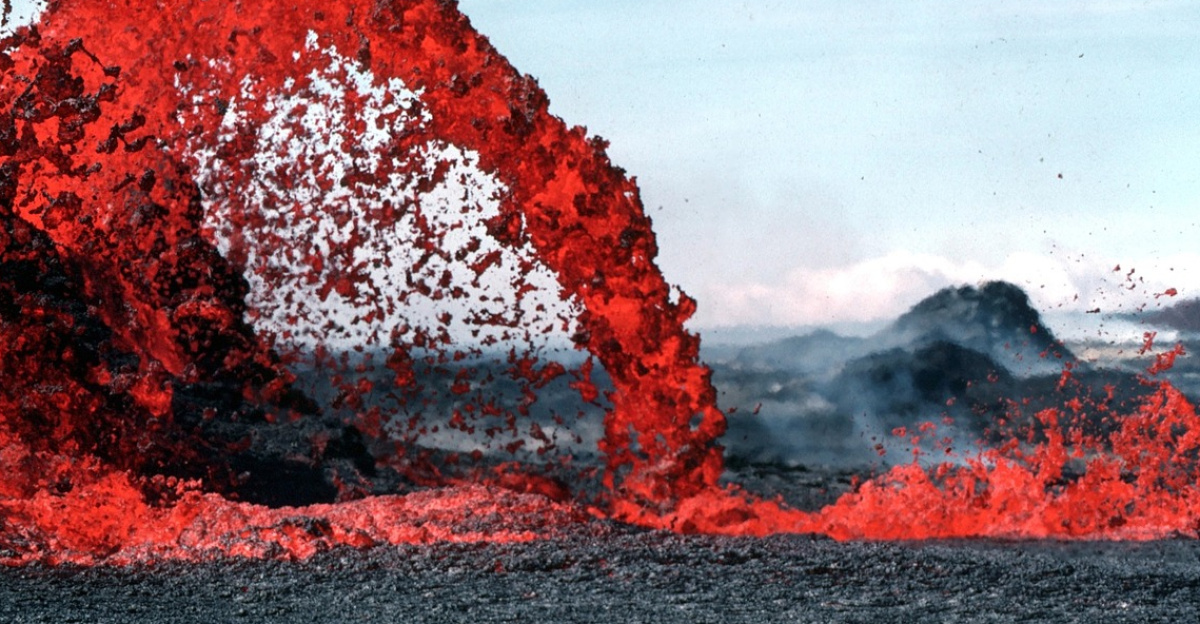
Santorini lies on the Hellenic Volcanic Arc, a chain of volcanoes that stretches through the Mediterranean Sea. This region has experienced some of the most powerful eruptions in history. Around 1,600 BCE, the volcano then known as Thera exploded violently, in an eruption so large that it destroyed settlements across the area, including much of the Minoan civilization on Crete.
That ancient blast left a wide, sunken crater, or caldera, that still shapes Santorini’s dramatic cliffs today. Its legacy also left a lasting fear: many locals worry that the island might one day erupt again with similar force. So when thousands of earthquakes began shaking the island in 2025, both residents and scientists knew the situation could be serious.
The swarm started near the end of January 2025. Tremors grew stronger and more frequent, disrupting daily life for Santorini’s 15,000 to 20,000 permanent residents and winter visitors. Authorities declared a state of emergency, closed schools, and restricted access around the island’s caldera. Military teams helped with safety measures while scientists raced to understand what was happening underground, and whether an eruption might follow.
AI Technology Unveils Underground Secrets

To uncover the cause of the earthquakes, a team of scientists from University College London and other research groups turned to advanced artificial intelligence. The earthquakes were too numerous and too complex for traditional analysis. Seismic instruments had recorded overlapping signals, making it difficult to tell where each tremor came from.
Using AI, the researchers could separate, locate, and analyze all 25,000 individual quakes. Each earthquake acted like a clue, revealing how stress shifted and where rock was fracturing underground. When all the data were combined, the AI built a detailed 4D model, showing not just location and depth but also how the underground forces changed over time.
The pattern shocked researchers. Instead of finding simple fault lines, they uncovered a massive reservoir of magma about ten kilometers below Santorini. This molten lake extended for tens of kilometers, possibly more than a hundred, linking Santorini’s caldera with Kolumbo volcano beneath the sea. The two volcanoes, once thought to be separate, were actually sharing the same magma source.
Within this huge reservoir, magma didn’t rise straight upward in a predictable path. Instead, it moved sideways through cracks in the rock layers like an underground highway. These movements created enormous pressure. When the magma forced its way through the crust, it sliced sideways through the rock, much like pushing a knife through a loaf of bread. Each slip or shift in these layers triggered thousands of earthquakes, producing the swarm that rattled the island for weeks.
The AI also revealed that the magma didn’t flow smoothly. It pulsed, surging forward, then retreating slightly, as underground stresses built up and released in waves. This rhythmic pumping created the unique, wave-like earthquake patterns that scientists recorded in 2025.
What Stopped the Eruption And What It Means Globally
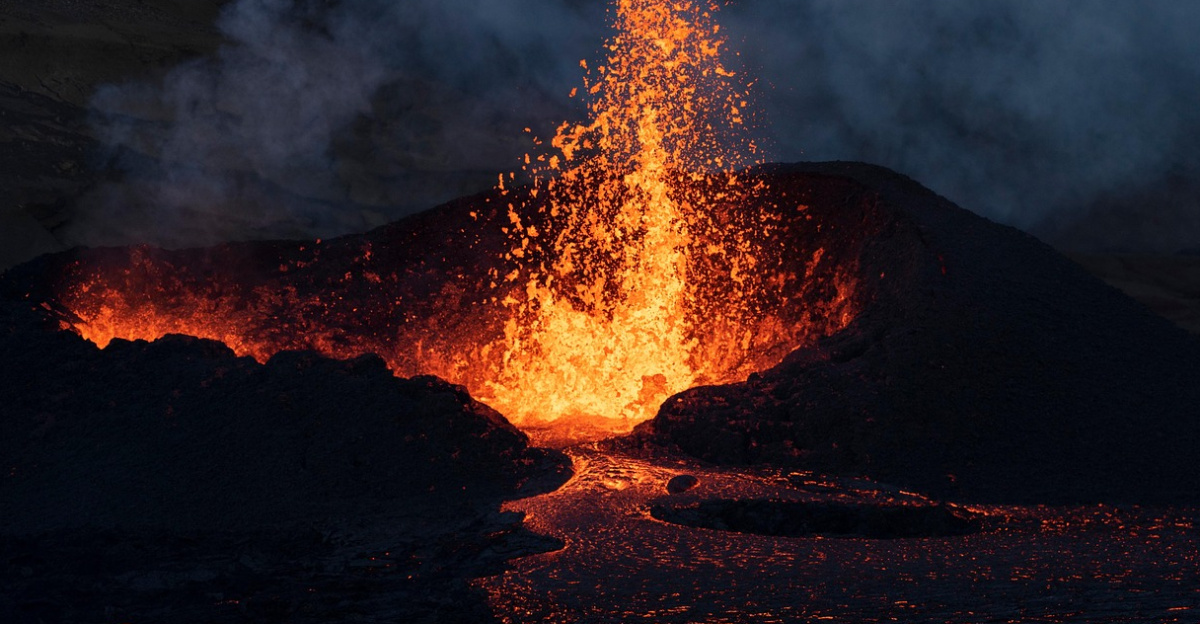
Even though those 25,000 earthquakes were frightening, the island never erupted. The magma stayed deep underground, never building enough pressure to break through the surface. Instruments measuring ground movement confirmed that the magma was still several kilometers below the island and the seafloor. Scientists call this kind of activity volcanic unrest rather than an imminent eruption. It means the volcano is active and restless but not on the verge of exploding.
By early March 2025, the shaking finally slowed. Earthquake activity returned to normal levels by spring, but scientists confirmed that the magma remains beneath Santorini, still alive and moving quietly. The system hasn’t gone dormant, it’s simply calmer for now. Because of that, researchers keep monitoring the island constantly, ready to detect any new signs of movement.
The Santorini discovery could change how scientists study volcanoes everywhere. The wave-like magma movements seen there may also happen under volcanoes in other regions, from Iceland to the Pacific Ring of Fire. If scientists recognize similar patterns in future earthquake swarms, they may be able to predict volcanic behavior more accurately, even when magma itself can’t be directly observed.
With AI-based tools now capable of detecting tiny, hidden quakes in real time, emergency teams might one day tell whether a swarm signals harmless shifting or a true eruption threat. This could lead to better, faster decisions about evacuations and help protect millions of people living near active volcanoes around the world.
Sources
BBC News – “Scientists reveal what triggered Santorini ‘earthquake swarm'” (20 Nov 2025).
UCL News – “Cause of Santorini earthquake swarm uncovered” (26 Nov 2025).
Discover Magazine – “AI Reveals What Was Behind Those Santorini Earthquakes in Early 2025” (23 Nov 2025).
British Geological Survey – “Artificial intelligence is proving a game changer in tracking the Santorini earthquake swarm” (10 Feb 2025).
Nature – Isken, M.P. et al. “Volcanic crisis reveals coupled magma system at Santorini and Kolumbo” (2025).
GEOMAR / GFZ press release – “Magma displacement triggered tens of thousands of earthquakes” (7 May 2025)