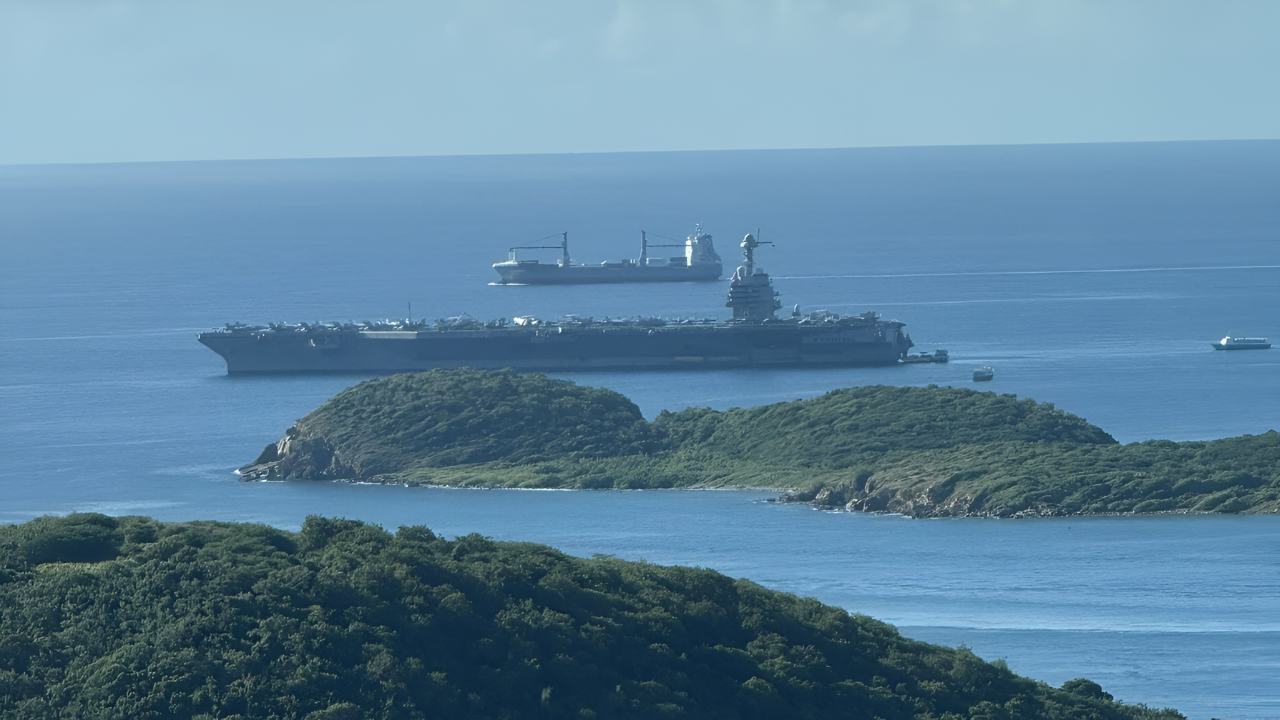
Two large U.S. amphibious warships have moved close to Venezuela’s coastline, reinforcing a carrier strike group already on station and marking the biggest American military presence in the Caribbean in decades. The deployment, involving an estimated 15,000 to 16,000 personnel aboard nearly a dozen major vessels, is positioned for rapid action as tensions with Caracas and regional security concerns converge.
Why Washington Is Moving Forces South
The Trump administration presents the buildup as part of Operation Southern Spear, a counter-narcotics campaign formally announced on November 13, 2025, following the first precision strike on September 2, 2025. U.S. forces have carried out more than 20 strikes on suspected drug-trafficking boats, operations that officials say have killed about 80 people. At the same time, Washington has doubled its reward for information leading to the capture of Venezuelan President Nicolás Maduro to $50 million, intensifying diplomatic and legal pressure on his government.
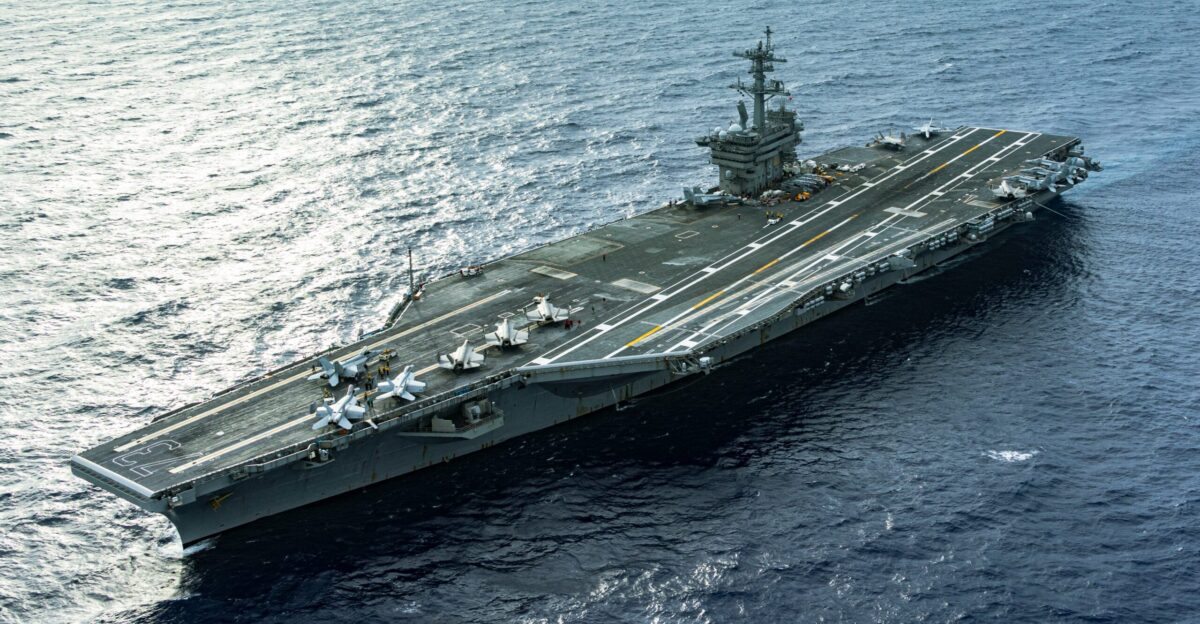
The overlapping emphasis on drug interdiction and political leverage leaves analysts divided over Washington’s primary goal. The growing armada, which includes the USS Gerald R. Ford carrier, amphibious assault ships, destroyers, and supporting aircraft, signals a capacity for sustained military operations even as U.S. officials avoid publicly outlining any broader campaign plan.
Economic Ripples for Islands, Shippers, and Oil Markets
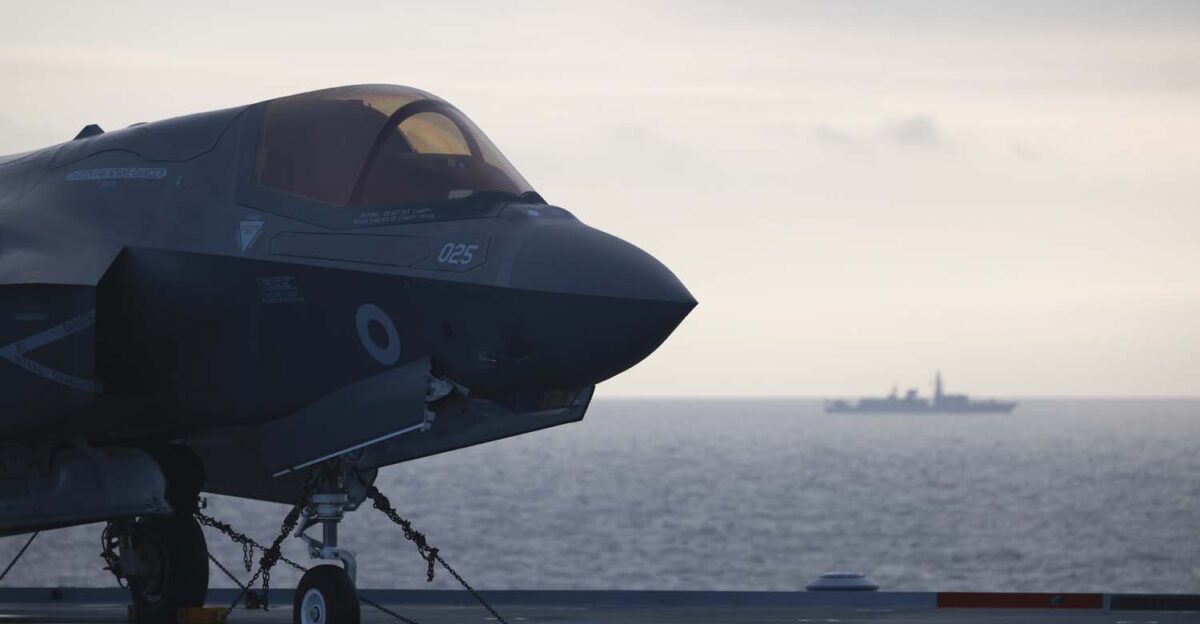
Across Puerto Rico and nearby islands, residents and businesses are adapting to a more heavily militarized environment. Forward-deployed F-35B stealth fighters, P-8 maritime patrol planes operating from Puerto Rico, and MQ-9 Reaper drones now fly regular sorties in support of Operation Southern Spear. Local tourism operators worry that visible military activity, tighter airspace controls, and rerouted flights could unsettle travelers during a critical holiday season.
Shipping lines that serve Caribbean ports are adjusting routes and schedules to avoid areas where U.S. forces maneuver close to Venezuelan waters or conduct maritime strikes. These detours add time and cost, with insurers raising premiums in zones where small boats have been targeted. The Caribbean’s role as a central pathway for container traffic and energy shipments means even modest route changes can affect freight times and prices along the Americas.
Venezuela’s oil exports, already limited by sanctions, now share crowded sea lanes with U.S. naval patrols and carrier-based aircraft. Venezuelan Defense Minister Vladimir Padrino López has pledged to defend approaches vital to the country’s energy sector. Any confrontation, temporary closure of shipping lanes, or tighter sanctions could further constrain supplies of heavy crude used by refineries on the U.S. Gulf Coast and in parts of Asia, adding uncertainty to global fuel markets.
Escalation Risks and Legal Disputes
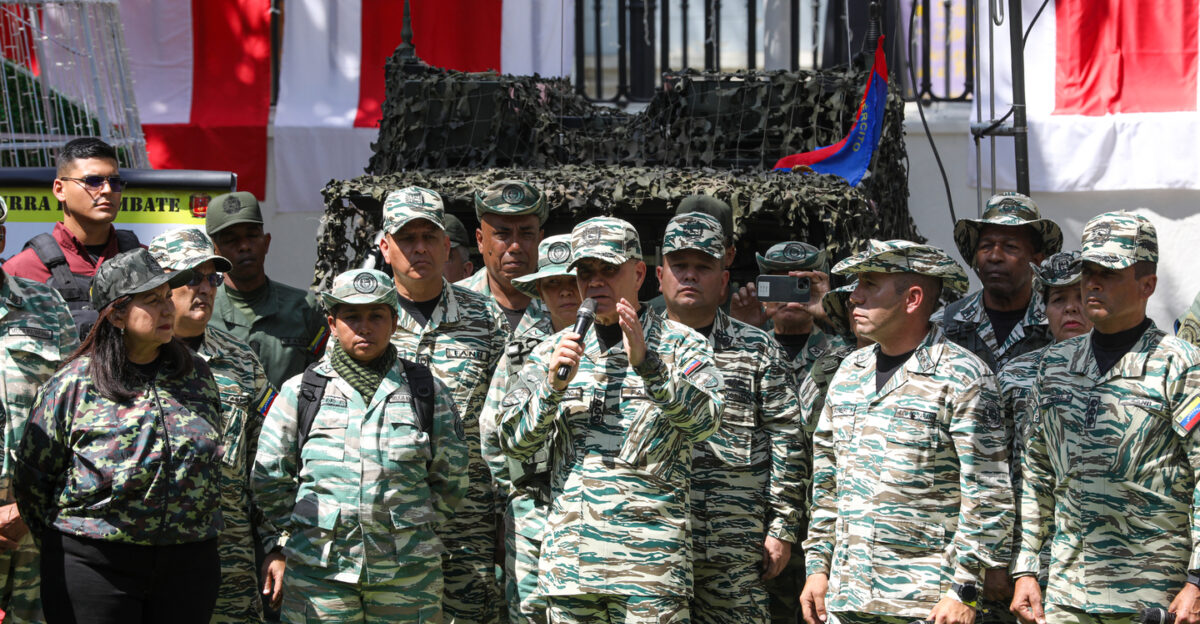
Caracas has launched one of its largest mobilizations in years under Plan Independencia 200, putting more than 200,000 troops and militia on alert. Venezuelan forces have strengthened coastal air defenses, potentially including Russian-made S-300 systems, and are running nationwide military drills. Along stretches of the Venezuelan coast, residents now navigate checkpoints, movement limits, and higher security alerts as U.S. amphibious ships reportedly operate within a short distance of national waters.
In Washington, the legal framework for ongoing strikes and any future expansion remains contested. Throughout October and November 2025, lawmakers argued over whether President Trump must secure explicit congressional authorization for continued operations under Operation Southern Spear. Twice, attempts to restrict presidential authority failed in the Senate. Human rights organizations question the legality of lethal maritime strikes that have killed roughly 80 people without publicly available evidence reviews, and they are pressing for clearer justification and oversight.
Rights advocates also warn that sinking unidentified vessels under wartime-style rules risks bypassing standards for proof and accountability, raising fears of extrajudicial killings. Environmental groups highlight the danger that repeated explosions, fuel spills, and debris in sensitive waters could damage fisheries and marine ecosystems that underpin tourism, food security, and small-scale livelihoods throughout the Caribbean.
Life in Puerto Rico, Global Perceptions, and What Comes Next
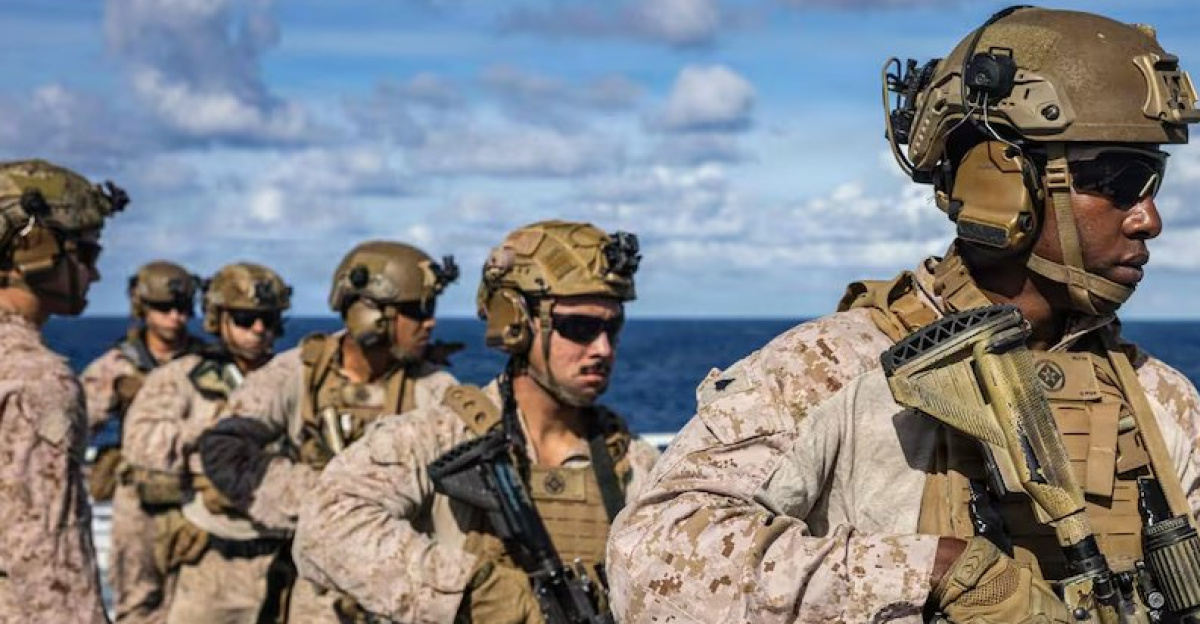
In Puerto Rico, expanded facilities at Roosevelt Roads and the use of civilian airports for surveillance flights have brought construction work and new contracts, tying parts of the local economy more closely to the U.S. military presence. At the same time, residents report increased jet noise, altered flight paths, and tighter security measures. Many express concern that their territory could become a launch platform—or a potential target—if a crisis with Venezuela escalates. The constant traffic of aircraft supporting the carrier group underscores Puerto Rico’s strategic role in the operation.
Internationally, the deployment of the USS Gerald R. Ford—the world’s largest aircraft carrier—alongside Arleigh Burke-class destroyers, a submarine, amphibious ships, and special-operations platforms has renewed debate over U.S. power projection. Supporters portray the mission as a determined stand against transnational criminal networks and drug trafficking. Critics counter that the scale of the force appears disproportionate to counter-narcotics goals, arguing that it fuels suspicion about U.S. intentions and complicates Washington’s claims to moral authority on democratic governance and the rule of law.
Defense firms supplying F-35Bs, MQ-9 Reapers, Ospreys, CH-53 helicopters, and major surface combatants stand to benefit from prolonged operations and expanded surveillance. Private security and construction companies linked to new or upgraded facilities in Puerto Rico and the U.S. Virgin Islands also see opportunities. At the other end of the spectrum, small Venezuelan fishing communities fear misidentification as U.S. forces target fast-moving vessels, and regional tourism agencies work to reassure visitors that beaches and resorts remain open despite mounting tension.
Investors are tracking defense, energy, and shipping companies tied to developments off Venezuela’s coast. Consumers across the Americas may face fluctuating fuel prices, altered cruise itineraries, and changing travel guidance. Analysts advise travelers to monitor airline and cruise policies and to plan for possible fuel surcharges, while political observers watch congressional oversight efforts that could reshape future U.S. operations and market reactions.
President Trump has indicated decision-making is underway regarding next steps in the region. The 15,000 to 16,000 U.S. personnel in theater, including the 22nd Marine Expeditionary Unit, are positioned for continued maritime and air operations but are widely seen as insufficient for a full-scale invasion. The months ahead could bring limited strikes, sustained pressure, or negotiations, outcomes that will influence regional stability, economic pressures, and perceptions of U.S. power well into 2026.
Sources
Council on Foreign Relations (CFR): No direct Nov 2025 article found; related analyses appear in timelines from AP.
Atlantic Council: General 2025 references; no specific 26 Mar or undated article with “Operation Southern Spear” confirmed.
Firstpost: No 12 Nov 2025 article verified; coverage aligns with broader regional reports.
Military.com/AP equivalents: “What U.S. Forces Face as Venezuela Puts Russian-Armed Militia on Alert” (Military.com, 19 Oct 2025); “A Timeline of the US Military’s Buildup Near Venezuela” (AP via USNews, 5 Dec 2025).