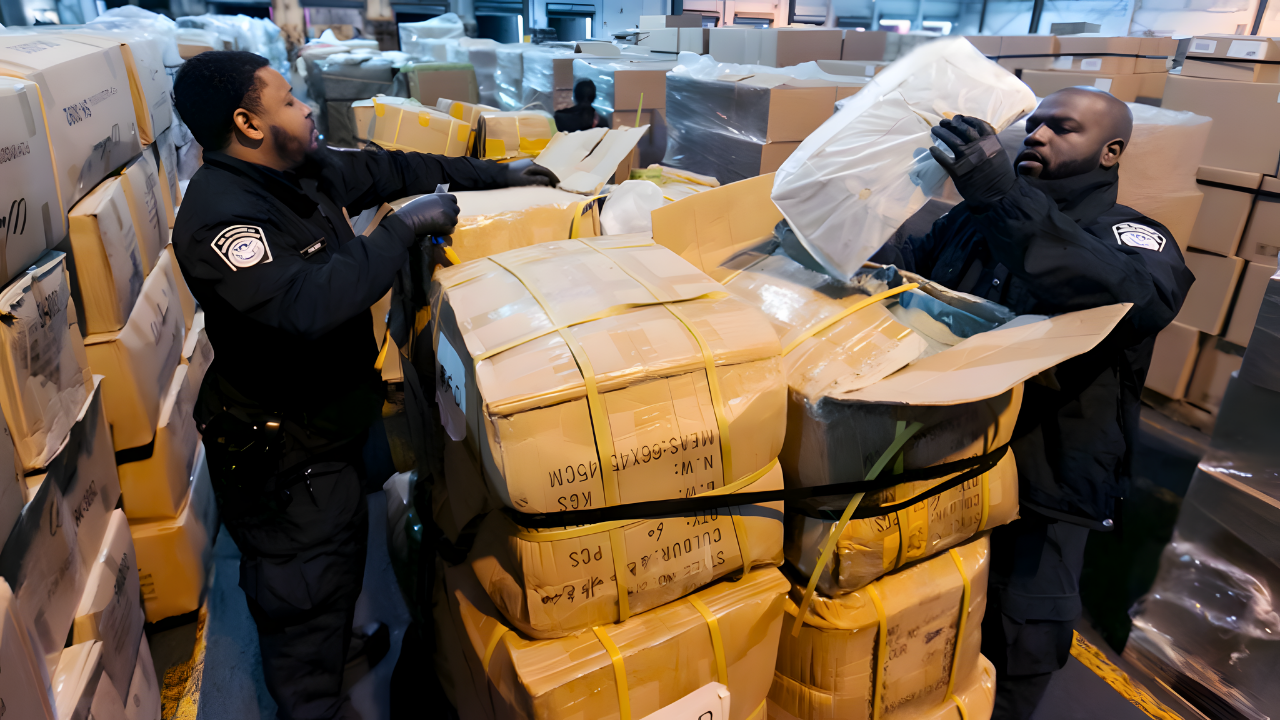
In a dimly lit Brooklyn warehouse, workers methodically stripped Nvidia labels from stacks of high-end AI chips, affixing the obscure name SANDKYAN in their place. Boxes resealed, documents falsified, and pallets readied for shipment—federal agents later uncovered thousands of these altered GPUs bound for restricted destinations.
The Battle for AI Supremacy: Why These Chips Matter
Nvidia’s H100 and H200 GPUs drive frontier AI systems for military simulations, surveillance, and massive model training. U.S. export restrictions on these chips to China began in 2023, citing their role in national security. Demand in China persists, fueled by goals to dominate global AI by 2030. Investigators estimate the smuggling of thousands of units jeopardized U.S. leads in high-performance computing and defense AI.
October 2023 rules targeted chips enabling large-scale training and weapons applications, zeroing in on Nvidia’s H100 and H200. Officials highlighted risks to military modernization abroad. Despite stepped-up enforcement, complex global supply chains left openings via licensing loopholes and intermediaries.
Investigations in 2024 and 2025 exposed industrial-scale diversions, with tens of thousands—or possibly over 100,000—advanced GPUs reaching China yearly. Tactics included shell companies, straw buyers, and Southeast Asian rerouting. Analysts peg smuggled H100s at supplying up to 10% of China’s AI training power.
Brooklyn Ring Dismantled
Operation Gatekeeper targeted Hao Global LLC in Missouri City, Texas. Alan Hao Hsu, 43, Fanyue Tom Gong, 43, and Benlin Yuan, 58, allegedly relabeled H100 and H200 chips by hand with the SANDKYAN brand, shipping them via Hong Kong to a China-based AI firm. From October 2024 to May 2025, over $160 million in restricted hardware moved. Brooklyn warehouses served as key nodes, where markings were removed, packaging changed, and papers listed items as generic parts. Raids yielded more than $50 million in chips and cash.
Justice Closes In: Guilty Pleas and Federal Charges

Hsu, Hao Global’s principal and a Texas tech entrepreneur, pleaded guilty on October 10, 2025, to smuggling charges. His firm received over $50 million in transfers from PRC-linked accounts via Thailand, Malaysia, and Singapore banks. He faces up to 10 years, with sentencing on February 18, 2026.
Gong and Yuan Arrests

Gong, 43, a Chinese citizen who managed warehouse relabeling operations in Brooklyn, was arrested on December 3, 2025, on conspiracy charges. Yuan, 58, a Canadian citizen and CEO of a U.S. subsidiary of a Beijing IT firm based in Sterling, Virginia, was arrested on November 28, 2025; he allegedly recruited inspectors to hide China destinations and faces up to 20 years under the Export Control Reform Act.
Regulatory Crackdown Expands

The FBI, Commerce Department’s Bureau of Industry and Security, and ICE led the probe. Yuan directed IT employees to falsify records, letting mislabeled shipments clear checks. The Justice Department calls this the largest AI chip smuggling case by value. Parallels exist in Singapore server seizures and U.S. cases in Florida and Alabama. Hong Kong acted as a repackaging hub exploiting separate customs.
Nvidia maintains rigorous compliance and aids probes. Analysts cite under-resourced enforcers against high stakes—GPUs fetch about $23,000 each. December 2025 policy allowed limited H200 sales to China with revenue-sharing oversight, aiming to curb black markets, though critics note prior diversions during peak restrictions.
Political Firestorm Builds
National security advocates link the scheme to China’s AI ambitions. Bipartisan pushes seek more funding for enforcement amid geopolitical strains. Hao Global folded post-plea; probes trace unconfirmed shipments, with the end-user AI firm uncharged. Yuan and Gong remain detained; more charges loom over wire transfers and fake contracts.
The operation underscores enforcement challenges in U.S.-China tech rivalry, where fake brands and paperwork evaded controls on vital AI hardware. Ongoing efforts like Gatekeeper signal tighter scrutiny, but sustaining export barriers will test resources as diversions evolve.
Sources:
U.S. Department of Justice – Office of Public Affairs (December 8, 2025) – “U.S. Authorities Shut Down Major China-Linked AI Tech Smuggling Network”
U.S. Justice Department – Southern District of Texas (December 7, 2025) – Federal Court Filings and Charging Documents
CNBC (December 9, 2025) – “Nvidia chips: Plots to send GPUs to China expose $160 million smuggling operation”
Bloomberg (December 8, 2025) – “US Detains Two Men Accused of Smuggling Nvidia AI Gear to China”
Tom’s Hardware (December 8, 2025) – “DOJ says H100 and H200 shipments were relabelled”