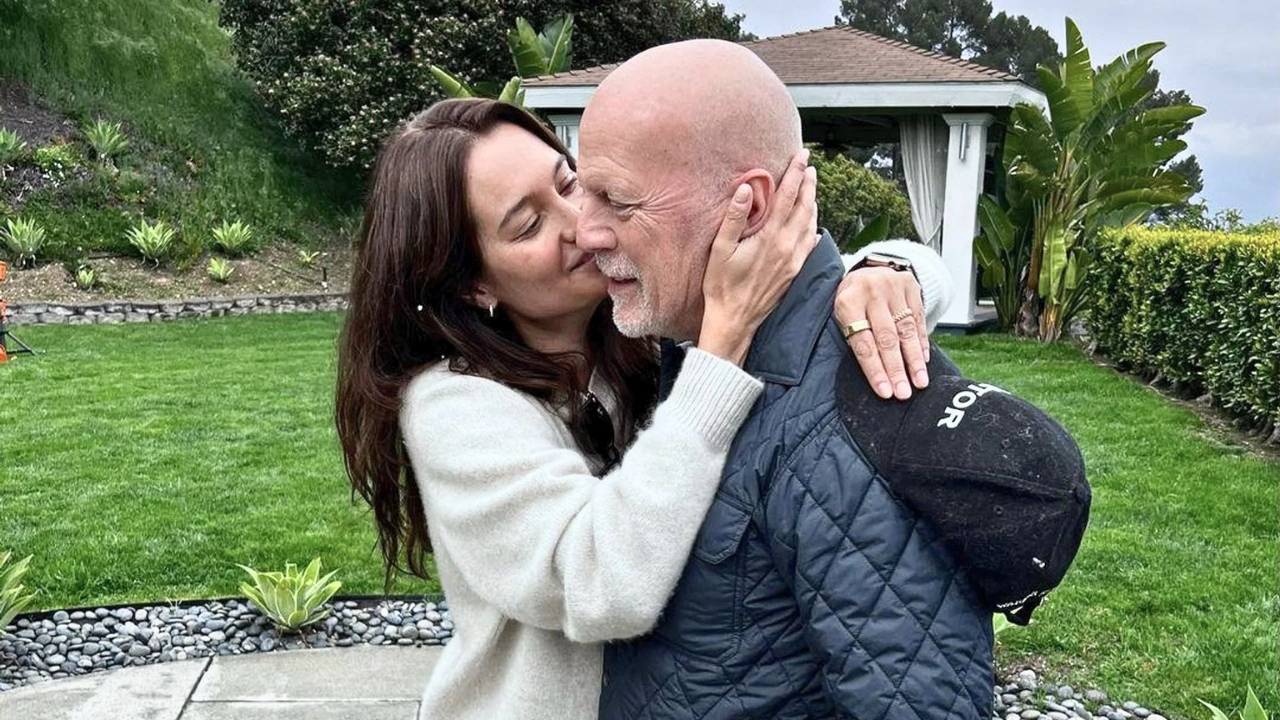
A crowded premiere, cameras flashing—and behind the smiles, a family quietly navigating what few Americans ever face. Of the roughly 6.7 million people in the U.S. living with dementia, less than five percent are diagnosed with frontotemporal dementia (FTD), a faster-moving and often earlier-onset form than Alzheimer’s. Many patients receive their diagnosis near age 60, yet the first signs—subtle personality changes, fading language, impulsive behavior—can linger in uncertainty for years. This disease steals identity long before life, and for one Hollywood family, that truth was no longer abstract.
The Diagnosis That Changed Everything

In March 2023, Bruce Willis’s family announced his diagnosis with frontotemporal dementia, shocking fans and drawing rare public attention to a disease most people had never heard of. At 70, Willis—the action hero of Die Hard and decades of blockbuster films—stepped away from acting and public life. The announcement marked a watershed moment: one of Hollywood’s most recognizable figures would no longer appear on screen, at premieres, or in the spotlight. What followed was a family’s quiet, determined pivot toward adaptation, caregiving, and finding meaning in the midst of loss.
Understanding Frontotemporal Dementia

Unlike Alzheimer’s, which typically begins with memory loss, FTD affects the brain’s frontal and temporal lobes—regions that control personality, language, and judgment. Early signs include inappropriate behavior, loss of empathy, difficulty speaking or understanding words, and compulsive eating or repetitive actions. The disease progresses unpredictably; some patients deteriorate over two to three years, others over a decade. As it advances, patients lose mobility and communication abilities and eventually require full-time professional care. For families, the emotional toll is akin to a slow goodbye—watching someone they love become increasingly unreachable.
The Caregiver’s Hidden Burden

Here lies an overlooked tragedy: roughly 30 percent of dementia caregivers die before the person they are caring for, according to medical research. The stress of round-the-clock caregiving, emotional exhaustion, sleep deprivation, and deferred self-care creates a perfect storm of health complications. For spouses like Emma Heming Willis, the burden is especially acute. At 47, with two young daughters still at home, Emma became not just a wife but a case manager, advocate, and guardian of daily routines. The weight of that responsibility—unspoken but omnipresent—sets the stage for what came next.
In late November 2025, Emma Heming Willis took the stage at the End Well 2025 conference in Los Angeles and did something rare: she spoke openly about her family’s transformed holiday reality. No longer hiding behind silence or curated appearances, Emma described a Christmas that is “joyous, just different”—a family learning to adapt traditions, create new memories, and find joy despite Bruce’s cognitive decline. She also appeared on Maria Menounos’s HealSquad podcast, deepening her message. For a woman who had managed caregiving privately, this was a deliberate, courageous choice to go public.
Reimagining Family Traditions
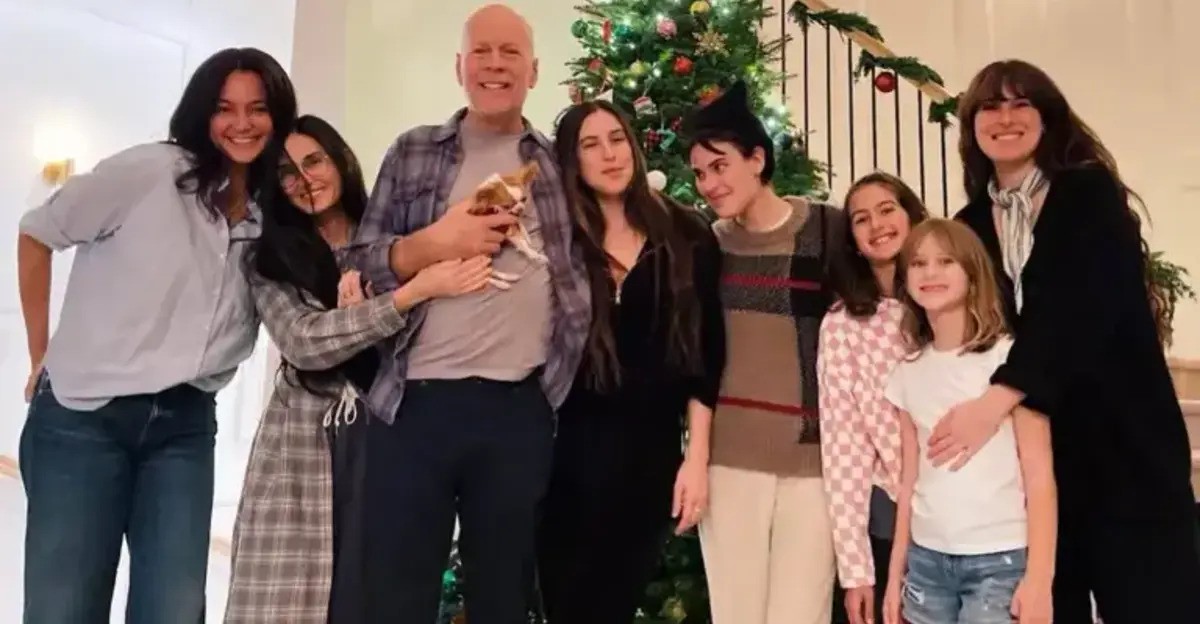
Emma’s daughters—Mabel Ray Willis, 13, and Evelyn Penn Willis, 11—are navigating a childhood interrupted by their father’s illness. Bruce, who loved Christmas and had shaped decades of family holidays, is no longer able to plan or lead those celebrations. Instead, Emma and the girls are learning to create new rituals, to include Bruce in ways that feel meaningful yet realistic, and to grieve the traditions they once knew while building new ones. The older Willis children from Bruce’s previous marriage to Demi Moore—Rumer, Scout, and Tallulah—face similar adjustments in their own adult relationships with their father.
Emma manages not only emotional labor but also the logistics of Bruce’s care: coordinating with a full-time professional care team, attending medical appointments, making decisions about treatment and daily routines, and shielding the children from the worst of the disease’s progression. She has written about caregiving in her book and on social media, offering glimpses of the exhaustion beneath the façade of grace. Yet her public persona—warm, engaged, advocate—masks the constant calculus of a family under siege: How do we keep Bruce comfortable? How do we protect the children? How do I survive this?
The Cost of Professional Care
Full-time in-home care for someone with advanced dementia costs between $150,000 and $300,000 annually—far beyond what most American families can afford. Bruce’s financial resources provide him access to specialized neurologists, round-the-clock nursing care, and tailored treatment plans. Yet even wealth cannot slow FTD’s progression. Bruce’s care team manages not just his physical needs but also behavioral changes, medication schedules, and the unpredictable crises that accompany neurodegeneration. For Emma, having professional help is both a relief and a reminder of how serious the situation has become.
A National Crisis Comes Into Focus
Emma’s story illuminates a national crisis largely invisible to the public: approximately 2.3 million Americans serve as family caregivers for someone with dementia, with roughly 690,000 of those caregivers at heightened mortality risk. The emotional, financial, and physical toll has prompted calls for policy changes—paid family leave, caregiver tax credits, mental health support, and respite care funding. Yet progress is glacial. Most caregivers cobble together informal support, often at significant personal cost. Emma’s public advocacy is part of a growing movement to unmask this hidden epidemic and demand systemic change.
Perhaps the most striking moment in Emma’s recent interviews came when she reframed the narrative entirely. Rather than painting dementia as an unrelenting tragedy, she spoke of finding joy within the changed reality—”Life goes on. It just goes on.” This shift in perspective is not denial; it is a deliberate cognitive choice to honor both the grief and the ongoing beauty of connection. Emma emphasized to other caregivers: “It’s not selfish to care for yourself; it is self-preserving.” This insight—that personal boundaries are not a matter of indulgence but of survival—may be the most necessary message she has delivered.
Emma’s public stance has sparked broader conversations about caregiver support, early FTD diagnosis, and workplace accommodations for those juggling full-time jobs with full-time caregiving. Advocacy organizations like the Association for Frontotemporal Degeneration (AFTD) and the Alzheimer’s Association have amplified her message, recognizing that celebrity voices—especially those rooted in genuine experience—can shift public perception and political will. Yet challenges remain: FTD is still frequently misdiagnosed, treatment options are limited, and caregiver support remains fragmented and underfunded across most of the country.
While no cure exists for FTD, researchers are exploring targeted therapies, genetic markers, and early interventions that may slow progression in some patients. Clinical trials are underway; awareness campaigns are expanding. Bruce Willis’s diagnosis, publicly disclosed, has brought FTD into the mainstream conversation. This mixed blessing raises hope while also deepening the ache of knowing that current medicine cannot reverse the disease’s trajectory.
The Willis family’s journey illustrates a broader truth: dementia does not discriminate by wealth or fame. Bruce Willis, one of the world’s most powerful entertainers, cannot escape FTD through money or influence. Emma’s grace under impossible pressure offers a template not of perfection but of honesty—admitting struggle, demanding support, and insisting that joy and grief can coexist. Their willingness to speak openly has already reshaped how some people think about caregiving, aging, and the real cost of illness in America. As FTD research advances and caregiver advocacy gains momentum, a critical question emerges: Will Emma’s voice—and those of millions of other caregivers—finally move policymakers to invest in prevention, early detection, support systems, and the dignity of care work itself? The Willis family’s private pain has become a public platform. What happens next depends on whether society is ready to listen and to act.
Sources
Alzheimer’s Association, 2023 Dementia Facts & Figures
Emma Heming Willis’s memoir and podcast interviews, 2024–2025; Entertainment publications profiling Willis family dynamics
National Institute on Aging, FTD Overview
Bruce Willis Family Statement, March 2023
Entertainment Weekly, March 30, 2023
Association for Frontotemporal Degeneration (AFTD)
Mayo Clinic FTD Overview, 2024