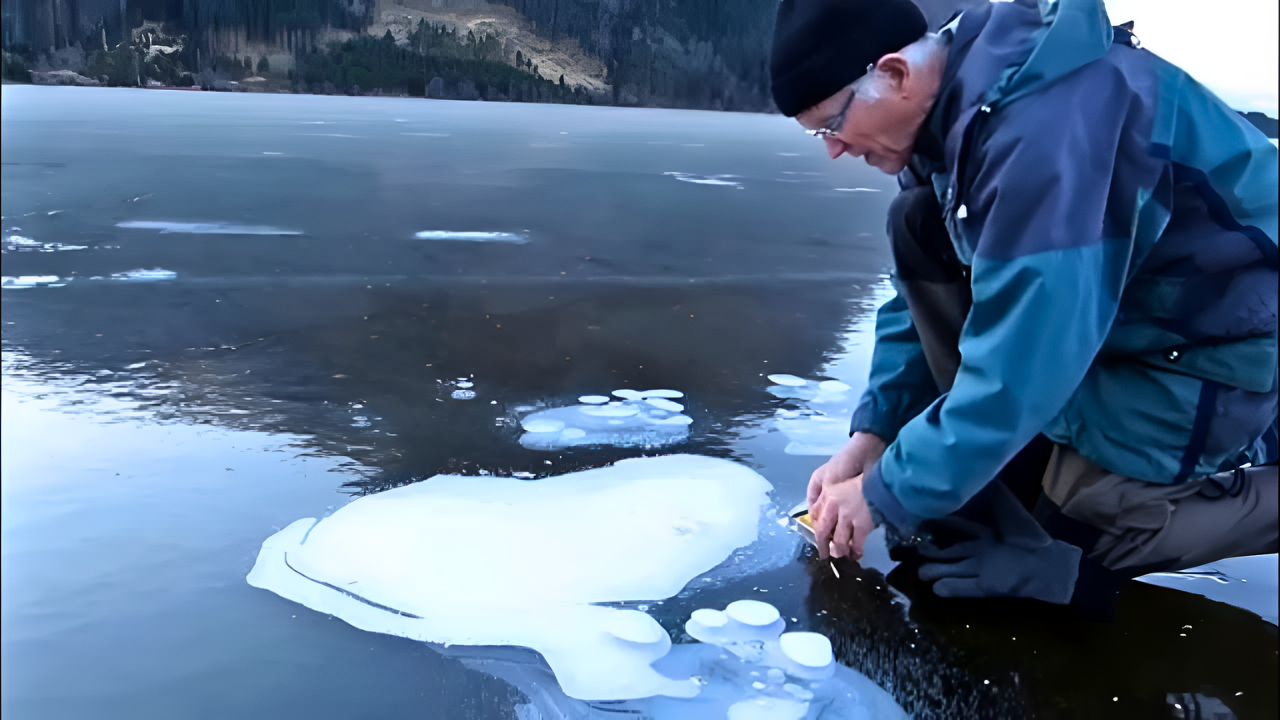
Nearly four kilometers below the surface of the Greenland Sea, scientists have discovered a thriving community of life that survives without any sunlight. Instead, these creatures rely on methane and crude oil that leak from Earth’s ancient layers. The area, known as the Freya gas hydrate mounds, sits along Molloy Ridge, an underwater mountain range west of Greenland, and is now recognized as the deepest known gas hydrate cold seep in the world.
Here, in permanent darkness and near-freezing temperatures, gas hydrates, crystal-like structures that trap gases under pressure, have formed striking shapes. These domes and ridges rise above the seafloor, while nearby pits mark places where the hydrates have broken down. Scientists say the Freya site extends the known depth of exposed gas hydrate formations by nearly 1,800 meters, making it a new frontier in Arctic ocean research. The area acts as a natural laboratory, helping researchers understand how deep ocean ecosystems connect to Earth’s climate and geology.
A Deep Dive into Discovery
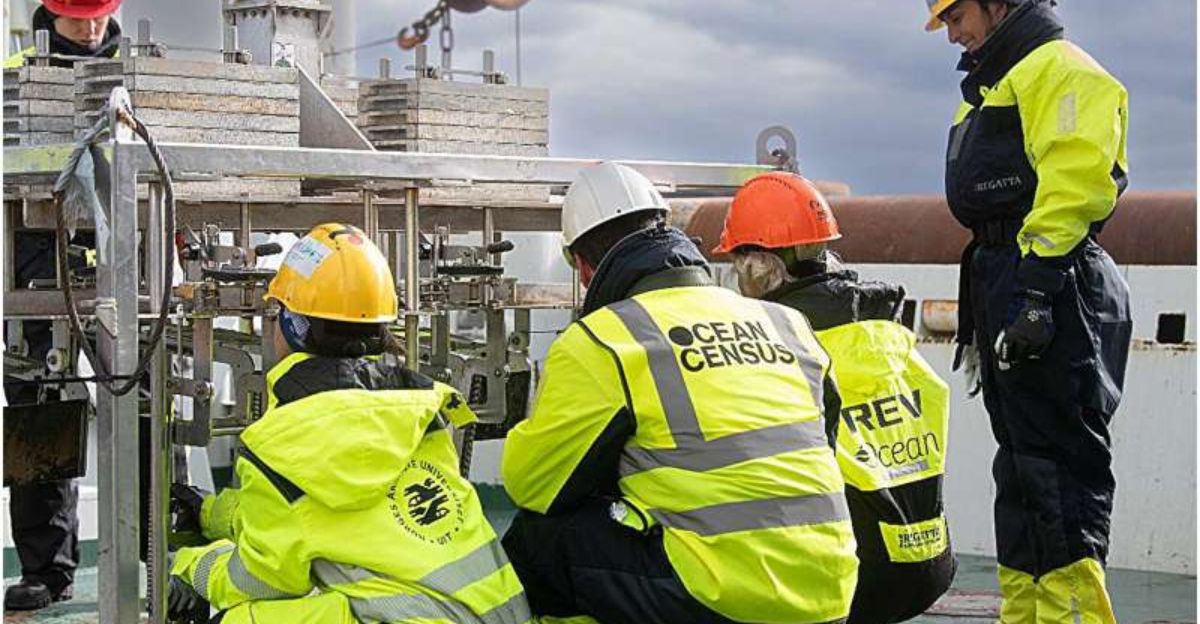
The Freya field was first spotted in May 2024 during the Ocean Census Arctic Deep – EXTREME24 expedition, a 22-day research mission led by Norway’s Arctic University (UiT) and REV Ocean. Aboard a well-equipped vessel, a team of specialists in geology, biology, and chemistry set out to study one of the least explored seafloor regions on the planet.
While mapping the area, scientists detected a huge column of bubbles, stretching more than 3,300 meters upward, using sonar equipment. This signal revealed methane gas escaping from the ocean floor. To investigate further, the team deployed Aurora, a remotely operated underwater vehicle capable of diving almost four kilometers deep. Guided only by lights and sonar, Aurora descended into the dark to find ice-like mounds coated with pale microbial mats and surrounded by clusters of marine life. In honor of the Norse goddess of life and fertility, the researchers named the site “Freya.”
Life That Thrives on Methane and Oil
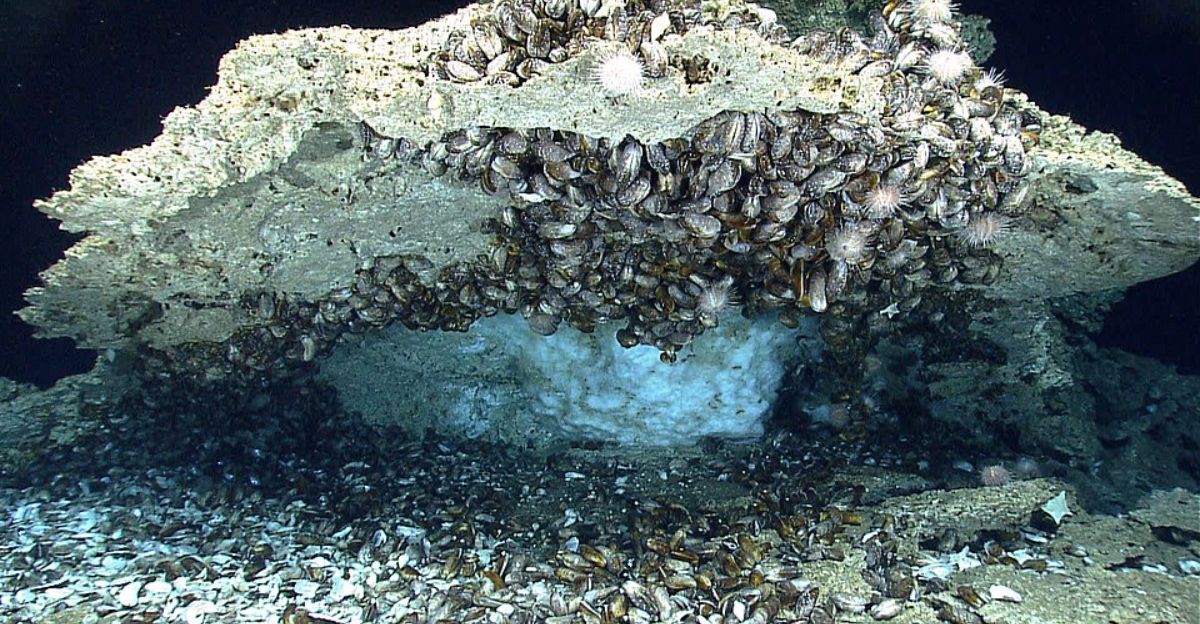
At Freya, methane and crude oil seep out of the seabed, collecting within and around the gas hydrates before spreading through the surrounding water. Instead of sunlight, life here depends on chemosynthetic bacteria—microbes that convert methane and sulfide into energy. These bacteria form the foundation of a food web that supports a wide range of deep-sea animals.
Microbial mats cover the hydrate surfaces like a living carpet. Some bacteria also live inside worms and other creatures, creating internal partnerships where both sides benefit. Around these mats, scientists observed tube worms, snails, bristle worms, small crustaceans, and mussels. Many burrow into the soft sediments or cling to the hydrate mounds, staying close to the bacteria that feed them. It’s a complete ecosystem sustained entirely by chemical energy, showing that even in extreme conditions, life finds a way to adapt and flourish.
The gas and oil feeding this ecosystem have deep roots in Greenland’s geological past. Chemical analysis shows they are “thermogenic,” formed millions of years ago when heat and pressure transformed buried plant and plankton remains into hydrocarbons. During the Miocene era, about 23 to 5 million years ago, Greenland was much warmer and covered by forests. Over time, this ancient organic material became trapped underground, and now it seeps back up through cracks in the rock to support life in the icy depths.
What This Means for Climate and the Arctic’s Future
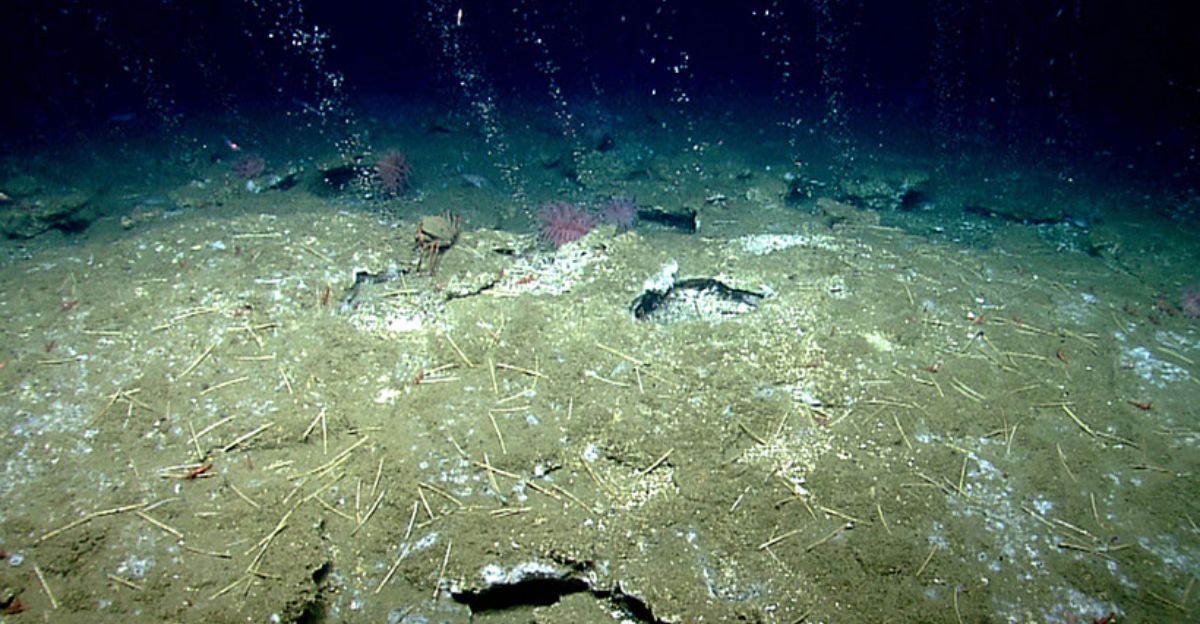
The Freya discovery is more than a glimpse into an alien-like ecosystem, it also expands our understanding of how methane moves through the ocean and affects the planet’s climate. Scientists estimate that roughly 20 percent of Earth’s methane is locked inside gas hydrates under the seafloor. If released, this carbon could influence global warming. Studying Freya helps researchers learn what happens when methane escapes from the deep seabed and travels toward the surface.
Most of the gas rising from Freya dissolves into seawater long before reaching the atmosphere. Microbes then consume much of it, converting methane into carbon dioxide. These natural processes help limit how much methane can contribute to greenhouse gas levels. Data from Freya are now helping improve global ocean and climate models that predict future carbon cycles as oceans warm.
At the same time, other studies reveal that Greenland’s massive ice sheet rests on soft, watery sediments rather than solid rock. This slippery foundation may allow ice to slide toward the ocean faster than previously thought, potentially speeding up sea-level rise. Combined with new findings from Freya, scientists are rethinking the Arctic as an active environment where both ice and seafloor processes play major roles in shaping Earth’s future.
Because the Freya mounds sit in an area opened to potential seabed mining by Norway in 2024, researchers are urging caution. They argue that such unique, methane-fueled ecosystems need strong protection from industrial disruption. As exploration and climate pressures increase, the Freya discovery reminds the world that the Arctic is not a frozen wasteland but a living, dynamic system deeply connected to the global environment.
Sources
UiT The Arctic University of Norway, Deepest gas hydrate cold seep ever discovered in the Arctic, 2025-12-21
ScienceAlert, World’s Deepest Gas Hydrate Discovered Teeming With Life Off Greenland, 2025-12-28
Newsweek, Deep-sea oasis discovered 2.5 miles below Arctic stuns scientists, 2026-01-07
Phys.org, Widespread sediments beneath Greenland make its ice more mobile, 2025-12-11
Yahoo News, Scientists issue warning after making surprising discovery under Greenland’s ice sheet, 2025-12-29