The recent record-breaking $30 billion quantum computing deal signed by the White House marks a significant advancement in American technological leadership. In contrast to classical computing, quantum computing uses qubits, which function according to the laws of quantum mechanics, to solve complex equations, optimize, and run simulations exponentially more quickly.
This $30 billion investment addresses technological sovereignty, economic competitiveness, and national security by accelerating U.S. dominance in quantum hardware, software, and workforce development. The United States will be at the forefront of future computational paradigms thanks to this investment, which not only represents a technological advancement but also a fundamental change in the global innovation ecosystem, as quantum computing promises revolutionary breakthroughs in domains ranging from materials science to cryptography.
The Historical Background of Public Investments

Although government support for quantum computing dates back to early 21st-century initiatives, federal spending has increased recently. In FY2022 alone, for example, the U.S. government invested about $900 million, nearly doubling since 2019. DOE, NSF, and NIST were among the agencies leading the effort. The $30 billion deal, however, is much larger than previous budgets and represents an unprecedented commitment similar to the $53 billion invested in chip manufacturing and research and development under the CHIPS Act.
This escalation marks the beginning of a new era of quantum arms races that will alter national security policies and scientific funding priorities due to geopolitical urgency fueled by international rivals, most notably China’s $10 billion quantum funding.
Current Trends in the Industry

The 2025 quantum computing market is distinguished by its varied strategies and quick advancements. Companies do not immediately pursue universal quantum computers; instead, they concentrate on scaling specialized hardware and software stacks.
Near-term applicability is accelerated by hybrid quantum-classical systems and co-designed industry-specific algorithms; early adopters in the fields of finance, medicine, and logistics stand to gain from quantum-enhanced machine learning and optimization. While major players like IBM and Google continue to work toward milestones spanning 2025–2030, key trends addressing talent shortages and usability include workforce development, software abstraction, and networking intermediate-scale quantum devices.
Technical Difficulties

Notwithstanding its potential, quantum computing faces significant obstacles, including unresolved issues with scalable hardware-software integration, expensive infrastructure such as cryogenic cooling, and qubit fragility and error rates. Systems scaling to the envisioned millions of qubits are complicated by the need for thousands of physical qubits to achieve fault-tolerant logical qubits.
Reducing system complexity and energy consumption without sacrificing fidelity is the integration challenge. Moreover, the transition from experimental to dependable commercial quantum systems necessitates cross-sector innovation and cooperation, and software ecosystems lag behind classical maturity. To fully achieve quantum’s potential, these challenges require consistent investment and astute engineering.
Innovations and Quantum Solutions

To cut down on noise and system complexity, industry leaders are adopting cutting-edge solutions like combining quantum and classical processors. Methods such as Adaptive Circuit Knitting enable scalability ahead of future quantum interconnects by effectively distributing quantum workloads across smaller devices.
Computational reliability could be improved by hybrid architectures, modular designs, and advances in error correction. While quantum machine learning advances from theory to real-world implementation in data-poor domains, co-design approaches that match hardware-software development with tangible applications increase productivity and speed deployment. These developments lay the groundwork for the rapid uptake and commercial viability of quantum computing.
Effects on the Economy

The $30 billion investment is in line with predictions that the global market for quantum computing will grow to $65 billion by 2030, with the potential for economic value creation to surpass $500 billion by that time. Wide-ranging economic repercussions result from quantum technology’s capacity to streamline intricate industrial processes, facilitate the discovery of new drugs, and transform financial modeling.
Up to 10 million jobs could be created globally by the growing quantum workforce, necessitating immediate focus on skill development and education. This deal is a decisive step to shape the future of technological capitalism because it stakes a crucial claim for American companies to dominate these profitable markets before foreign competitors establish dominance.
Implications for National Security

A large portion of the urgency surrounding quantum investments is driven by national security. Current encryption techniques are in danger due to quantum computers, which could jeopardize defense systems and communications that depend on conventional cryptographic standards. At the same time, quantum technology makes it possible to create quantum-safe encryption, such as Quantum Key Distribution, which is essential for protecting classified data and is essentially unhackable.
A new era in cyberwarfare and espionage is being defined by the race, which involves both offensive and defensive quantum cryptography capabilities. Building robust, next-generation security frameworks and avoiding vulnerability to adversaries with quantum capabilities are essential to maintaining U.S. leadership.
Military and Geopolitical Aspects

Geopolitical power is becoming more and more dependent on quantum computing. Competing countries are getting closer to operational military quantum technologies that could transform warfare capabilities, such as radar, irregular warfare, and decision-making support, the U.S. Defense Intelligence Agency warns.
Strategic foresight is shown by investments like the $30 billion agreement, which will deter enemies and maintain American military and intelligence advantages. Due to quantum’s ability to optimize logistics, intelligence analysis, and battlefield simulations, failures to take the lead in this field run the risk of losing crucial operational superiority and economic leverage.
Development of the Workforce and Talent

The crucial requirement for a specialized workforce is the foundation for the deal’s success. Physics, computer science, and mathematics are all impacted by quantum computing, and advancement could be hampered by the present lack of qualified experts. By focusing on workforce development, the agreement seeks to close skill gaps before they impede innovation by fostering and retaining talent through training, education, and public-private partnerships.
By ensuring that the United States maintains its competitive edge, maximizes returns on investment, and draws in talent from around the world, this strategic focus strengthens a larger innovation ecosystem that is in line with national priorities.
Unexpected Combinations in the Industry

The combination of quantum computing with other cutting-edge technologies like advanced manufacturing, biotechnology, and artificial intelligence is an understudied perspective. Unprecedented synergy is produced by the hybridization; examples include how quantum machine learning speeds up drug discovery or climate modeling.
The $30 billion agreement puts the United States in a position to lead these mashups by utilizing quantum’s ability to turn enormous datasets into valuable insights that are not possible with traditional computers. America’s position as the innovation crossroads of the twenty-first century could be strengthened by this convergence, which has the potential to disrupt established industries and create whole new ones.
Contrarian Views

Critics warn against excessive investment that might take money away from more immediate technologies, arguing that quantum computing is still undeveloped, speculative, and unaffordable. This perspective, however, undervalues the strategic dangers of lagging behind geopolitical competitors and failing to notice the approaching quantum disruption curve.
The magnitude of the deal indicates an understanding that quantum is not a far-off dream but rather an impending paradigm shift that calls for fearless leadership. In order to prevent disruptive surprises like the Cold War missile gap or semiconductor shortages, pragmatic futurism requires significant, ongoing investments.
Case Studies of Extreme Examples

The $30 billion quantum deal might signal a turning point similar to the invention of the Internet or the semiconductor revolution, much like the Manhattan Project changed science and war. Similar to how those initiatives altered international economies and security dynamics, quantum computing holds the potential to bring about equally significant transformation.
Google’s quantum supremacy demonstration, for instance, demonstrated possible advances in computing power. The stakes are high because mass-scale encryption-breaking capabilities or quantum-enhanced supply chains could instantly reshape power structures across industries.
Distinct Frameworks for Knowledge

Ecosystem orchestration, a concerted dance between the government, academia, industry, and capital markets, can be used to frame quantum development. The transaction exemplifies this complex model, in which the roles of all stakeholders are dynamically interdependent rather than linear.
This viewpoint aids in explaining why without coordinated workforce development, cybersecurity, and integration strategies, funding alone is insufficient. It also makes clear that in order to move quantum from specialized research to practical applications, standard-setting, interoperability protocols, and strategic partnerships are required.
Unexpected Data Highlights
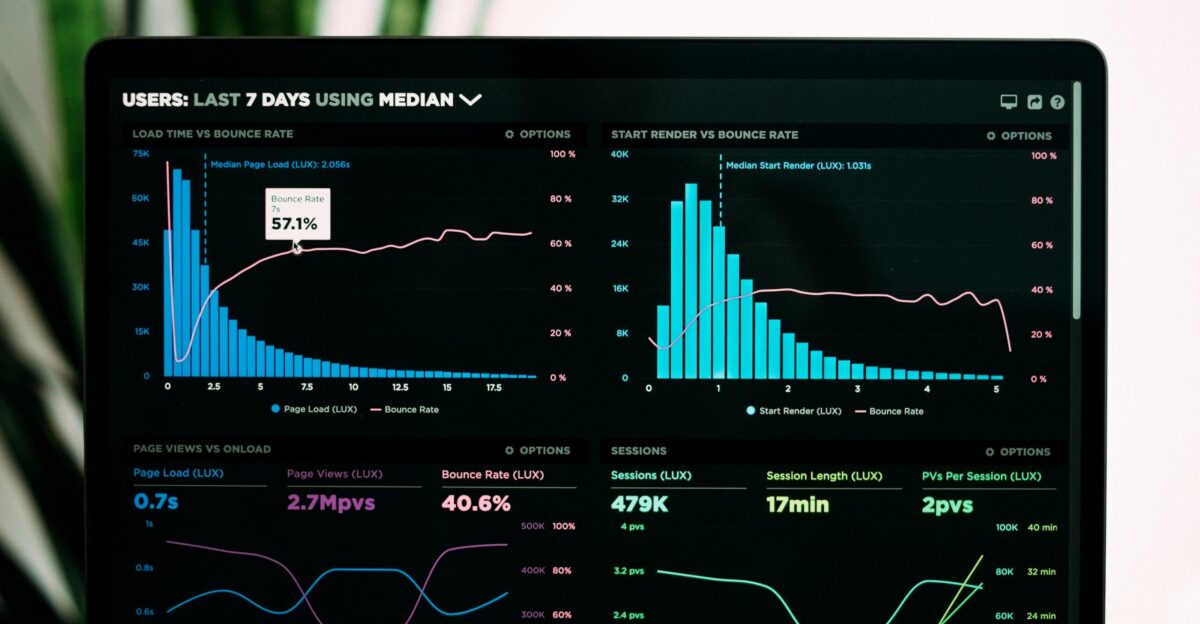
In line with predictions that the quantum market will reach $65 billion by 2030 and generate over $1 trillion in cumulative economic impact by 2035, the $30 billion deal’s size dwarfs many previous quantum initiatives. The socio-economic ripple effects are highlighted by the workforce-scale projections of 10 million new quantum-enabled jobs globally.
The federal commitment scaled so dramatically after years of incremental spending, demonstrating that quantum computing is poised for a tectonic economic shift. These data points convey not only potential but also an immediate economic imperative.
Future Prospects and Theoretical Hypotheses

Beyond real-world uses, theorists suggest that quantum computing may open up scientific possibilities that are not possible with classical systems by enabling ground-breaking new physics simulations or resolving NP-hard problems that are currently unsolvable.
Potential advances in post-quantum artificial intelligence, entanglement networking, or quantum materials could push the boundaries of human science and technology. By combining speculative research with practical application, the deal’s significant investment creates an atmosphere that makes such theoretical horizons accessible and helps to determine humanity’s technological future.
Beyond Encryption: Quantum Computing and Cybersecurity

Quantum computing promises sophisticated cyber defense systems that can identify attacks in advance through quantum-enhanced analytics and pattern recognition, even though encryption is still a significant concern. This could bring about a fundamental shift in defensive paradigms and usher in an era of quantum cybersecurity where breaches are predicted and stopped before harm is done.
In order to defend vital infrastructure and digital sovereignty against cyberthreats enabled by quantum technology, the White House agreement advances the development of quantum-ready cybersecurity tools.
Industrial Uses Not Related to National Security

The benefits of quantum computing go beyond government applications. The financial, logistics, and pharmaceutical sectors are all at risk of disruption from quantum technology. New quantum algorithms, for instance, can optimize supply chain routes or drug compounds with previously unachievable precision.
The investment expedites the shift from laboratory proofs-of-concept to commercial quantum products that increase efficiency, lower costs, and create new revenue streams by fortifying public-private partnerships and encouraging commercialization pathways.
International Partnerships and Contests
While geopolitical competition exacerbates quantum races, the agreement also emphasizes the need for global cooperation. Joint ventures can promote quantum science and workforce development globally, as demonstrated by partnerships like the $1 billion Quantinuum-Al Rabban Capital joint venture between the United States and Qatar.
The United States seeks to take the lead through partnerships that strike a balance between cooperation and competition, guaranteeing international quantum standards while using common knowledge to spur innovation responsibly.
Strategic Telos for the Long Term

The ultimate goal of the $30 billion agreement is to protect American technological dominance in the latter half of the twenty-first century and beyond. The White House lays the groundwork for long-term leadership in quantum technology by making calculated investments now, which will impact scientific research directions, economic power, and defense strategy.
By protecting national interests through independent innovation ecosystems, this foresight mitigates the risk of technological stagnation or reliance on foreign quantum capabilities.
Conclusion

The White House’s $30 billion deal on quantum computing is a comprehensive strategic move rather than just a financial headline. It positions the United States as a leader in a game-changing technology that is vital to economic expansion, national security, and worldwide technological influence.
The agreement establishes a new standard for technological policy by tackling past underinvestment, leveraging new trends, overcoming obstacles to innovation, and developing talent. This resolute, progressive strategy guarantees that America stays at the forefront of the impending quantum era, with its immense potential to influence nations and industries globally for many years to come.