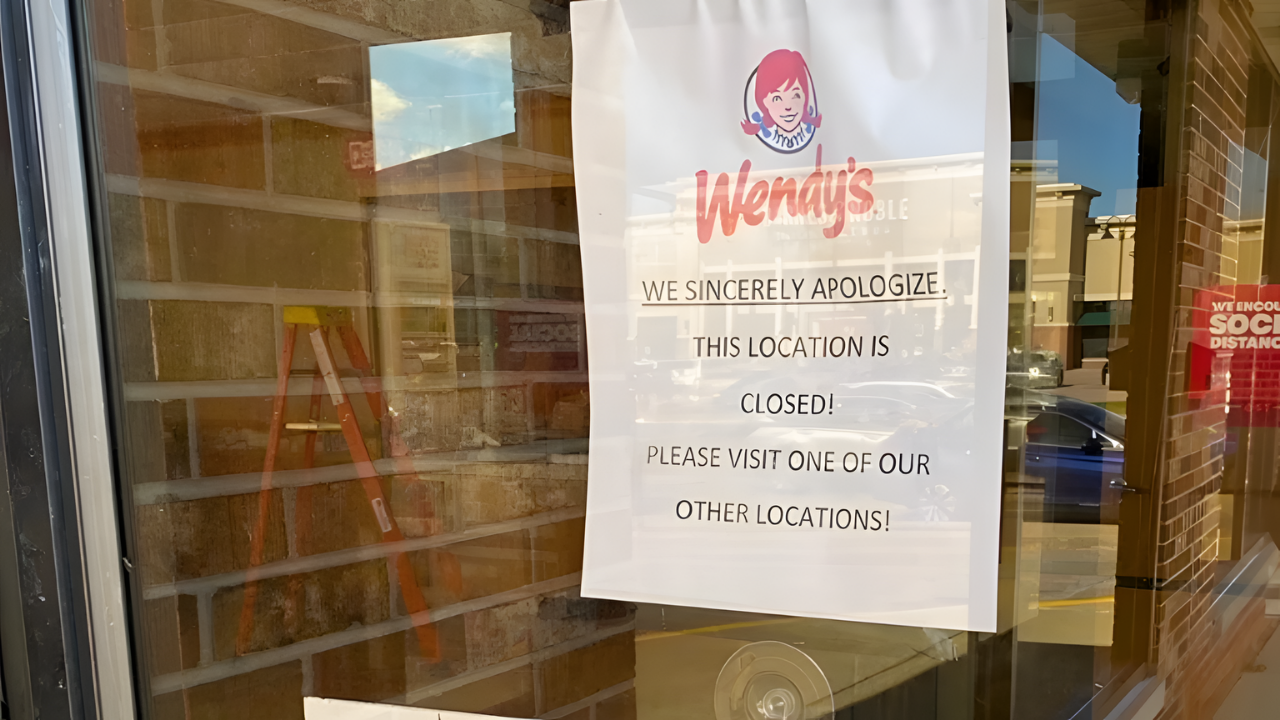
Wendy’s, the well-known fast-food chain, is going through one of its toughest periods in recent years. The company’s stock has dropped by 46%, reflecting shrinking profits and growing challenges in the fast-food industry. It plans to close up to 350 U.S. restaurants between late 2025 and 2026. This is part of a larger shift as Wendy’s tries to adjust to an economy affected by inflation and changing dining habits.
Out of more than 6,000 American locations, about 5–6% will shut down. The company has not yet said which restaurants are closing. This follows 240 closures that already took place in 2024. Over a roughly two-year period, the total number of closures could reach between 440 and 590, one of the most significant cutbacks in Wendy’s history. The goal is to focus on profitability rather than simply expanding.
For Wendy’s, the closures are a way to deal with rising costs and slower sales. Management hopes that by removing weaker stores, franchise owners can strengthen the remaining ones and stay financially stable.
How Inflation Is Hurting Business
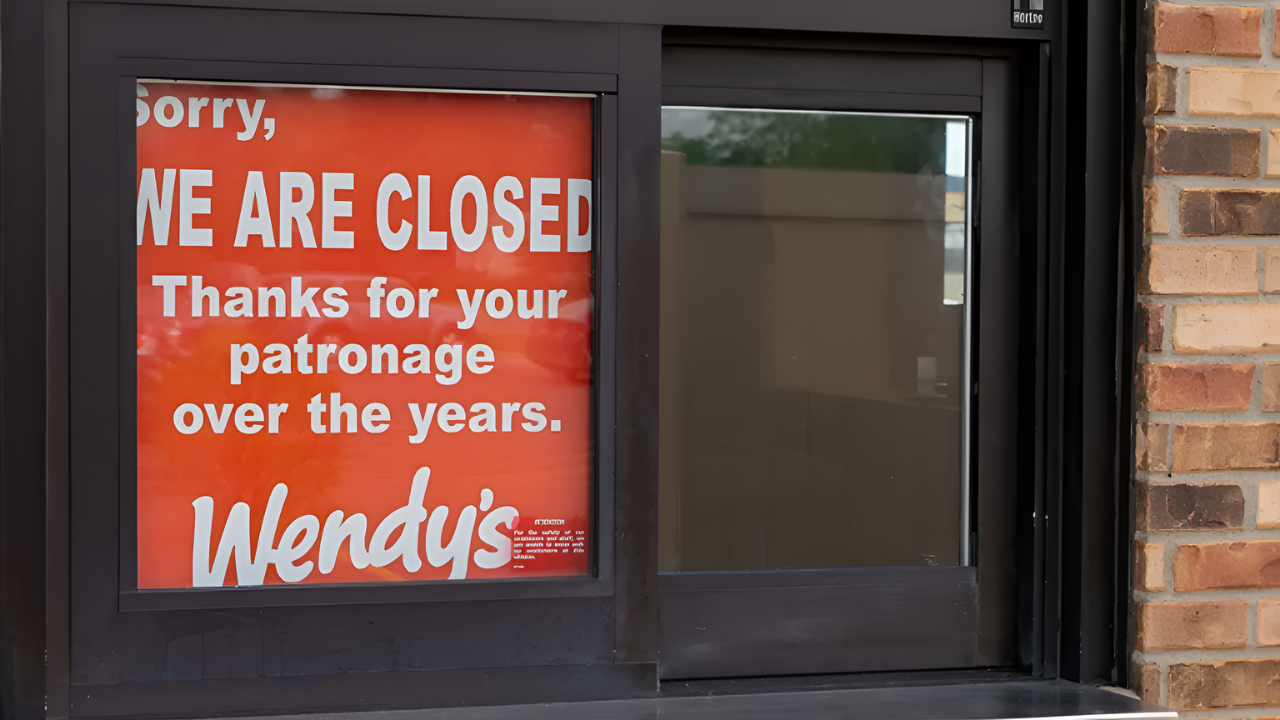
One of Wendy’s main challenges has been inflation, the steady increase in the cost of food, ingredients, and labor. Rising prices have stretched the company’s budget and made it harder for its lower-income customers, who are among Wendy’s most loyal diners, to afford eating out.
As a result, sales at existing locations have dropped by around 4.7%. This decline stands out because major competitors like McDonald’s and Burger King have actually reported sales growth during the same period. Wendy’s traditional strength, value meals and combo deals has started to lose its appeal as families turn to cheaper options or cook at home to save money.
Many customers who once saw fast food as a convenient, low-cost choice now see it as an unnecessary expense. The combination of inflation, higher wages, and tighter household budgets means Wendy’s must rethink how it attracts and keeps price-sensitive diners.
Rising Tension Among Franchise Owners
Another growing problem for Wendy’s lies within its own business structure. About 94% of its 7,363 restaurants are run by independent franchise owners rather than the corporation itself. These local operators are the first to feel the effects of underperforming locations. Many franchisees have expressed frustration with the company’s lack of transparency about which restaurants will close, making it difficult for them to plan their own business strategies or reinvest profits.
These tensions have put stress on the relationship between Wendy’s corporate leadership and its franchise community. Some operators feel the company isn’t providing enough guidance or financial help to counter the pressure from weak sales and expensive upgrades. For them, keeping certain outlets open while waiting for corporate decisions has become a financial burden.
Meanwhile, the uncertainty has slowed down investment in remodeling or new technology at local levels. That, in turn, affects how competitive these restaurants can be in a market where digital ordering and efficiency now play a major role.
Trying to Turn Things Around
Despite these setbacks, Wendy’s has launched several initiatives aimed at reviving the brand’s growth and improving customer experience. In October 2025, the company introduced “Project Fresh,” a plan focusing on updated marketing strategies, better restaurant operations, and new technology tools. These include digital menu boards, app improvements, and more efficient kitchen systems.
One small success came with the launch of “Tendys,” a chicken tenders item that debuted in September 2025. It sold out quickly in some locations, showing that customers are still willing to respond positively to strong product launches.
Interim CEO Ken Cook is currently leading these changes. However, because his position is temporary, investors and analysts are unsure whether the chain’s comeback strategy will stay consistent long term. Wendy’s previously said it aimed to grow to between 8,100 and 8,300 restaurants globally by 2028. The wave of closures now casts doubt on whether those goals will be achievable.
Other restaurant chains, such as Starbucks, Denny’s, and Jack in the Box, are facing similar pressures and have also started closing underperforming outlets. Rising costs across the food industry and the growing popularity of takeout and delivery apps have upended traditional restaurant models.
The closures will likely lead to significant job losses, especially for employees in entry-level positions who depend on hourly wages. In many towns and suburbs, Wendy’s restaurants provide steady employment, so these cuts may hit local communities hard. So far, the company has not announced any severance or reassignment plans for affected workers.
Looking ahead, analysts are closely watching Wendy’s earnings report expected in mid-February 2026. It will offer clues about whether the company’s efforts to modernize are paying off or if the challenges continue to deepen. For now, Wendy’s future depends on whether slimming down its store count and focusing on quality and innovation can lead to a rebound, or whether the downturn marks the beginning of a long-term contraction in one of America’s iconic fast-food brands.
Sources:
“The Wendy’s Company Reports Third Quarter 2025 Results.” PR Newswire, 7 Nov 2025.
“Wendy’s Plans Hundreds of Store Closures to Boost Profits.” Fortune, 10 Nov 2025.
“Wendy’s Plans to Close 140 Restaurants by End of Year.” Associated Press, 1 Nov 2024.
“Wendy’s (WEN): Evaluating Undervaluation After 46% Decline—Key Metrics Explained.” Yahoo Finance, 13 Nov 2025.