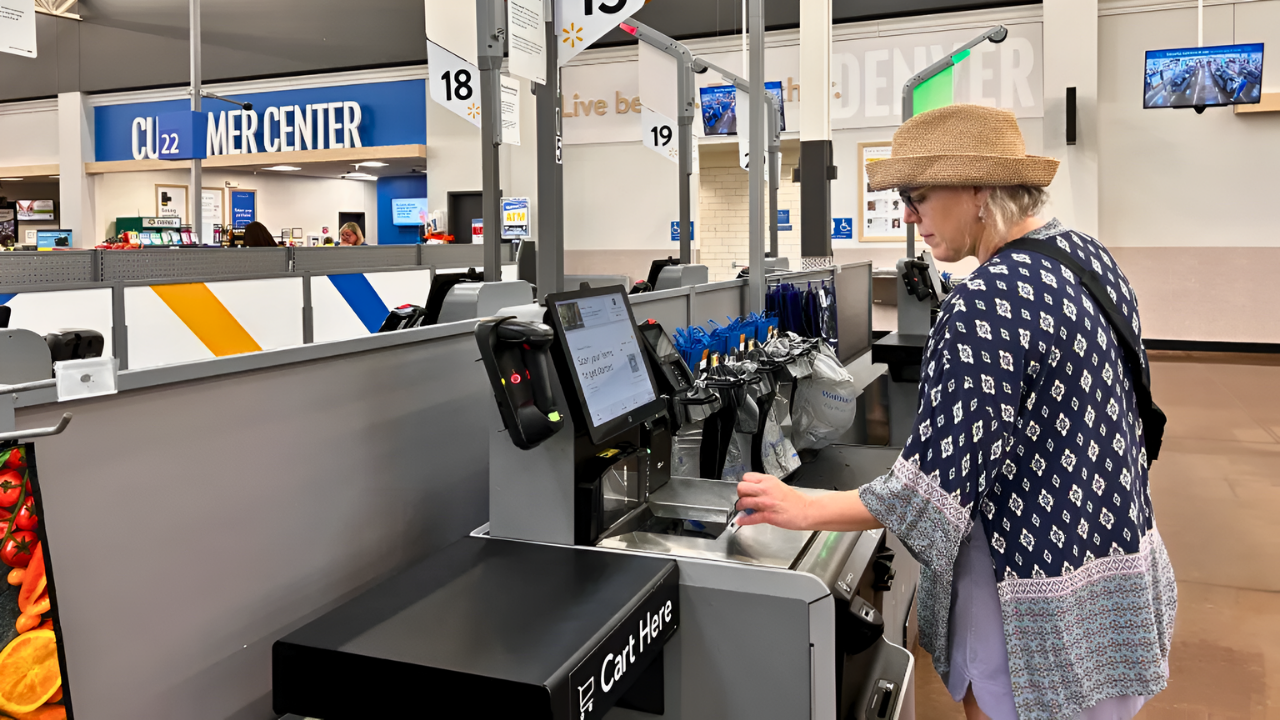
In early 2024, a single Walmart in suburban St. Louis became an unexpected epicenter of local crime. The Shrewsbury Supercenter generated 509 police calls in just five months, placing heavy strain on a city of 6,328 residents.
Police Chief Lisa Vargas described officers returning repeatedly for thefts linked to self-checkout, where skipped scans had quietly become a daily challenge. The surge signaled a deeper problem involving economic pressure, staffing models, and retail losses. Let’s look into this more closely.
How Self-Checkout Fueled Rising Theft

Between January and May 2024, the Shrewsbury Walmart operated on a familiar assumption. Customers would reliably scan every item while a handful of workers monitored multiple lanes. This system faltered quickly. Most thefts came from routine shoppers who bypassed scans rather than from organized crime, creating a steady rise in calls for service.
Economic stress amplified the issue. A October 2025 LendingTree survey found that 27 percent of Americans admitted to retail theft. Of those respondents, 47 percent cited unaffordable prices and 46 percent said they stole to meet basic needs. Many also said they took items to stretch already thin budgets.
These small but widespread decisions added up. Walmart recorded a shrinkage rate of 1.38 percent of total sales. Companywide, this translates to about $ 3 billion in annual losses. At the Shrewsbury store, internal estimates placed losses between $2 and $5 million per year. The National Retail Federation’s October 2025 study reported that U.S. retailers faced an 18 percent rise in shoplifting and a 17 percent increase in violent theft, with $112.1 billion lost nationwide. This created a significant burden that extended far beyond a single suburban store.
Early Warnings From Leadership

Long before Shrewsbury’s crisis peaked, Walmart leaders had acknowledged a growing threat. CEO Doug McMillon told CNBC in December 2022, “Theft is a concern. It’s at a level higher than what we have historically observed.” He warned that persistent losses might lead to higher prices or store closures and emphasized the importance of law enforcement partnerships.
By early 2024, those warnings were playing out directly in Shrewsbury. The city saw more than a quarter of all police calls tied to one retail location. This strained the department, affected response times, and diverted officers from community duties.
The pressure accelerated internal discussions. With theft increasing and patrols stretched thin, Walmart chose an approach few large retailers had attempted at scale. In April 2024, the Shrewsbury Supercenter removed every self-checkout station and returned fully to staffed lanes. The store did not adopt hybrid systems or new monitoring technologies. Instead, traditional cashiers resumed scanning each item as shoppers passed through.
Crime Falls After Self-Checkout Removal
Once staffed checkout returned, the results were dramatic. Between June and October 2024, police logged 183 calls at the store. This reflected a 64 percent drop compared to the 509 calls in the prior five months. Arrests fell as well. Officers made 49 arrests compared to 108 during the earlier period. The store’s share of city arrests declined significantly after reaching nearly 68 percent during peak self-checkout months.
Police Chief Lisa Vargas presented the findings at a Shrewsbury City Board meeting on June 10, 2025. She described the shift as “a huge” change for local policing. Municipal records later confirmed the numbers.
The city also examined the financial effect. With 326 fewer calls, an estimated 245 officer-hours were regained, worth about 22,800 dollars in salary savings. Analysts projected that a full year of similar reductions could return 2 to 4 million dollars in public safety resources once equipment, vehicles, dispatch, and administrative work were included. This created measurable relief for a small department that had previously been overwhelmed.
National Retailers Adjust Their Strategies
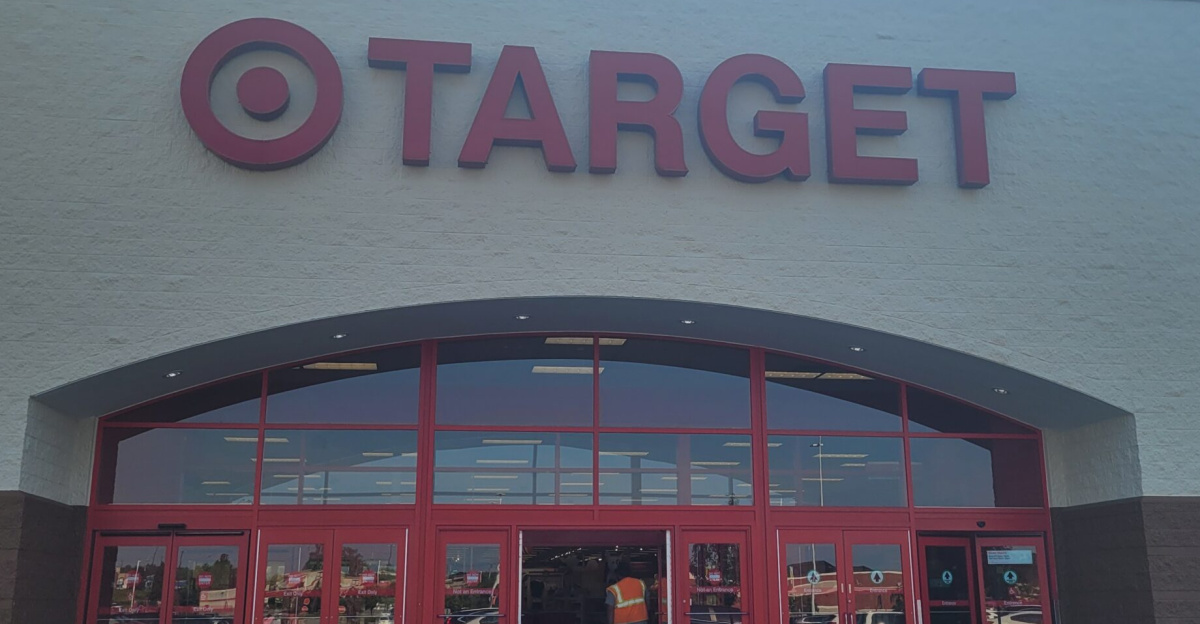
Across the country, major retailers approached self-checkout reforms cautiously. Target limited self-checkout to 10 items per visit in around 2,000 stores beginning March 2024. Dollar General introduced assisted-checkout in 9,000 locations and removed self-checkout entirely at 300 high-loss stores. Walmart confirmed that as of 2025, only about 6 to 10 stores nationwide had fully eliminated self-checkout.
These adjustments reflect ongoing debate about how to balance automation with security. For many retailers, self-checkout remains a cornerstone of efficiency, yet Shrewsbury’s results highlighted that automated lanes can escalate losses in high-risk environments. In those locations, a shift back to staffed checkout may reduce theft and strengthen community relations.
Retail crime also carries a hidden cost for consumers. Industry estimates show shrinkage adds about 400 dollars annually to the average household’s expenses. If a single store prevents 2 to 5 million dollars in losses each year, localized price pressure may ease even while national retail losses remain above 100 billion dollars.
Workforce and Community Impacts
The Shrewsbury decision also intersected with employment. Walmart associates earn between 14 and 37 dollars per hour depending on role and tenure. Restoring staffed checkout revived cashier roles that had diminished as self-checkout expanded. This shift aligned with broader 2025 workforce decisions that emphasized customer service and community needs.
Local dynamics magnified the significance of the change. St. Louis County is served by roughly 60 independent police agencies. In a town of just over 6,000 residents, having one store account for 27 percent of all police calls disrupted routine patrol patterns. Officers often cycled through theft cases instead of performing neighborhood-focused work.
By removing self-checkout, Walmart eased a substantial burden on Shrewsbury’s small police force. The reduction in calls and arrests allowed officers to return to proactive tasks that had been overshadowed by retail crime. This demonstrated how a retail decision could reshape local public safety conditions.
An Outlier Case or a Roadmap for Retail?

The Shrewsbury case remains one of the most thoroughly documented examples of a retailer removing self-checkout entirely and tracking the outcome. A 64 percent drop in police calls, a sharp decline in arrests, and up to 4 million dollars in recaptured public resources offer a compelling model for stores facing similar pressures.
Shrinkage rates between 1 and 2 percent have long been considered manageable, even as retailers embraced automation. Shrewsbury’s experience challenges that assumption by showing how reversing automation in targeted locations can reduce crime by more than half. It also raises questions about how retailers will respond in the future.
Some companies may adopt artificial intelligence monitoring. Others might keep automated systems despite losses. Still others could follow Shrewsbury’s example in high-risk stores. Whatever direction they take will influence store operations, community safety, and the true cost consumers pay for retail crime.
Conclusion
Shrewsbury’s Walmart offers a striking example of how operational choices can shape both company outcomes and community well-being. Removing self-checkout produced measurable reductions in theft, recaptured significant public resources, and eased strain on a small police force. The results suggest that traditional staffing can outperform automation in specific locations where losses are high and oversight is limited.
The broader retail landscape faces ongoing pressure from rising theft and economic stress. Whether companies choose staffed checkout, hybrid systems, or new surveillance tools, their decisions will affect shoppers, workers, and law enforcement agencies. Shrewsbury’s experience shows that small changes in store operations can create substantial ripple effects, pointing to important lessons for the industry.
Sources:
Shrewsbury Police Department Municipal Records and City Board Presentation. Shrewsbury Police Department, June 10, 2025
The Impact of Theft & Violence 2025. National Retail Federation and Loss Prevention Research Council, October 2025
Self-Checkout and Retail Theft Survey. LendingTree, October 2025
Walmart CEO Doug McMillon Statement on Retail Theft. CNBC, December 5-6, 2022
Walmart Store Removed Self-Checkout Option and Shoplifting Decreased. People Magazine, June 21, 2025
Shrewsbury, Missouri Population Data. U.S. Census Bureau, 2020Walmart Corporate Communications and Financial Reporting. Walmart Investor Relations, 2024-2025