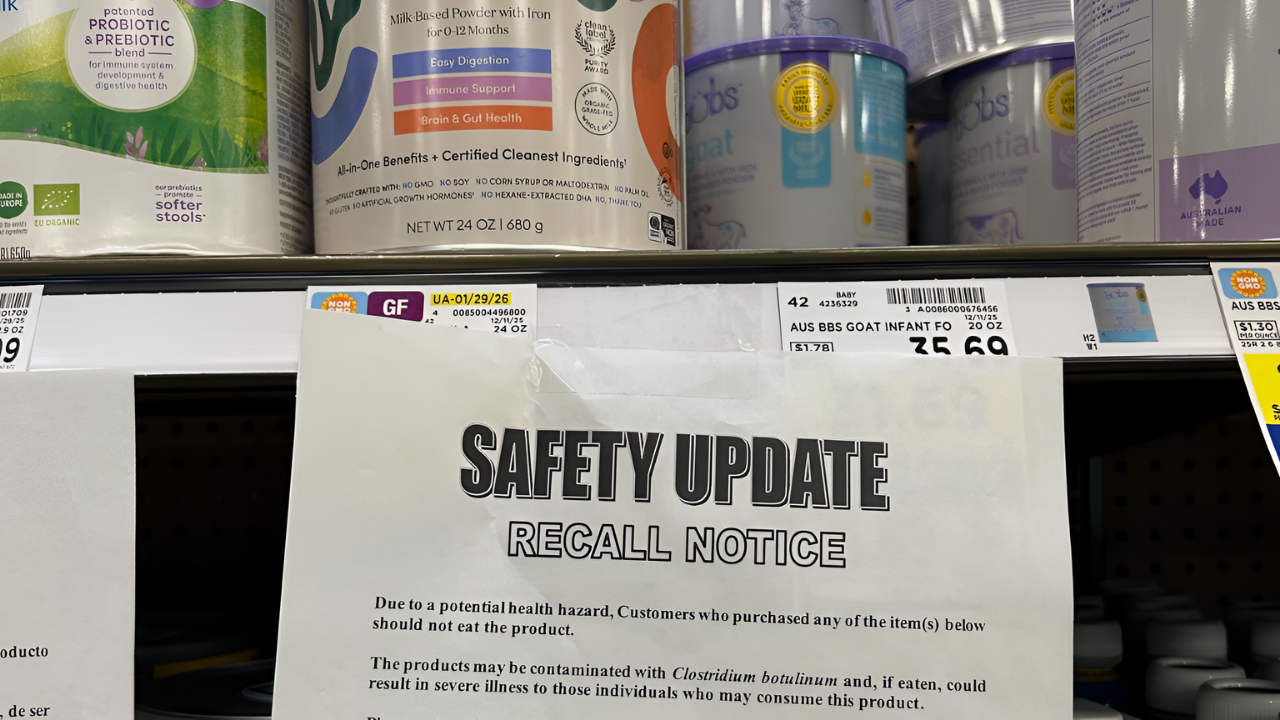
FDA inspectors spread across America in late November 2025 to search retail stores from coast to coast. They hunted for infant formula tied to a botulism outbreak that had already sent dozens of babies to hospitals.
They discovered a serious breakdown in safety rules at major retailers. The inspectors checked over 4,000 stores and found a disturbing pattern—recalled formula contaminated with dangerous bacteria was still on shelves, where unsuspecting parents could easily grab it.
Some packages even had “Sale!” stickers while 51 infants across 19 states fought for their lives in hospital beds.
Spreading Crisis
The contaminated formula spread throughout America’s retail supply chain. Investigators found recalled ByHeart Whole Nutrition Infant Formula in more than 175 stores across 36 states.
Every single baby who consumed this product ended up in the hospital, though none died. The outbreak began in August 2025 and became one of the largest infant botulism clusters in recent U.S. history.
Lab tests confirmed the presence of Clostridium botulinum—bacteria that create toxins able to paralyze muscles, including those needed for breathing. The danger to America’s youngest children couldn’t have been worse.
Regulatory Foundation

The FDA’s recall system requires every part of the supply chain to respond quickly. When companies issue voluntary recalls, they must contact retailers in writing immediately and provide specific product details and removal instructions.
Retailers are required by federal law to remove products from shelves and halt sales.
For decades, this system worked well—until a small startup called ByHeart, which controlled less than 1% of the U.S. infant formula market, caused a complete failure. The company’s formula first hit store shelves in March 2022.
Warning Signs
ByHeart’s safety record showed serious problems long before the botulism outbreak. In August 2023, the FDA issued a warning letter to the company regarding unsanitary manufacturing conditions, including mold, dead bugs, and water leaks, as well as a prior Cronobacter sakazakii contamination that led to a 2022 recall.
The company’s Pennsylvania plant shut down completely because of these violations. Despite these documented failures, the ByHeart formula continued to flow into American homes.
When California’s Infant Botulism Treatment and Prevention Program noticed an unusual spike in cases during August 2025, investigators started connecting the pieces.
Four Letters
On December 12, 2025, the FDA took dramatic action: it sent simultaneous warning letters to Walmart, Target, Kroger, and Albertsons—four retail giants.
The letters cited federal law violations for receiving and delivering contaminated food across state lines. Despite written notices on November 8 and expanded warnings on November 11, the recalled ByHeart formula remained on store shelves from November 12 through November 26.
The FDA used harsh language: the products remained on shelves “well after the recall was initiated.” This marked one of the agency’s toughest multi-retailer enforcement actions, exposing what officials called “a concerning problem with recall effectiveness at the retail level.”
Geographic Spread
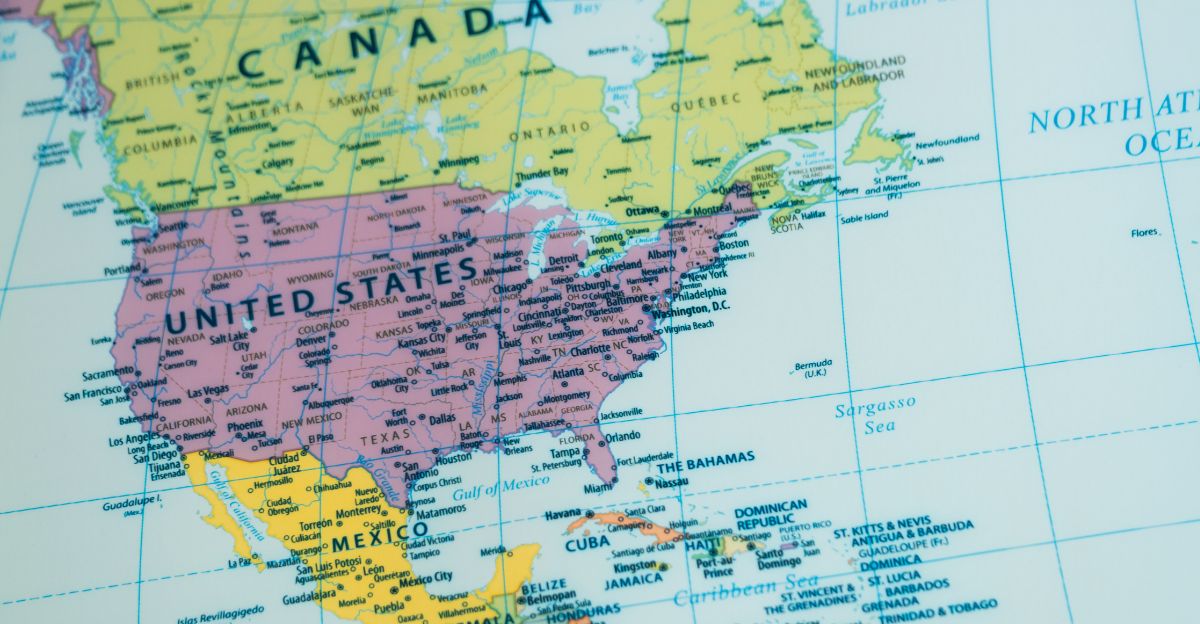
The compliance failures spanned huge areas across America. Walmart stores in 21 states continued selling recalled formula for up to 18 days after receiving notice.
Target locations in more than 20 states maintained the products’ availability for 8-12 days after the recall. Kroger stores across 10 states and Albertsons locations in 11 states maintained inventory through November 19.
In California, parents bought contaminated formula days after state health officials urged consumers to stop using it immediately. In Illinois, Michigan, Pennsylvania, and Texas—states with multiple confirmed infant botulism cases—the recalled formula remained easy to find while public health warnings grew stronger.
Sale Sign
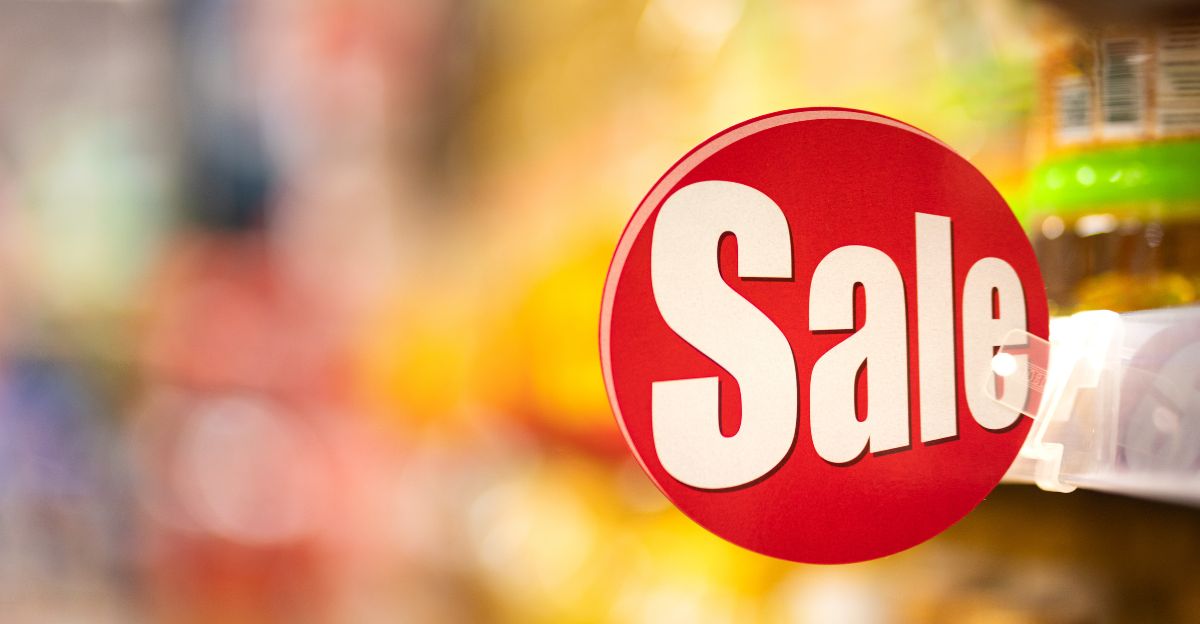
The most shocking example came from Arkansas. FDA investigators found ByHeart Whole Nutrition Infant Formula single-serve packets displayed on a Target shelf with a bright “Sale!” sign offering a $2 discount.
The sale started five days after the November 11 expanded recall, when ByHeart had warned that all products might be contaminated. The discounted formula stayed available through November 22.
Store workers told investigators that they felt confused about which specific batches were affected, were unaware of recall notices, and struggled to remove all contaminated products. Sometimes, customers returned contaminated products, and workers accidentally put them back on shelves.
Systemic Pattern

The ByHeart recall failure was not the first time retailers failed. In 2023, Dollar Tree faced FDA enforcement for failing to remove WanaBana apple cinnamon fruit pouches contaminated with lead at levels 200 times above safe limits.
That recall involved a product sold to vulnerable children, and retailers similarly left dangerous products available for weeks after official warnings. The FDA’s December 2025 press release directly pointed to this pattern, stating that repeated failures “raise significant concerns about the ability of retailers to protect consumers during public health-related recalls.”
Experts noted that automated inventory systems often fail to flag every affected product, especially when recalls expand beyond the first batch numbers.
Federal Response
FDA Commissioner Dr. Marty Makary made a strong statement: “Food safety is a collective responsibility, and it is critically important for all parties within the supply chain to act promptly and diligently to safeguard our nation’s children from unsafe food.”
The agency required all four retailers to respond within 15 working days with specific corrective actions to prevent future failures. If retailers fail to respond properly, the FDA may trigger stronger enforcement measures, including product seizures, court orders, or criminal charges.
Steven Mandernach, executive director of the Association of Food and Drug Officials, noted the FDA itself moved slowly—taking nearly a week to share complete product lists with state regulators after the November 8 recall.
Poisoned Pipeline

The FDA’s broader investigation uncovered a shocking secondary fact: the contamination may have lasted much longer than originally thought.
On December 10, 2025, the CDC expanded its case definition to include any infant with botulism who consumed ByHeart formula “at any time since the product’s release” in March 2022. This backward-looking analysis found 10 additional confirmed cases dating back to December 2023—nearly a full year before the outbreak became public.
All told, infants may have consumed potentially contaminated formula for possibly three years. ByHeart’s own tests found Clostridium botulinum in samples from three different batches, raising questions about whether contamination was ongoing rather than isolated.
Corporate Silence

After receiving the FDA warning letters, retailers responded in various ways—some defended themselves, while others remained silent. Walmart issued a statement claiming no formula was sold after it activated electronic sales restrictions: “We moved swiftly to issue a sales restriction and removed this product from our impacted stores and clubs, and online.”
Albertsons confirmed it removed products and stressed its commitment to customer safety. Target told the Los Angeles Times it “immediately notified guests, initiated refunds and began removing all ByHeart products,” but FDA documents showed a different timeline.
Kroger made no public statement. None of the retailers explained why their systems failed to detect the products during the critical November 12-26 window, when inspectors found them readily available.
Fractured Systems

FDA findings revealed multiple internal failures at retail operations. Store workers cited several problems: recall notices didn’t reach employees on the sales floor, workers felt confused about whether “all batches” truly meant every single product, they struggled to remove products from multiple storage areas, including back rooms, and supply chain deliveries continued after recalls were initiated.
Electronic sales blocks—designed to prevent purchases—were in place at most chains but failed when workers manually bypassed system warnings or when self-checkout machines malfunctioned.
The FDA noted that in several cases, “stocking products that arrived after the recall notification” showed that warehouses and distribution centers didn’t stop shipments. Retail food safety procedures, designed for adult foods, weren’t adequate for products serving infants.
Legal Reckoning
Families affected by the outbreak began filing lawsuits against ByHeart for selling defective formula, despite knowing that its manufacturing plants had safety problems.
These legal cases seek money for medical bills—infant botulism treatment requires specialized hospital care and BabyBIG, an IV medication costing tens of thousands of dollars—plus payment for emotional pain. Some legal experts have said that retailers could face secondary liability for continuing to sell products after receiving official recall notifications.
The FDA’s warning letters, now public documents, gave victims’ lawyers government proof of retailer negligence. ByHeart stated it would “remain dedicated to identifying the root cause through a thorough audit of every aspect of our product development process.”
Fragile Trust

Consumer trust in both ByHeart and major retailers collapsed quickly. Parents who chose ByHeart—often paying premium prices for what was marketed as organic and carefully made—felt betrayed.
Social media is filled with accounts from families describing the frightening experience of watching infants develop botulism symptoms: constipation progressing to difficulty swallowing, weak cries, loss of head control, and eventually respiratory distress requiring a breathing machine.
The outbreak destroyed belief in the safety of products sold at trusted national chains. Industry observers noted that infant formula occupies a unique regulatory space—it’s often the sole source of nutrition for babies, making contamination far more hazardous than defects in foods consumed by adults with varied diets.
Unfinished Business

By late December 2025, no new cases had been reported since December 1, and no recalled formula had been found on shelves since November 26.
However, critical questions remained unanswered: Would the FDA impose financial penalties on the retailers beyond issuing warning letters? Could automated inventory systems be redesigned to prevent similar failures? How many families still had contaminated formula in their homes, unaware of the expanded recall covering all products back to 2022?
And most troubling: if four of America’s largest, most sophisticated retailers couldn’t execute a recall of a product that represented just 1% of its category, what happens when the next crisis involves a product with true market dominance?
Sources:
- CNN, FDA sends warning letters to major retailers for selling recalled baby formula, December 15, 2025
- FDA.gov, Outbreak Investigation of Infant Botulism: Infant Formula, December 16, 2025
- FDA Warning Letters, Walmart Inc. MARCS-CMS 720400 and Target Corporation 720399, December 12, 2025
- Food Safety News, FDA warns retailers who failed to pull recalled ByHeart formula, December 9, 2025
- CBS News, FDA warns 4 major retailers about failure to quickly stop selling recalled baby formula, December 16, 2025
- FDA Press Release, FDA Takes Action to Improve Recall Effectiveness Following Infant Botulism Outbreak, December 14, 2025