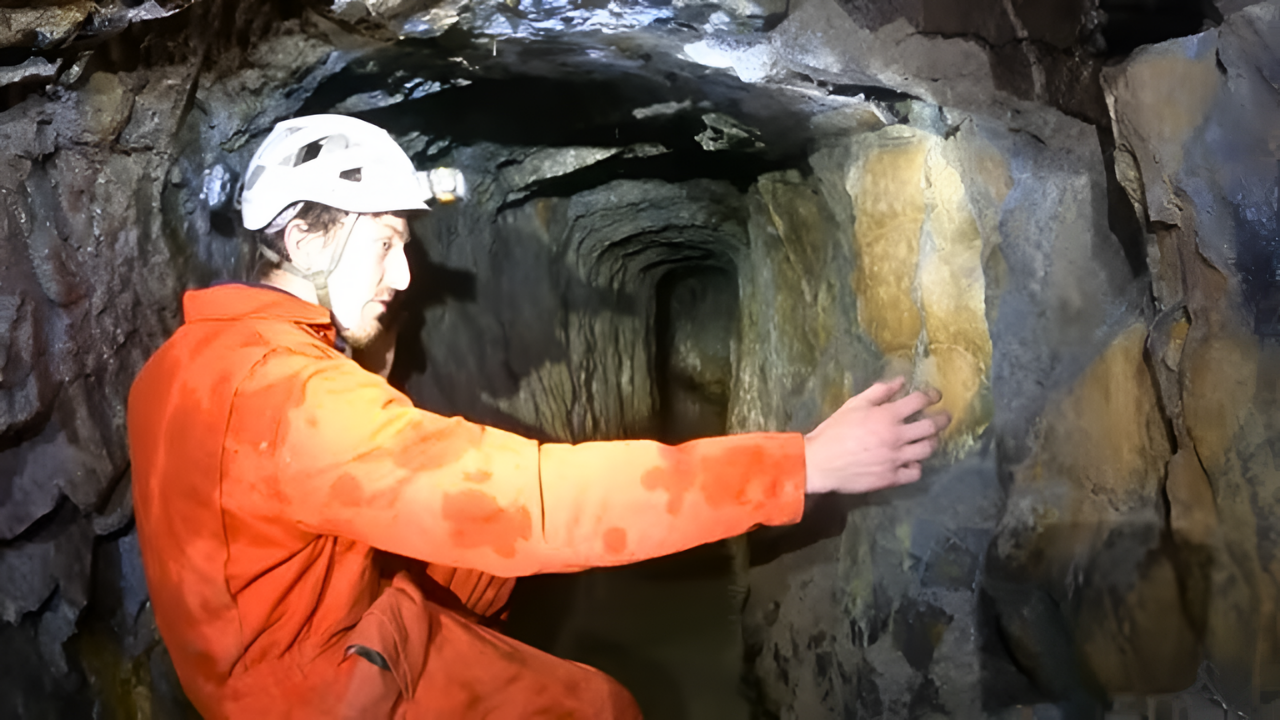
In late 2025, Pentagon spreadsheets flagged a stark reality: fighter jets, missile systems, and semiconductor production all faced the same bottleneck. China controlled roughly 70 percent of global rare earth processing, and export restrictions were tightening. U.S. officials warned production lines could stall within months, with government assessments documenting an $18.5 billion shortfall in critical materials. Washington had no immediate domestic backup—until a December announcement from Utah’s Lake Mountains changed the calculation.
For the first time in decades, capital deployment, federal commitment, and geological advantage aligned simultaneously. The rare-earth sector began experiencing its fastest mobilization in modern U.S. history: Pentagon prioritization, Treasury capital acceleration, and private sector competition converging at once.
China’s Strategic Leverage
Beijing’s strategy became unmistakable throughout 2024 and 2025. In December 2024, China banned exports of gallium, germanium, and antimony—minerals essential for semiconductors and defense electronics. By April 2025, licensing requirements extended to lutetium, scandium, and yttrium, further tightening Western access to materials that power everything from smartphones to surveillance systems.
The restrictions exposed a vulnerability decades in the making. The United States once led global rare earth production through California’s Mountain Pass Mine, discovered in 1949 and operational by 1952. By the 1960s, it dominated world supply, fueling color television and defense technologies. But cheaper Chinese production steadily undercut American operations, and by 2002, Mountain Pass shut down. For nearly two decades, the U.S. relied almost entirely on foreign—mostly Chinese—supply chains.
Utah’s Silicon Ridge Discovery
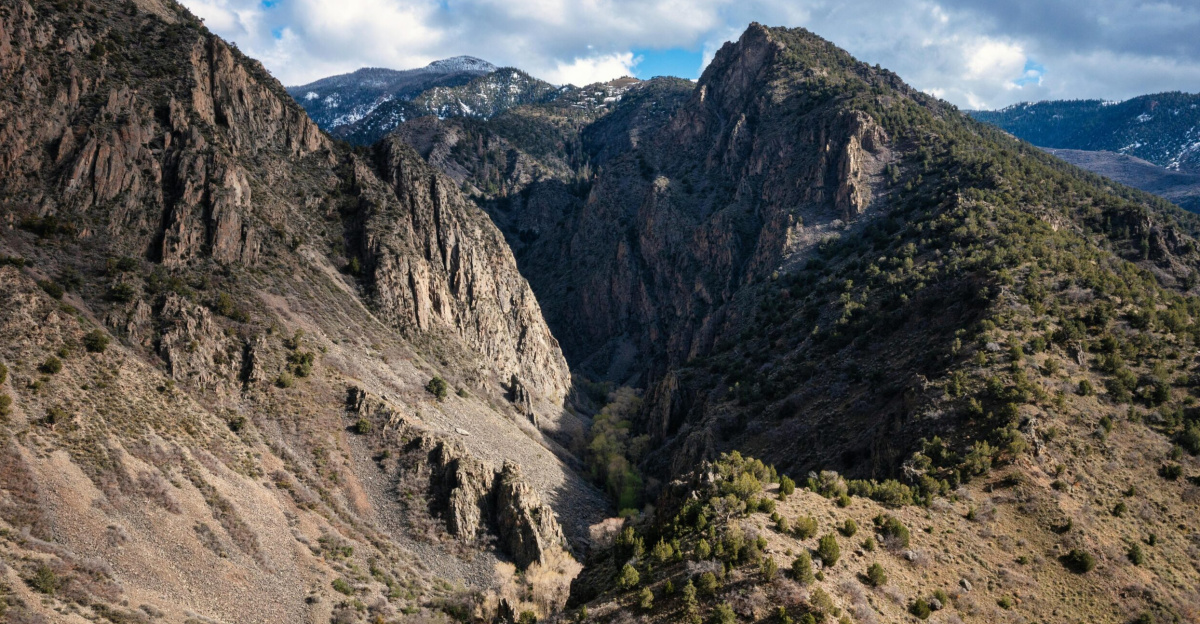
On December 11, 2025, Ionic Mineral Technologies announced a discovery that immediately drew Pentagon attention. Geological surveys at Silicon Ridge, a 4,000-acre site in Utah’s Lake Mountains, confirmed 16 rare earth and critical minerals in a soft clay system just 20 miles from the Silicon Slopes tech corridor.
Independent laboratory assays from ALS Chemex verified the deposit as a halloysite-hosted ion-adsorption clay (IAC) system—the same geology responsible for 35 to 40 percent of China’s rare earth production and over 70 percent of global heavy rare earth supply. Lab tests showed approximately 2,700 parts per million combined rare earth and critical metals, exceeding typical Chinese deposits that range from 500 to 2,000 ppm.
The discovery included gallium, germanium, rubidium, cesium, scandium, lithium, vanadium, tungsten, niobium, and a full spectrum of light and heavy rare earths. Initial drilling covered just 11 percent of the resource area to a depth of 100 feet, suggesting significant expansion potential.
CEO Andre Zeitoun described the moment in clear terms. “This confirmation is a watershed moment for American resource independence,” he stated in the company’s announcement. “For the first time, we have a domestic, shovel-ready source for a full spectrum of critical minerals, all extractable with a faster, cleaner process than traditional hard rock mining and extraction.”
Unlike hard-rock mining operations, IAC deposits allow simpler extraction from soft clay near the surface. Utah offered additional advantages: workforce depth, existing infrastructure, and proximity to a 74,000-square-foot processing facility in Provo already licensed and operational. The site sits on state-leased land with active mining permits, reducing some regulatory hurdles.
Timeline Realities and Industry Caution
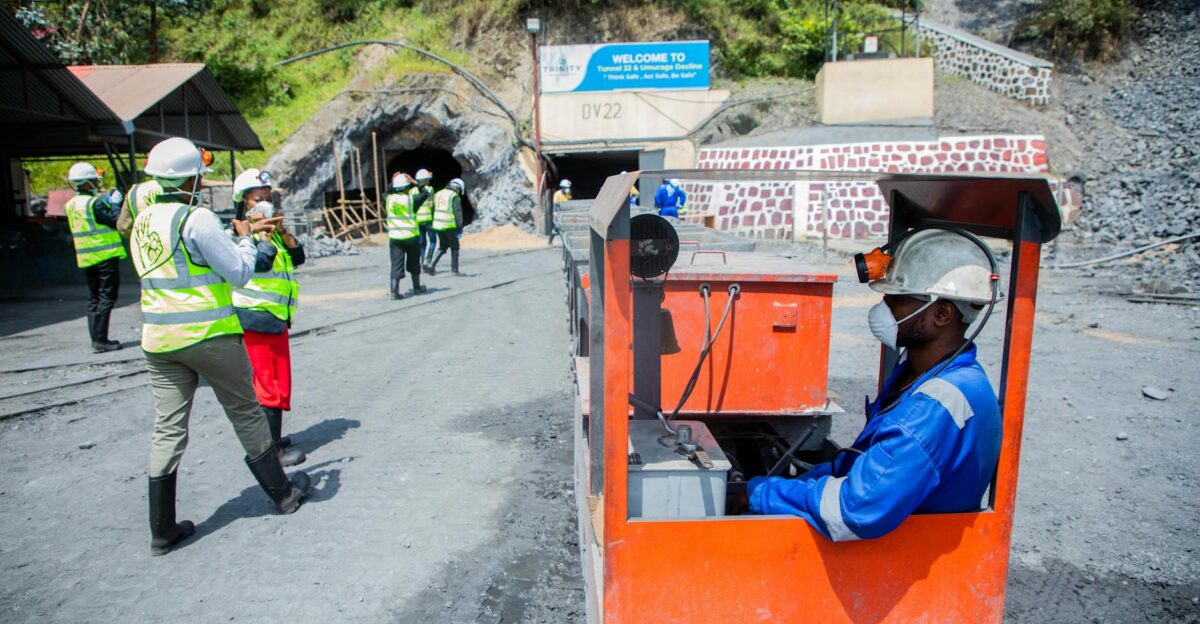
Ionic MT projected a Preliminary Economic Assessment (PEA) by mid-2026, far faster than typical industry timelines. But mining professionals urged measured expectations. The average U.S. mine requires 29 years from discovery to production, and even accelerated projects face four to six years of engineering, environmental reviews, water permitting, and operational licensing.
The PEA represents only the first gatekeeper. A positive assessment leads to a Feasibility Study, typically lasting 12 to 24 months, before construction can begin. Even Mountain Pass, with existing permits and infrastructure, required years to restart operations. Industry veterans noted that while Silicon Ridge holds “real advantages”—grade, infrastructure, supportive state regulatory climate—these don’t translate to unprecedented timelines.
Grade consistency across the broader 4,000-acre site remains unproven. If high concentrations prove localized beyond the initial 650-acre exploration area, production economics could shift substantially. The reported 2,700 ppm concentration is compelling, but only systematic drilling will confirm whether grades hold across the full resource.
Strategic Stakes and Forward Path

The Department of Defense had already authorized $2 billion for emergency critical-materials stockpiling when Silicon Ridge emerged. With fighter jets, missile guidance systems, and advanced electronics all dependent on rare earths, the discovery entered national security calculations immediately.
China emphasized its 70 percent processing dominance in response to Western supply-chain initiatives, framing rare earths as strategic assets rather than mere commodities. America’s vulnerability extends to allies—Japan, South Korea, Australia, and Europe all monitor U.S. rare earth developments closely as they pursue supply-chain independence from Beijing.
Silicon Ridge represents a historic acceleration in U.S. rare-earth capital mobilization—a convergence of federal commitment, investment acceleration, and permitting speed. Whether this capital boom translates to sustained production independence depends on grade consistency, timeline execution, and the ability to scale from one significant discovery to a comprehensive domestic supply chain. The question facing policymakers and industry isn’t whether mobilization can accelerate—Silicon Ridge proves it can—but whether acceleration can become production before supply vulnerabilities deepen further.
Sources:
ionicmt.com | Heading: Ionic Mineral Technologies Announces Major U.S. Discovery of Rare Earth and Critical Technology Metals | Publication Date: December 11, 2025
mining.com | Heading: Massive Critical Minerals Deposit Found in Utah | Publication Date: December 14, 2025
grist.org | Heading: A Huge Cache of Critical Minerals Found in Utah May Be the Largest in the US | Publication Date: December 11, 2025
mining.com | Heading: Pentagon Moves to Build $1 Billion Critical Minerals Stockpile to Counter China Report | Publication Date: October 12, 2025
mining.com | Heading: China Lifts Export Ban on Gallium, Germanium and Antimony to US | Publication Date: November 9, 2025