
American businesses are slowing down hiring amid the economy crawling in July. The Institute for Supply Management reported that services activity dropped to just 50.1% with employment contracting for the fourth time in five months.
The sector is responsible for two-thirds of American employees nationwide, making this decline particularly significant for the broader economy.
Growth Challenges

Service sector growth has dropped 0.7% from 50.8% to 50.1% across June to July, reflecting that the economy barely grew. This sector includes various businesses, including hair salons and banks.
These services are used daily, but millions of workers lose their jobs when companies struggle, and families can feel the direct effects.
Historical Context

Service businesses often rely on the summer months when consumers spend more on vacations and activities.
The last time services dropped so much was during economic hardships and recessions. These businesses have seen steady growth for the past five years, so July’s sudden drop was a surprising blow.
Mounting Pressure

Business costs rise while government policies create uncertainty, squeezing companies from both sides.
Several ISM respondents pointed to tariffs and rising input costs: “Increased buying due to upcoming increase of tariffs on copper,” and “Flooding across the state” were cited as disruptors. These factors contributed to slowed business activity and hiring challenges.
Employment Collapse
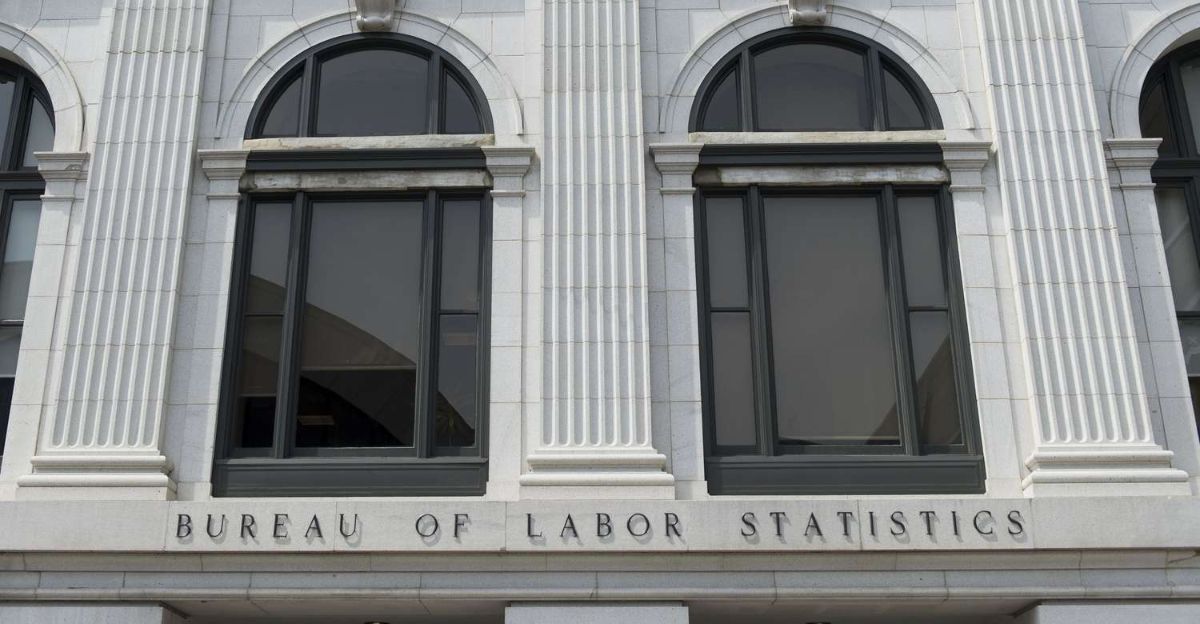
According to Bureau of Labor Statistics (BLS) data, total nonfarm payrolls grew by just 73,000 jobs in July.
This sluggish pace failed to keep up with population growth and followed downward revisions for earlier months, highlighting growing labor market weakness.
More People Out of Work

The unemployment rate ticked up to 4.2% in July, with about 7.2 million Americans now officially counted as unemployed.
Economists note that this is partly because job growth isn’t keeping up with the number of people looking for work, a sign that the overall labor market is cooling.
Healthcare Defies the Trend

Not all industries struggled in July. Healthcare and social assistance added 58,000 jobs, continuing a steady rise that’s lasted for more than a year.
When you also include private education, the combined gains were about 70,000 jobs – one of the few bright spots in an otherwise sluggish economy.
Professional Services Hold On

Professional and business services such as law, accounting, and consulting managed to add 17,000 jobs in July.
However, ISM’s own survey found that many companies in these fields still struggled to hire qualified workers and to replace employees who had left, showing that the hiring challenges remain complex.
Retail vs. Leisure

Retail stores had a slight drop, losing about 1,800 jobs in July. In contrast, leisure and hospitality – which includes hotels and restaurants – added 24,000 jobs.
The mixed performance suggests that consumer spending is uneven, with some industries benefiting while others, like retailers, are feeling cost pressures and tariffs.
Layoffs Rising

Layoff announcements are up sharply. Companies told outplacement firm Challenger, Gray & Christmas they planned 62,075 job cuts in July.
That’s 29% more than in June, and 140% higher than last year’s July number. Retail, government, and technology industries were at the top of the list for planned layoffs.
The Year’s Biggest Job Cutters

So far in 2025, the biggest layoff totals have come from government (292,294 cuts), technology (89,251), retail (80,487), and the general services category (53,438).
In July, retail and government job cuts led the way. These totals combine individual company plans into a national picture of where jobs are being lost.
Costs Keep Rising

ISM’s Prices Paid index jumped to 69.9 in July – the highest since October 2022 – meaning more companies are paying higher prices for goods and services they need.
Survey participants mentioned tariffs, raw material shortages, and even bad weather as adding to their cost pressures.
International Trade Weakens

Two measures in ISM’s data show trouble for cross-border trade: New Export Orders fell to 47.9, and Imports dropped to 45.9.
Both are below 50, meaning more companies report shrinking trade than growing trade. This hints at slowing international demand and ongoing tariff effects.
Clouds on the Horizon

With growth barely positive, costs rising, and new job creation slowing, the outlook for America’s service businesses is uncertain.
Survey respondents said tariff policy changes were delaying projects and investment. The combination of slower growth and higher costs tends to make companies more cautious about hiring and expansion.
The Road Ahead

America’s service sector is still growing, but only just – and facing serious headwinds. The ISM data shows direction and sentiment; BLS data confirms job growth is weak.
Put together, they tell a story of a sector in holding pattern, waiting for clearer economic signals before committing to big hiring or spending.