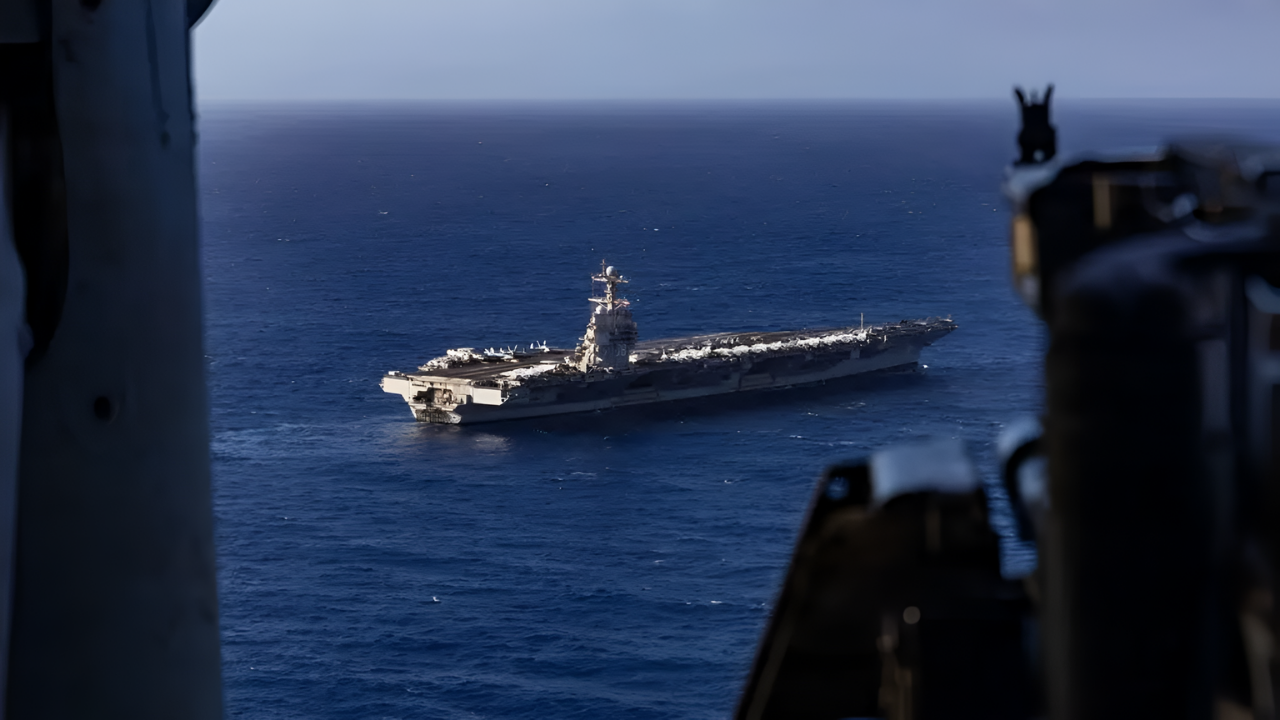
The largest concentration of U.S. naval power in decades is now clustered in the Caribbean Sea, long a corridor for drug interdiction but rarely a focal point of peacetime military planning. As of November 2025, roughly a quarter of all deployed U.S. Navy warships are operating there, a deployment that signals a profound shift in Washington’s posture toward Latin America and especially Venezuela. The scale and proximity of this force have stirred unease across the region, where governments and civilians alike are trying to gauge whether the buildup is primarily about narcotics enforcement, coercive diplomacy, or preparation for a wider confrontation.
Carrier Strike Group in Caribbean Waters
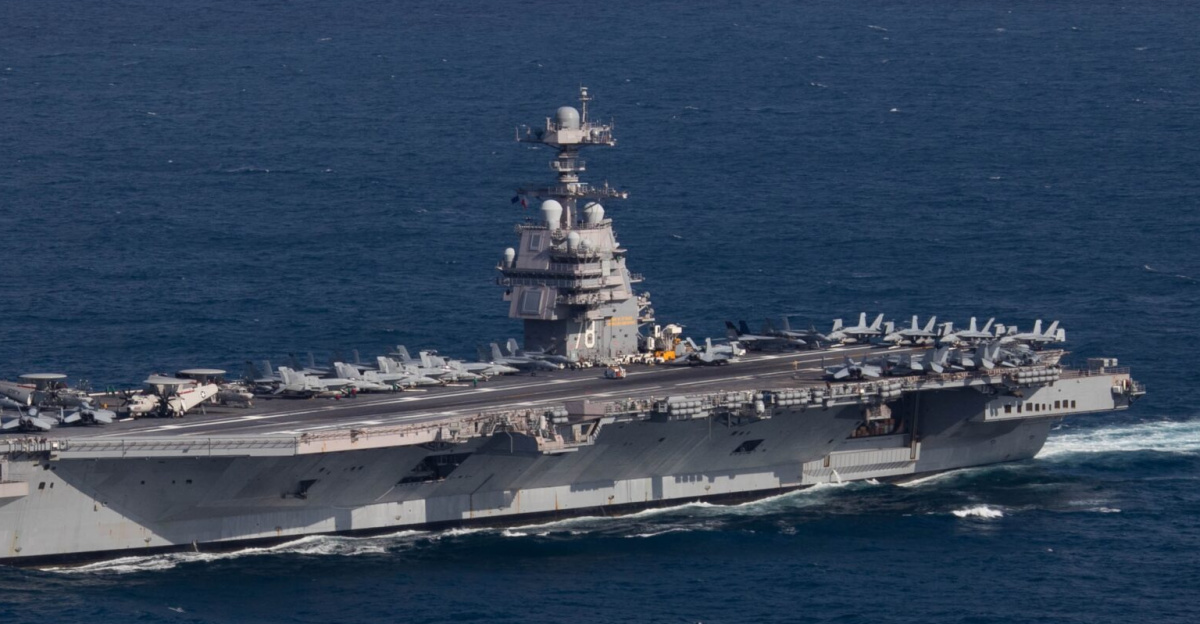
The centerpiece of the deployment is the USS Gerald R. Ford, the Navy’s newest and most advanced aircraft carrier, which arrived in Caribbean waters on November 16, 2025, after a six‑month journey through the Atlantic, Mediterranean, and Arctic. The 100,000‑ton carrier brings more than 4,000 sailors and over 75 aircraft, including F/A‑18 Super Hornets capable of striking targets hundreds of miles inland. Its move south followed an initial period of alliance exercises, notably NATO’s Neptune Strike drills, before Washington redirected the ship toward Venezuela as a constitutional crisis deepened in Caracas. By pairing the Ford with amphibious groups, destroyers, and cruisers, the United States has effectively turned a traditionally low‑intensity zone into a hub of high‑end combat capability.
From Drug Strikes to Operation Southern Spear
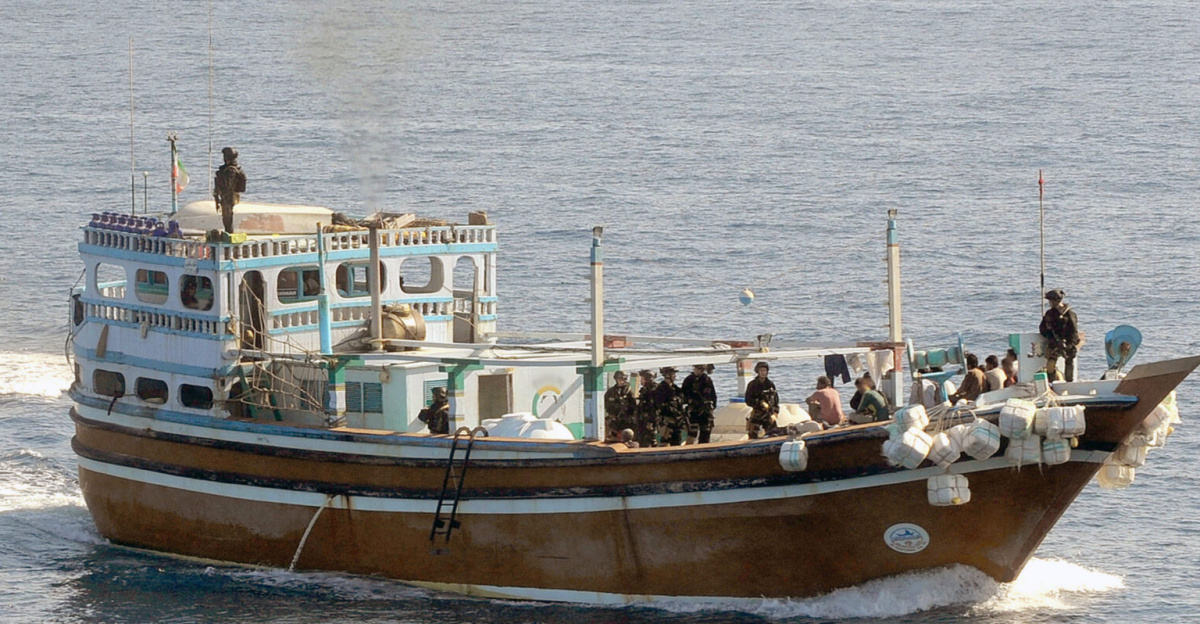
The shift began to crystallize in August 2025, when President Trump authorized a series of military strikes on vessels in the Caribbean and Eastern Pacific suspected of carrying narcotics. Over roughly two months, more than 21 attacks reportedly killed at least 83 people on ships alleged to be involved in trafficking, underscoring a willingness to use lethal force at sea in the name of drug control. In parallel, U.S. agencies explored more aggressive tools on land, with the CIA preparing covert options inside Venezuela and the State Department weighing whether to designate the Venezuelan‑linked Cartel de los Soles as a foreign terrorist organization. The campaign was formalized on November 13, 2025, when Defense Secretary Pete Hegseth announced Operation Southern Spear, described as an effort to dismantle transnational criminal networks and cut narcotics flows. Under that banner, an estimated 15,000 sailors and Marines are now operating as a unified force, blurring the line between limited drug enforcement and a wider military initiative.
Regional Tensions and Humanitarian Strain
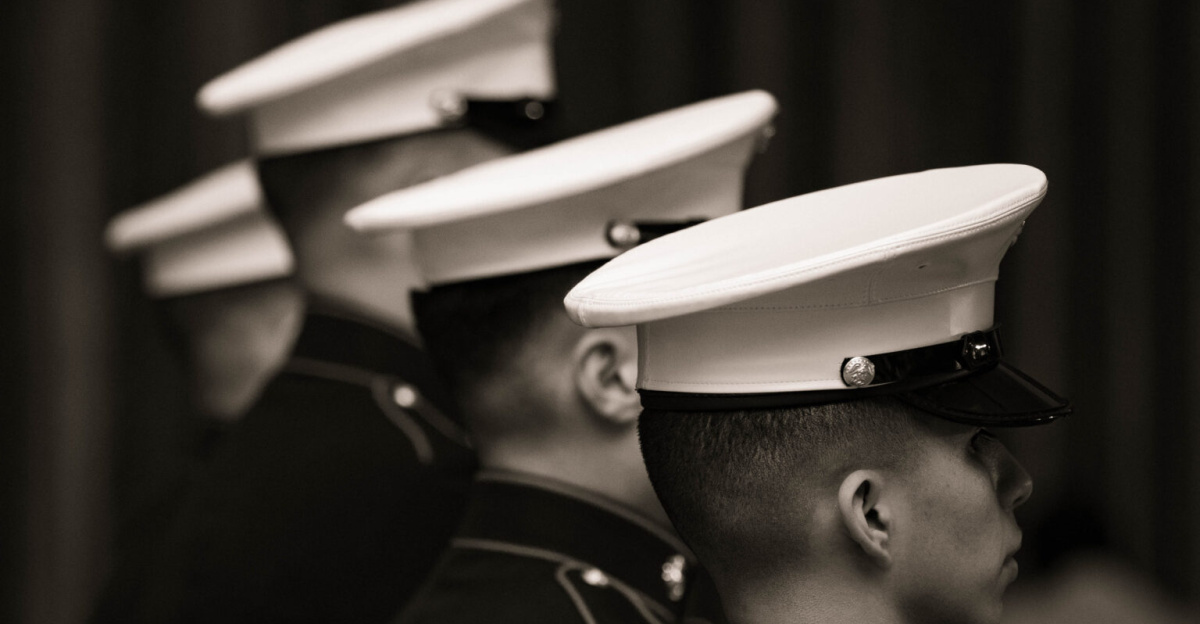
The deployment has immediate consequences for nearby states such as Trinidad and Tobago, only seven miles from Venezuela’s northern coast and already hosting large numbers of Venezuelan refugees and migrants. Joint training exercises with U.S. Marines planned for mid‑November have stoked local anxieties about being drawn into a conflict just offshore. Across the region, humanitarian concerns intersect with security fears as Venezuela’s prolonged economic collapse, political turmoil, and now mounting external pressure converge. Aid groups and analysts warn that intensified military activity could worsen hardships for civilians, both inside Venezuela and in neighboring countries struggling to support millions who have fled. For many residents, the growing presence of warships and warplanes signals not reassurance but the possibility that an already volatile situation could tip into armed confrontation.
Diplomacy, History, and Regional Reactions
Regional governments are navigating a difficult landscape shaped by history and present‑day power imbalances. Colombia, sharing a long border with Venezuela and hosting millions of Venezuelan migrants, faces strong U.S. pressure to align more closely with Washington’s approach even as President Gustavo Petro emphasizes negotiation over force. At the same time, the Trump administration has combined sanctions targeting Petro with trade incentives for Colombian exporters, a strategy designed to influence domestic politics while keeping Bogotá within a U.S.‑led security framework. Elsewhere, countries such as Brazil and Argentina are reassessing previously neutral or low‑key positions as the scale of U.S. deployments becomes clear. Analysts and civil society figures draw parallels to earlier eras of intervention in Latin America and to Cold War flashpoints like the Cuban Missile Crisis, pointing out that dense naval concentrations in the Caribbean during peacetime have been rare and often associated with periods of acute geopolitical tension.
Possible Paths Forward
The buildup has revived longstanding debates about how to address narcotics trafficking, political instability, and humanitarian crises without repeating past patterns of open‑ended intervention. Military pressure may disrupt some smuggling routes and signal resolve toward Venezuelan authorities and criminal groups, but experience suggests that trafficking organizations often adapt, shifting corridors rather than disappearing altogether. Critics argue that durable progress will require broader coordination with regional governments, international institutions, and local communities to tackle the economic and social roots of violence and migration. As the United States tests a more forceful strategy, Latin American leaders, activists, and policy specialists are watching to see whether Washington pairs its display of strength with sustained diplomacy and support for civilian populations. The choices made in the coming year—between escalation and dialogue, coercion and cooperation—are likely to shape not only conditions in the Caribbean but also the future trajectory of U.S. engagement across the hemisphere.
Sources:
U.S. Navy Press Release – Gerald R. Ford Carrier Strike Group Enters Caribbean Sea
Army Recognition – 25% of U.S. Navy’s Deployed Warships Now in Caribbean as Ford Carrier Group Leads Force
Wikipedia – 2025 United States naval deployment in the Caribbean
Al Jazeera – US announces ‘Southern Spear’ mission as forces deploy to South America
New York Times – Trump Said to Authorize C.I.A. Plans for Covert Action in Venezuela
Quincy Institute for Responsible Statecraft – U.S. Military Buildup in the Caribbean Demands Congressional Action