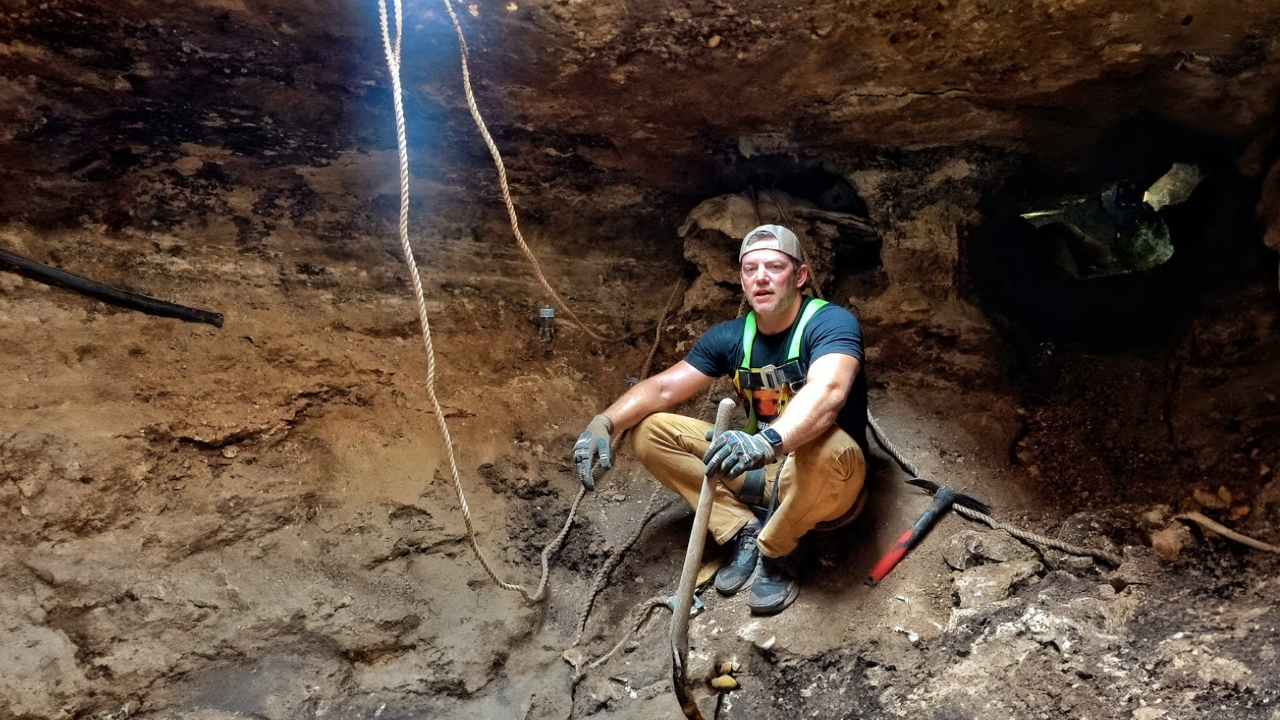
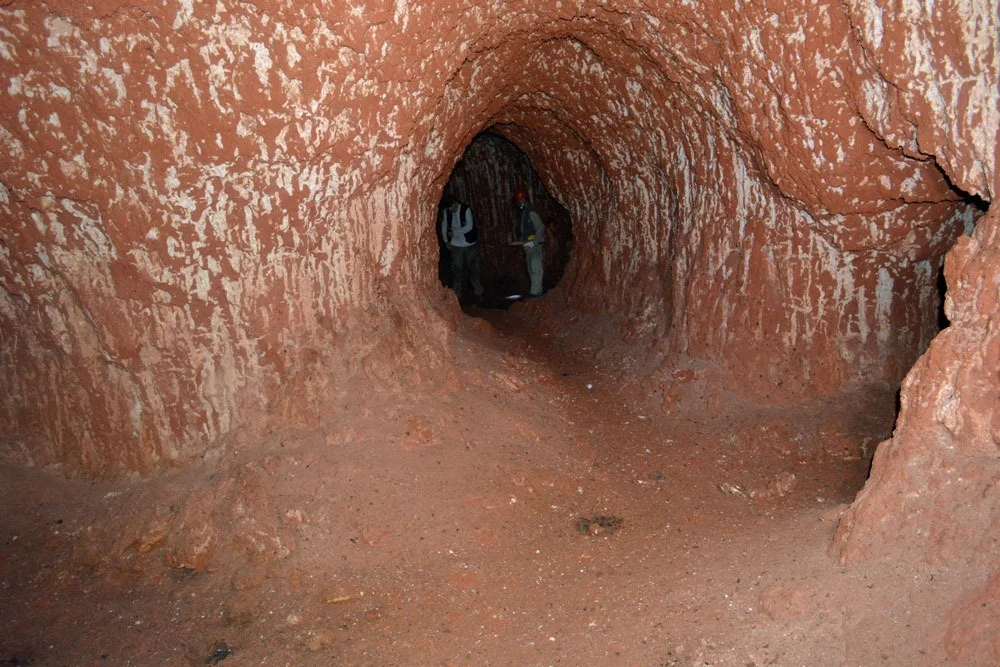
In southern Brazil and northern Argentina, scientists have discovered massive underground tunnels stretching for hundreds of meters. Their carved ceilings and claw-marked walls reveal that these spaces weren’t made by people or natural forces, but very likely by ancient giants, giant ground sloths that lived during the last Ice Age. Some of these paleoburrows measure more than 550 meters long and nearly two meters high, showing impressive construction ability for animals.
Geologist Heinrich Frank first came across one of these unusual tunnels in the early 2000s, during a road-building project in Brazil’s Rio Grande do Sul state. At first, it looked like an ordinary cave, but closer inspection revealed smooth walls marked with long, parallel scratches, as if huge claws had dug them out. Over the next two decades, scientists found more than 1,500 similar tunnels across the region. What started as a random find soon became a key discovery in understanding South America’s ancient wildlife and how it shaped the land.
Ancient Builders of the Pleistocene
The tunnels date back to the Pleistocene epoch, a period that ended about 11,700 years ago, when South America burst with large animals, or megafauna. Among them were massive ground sloths, some weighing up to four tons. These creatures lived through dramatic climate changes and shared their world with predators such as saber-toothed cats. Studies of sediments and minerals inside the tunnels suggest most were created between 20,000 and 40,000 years ago, long before humans spread widely across the region.
Evidence linking the tunnels to giant sloths is strong. The walls show wide claw marks, up to 20 centimeters across, arranged in rhythmic, parallel lines along the burrow length. The tunnels themselves, averaging about 1.5 meters wide and 1.8 meters high, closely match the body size and digging abilities of these animals. Fossilized footprints found on the floors, complete with claw drags, further support this connection. Unlike human-made caves, these tunnels show no sign of tools, fire, or habitation, only the steady work of claws scraping through rock and soil.
Dismissing Other Explanations
Some early researchers wondered if people could have built the tunnels, or if they formed naturally through erosion, lava flows, or water action. But evidence strongly rules those ideas out. Many tunnels were made in hard rock like sandstone or volcanic layers, which would have required advanced tools, technology that didn’t exist when the tunnels were made. They also don’t follow natural fractures or water paths, and their shapes are far too deliberate and consistent to be formed by chance.
Human artifacts such as stone tools, hearths, or remains are completely missing from these sites. That, along with their ancient age, points firmly to animal behavior rather than human engineering. The sheer number and organization of these burrows also make them stand out, networks of dozens of interconnected tunnels per square kilometer, some plunging over ten meters deep with side passages and chambers. The largest ones rival small mines in scale.
What the Burrows Reveal
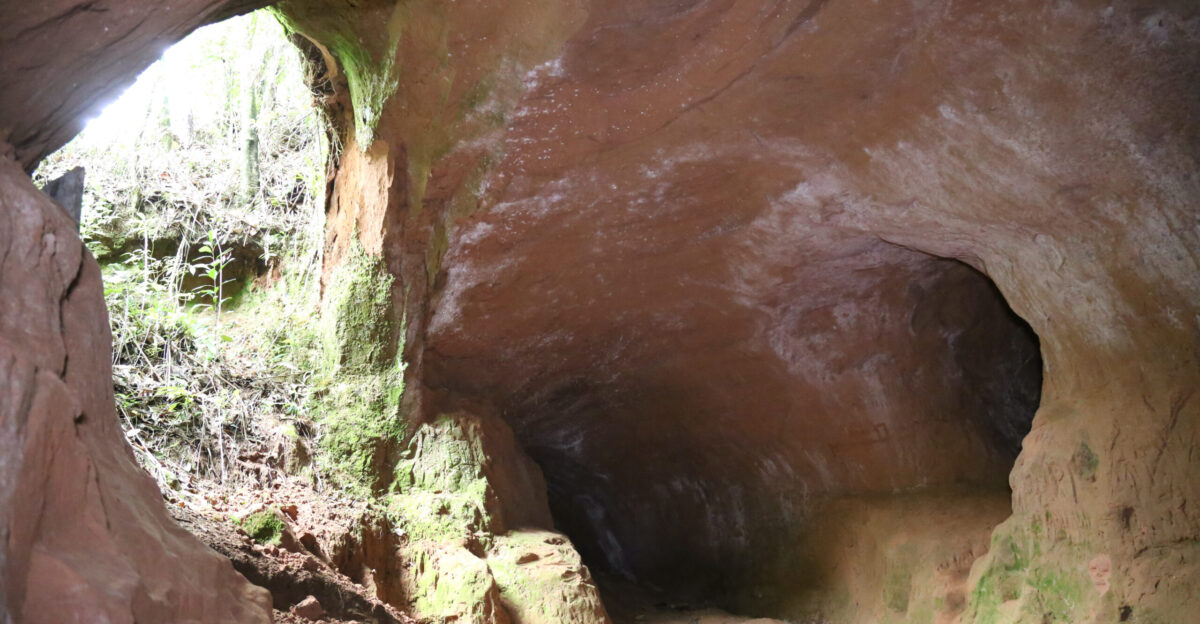
These tunnels do more than show the digging power of giant sloths; they also reveal how these animals shaped their environments. By turning over soil and carving through rock, the sloths changed how water and air moved underground. The burrows improved soil conditions for plants and created stable climates inside, possibly providing shelter from predators or extreme weather. Over many generations, repeated use likely expanded the tunnels, making them lasting parts of the landscape. Even after thousands of years, around 80 percent of them still hold their original form.
Modern technology, including drones, radar, and 3D mapping, has given scientists detailed views of the tunnels’ structure. These images show smooth, rounded ceilings and consistent widths, suggesting the sloths dug carefully and systematically. Computer models of their body movements confirm that giant ground sloths could have created such burrows using steady, powerful strokes with their forelimbs. No land animal alive today makes homes anywhere near this scale. Compared with elephant seal wallows or wombat tunnels, the paleoburrows are monumental in size and complexity.
Footprints from other Pleistocene sites, such as those in White Sands, New Mexico, show that humans occasionally crossed paths with giant sloths, sometimes even following them. This raises fascinating questions about whether people ever encountered these creatures in or near their burrows. Though the sloths are long gone, their incredible handiwork endures, hidden beneath hills and highway cuts.
As construction and exploration continue across South America, more paleoburrows are being unearthed each year. Scientists rush to record them before erosion or development destroys these windows into the past. The tunnels are more than relics of ancient animals; they are monuments to a time when giant sloths literally reshaped the Earth, living architects of the Ice Age whose mysteries scientists are still uncovering today.
Sources:
Giant Sloths Crafted 2000-Foot Tunnels Beneath Brazil and Argentina: Scientists DiscoverSSB Crack (news.ssbcrack.com)
Huge underground tunnels found in South America were not made by humans—footprints…Times of India
Turns Out, Humans Didn’t Make These Massive Mysterious Tunnels In South AmericaThe Travel
Giant underground tunnels discovered in South America—Not made by humans or natural forcesLe Ravi