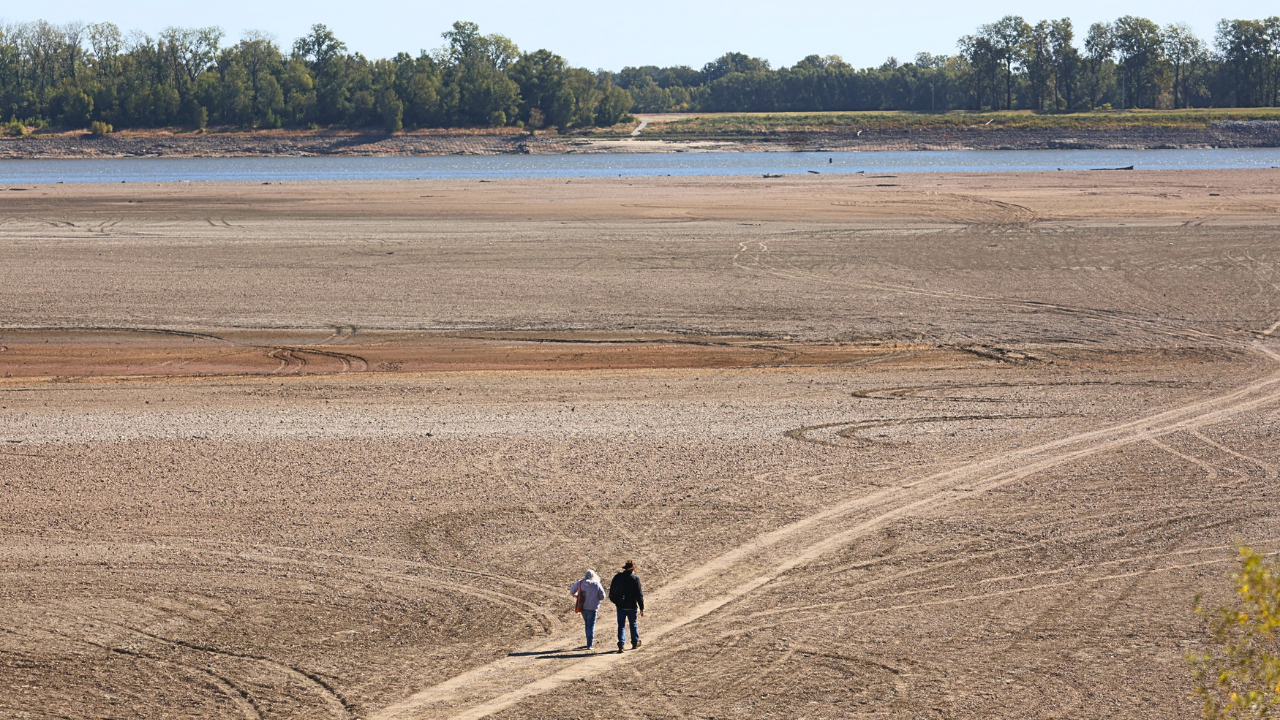
The world’s water systems have crossed a threshold from which there is no return. On January 20, 2026, the United Nations University Institute for Water, Environment and Health released a stark assessment: humanity has entered an era of “water bankruptcy,” a condition far more permanent than the temporary crises scientists have warned about for decades. The distinction matters profoundly. While a crisis implies recovery is possible, bankruptcy signals structural failure—the planet’s water account is not merely overdrawn, it is insolvent.
This declaration marks a fundamental shift in how the global community must understand and respond to water scarcity. The damage already done to Earth’s water systems cannot be reversed on any meaningful timescale. Wetlands that once filtered and stored water have been drained or paved over. Aquifers have been pumped so heavily that their underground structure has collapsed, reducing storage capacity. Glaciers and lakes that served as natural water banks are vanishing. These are not temporary setbacks but permanent losses of natural water capital.
The Collapse of Hidden Reserves
Groundwater has long functioned as humanity’s safety net, the silent reserve tapped when rivers dry and rains fail. That reserve is collapsing. Approximately 70 percent of the world’s major aquifers are now in long-term decline, shrinking faster than nature can refill them. These aquifers supply roughly half of all domestic drinking water and more than 40 percent of irrigation water used to grow food globally. This is not a reaction to a single drought but a pattern created by decades of over-pumping for farms, expanding cities, and heavy industry.
The physical consequences are already visible. In many regions, wells must be drilled deeper each year to chase water slipping away. As aquifers drain, land above them sinks, cracking roads, damaging buildings, and breaking pipes. Around two billion people live on land that is subsiding due to groundwater over-pumping, with some cities sinking by up to 25 centimeters annually.
Lakes and Glaciers in Retreat
Across the globe, lakes and glaciers are shrinking at a pace that alarms even veteran scientists. More than half of the world’s large lakes have lost water since the early 1990s, even as a quarter of the world’s population depends directly on these lakes for drinking water and food production. Global glacier mass has fallen by approximately 30 percent since 1970, with some mountain ranges expected to lose most of their functional glaciers within decades.
Lakes like Chad in Africa and the Aral Sea in Central Asia have shrunk dramatically. Iconic glaciers in the Alps, Andes, and Himalayas retreat year after year. These systems act as giant natural storage banks, holding water in ice and large basins and releasing it slowly over time. Their disappearance removes a crucial buffer against seasonal and annual water variability.
Billions Without Secure Water Access
Behind every statistic are people whose lives are becoming more precarious. The UN report estimates that nearly four billion people experience severe water scarcity for at least one month every year, struggling to secure enough water for drinking, cooking, and basic hygiene. Another 2.2 billion people lack access to safely managed drinking water, and about 3.5 billion lack safe sanitation. Almost three-quarters of the world’s population now lives in countries classified as water-insecure or critically water-insecure.
The geographic distribution of this crisis is uneven but severe. The Middle East and North Africa face extreme pressure, where naturally low rainfall collides with rising temperatures, rapid population growth, and political tensions. In South Asia, relentless groundwater pumping for rice and wheat, combined with expanding cities, has caused water tables to fall sharply. The United States faces its own reckoning, with the Colorado River Basin becoming a symbol of over-promised water.
Cities on the Brink
Mexico City and Kabul illustrate how water bankruptcy can push major urban centers toward collapse. Mexico City, home to around 21 million people, is sinking by roughly 20 inches a year in some areas due to relentless pumping of underlying aquifers. Streets buckle, homes crack, and water pipes rupture, even as residents struggle with shortages and rationing. Engineers warn that some damage is irreversible, raising serious questions about the city’s long-term viability.
Kabul faces a different but equally alarming threat. With rapid population growth, limited infrastructure, and shrinking groundwater, researchers warn the city could effectively run out of usable water by 2030 if current trends continue. That would make Kabul one of the first modern megacities to exhaust its water supply.
Agriculture and Global Food Security
Agriculture consumes about 70 percent of all freshwater withdrawals globally and is one of the sectors most exposed to water bankruptcy. Over 170 million hectares of irrigated cropland—an area roughly equal to France, Spain, Germany, and Italy combined—faces high or very high water stress. In many regions, farmers rely heavily on dwindling rivers and over-pumped aquifers.
Around 100 million hectares of farmland have been damaged by salinization, where salts build up in soil due to poor irrigation and drainage, reducing yields or rendering land unusable. About three billion people and more than half of global food production are located in areas where total water storage is already declining or unstable. Water bankruptcy does not stay within national borders. When a key farming region runs short of water, effects spread through trade, markets, and migration, potentially fueling food price spikes and social unrest.
The Economic Toll
The economic costs are already staggering. Drought alone drains approximately 307 billion U.S. dollars from the global economy every year through failed harvests, reduced hydropower generation, damaged infrastructure, and emergency response. The disappearance of wetlands, which filter water, store floods, and support fisheries, represents an annual loss in natural value of more than 5.1 trillion dollars—roughly equivalent to the combined yearly output of around 135 of the world’s poorest countries. These are not theoretical numbers for the future; they reflect money being lost today.
A New Framework for Response
The UN report calls for a complete shift in how governments and societies approach water. Instead of focusing on short-term crisis response—drilling emergency wells, trucking in water, or building another dam—it urges countries to adopt bankruptcy management. This means rebalancing water rights among farmers, cities, industries, and ecosystems within smaller, more realistic limits. Water-intensive sectors like agriculture may have to change crops, adopt new technologies, or relocate.
The report was released ahead of the 2026 UN Water Conference in Dakar, Senegal, held on January 26–27, with a larger follow-up conference planned in the United Arab Emirates in December 2026. These meetings are seen as crucial moments to redefine global water policy and officially recognize water bankruptcy as a framework for understanding current realities.
The declaration of global water bankruptcy is not intended as a message of despair but as a demand for realism and transformation. Humanity cannot regrow glaciers or restore compacted aquifers on any meaningful timescale, but it can choose to stop further destruction and redesign economies, cities, and food systems to operate within new limits. Over the next decade, those decisions will determine whether billions of people adjust to new water realities or are pushed into hunger, migration, and conflict.
—
Sources
UN University Institute for Water, Environment and Health – Global Water Bankruptcy: Living Beyond Our Hydrological Means in the Post-Crisis Era – 20 January 2026
UN News – World enters era of “global water bankruptcy” – 19 January 2026
ABC News – The planet has entered an era of “water bankruptcy,” according to a new UN report – 21 January 2026
CNN – The world has entered a new era of “water bankruptcy” with irreversible consequences, UN warns – 20 January 2026
Reuters (via Daily Maverick) – Looming water supply “bankruptcy” puts billions at risk, UN report warns – 19 January 2026