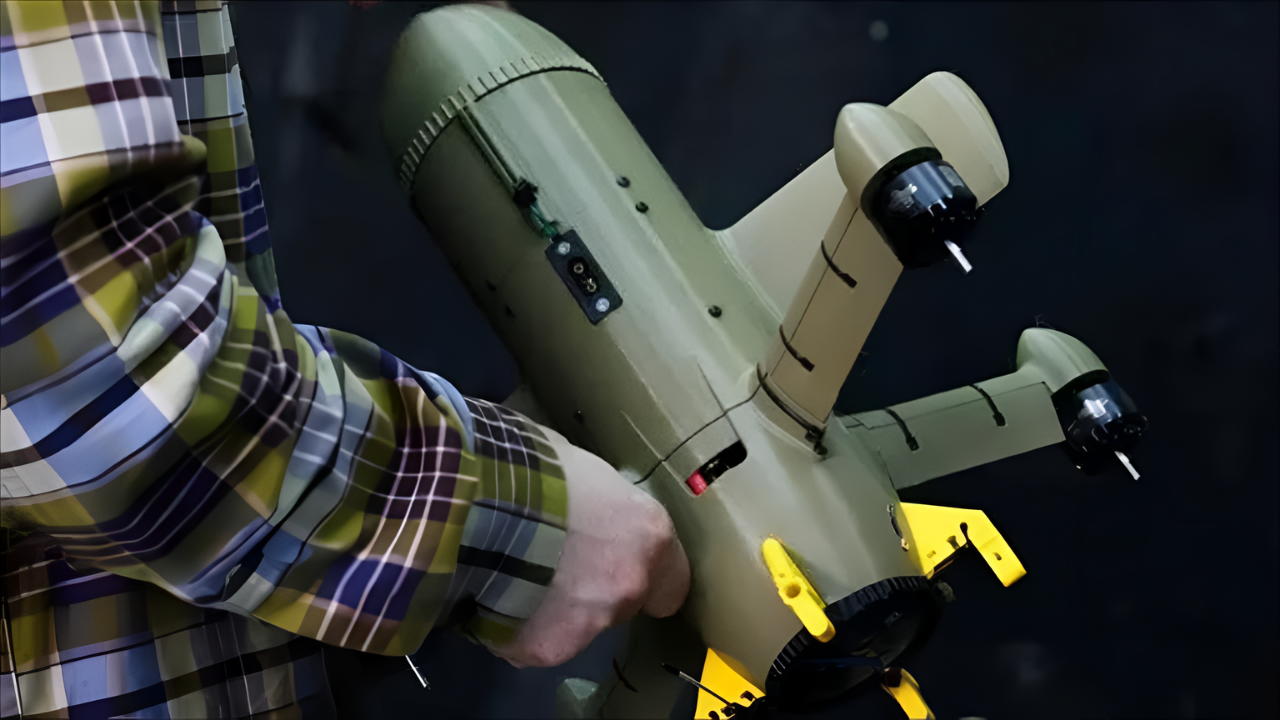
On the night of November 29–30, 2025, Ukrainian forces demonstrated a watershed moment in modern aerial warfare. Ukrainian-made Sting interceptor drones successfully shot down several Russian Geran-3 jet-powered attack drones for the first confirmed time, marking the first verified drone-on-drone interception of a jet-powered loitering munition in actual combat. Russia launched 138 Geran-3 jet-powered drones during the mass strike, and Ukrainian air defenses destroyed most of them, fundamentally challenging the long-held assumption that swarm attacks using high-speed drones are unstoppable.
The Threat: Russia’s Geran-3 Jet-Powered Drone
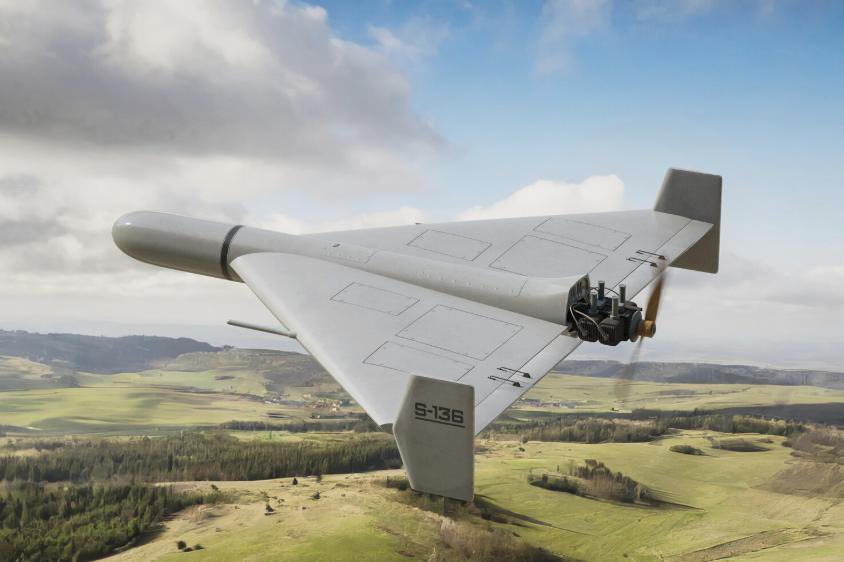
The Geran-3 represents a significant evolution in Russian aerial weaponry. Approximately 3.5 meters long with a 3-meter wingspan, it carries a 50-kilogram warhead and reaches speeds of 550–600 km/h, with a range extending up to 2,500 kilometers. However, operational speeds typically remain between 300–350 km/h, reaching peak velocity only on limited route segments. The sheer scale of Russia’s deployment—138 drones carrying nearly seven metric tons of combined explosives—underscores the intensity of the aerial campaign against Ukrainian cities and infrastructure.
The Solution: Ukraine’s Sting Interceptor System
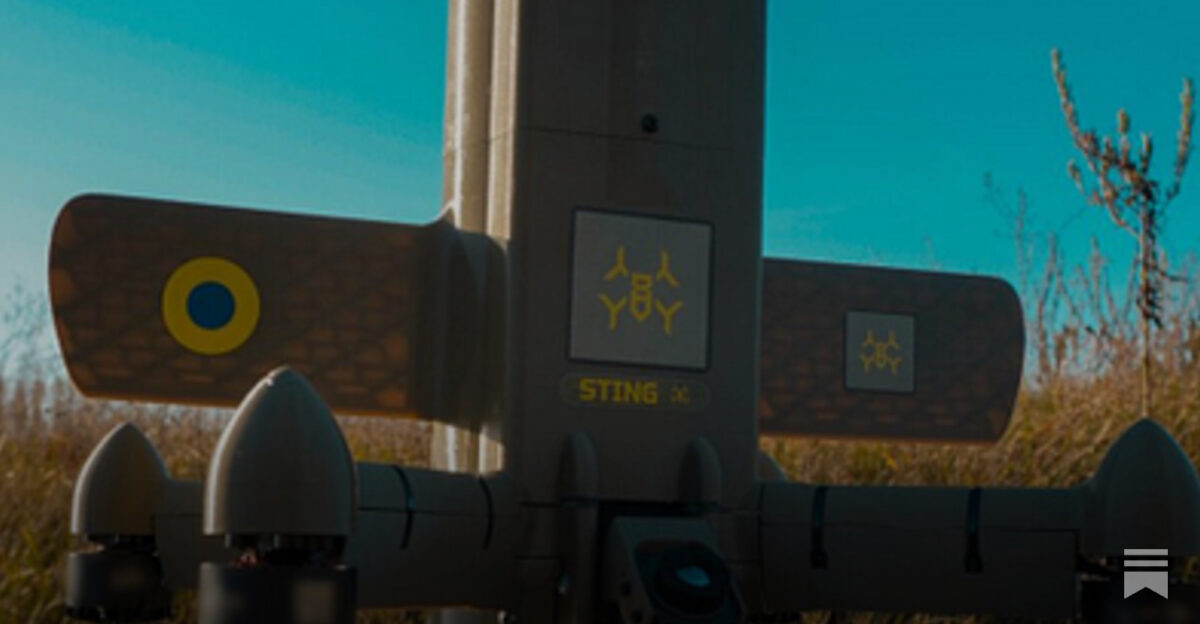
Ukraine’s response came through the Sting interceptor drone, developed by the Ukrainian engineering group Wild Hornets. Each unit costs approximately $2,500, making it dramatically cheaper than traditional missile interceptors. The Sting is equipped with an AI-based guidance system, operates via VR goggles, and reaches speeds of up to 315 km/h at altitudes approaching 3 kilometers. Despite its lower theoretical top speed, the interceptor succeeds through networked detection, predictive pathing, and human-in-the-loop control. Rather than chasing at maximum speed, Sting drones position themselves along projected flight corridors, demonstrating that raw velocity alone does not guarantee survivability in modern drone warfare.
The scale of success has been substantial. According to developers and volunteer operators, Sting interceptor drones have destroyed more than 1,000 Shaheds and Gerans over recent months, including both propeller-driven and jet-powered variants. The November 29–30 engagement validated the system’s ability to neutralize Russia’s fastest Shahed-type drones at industrial combat scale. Each $2,500 Sting drone intercepts attack drones estimated to cost tens of thousands of dollars per unit, creating a dramatic cost asymmetry. In a single night, Russia expended millions of dollars in assets while Ukraine relied on inexpensive interceptors that can be mass-produced rapidly.
Behind this technological achievement lies a distinctly Ukrainian model of wartime innovation. The Sternenko Community Foundation, founded by activist Serhii Sternenko, plays a central role in supporting Sting production through crowdfunding and logistics. Volunteer engineers, drone builders, and front-line operators work in rapid feedback cycles—designing, testing, deploying, and refining interceptors under combat conditions. This citizen-supported production model has enabled Ukraine to scale an advanced air-defense capability without relying solely on traditional defense-industry timelines, reinforcing Ukraine’s global image as a high-technology battlefield innovator.
Strategic Implications and the Future of Drone Warfare
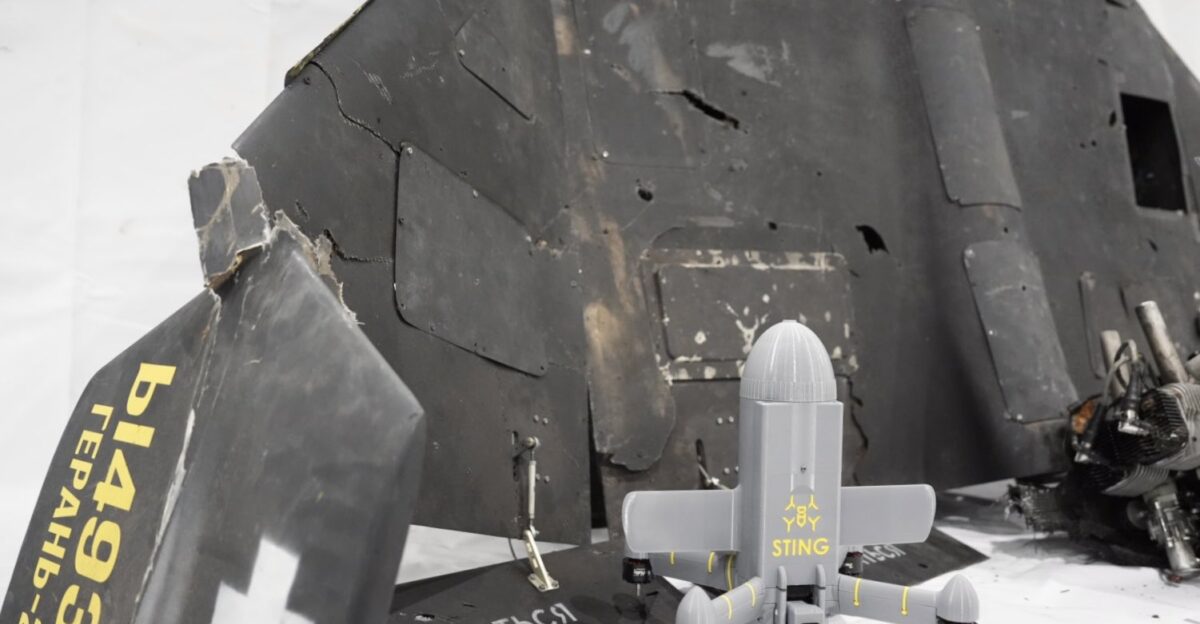
The tactical implications extend beyond immediate military effectiveness. Traditional surface-to-air missiles remain essential against aircraft and ballistic threats, but interceptor drones offer a distributed, reusable, low-cost alternative for neutralizing mass drone swarms. This layered defense approach relieves pressure on Ukraine’s limited missile stocks while providing direct civilian protection. Each intercepted Geran-3 removes a 50-kilogram explosive threat from Ukrainian cities and residential zones, making interceptor drones not only a military tool but a lifesaving system for civilians.
Russia’s drone doctrine now faces mounting pressure. With over 1,000 drones already destroyed by Stings, the economic logic of saturation attacks weakens. Russia confronts rising attrition without guaranteed penetration, likely forcing adjustments in launch volumes, routes, decoys, electronic warfare usage, or entirely new drone designs. Meanwhile, an accelerating technological arms race is underway. As interceptor drones prove effective, Russia will pursue counter-countermeasures, while Ukraine continues refining AI guidance, detection range, and interceptor autonomy.
The November breakthrough confirms that even the fastest swarm weapons can now be hunted, intercepted, and destroyed by systems costing a fraction of their price. This achievement reshapes how militaries worldwide will approach mass drone defense, establishing interceptor drones as a formal new category of air-defense weapons and proving that drone-on-drone air defense works reliably against high-speed threats in large-scale combat operations.