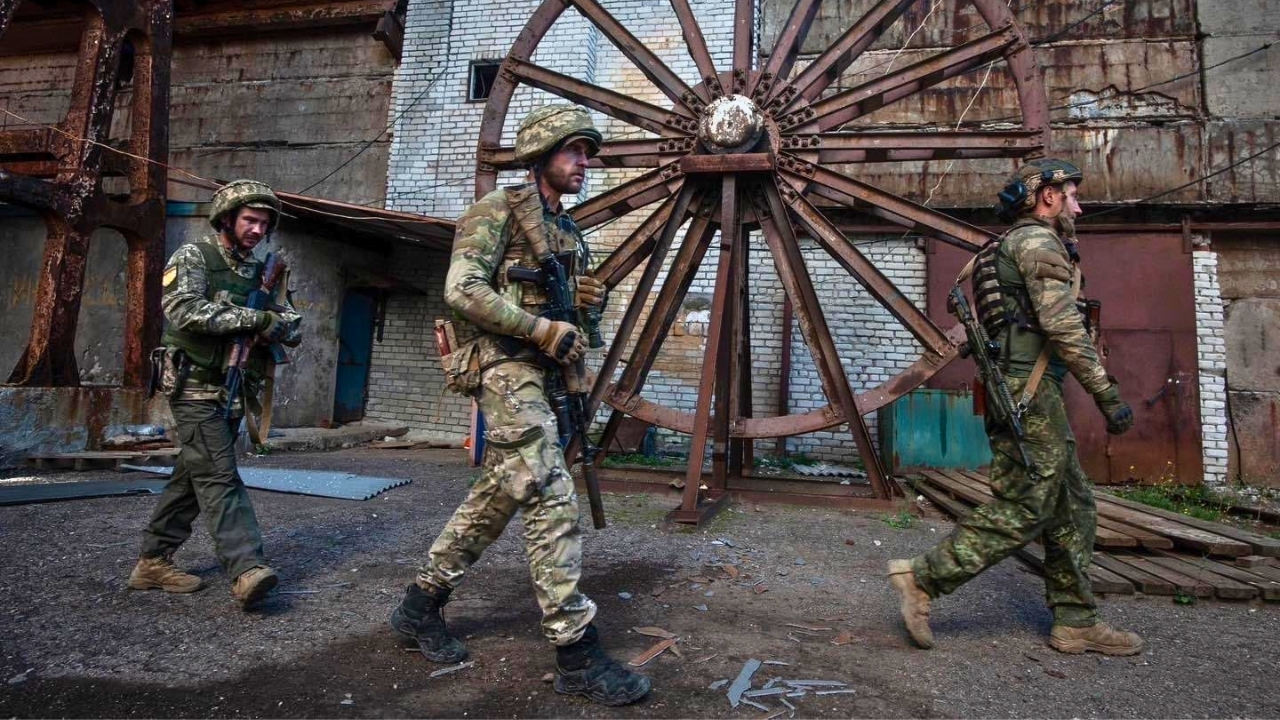
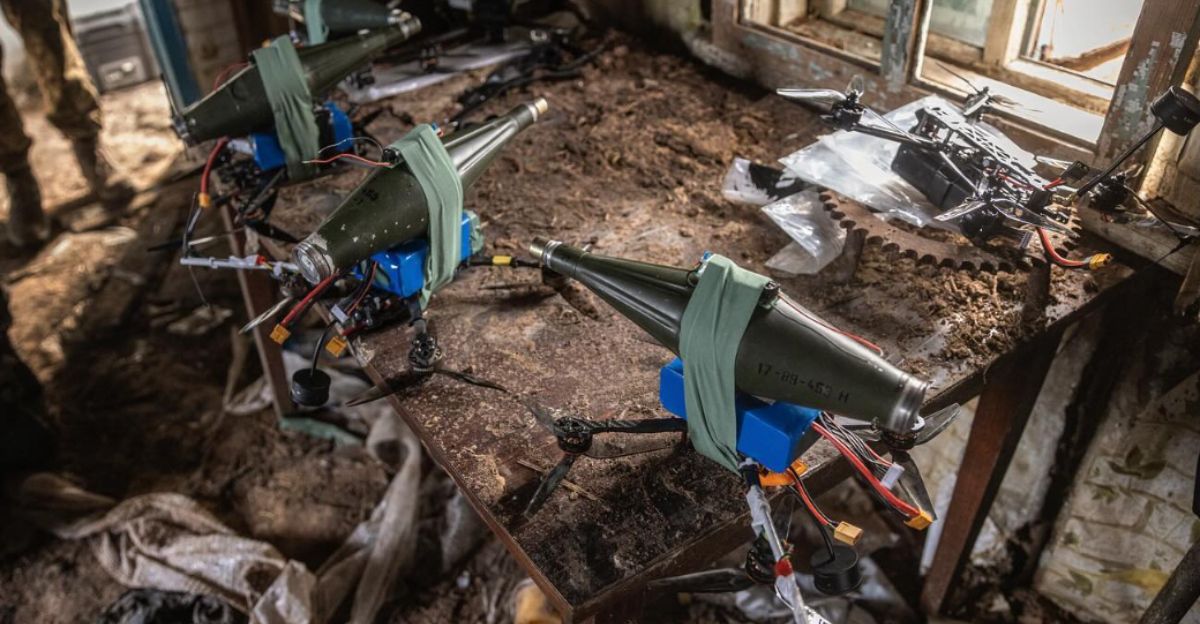
On November 22, 2025, a Ukrainian drone pilot known by the call sign Voyazh carried out a successful attack deep inside Russian-controlled territory in the Donetsk region. The mission destroyed a PPRU-1 command post, a mobile system used by Russia to coordinate short-range air-defense operations. Ukrainian officials confirmed the strike with photos showing the destroyed equipment. The drone used in the mission was part of the Phoenix unit of Ukraine’s State Border Guard Service, which has become known for using advanced drones to hit important Russian targets.
This attack is one of several showing how Ukraine has improved its ability to strike behind enemy lines using small, precise drones. Drones that once began as basic, improvised weapons have become professional-grade tools capable of reaching and destroying heavily protected military systems. The loss of the PPRU-1 is a serious setback for Russian forces, as the system plays a vital role in controlling air-defense across multiple battle zones.
The Operation and Technical Details
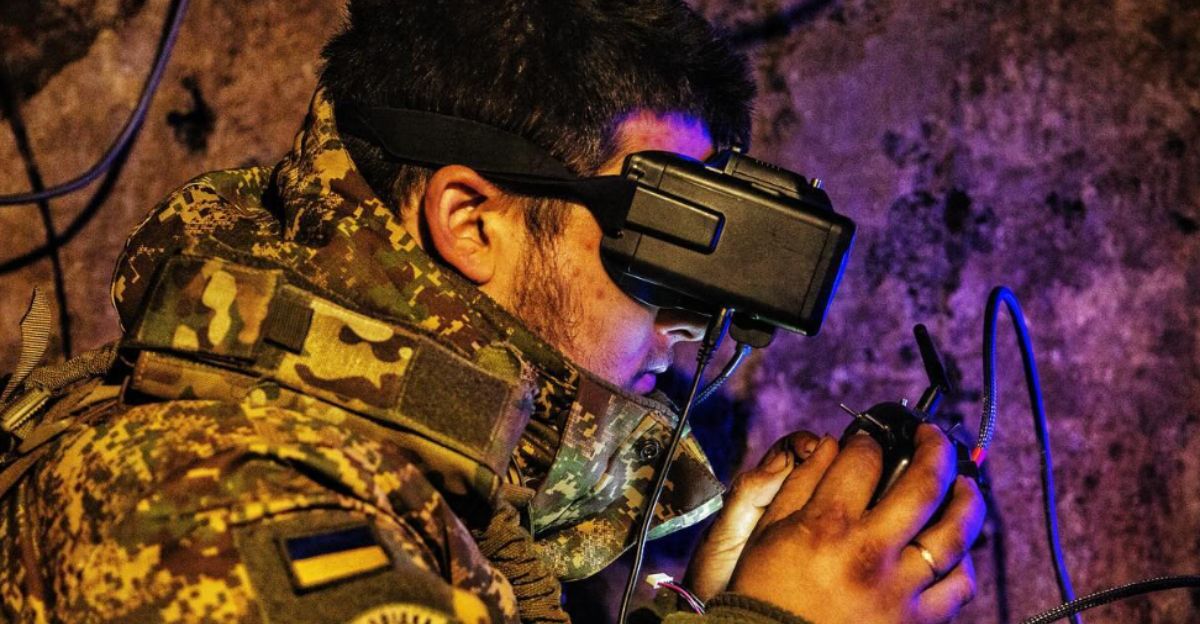
Voyazh’s mission involved flying several kilometers into Russian-controlled territory while relying on limited visual data from a first-person-view (FPV) drone camera. FPV drones are small, manually controlled aircraft that send live video feeds to the pilot, allowing precise navigation and targeting. Despite obstacles such as poor visibility and strong electronic interference, the pilot identified suspicious military activity near a hidden site and decided to engage. The strike hit the camouflaged PPRU-1, completely destroying it.
The PPRU-1, known to NATO as “Dog Ear,” was first developed in the Soviet Union in 1978. It is built on an armored vehicle called the MT-LBu and contains radar, tracking, and communication systems used to coordinate other air-defense units. Although several decades old, Russia still relies on these systems because they play a key role in connecting newer and older defense technologies within its national air-defense network. Without them, Russian air-defense units struggle to communicate and coordinate effectively, making it easier for Ukraine to carry out air operations.
Why the Target Was Important
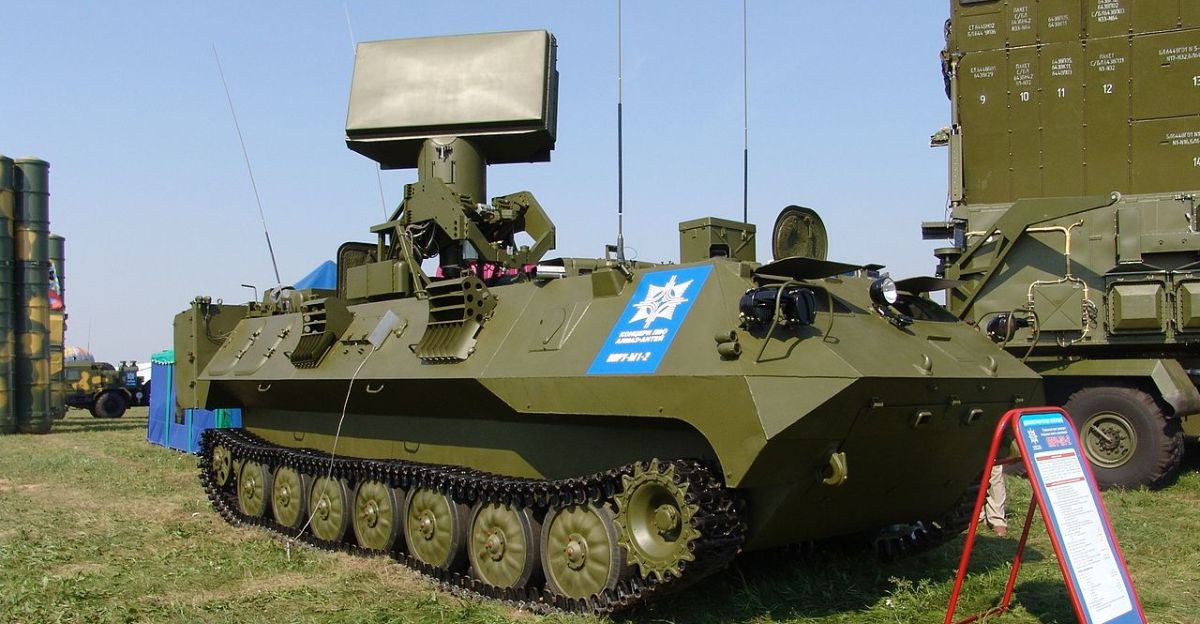
The PPRU-1 acts as a central hub for short-range air-defense systems. A single unit can manage up to four Tor-M1 or Osa-AKM missile systems, six Strela-10 or Tunguska vehicles, and multiple anti-aircraft gun units at once. It can detect planes or incoming threats from over 40 kilometers away and track up to 99 targets simultaneously. This makes it essential for organizing defenses quickly across several sectors.
Destroying one of these command posts severely disrupts Russia’s air-defense network. Without centralized coordination, individual air-defense systems must work on their own, greatly weakening their effectiveness. On the same night as the strike, Ukrainian forces also shot down 89 of 104 incoming Russian drones. The combined pressure from both offensive and defensive operations placed major stress on Russia’s already overloaded air-defense systems, forcing them to operate with fewer command nodes and less coordination.
Strategic and Human Impact
Ukraine’s recent actions suggest a larger strategy: systematically disabling the key systems that keep Russia’s air defenses organized. By attacking command posts like the PPRU-1, radar stations, and communication hubs across multiple regions, Ukraine aims to reduce Russia’s ability to protect its airspace. The more command systems are lost, the harder it becomes for Russian forces to respond effectively to future drone or missile attacks.
Replacing the destroyed PPRU-1 systems will be difficult for Russia. Many are old and require specialized parts or trained personnel that are in increasingly short supply. The military must now rely on outdated backup systems or leave certain sectors less protected. This situation presents long-term challenges for Russia, as its air-defense coverage becomes thinner and more inconsistent over time.
In addition to the loss of equipment, trained air-defense crews are also affected. Operators specializing in the PPRU-1 must now adapt to new systems or work under reduced coordination, increasing the risk of mistakes during combat. This adds to Russia’s existing personnel shortages, where frequent rotations, battlefield losses, and limited training time have already strained its forces.
Looking Ahead

The destruction of this PPRU-1 raises key questions for both sides. For Ukraine, the success highlights the growing effectiveness of drone warfare and the possibility of continuing to weaken Russian defenses through targeted strikes. For Russia, it exposes the difficulty of maintaining complex military systems under constant attack. If Ukraine continues to destroy these command centers faster than Russia can replace them, it could eventually cause the air-defense network to operate as separate, less-effective units instead of a coordinated system.
The next few months will reveal whether Ukraine can sustain this advantage. If similar operations continue, Russia may face serious long-term challenges in defending its occupied territories and critical assets from future Ukrainian air and drone assaults. The strike carried out by Voyazh thus represents not only a tactical victory but also a potential shift in how modern warfare depends on precision technology and rapid adaptation.
Sources
State Border Guard Service of Ukraine. (2025, November 22). The “Phoenix” UAV unit destroyed a unique target: the PPRU-1 “Ovod.”
Stanford Security Studies. (2024). Small, low-altitude drones and detection challenges.
Military Technology Assessment. Military Review. (2025, November). The evolution of air defense: Adapting to emerging threats.
U.S. Army Publications. Commander Syrskyi, Ukrainian Armed Forces. (2025, August 7). Ukrainian military report on drone operations.
Kyiv Independent.