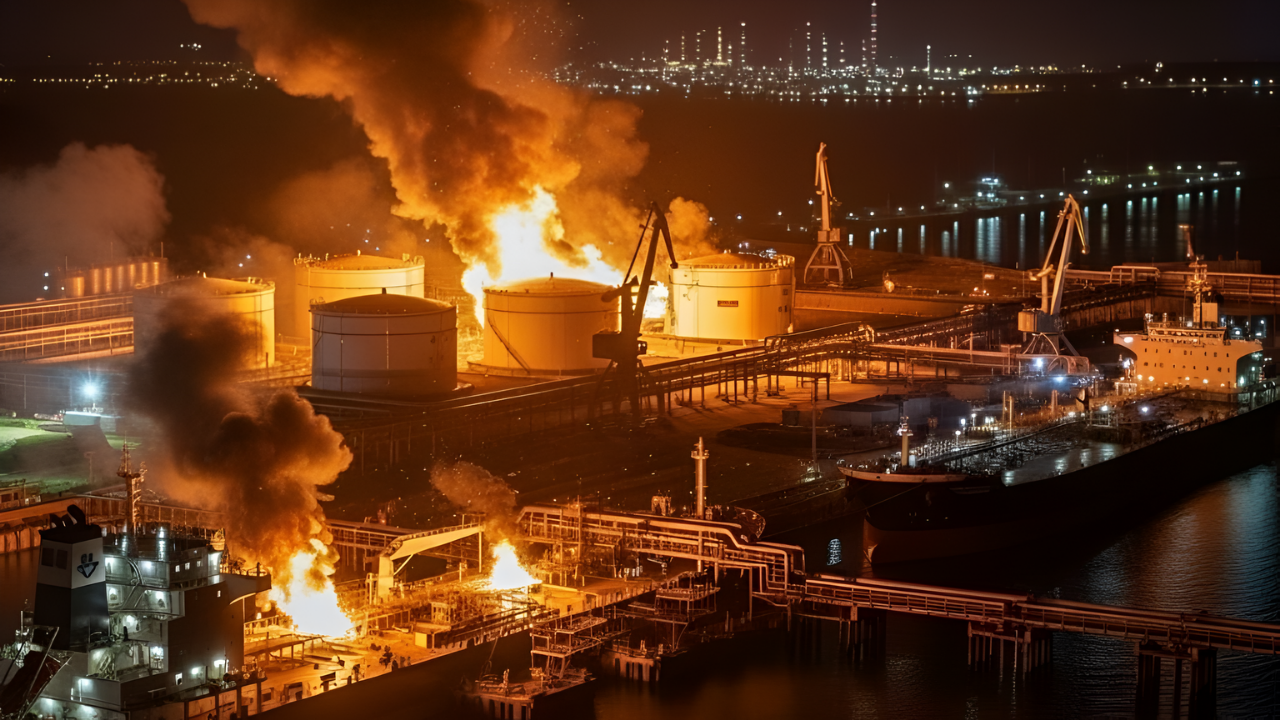
Russia’s oil export infrastructure faces an unprecedented threat. The Novorossiysk port complex, stretching along Russia’s southern coast, processes roughly 20% of the nation’s crude exports a staggering volume that fuels Moscow’s war machine and generates billions in revenue. Yet this strategic hub has become a magnet for Ukrainian strikes.
In recent weeks, drone attacks have escalated in frequency and precision, targeting the very facilities Moscow relies on to move oil to global markets. The question hanging over energy markets: how much longer can this critical artery survive?
When 2% Shakes Global Markets
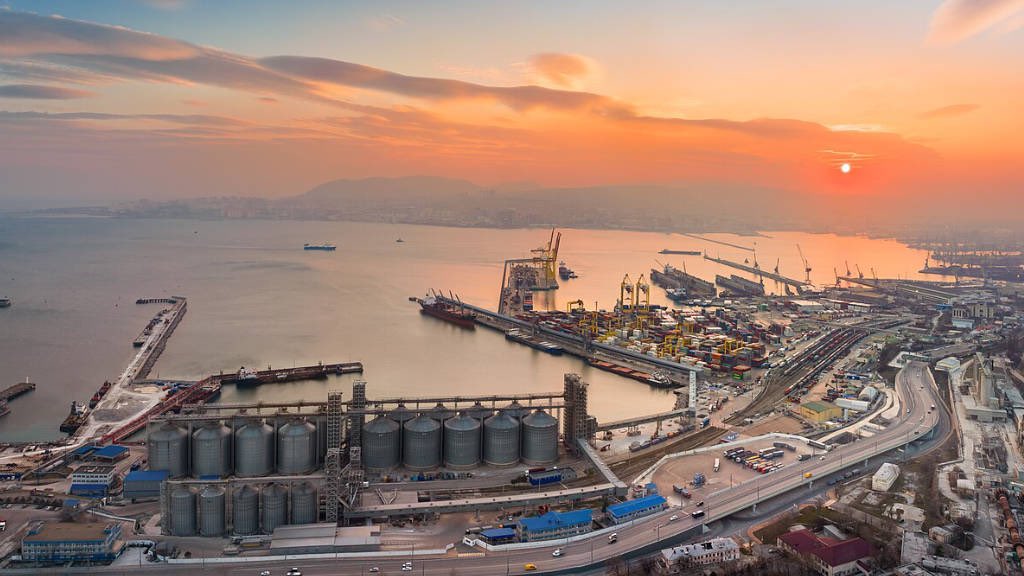
Two percent might sound modest, but in the oil world, it’s seismic. The global crude market processes approximately 103 million barrels daily, so 2% represents roughly 2.2 million barrels vanishing overnight. For context, that’s equivalent to Saudi Arabia’s daily output or Libya’s entire production capacity.
When supply disruptions hit this scale, they ripple through refineries, heating-oil shortages, and fuel prices at your local pump. Energy traders have learned that even minor supply hiccups can trigger volatility across commodities and equities. What happens when that 2% stays offline for weeks?
The Caspian Pipeline Consortium’s Strategic Role
The Caspian Pipeline Consortium wasn’t built as a Russian asset it’s a 1992 joint venture bringing together Russia, Kazakhstan, and major Western energy firms including Chevron, ExxonMobil, Shell, and Eni. This unusual partnership reflects Cold War thaw and post-Soviet energy pragmatism.
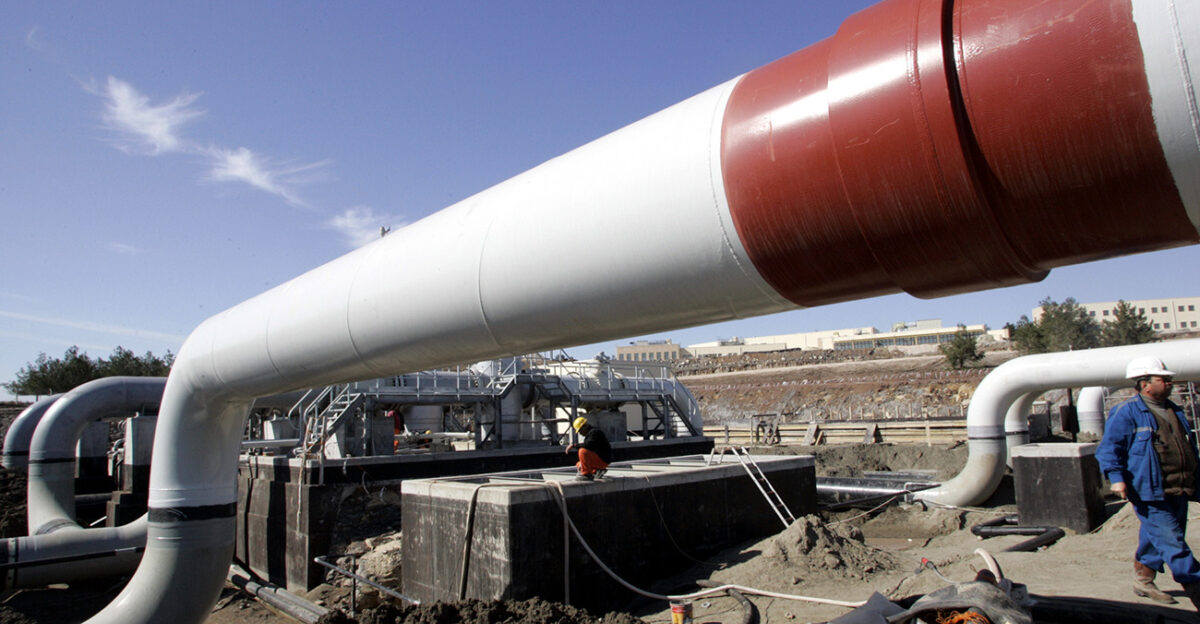
The CPC operates the world’s longest oil pipeline, stretching over 1,500 kilometers from western Kazakhstan’s massive Tengiz, Kashagan, and Karachaganak fields to Novorossiysk’s marine terminal on the Black Sea. In 2024, it shipped 63 million tonnes of crude annually making it indispensable for global energy balance.
Escalating Strikes: A Pattern Emerges
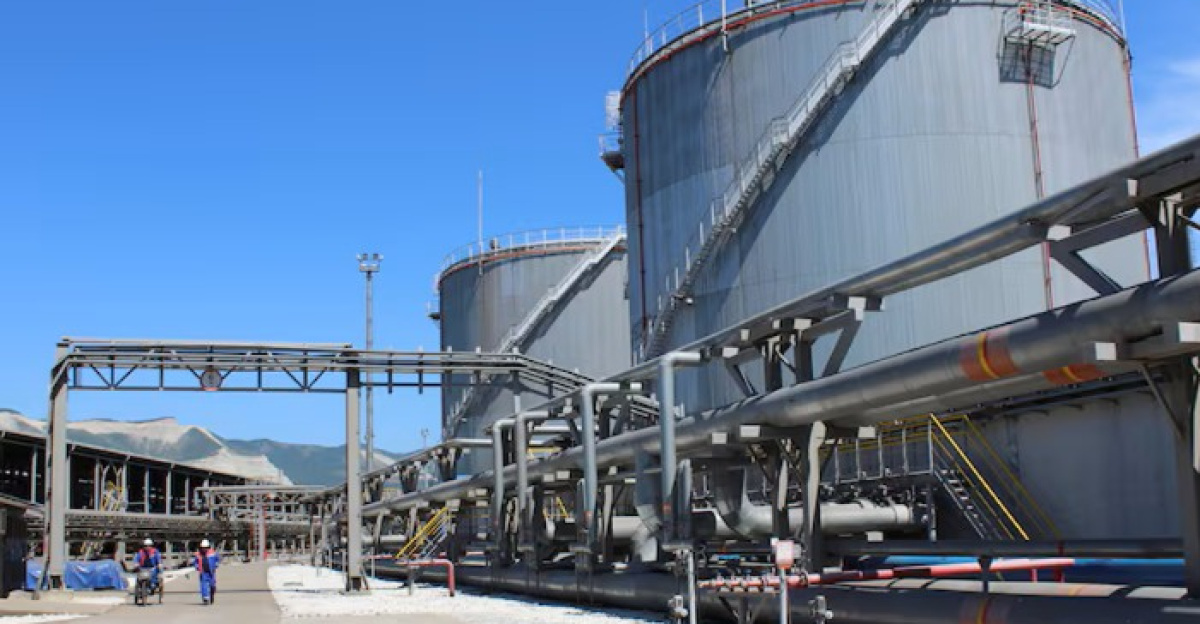
Ukraine’s campaign against Russian oil exports has intensified dramatically. In September 2025, drones hit the CPC’s city office in Novorossiysk. By mid-November, strikes damaged port infrastructure, oil depots, and container terminals. On November 25, another attack targeted the CPC’s administrative building at the marine terminal.
Then, just four days later, the pace accelerated further. Each strike demonstrates evolving targeting precision and Ukrainian determination to degrade Moscow’s financial capacity. The succession of attacks suggests a coordinated strategy not random harassment, but calculated attrition aimed at Russia’s economic lifeline.
The November 29 Strike: SPM-2 Crippled

On November 29, 2025, at 04:06 Moscow time, Ukrainian uncrewed surface vessels commonly known as sea drones struck the Caspian Pipeline Consortium’s marine terminal in Novorossiysk. Their target: the SPM-2 single-point mooring unit, one of three floating buoys through which oil is loaded onto tankers. The impact was catastrophic.
CPC issued an immediate statement: the SPM-2 mooring unit suffered serious damage, making its operation impossible. All cargo operations halted instantly. Tankers were ordered out of CPC waters. The emergency protection system automatically shut off pipelines, preventing an ecological disaster.
Kazakhstan’s Dilemma: Caught in the Crossfire
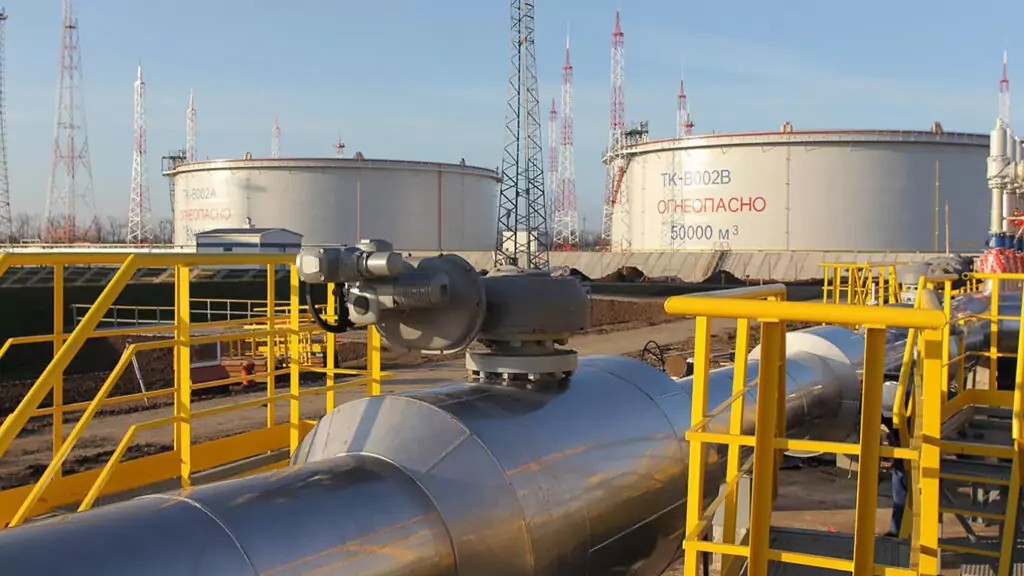
Kazakhstan pumps roughly 2% of global oil output and the CPC handles approximately 80% of Kazakh crude exports. This makes Almaty acutely vulnerable to Ukraine’s targeting strategy. When SPM-2 fell offline, Kazakhstan lost direct access to roughly 55 million tonnes of annual export capacity.
On November 30, Kazakh officials publicly protested the attack, describing the CPC terminal as an exclusively civilian facility and calling on Ukraine to cease strikes. Yet Kazakhstan faces an impossible position: it cannot abandon Russian pipelines without economic catastrophe, nor can it ignore Ukrainian grievances in an existential war. The nation remains trapped between competing allies and adversaries.
Western Energy Giants Face Unexpected Losses
The November 29 strike hit Chevron, ExxonMobil, Shell, and Eni where it matters most: their bottom line. These companies collectively own 30-plus percent of CPC and profit directly from each barrel shipped through Novorossiysk. When operations froze, so did their daily revenue streams.
Reuters reported that the terminal was halting roughly 2.2 million barrels per day about 46.6 million tonnes of annual foreign-shipper throughput suddenly offline. For Chevron and ExxonMobil, both operating in Kazakhstan under production-sharing agreements, the strike represents uninsured loss. None of these firms publicly acknowledged the attack’s impact, but energy traders immediately priced in supply anxiety.
The Baltic Port Collapse: A Wider Pattern
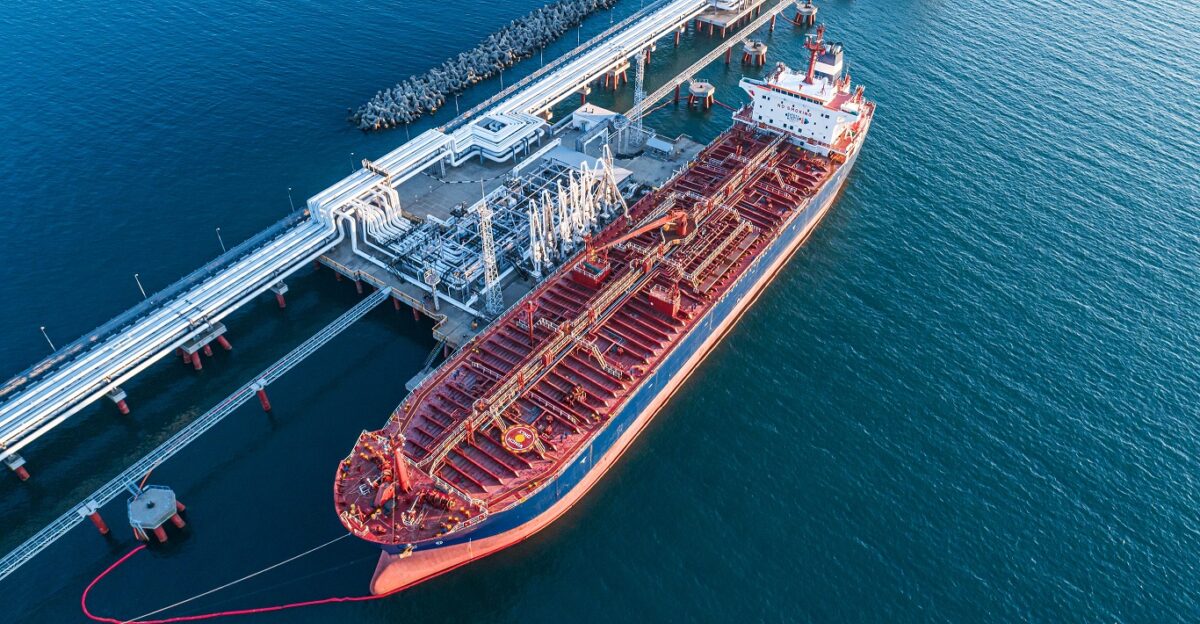
Novorossiysk is not Russia’s only wounded oil hub. Primorsk, located on the Baltic Sea and Russia’s largest crude export terminal, has hemorrhaged export capacity over recent weeks. Last week, shipments plummeted 73% a 3.7-fold collapse to just 43,000 tonnes per day.
This suggests a broader Ukrainian strategy targeting Russia’s entire oil export infrastructure simultaneously. With Novorossiysk crippled and Primorsk strangled, Russia’s remaining export options dwindle. Alternative routes through the Arctic or Caspian face logistical and geopolitical constraints. Moscow’s crude increasingly faces a blockade, not by conventional military means, but by precision drone warfare against fixed infrastructure.
Global Oil Market Braces for Volatility

Energy Aspects, the independent commodities analyst firm, estimated that the CPC strike reduces near-term global crude supply by approximately 50% of the terminal’s normal capacity translating to roughly 1 million barrels daily offline. This supply shock ripples through three distinct channels: refineries that contract CPC crude face procurement gaps; tanker operators lose lucrative charter contracts; and OPEC faces pressure to raise output or risk price spikes that could trigger recession fears.
Brent crude futures have already absorbed the news, though spot prices remain volatile pending clarity on repair timelines. Market watchers cite the strike as evidence that oil-price ceilings are now dictated by drone precision, not OPEC quotas.
The Environmental Near-Miss: Catastrophe Averted
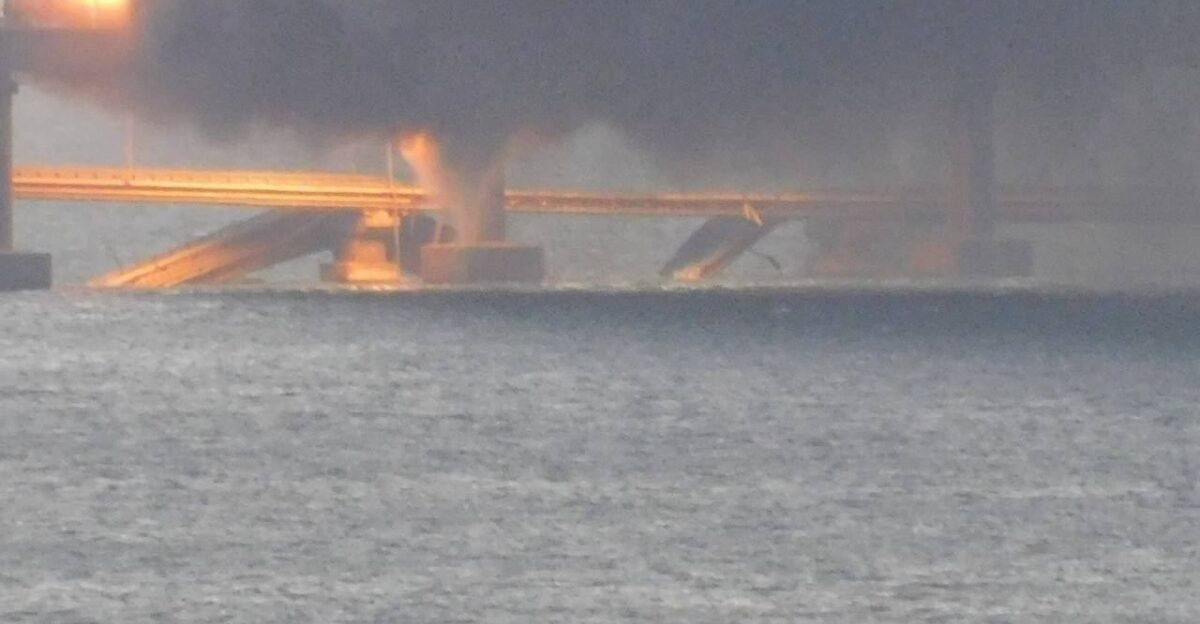
Here’s the collateral narrative most headlines missed: the November 29 strike nearly triggered an ecological catastrophe. When the drone impacted SPM-2, the CPC’s emergency protection system automatically shut off all relevant pipelines a fraction of a second prevented crude from spilling into the Black Sea. Environmental monitoring teams were mobilized immediately.
Seawater samples were collected. The emergency oil-spill response plan was activated. Had the pipeline system failed to auto-isolate, the environmental damage could have exceeded the 2023 Kerch Strait spill or the 2014 Deepwater Horizon disaster proportionally. The strike’s true risk wasn’t just economic it was ecological.
Repair Timeline: The Unanswered Question
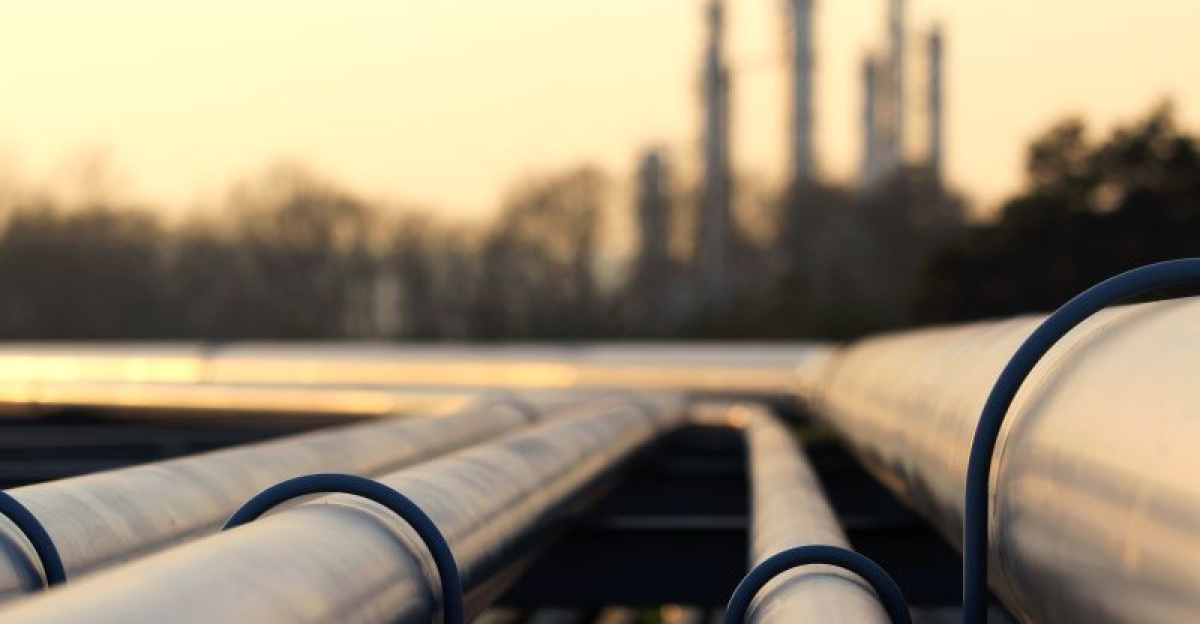
CPC offered no public estimate for SPM-2 restoration. This silence is telling. A typical single-point mooring damaged by explosive force requires weeks or months to repair assuming replacement parts exist and can be delivered amid war. If structural damage extends to subsurface components or the pipeline manifold, repairs could stretch into 2026.
Energy traders have begun pricing in a “long halt” scenario. Meanwhile, Kazakhstan’s government grows restless. Refineries worldwide are adjusting inventory strategies. Chevron and ExxonMobil have not issued public statements, but corporate communications suggest frustration with the impossibility of conducting energy diplomacy amid active warfare.
CPC’s Partial Recovery: One Mooring Stands Alone
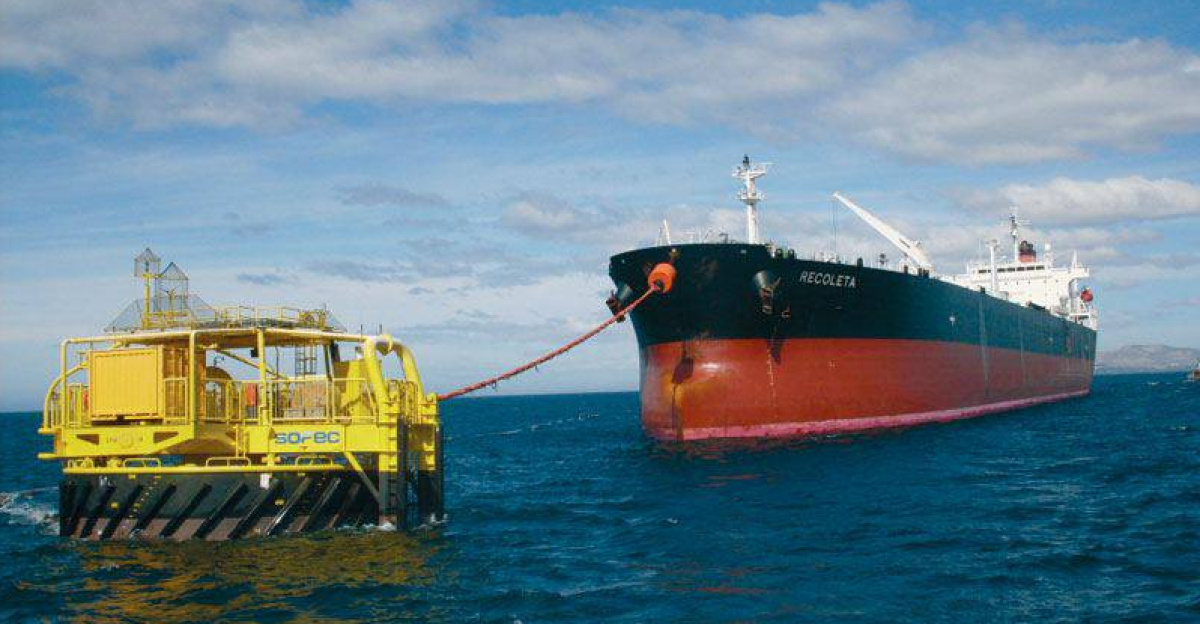
By December 1, 2025, news broke that CPC had resumed limited operations through SPM-1, the single-point mooring that escaped the November 29 strike. Reuters reported that loadings had restarted, though at reduced capacity. This temporary reprieve masks a deeper vulnerability: the terminal now operates on a single mooring unit, eliminating redundancy.
Any follow-up strike on SPM-1 would shut the facility entirely. CPC’s management is therefore under immense pressure forced to resume operations to maintain customer confidence while operating with zero margin for error. The situation reflects Ukraine’s strategic objective: not permanent destruction, but sustained pressure and uncertainty.
Ukraine’s Drone Arsenal Evolves
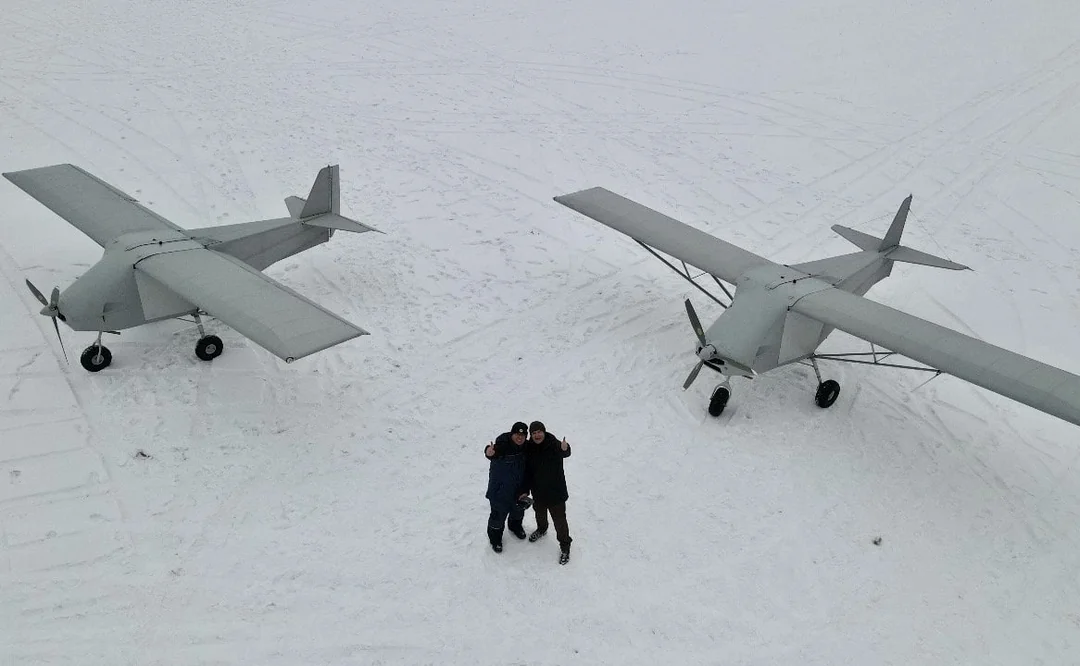
Ukrainian sea drones have become increasingly sophisticated. Defense News reported in October 2025 that Ukraine unveiled an upgraded platform featuring enhanced targeting, extended range, and improved survivability against Russian air defenses.
These vessels operate with near-total autonomy, launching from locations across Ukraine’s coastline and navigating hundreds of kilometers across hostile waters to strike predetermined coordinates. The November 29 attack on SPM-2 demonstrates this capability in action: precision strike on infrastructure, minimal collateral, maximum economic disruption. As Ukraine refines its drone doctrine, Russia’s remaining export terminals face a permanent threat profile that no conventional defense system has yet neutralized effectively.
Moscow’s Limited Defenses and the Impending Stalemate

Russia has deployed air-defense systems around Novorossiysk to intercept drones and cruise missiles. Yet sea drones present a unique challenge: they operate at water level, making radar detection difficult and anti-aircraft systems ineffective. Ground-based naval defenses require persistent surface-patrol assets that Russia, facing manpower shortages, struggles to maintain.
Military analysts suggest that Russia cannot adequately protect all three SPMs simultaneously. This asymmetry Ukraine’s cheap drone technology versus Russia’s expensive air-defense infrastructure has fundamentally tilted the cost-benefit calculation. Experts cite the CPC strikes as evidence of a new era in economic warfare: adversaries now target energy infrastructure knowing that repairs remain vulnerable and expensive.
The Pivot Point: Energy Markets Reimagine a New Order
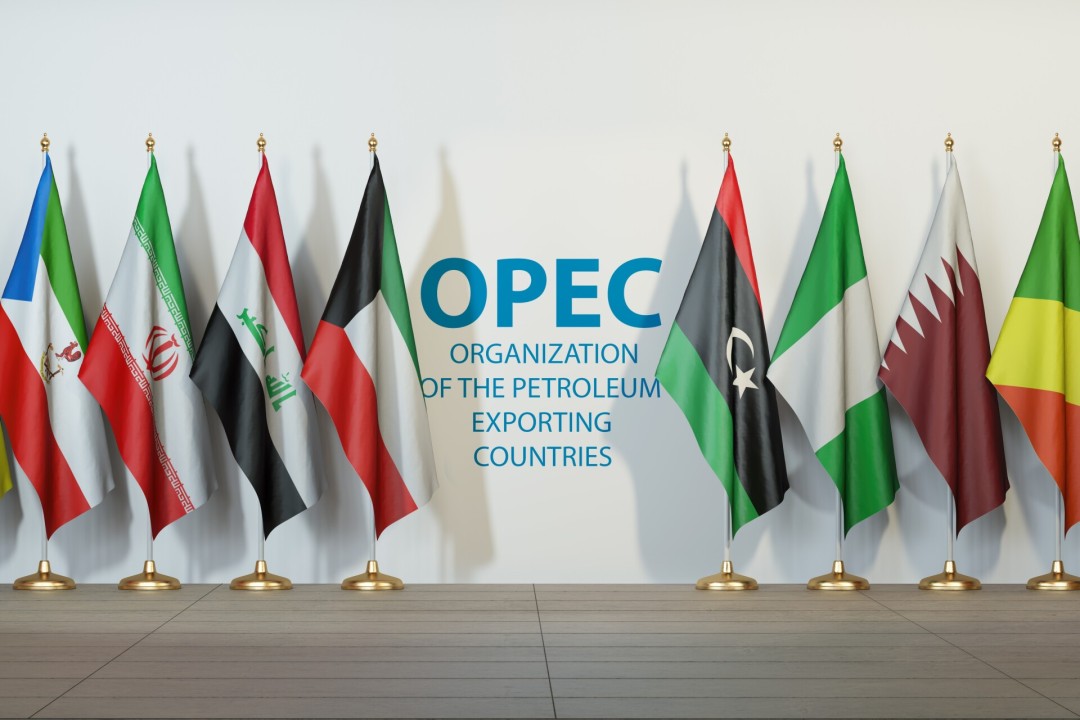
The November 29 strike on the CPC terminal crystallizes a haunting question: will global energy markets permanently shift away from Russian exports? If Ukraine can maintain pressure on Novorossiysk and Primorsk keeping 2% of world crude offline indefinitely then alternative suppliers gain leverage. OPEC nations, U.S. producers, and other exporters benefit from sustained Russian scarcity.
Meanwhile, the Western energy majors holding CPC stakes face an unresolved calculus: continue operating in Russian infrastructure under perpetual drone threat, or withdraw entirely? Historically, capital flees war zones. If Chevron, ExxonMobil, Shell, and Eni decide the risk exceeds the reward, they will exit the CPC. The terminal could cease being an international consortium and become a purely Russian asset one that the world’s energy markets have learned to live without.
Sources:
Pravda, Ukrainian Independent News – “Oil terminal in Russia’s Novorossiysk halts operations after sea drone attack”
Reuters – Multiple reports on CPC strike, oil market impact, operational status, and energy market analysis
Moscow Times – “Novorossiysk Oil Terminal Resumes Operations After Ukrainian Attack”
Kyiv Independent – “Drone strike forces Russia’s Novorossiysk oil terminal to halt all loading operations”
Maritime Executive – “CPC Shuts Down Export Loadings After Attack on SPM Buoy”
Defense News – “Ukraine unveils upgraded sea drone for Black Sea strike missions”
RSDI – “How Ukraine’s Unmanned Surface Vessels Have Reshaped Modern Naval Warfare in the Black Sea”
Jamestown Foundation – “Kazakhstan Faces Oil Export Challenges Amid Russia’s War Against Ukraine”
Statista – Global crude oil demand statistics
Wikipedia – “Caspian Pipeline Consortium”