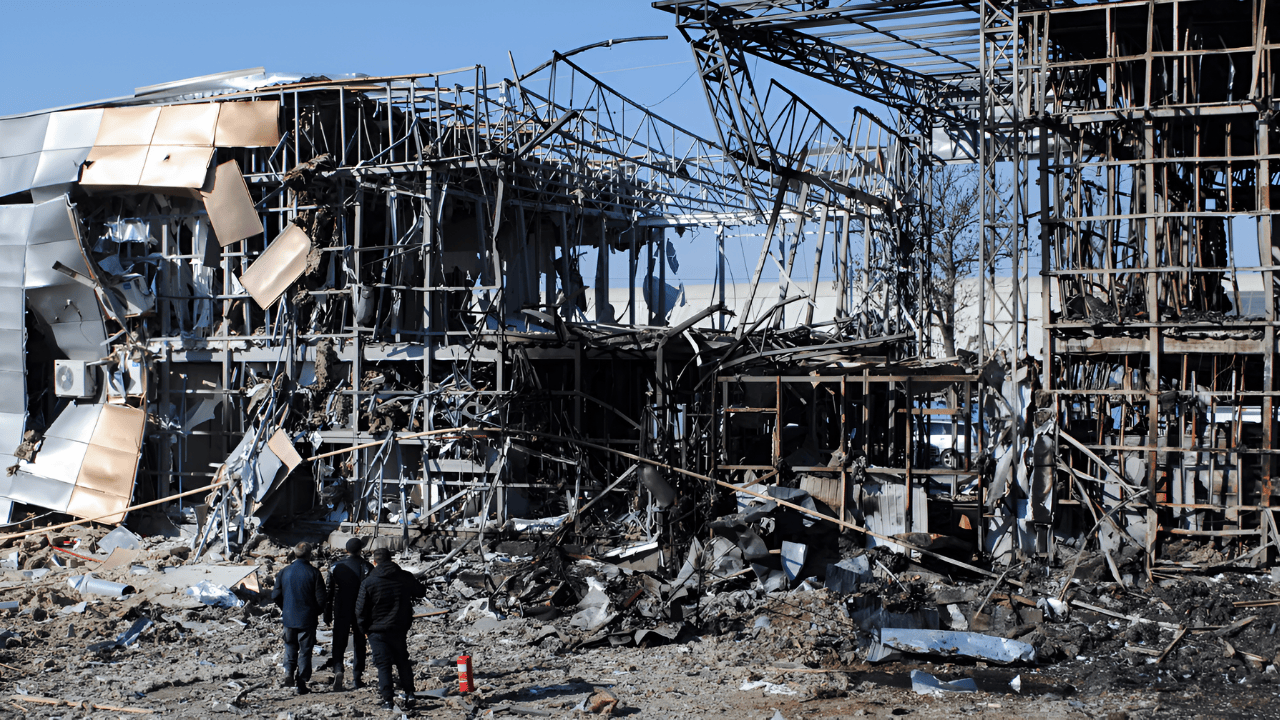
Ukraine’s late-November drone offensive signaled a new phase in the war: a large-scale, long-range air campaign conducted entirely by unmanned systems against Russia’s energy grid, fuel production, and military infrastructure. Over November 27–28, 2025, Ukrainian forces used drones to strike at least ten high-priority sites across Russia and occupied territories, from oil refineries deep inside Saratov region to airfields and substations in Crimea, Luhansk, Rostov, and as far as Chechnya. The pattern of targets, distance, and coordination underscores a shift from improvised defense to a sustained strategy aimed at eroding Russia’s ability to wage war.
Madyar’s Drone Command And A New Doctrine
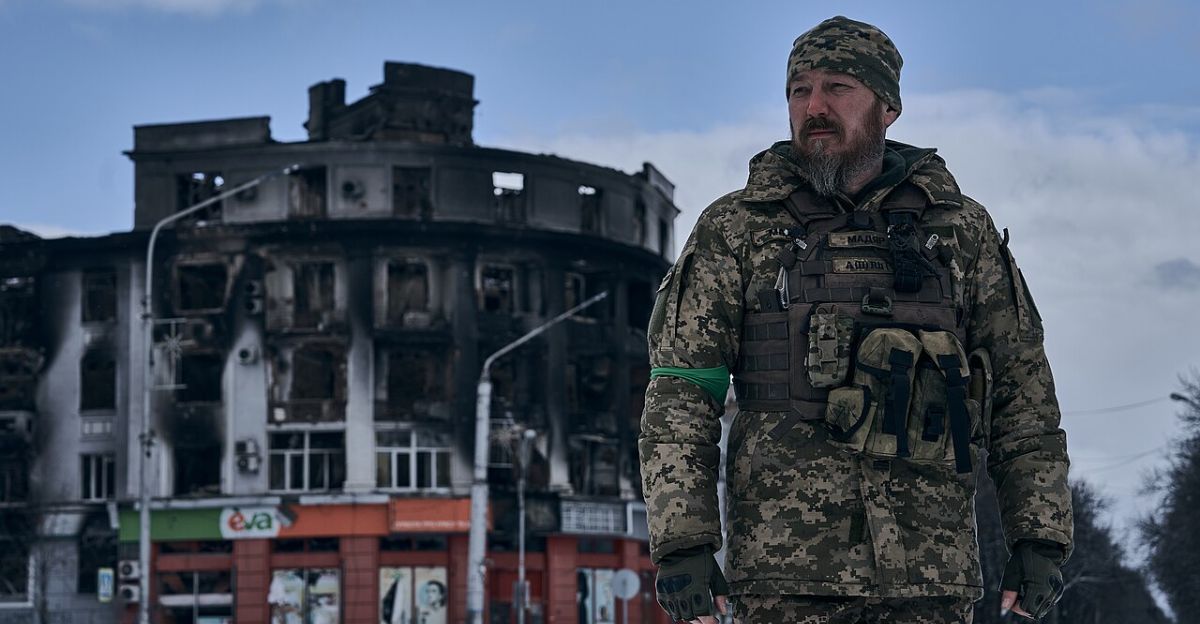
At the center of this transformation is Robert “Madyar” Brovdi, appointed in June 2025 to lead Ukraine’s Unmanned Systems Forces. Under his direction, a volunteer unit known as “Madyar’s Birds” evolved into the 414th Strike Unmanned Systems Brigade, part of a broader integration of drones into national defense planning. Though unmanned units make up a small share of Ukraine’s overall forces—around 2 percent, according to Ukrainian data—they are credited with roughly one-third of Russian casualties.
Moscow has taken notice. In October 2025, Russian authorities formally designated Brovdi a terrorist, a label that Ukrainian analysts interpret as recognition of his operational impact. Under his leadership, Ukraine’s unmanned doctrine emphasizes quantified results, public transparency about strikes, and the use of psychological pressure, such as highlighting the reach of drones into areas long considered secure rear zones.
Deep Strikes On Fuel, Airfields, And Power
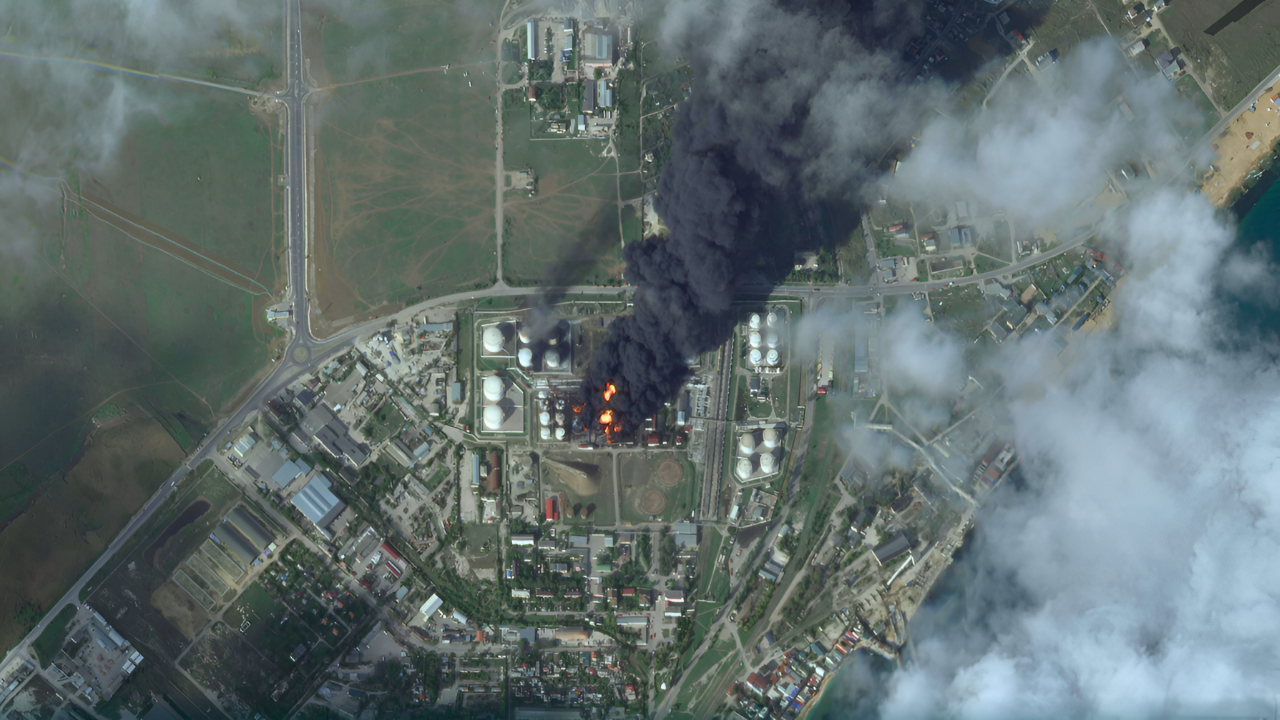
The most strategically significant target hit on November 28 was the Saratov oil refinery, operated by Rosneft. The plant, some 1,300 kilometers from Ukraine, produces more than 20 fuel products essential to military logistics and civilian use. Explosions and fires there forced a shutdown of primary processing units, according to Ukrainian and international reporting. It was at least the fifth confirmed strike on Saratov in the autumn of 2025; an earlier attack on November 11 also halted primary processing, a shutdown later confirmed by Reuters. The repeated hits indicate both an ability to penetrate Russian air defenses at long range and persistent intelligence on refinery operations.
In occupied Crimea, Ukraine executed a layered operation against the Saky airfield. Drones first targeted air defense systems, including Pantsir-S1 and Tor-M2 batteries, before subsequent strikes destroyed a hangar used for Forpost and Orion reconnaissance drones. This two-step approach—suppressing defenses, then attacking high-value assets—mirrors classical manned air campaign tactics. At roughly the same time, Ukrainian special forces attacked a Shahed drone storage and launch facility near Cape Chauda, damaging Russian strike-drone and reconnaissance capacity on the peninsula.
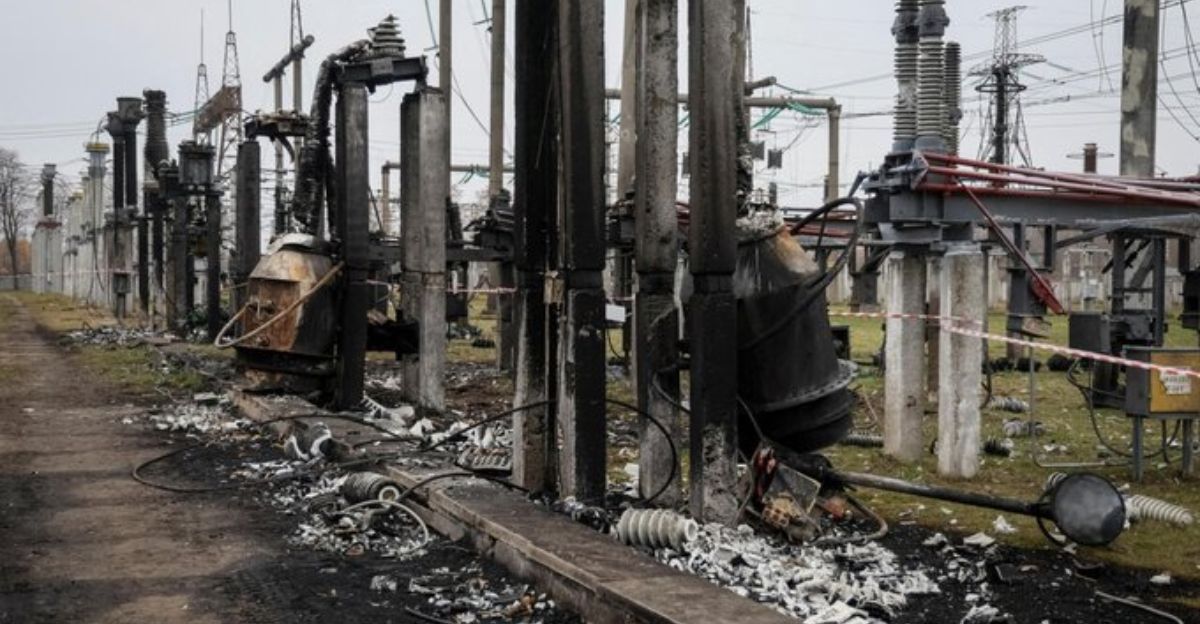
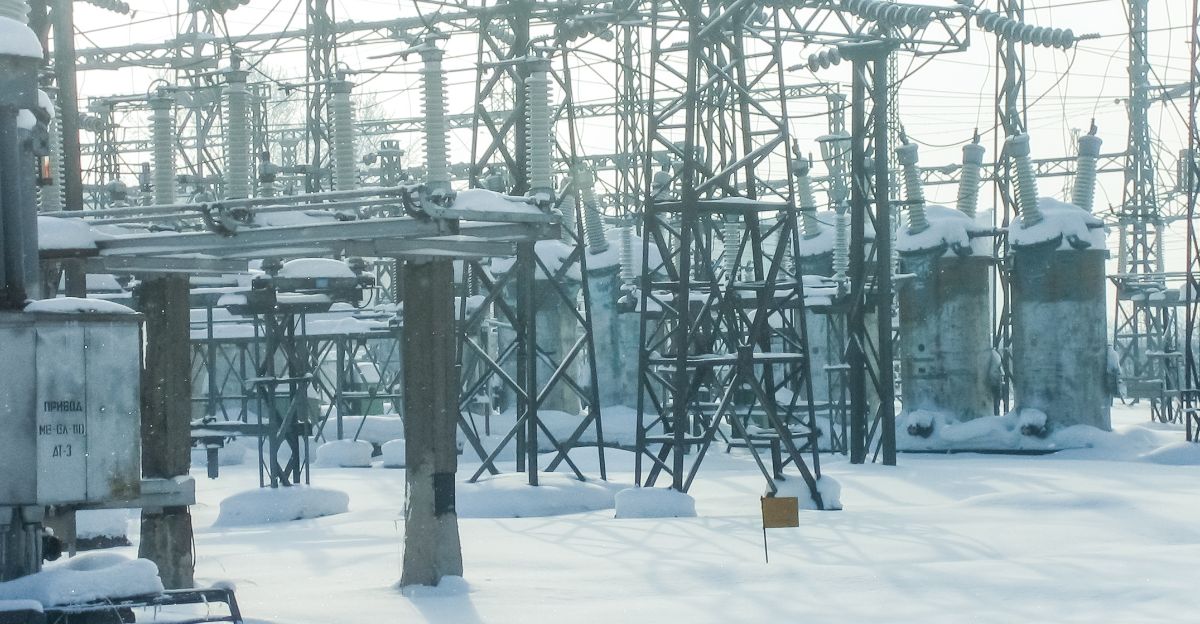
The campaign also hit multiple 500-kilovolt electrical substations in occupied Luhansk and Russia’s Rostov region. These high-voltage nodes feed large urban centers and industrial areas. By targeting transmission hubs rather than generation plants, Ukrainian planners aimed to trigger wider blackouts that are more complex and time-consuming to repair. With winter demand rising, damage at each substation translated into broader power instability, compounding pressure on both civilian life and military operations.
Unlimited Geography And Cost Calculus
Geographically, the late-November strikes covered an arc larger than Texas, reaching from Saratov and Rostov to Crimea, Luhansk, and Chechnya. On November 27, Ukrainian drones struck Grozny, hitting the Rosgvardiya “Akhmat-North” military compound in what Ukrainian and independent observers identified as the first confirmed Ukrainian attack there. Brovdi has described the campaign as having “unlimited geography,” a phrase interpreted by analysts as a reference to dispersed launch sites, long-range autonomous navigation, or both.
Russia’s Defense Ministry claimed to have shot down 136 drones during the late-November wave. Even if that figure is accurate, Ukraine still achieved hits on at least ten priority targets, including the Saratov refinery, Saky airfield installations, 500 kV substations, command centers, and fuel depots in Donetsk and Luhansk. For Kyiv, the cost-exchange ratio is central: many attack drones cost in the low thousands of dollars, while damaged refineries, substations, and military facilities represent losses in the tens or hundreds of millions. Bloomberg reporting counted at least fourteen successful strikes on Russian refineries through November alone, suggesting a cumulative impact on fuel production capacity.
Drone-Centric Winter Strategy And Russian Limits
Ukrainian officials frame this campaign as part of a deliberate winter strategy focused on energy denial. By degrading fuel refining and power transmission, Kyiv aims to strain Russia’s logistics, increase the cost of heating and mobility, and complicate military resupply. Interruptions in electricity affect hospitals, factories, and communications as well as command-and-control networks. Rather than matching Russia in armor or artillery, Ukraine is leaning on smaller, cheaper systems to exploit seasonal vulnerabilities.
Official Ukrainian statements, supported by satellite imagery and open-source analysis, confirm damage to the Saratov refinery, the Saky airfield’s drone facilities, air defense units, and fuel depots. Reuters has verified specific shutdowns, such as Saratov’s November 11 production halt. Russian state outlets and the Defense Ministry acknowledge large-scale drone interceptions and have reported explosions at some sites, though they often downplay the consequences. Cross-checking by Ukrainian authorities, international media, and independent researchers has created a comparatively high level of verification for these wartime claims.
Behind The Strikes
Behind the strikes is an increasingly integrated drone ecosystem. Ukraine now fields a mix of domestically produced first-person-view drones and one-way attack systems carrying small warheads for precise hits on critical components, supported by reconnaissance platforms that provide targeting data and battle damage assessment. Different drone types are coordinated in “strike packages” that include decoys, air defense suppression, and main attack waves. External partners contribute satellite imagery, electronic intelligence, and some advanced munitions. What began as improvised adaptations in 2022 has become, by late 2025, a scalable unmanned strike architecture.
Russia has responded by expanding air defense coverage, relocating some fuel and drone assets, and attempting to harden key facilities. However, substations, refineries, and large depots cannot be fully dispersed or rapidly rebuilt, and modern air defense systems require steady supplies of missiles, maintenance, and foreign components. Western sanctions and export controls have pushed Moscow to rely more heavily on Iranian-derived systems and domestically produced substitutes, which face their own production bottlenecks. As strike tempo rises—Ukrainian figures cite 39 fuel and energy attacks in September, 57 in October, and at least 14 refinery hits in November—Russia risks falling behind in repair and replacement.
Looking ahead to winter and spring, analysts warn of second- and third-order effects: localized blackouts, reduced industrial output, fuel shortages for both civilians and the military, and growing psychological strain from repeated attacks inside Russian territory. A sustained campaign could lower Russia’s available fuel output by an estimated 10–20 percent, forcing greater reliance on reserves and imports. Internationally, the operation highlights the vulnerability of centralized energy infrastructure not only in Russia but in any industrialized state. For Ukraine, the November 27–28 strikes mark not an endpoint but an early stage in an evolving model of warfare in which small, unmanned systems systematically target the backbone of an adversary’s power and logistics.
Sources:
Bloomberg
Kyiv Independent
The General Staff of the Armed Forces of Ukraine (official Ukrainian military / government sources)
Russian Defense Ministry (Russian official statements)
Russian state-media reporting (on explosions and damage)
Open-source intelligence assessments such as the Institute for the Study of War (ISW)