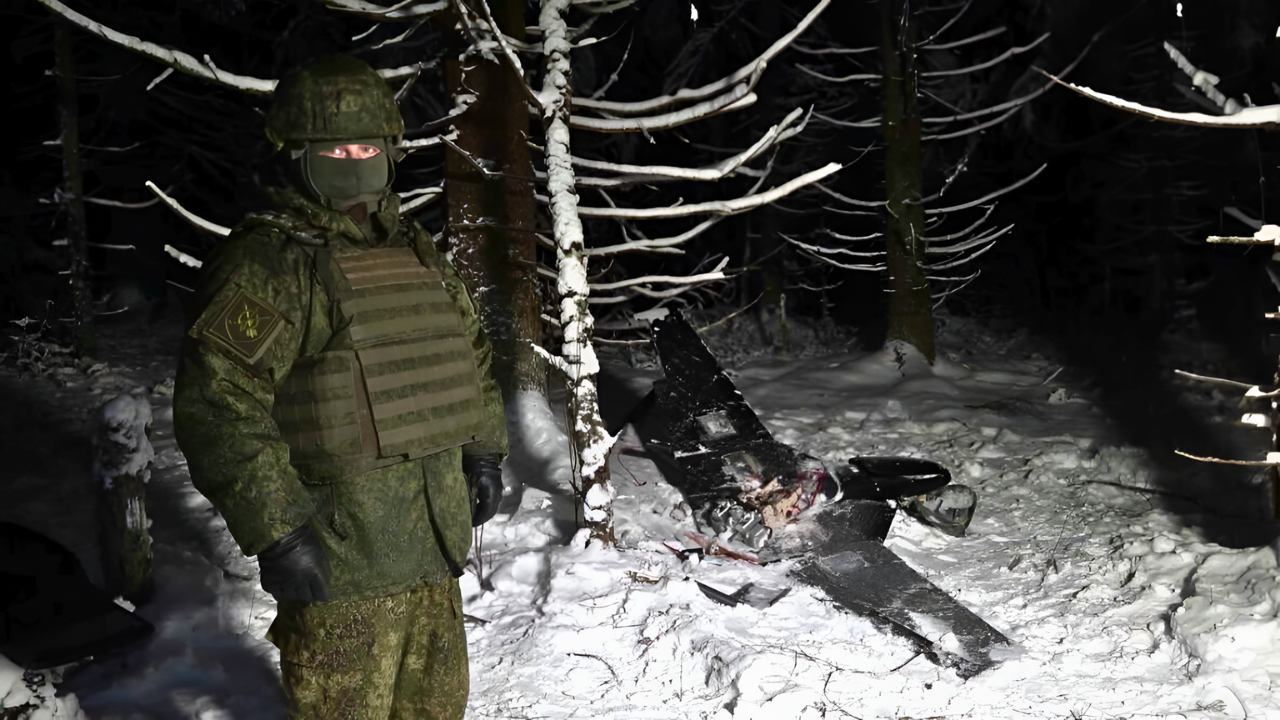
When Russian officials announced that Ukraine had sent 91 drones to attack President Vladimir Putin’s secluded residence near Valdai on December 29, 2025, the allegation landed at a critical moment in efforts to end the war. The claim came less than 24 hours after Donald Trump hosted Ukrainian President Volodymyr Zelensky at Mar-a-Lago for a three-hour meeting, where both leaders said a 20-point peace framework was “90% complete” and promoted a proposed 15-year U.S. security guarantee for Ukraine. The timing immediately tied the supposed attack to the trajectory of the talks and to Trump’s personal diplomacy.
Trump said he learned of the incident directly from Putin during a phone call on December 29. He told reporters he was “furious,” drawing a distinction between what he called offensive operations and an assault on the Russian leader’s home, and said, “It’s not the right time to do any of that.” At that stage, he conceded he had no independent U.S. confirmation but indicated he took Putin’s account seriously, even as his own aides began quietly seeking verification.
Moscow’s Story and Kyiv’s Denial
Russia framed the alleged operation as a major strike on the president’s secure compound in Novgorod Oblast, about 400 kilometers northwest of Moscow, far from active front lines. The Defense Ministry said air defenses intercepted all 91 drones, reporting 50 shot down over the Bryansk and Smolensk regions and 41 over Novgorod. Officials said there were no casualties, damage, or successful penetrations of the estate.
Foreign Minister Sergey Lavrov quickly used the allegation to signal a tougher stand in the talks, saying Moscow would “review” its position and had “selected targets for retaliatory strikes” in Ukraine. He declared that an attack on the presidential residence “will not go unanswered,” presenting the incident as a direct assault on Russia’s leadership.
Kyiv immediately rejected the claim. Zelensky called it a “complete fabrication,” and Ukrainian officials argued that Russia was manufacturing a pretext to justify future large-scale strikes and to derail the nascent peace process. Their skepticism was echoed by some residents in the Valdai area, who told reporters they had heard no explosions or unusual military activity that night. The gap between Russia’s description and local accounts added early doubts about Moscow’s narrative.
Intelligence Findings Undercut Moscow
Inside the Trump administration, the initial public anger was not matched by instant acceptance among security officials. After Trump’s comments, White House staff quietly tasked the CIA with assessing what had actually happened. Within days, the question of whether drones were launched gave way to a more focused issue: what, if anything, they were targeting.
By December 31, 2025, the CIA had completed an initial damage and targeting review. U.S. intelligence concluded that Ukraine had not targeted Putin’s residence. Analysts reported that any drones operating in the region appeared aimed at a military facility near Valdai, not the presidential complex itself, and said they found no evidence of a direct strike on Putin’s home. The assessment directly contradicted Moscow’s claims and removed the foundation for treating the incident as a personal attack on the Russian leader.
Independent research groups reached similar conclusions. Analysts from the Institute for the Study of War and Meduza said they had found no verification of an attack on the residence and noted the absence of physical evidence or corroborating imagery. Several experts suggested the episode resembled a possible “false flag” effort: a staged or misrepresented event used to gain leverage in negotiations, justify future attacks on Ukrainian state targets, or pressure Washington to limit military assistance to Kyiv.
From Trump’s Anger to Reversal

The CIA findings set the stage for a notable shift in Trump’s public stance. One week after saying he was “very angry” about the alleged strike, he told reporters aboard Air Force One on January 5, 2026, that he no longer believed the attack on the residence had occurred. “I don’t believe that strike happened,” he said, explicitly citing the U.S. intelligence assessment.
The reversal marked a rare, public break with a narrative advanced by Putin that Trump had initially echoed. It also exposed tension inside the administration over how to handle unverified assertions from Moscow. The about-face angered Russian officials, who had leaned on Trump’s early reaction to bolster their case. Kremlin spokesman Dmitry Peskov said Russia “will not abandon talks,” but indicated that Moscow’s position had hardened, and Russian officials privately portrayed Trump’s pivot as a sign of American unreliability.
Zelensky and his team treated the CIA assessment as validation of their immediate denial. They used the findings to argue that Russia had acted in bad faith and that any eventual agreement must include strong international monitoring to detect and disprove similar allegations in real time. The episode gave Ukraine a credibility advantage in the diplomatic process and reinforced its push for multilateral verification mechanisms.
Negotiations, Credibility, and the Information War

The Valdai dispute reverberated beyond the three capitals. NATO governments viewed the sudden Russian claim, coupled with threats of retaliation, as part of a broader pattern in which unverified accusations precede escalatory moves. Western allies continued diplomatic engagement while monitoring the situation closely, even as many pushed to keep diplomatic channels open.
For U.S. intelligence agencies, the episode highlighted the influence and constraints of independent analysis. The CIA’s rapid, publicized contradiction of a foreign leader’s high-stakes claim—and of the U.S. president’s initial reaction—bolstered its reputation for challenging unfounded accounts. It also sparked debate in Washington over Trump’s instinctive readiness to credit Putin’s version before receiving classified briefings, and over how quickly the president then adjusted once presented with contrary evidence.
Globally, the incident became a reference point in discussions about disinformation and warfare. If the Russian allegation was indeed false or significantly mischaracterized, it showed how quickly an unverified claim could shape high-level diplomacy, unsettle peace efforts, and test alliances. The dispute underscored how audiences increasingly demanded independent verification rather than trusting state narratives by default.
As talks moved into early 2026, the Valdai dispute contributed to a more cautious, distrustful negotiation environment. Russia pressed for recognition of territorial “realities.” Ukraine insisted that any ceasefire be backed by international oversight and mechanisms to challenge fabricated pretexts for renewed hostilities. For mediators, including Trump, the episode served as a reminder that in an age of contested information, durable agreements will likely depend not only on political concessions, but also on trusted systems for establishing what has, and has not, actually happened.
Sources:
CNN CIA assesses Ukraine was not targeting a Putin residence in drone attack (December 31, 2025)
New York Times Ukraine Did Not Target Putin’s Home, C.I.A. Finds (December 31, 2025)
Wall Street Journal Intelligence Assessment of Drone Attack Claims (December 31, 2025)
Russian Defense Ministry Official Statement: Alleged Ukrainian Drone Attack (December 30, 2025)
ABC News Trump says Russia and Ukraine are ‘maybe very close’ to peace deal after Zelenskyy meeting (December 28, 2025)
Al Jazeera Have Russian claims of Ukraine attack on Putin home ended hopes for peace (December 30, 2025)