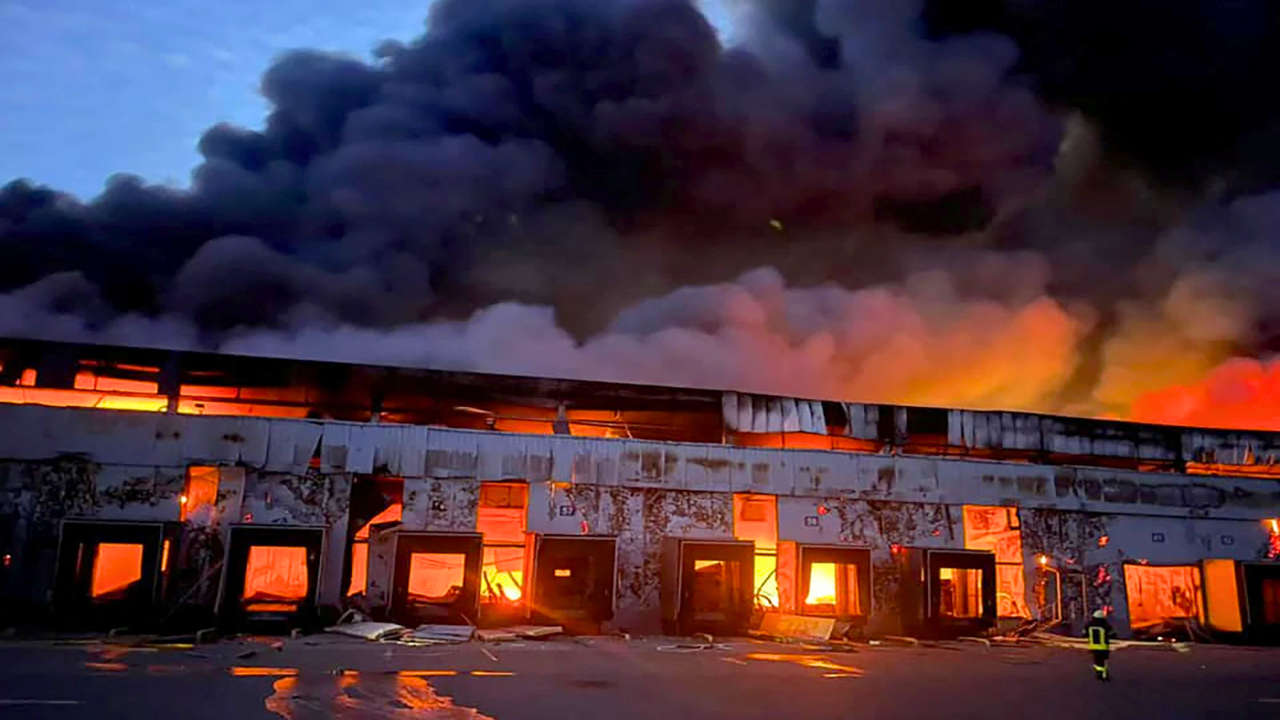
On the night of January 5–6, 2026, Ukraine carried out one of its most daring attacks since Russia’s invasion. Drones from Ukraine’s Security Service (SBU) flew nearly 900 kilometers into Russian territory and struck a large military storage site in Kostroma Oblast. The site was an ammunition depot known as Arsenal No. 100. The explosions lasted for hours, lighting up the night sky and forcing about 1,200 people to evacuate nearby areas. This attack marked the deepest confirmed Ukrainian strike on Russian military infrastructure since the war began.
Arsenal No. 100, located near the small town of Neya, covers about two square kilometers and plays a major role in Russia’s logistics network. It’s one of the country’s main sorting centers for missiles and artillery ammunition. Weapons from factories across Russia arrive there, are organized, and then sent to supply Russian forces fighting in places like Donbas and Luhansk in eastern Ukraine. Satellite images taken before the attack showed busy activity at the site, confirming it was in full operation at the time.
The Rise of Ukraine’s Long-Range Drone Power

The success of this long-range strike highlights how far Ukraine’s drone technology has advanced. Only two years ago, most Ukrainian drones could fly just 50 to 100 kilometers from the front lines. Now, the SBU’s elite Alpha Special Operations Centre is deploying drones that can travel nearly 1,000 kilometers. This improvement wasn’t just about technological progress, it was born from necessity. Outnumbered and outgunned by Russia’s army, Ukraine has focused on precision attacks deep inside enemy territory to disrupt Russian operations without using traditional heavy weapons.
Russia burns through ammunition at an enormous rate, firing around 120,000 artillery shells each month in eastern Ukraine. To keep up that pace, it relies heavily on hubs like Arsenal No. 100 to move weapons quickly to the battlefield. Losing such a key storage and distribution point means Russia must find new supply routes, which takes time and causes delays. Ukraine’s military leaders say the destruction of this depot has seriously hurt Russia’s ability to deliver ammunition to its troops and coordinate large-scale assaults.
How the Attack Unfolded
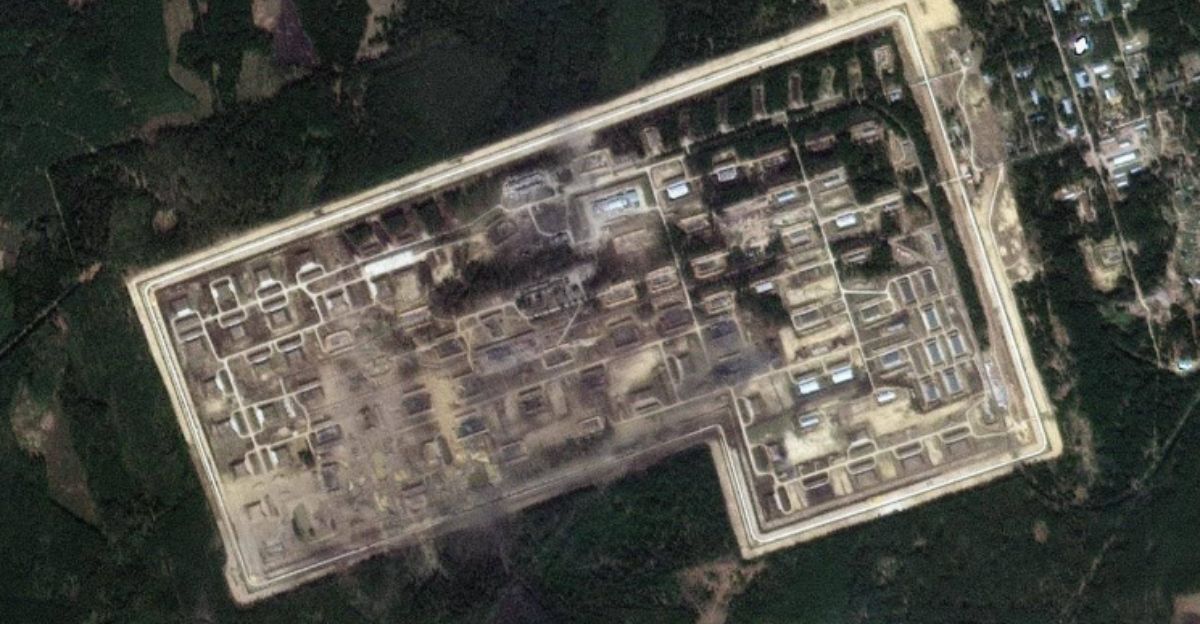
The operation began on the evening of January 5. Ukrainian drones crossed deep into Russian territory, carefully avoiding air defenses before striking the depot. When the drones hit, they caused massive secondary explosions that spread across the complex and burned throughout the night. Open-source analysts later identified at least four separate impact zones, showing it was a well-planned multi-directional attack. The blasts were powerful enough to blow out windows two kilometers away and damage homes in nearby neighborhoods.
Local authorities quickly ordered evacuations for residents of Neya, setting up shelters for 1,200 people to avoid injuries from debris and fire. Kostroma Governor Sergei Sitnikov later confirmed that some drones were shot down but admitted that falling debris and fires hit civilian areas. This situation reflected both the scale of the attack and the difficulty Russia faces in defending its vast territory from these deep strikes.
Around the same time, Ukraine also targeted another key facility, an oil depot operated by Gerkon Plus in Lipetsk Oblast, about 200 kilometers from the Kostroma site. The depot supplied fuel to the Lipetsk, Tambov, and Voronezh regions, which are critical for Russia’s military vehicles and operations. The dual strikes, one on ammunition, the other on fuel, demonstrated Ukraine’s strategic understanding of how Russia’s supply chain works. Artillery needs both shells and fuel: without one, the other becomes useless.
Strategic and Long-Term Impact
The destruction of Arsenal No. 100 was not an isolated incident. It was the fifth major Russian ammunition storage site known to have been destroyed by Ukraine since the full-scale war began. Previous strikes included a large facility near Kotovo that stored both Russian Iskander missiles and imported North Korean munitions. Every time one of these depots is hit, Russia is forced to consolidate remaining stockpiles into fewer locations, making them easier targets and stretching its already pressured production capacity.
Analysts estimate Arsenal No. 100 could hold up to 150,000 tons of explosives and missiles. Even if only part of it was full, the loss could total between $500 million and $1 billion worth of equipment. Beyond the financial blow, this attack further exposes how dependent Russia’s war effort is on logistics. Without stable stockpiles and transport systems, even a powerful army struggles to sustain its operations.
The strike also fits into a larger pattern. Over the past seven months, Ukraine’s growing fleet of state and private drones, collectively called the Unmanned Systems Forces, has launched about 832,000 sorties, hitting more than 168,000 targets and causing around $20 billion in total damage. Although Russia’s air defenses claim to have destroyed 129 drones that same night across multiple regions, big gaps remain, especially across remote areas like Kostroma.
In the short term, the attack tightens supply lines feeding Russia’s forces in Donbas. In the long term, it signals a shift in how wars are fought: Ukraine’s increasing ability to hit deep inside Russia forces Moscow to choose between defending its vast rear areas or risking further logistical collapse. As Ukraine continues to expand its drone range and production, more depots, refineries, and transport links may soon come under threat, potentially redefining how either side can keep its front lines supplied in the year ahead.
Sources:
Kyiv Independent, “Explosions rang out all night — SBU conducts fresh strikes on ammunition depot and oil facility deep inside Russia,” January 5, 2026
Ukrainska Pravda, “Security Service of Ukraine strikes Russian missile arsenal and oil depot in Russia,” January 6, 2026
Business Insider, “Ukraine’s deep-strike drones hit Russian ammo, oil: security official,” January 5, 2026
United24media, “Ukraine’s Unmanned Systems Forces have struck 168,000 targets worth an estimated $20 billion,” January 6, 2026
RBC-Ukraine, “Arsenal, oil base and beyond: Ukrainian military confirms hits on major Russian sites,” January 5, 2026