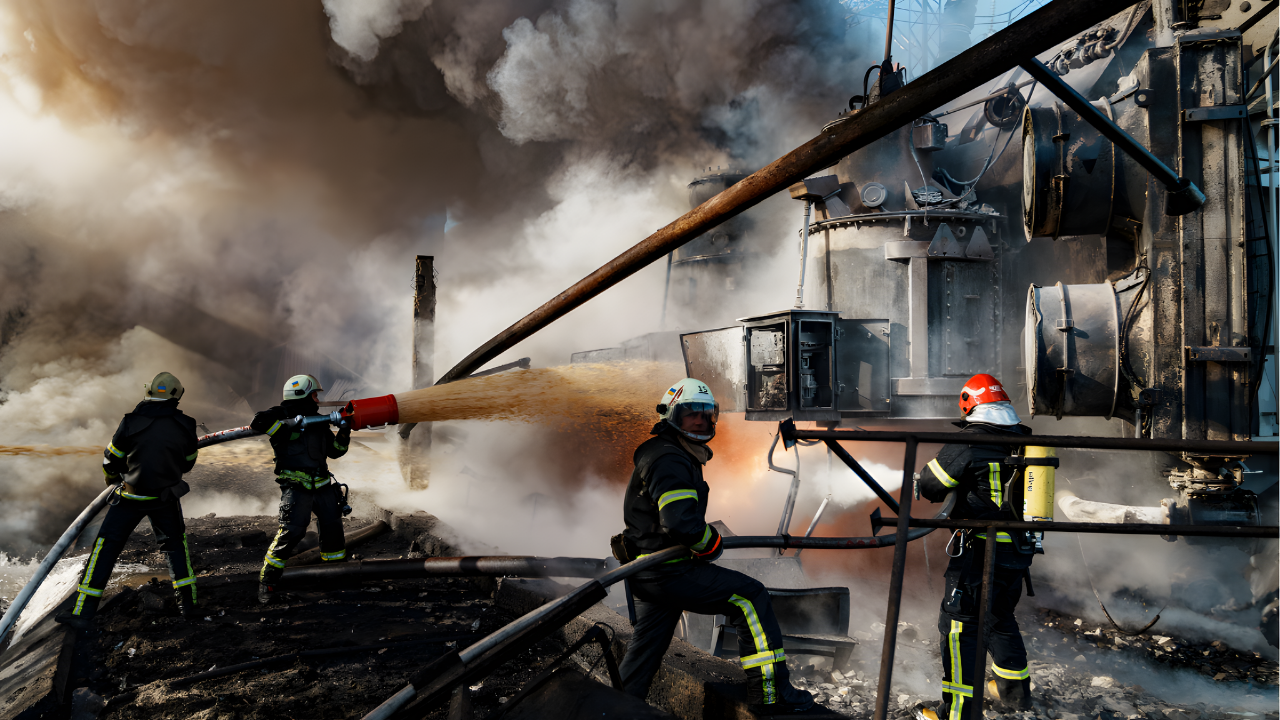
Air-raid sirens blared across Ukraine as 149 attack drones launched overnight from six separate locations in Russia and Crimea. Ukrainian defenses engaged immediately, but by morning, 16 drones had evaded interception and struck key energy sites.
This marked one of the largest single-night drone assaults of the war. The sequence unfolded in real time, leaving little warning and no pause as defenders scrambled to keep pace.
A Coordinated Assault
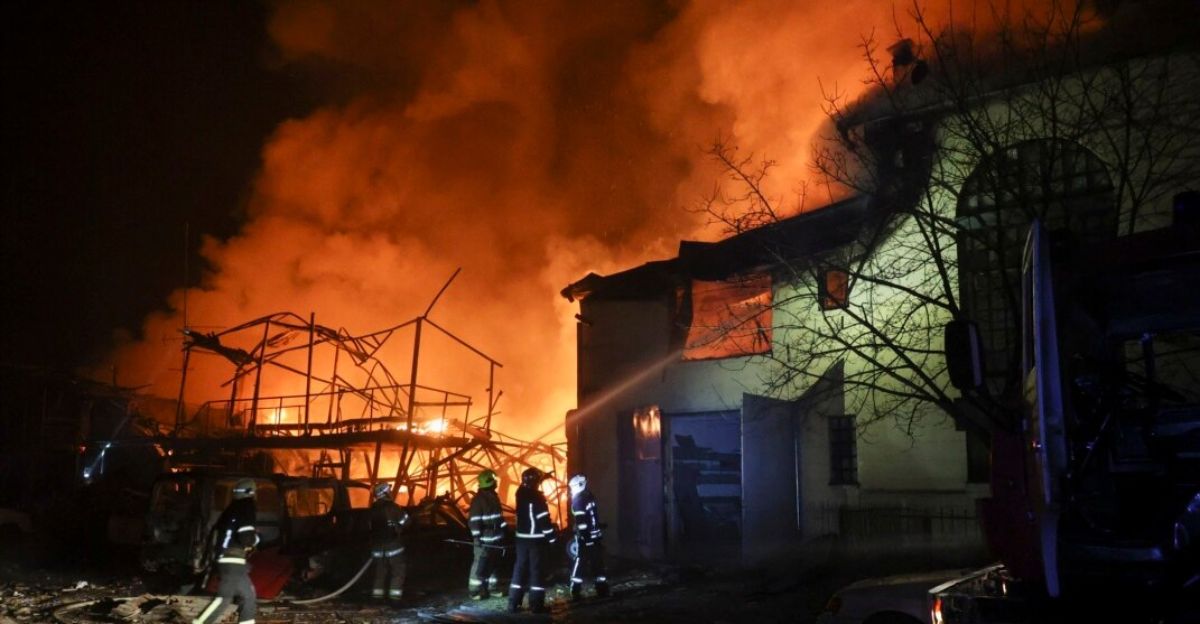
The drones were launched from Bryansk, Oryol, Kursk, Primorsko-Akhtarsk, Millerovo, and Chauda in occupied Crimea, complicating interception efforts. Ukraine’s air defense systems, already stretched thin, had to address the multi-vector attack, targeting not just military sites but energy and residential infrastructure as well.
The goal was saturation—overwhelm radar, missiles, and mobile fire groups simultaneously. As alerts spread nationwide, energy operators braced for impact, unsure how many drones could be stopped before reaching critical infrastructure.
The 149-Drone Reality
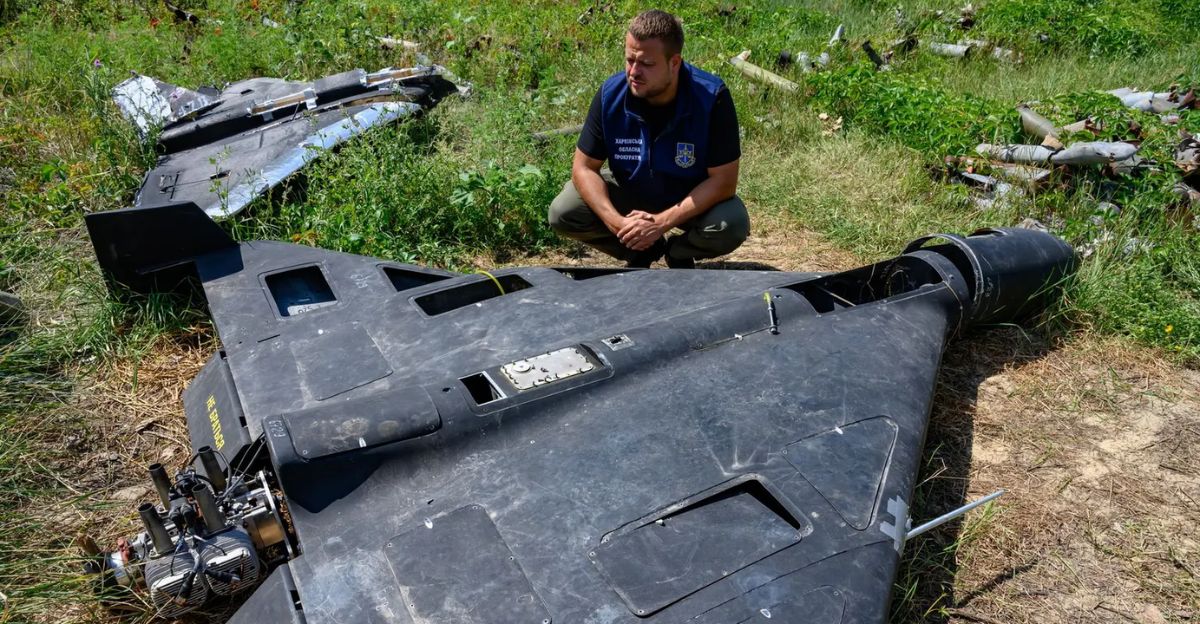
By daylight, Ukrainian officials confirmed the number: 149 attack drones launched between the evening of December 7 and the morning of December 8, 2025. Roughly 90 were Shahed-type UAVs, with others identified as Gerbera-type and similar attack platforms.
The drones targeted energy infrastructure and urban areas in a sustained, hours-long operation. This was not a probing strike but a full-scale overnight barrage designed to test endurance as winter tightened its grip.
Air Defenses Under Maximum Pressure
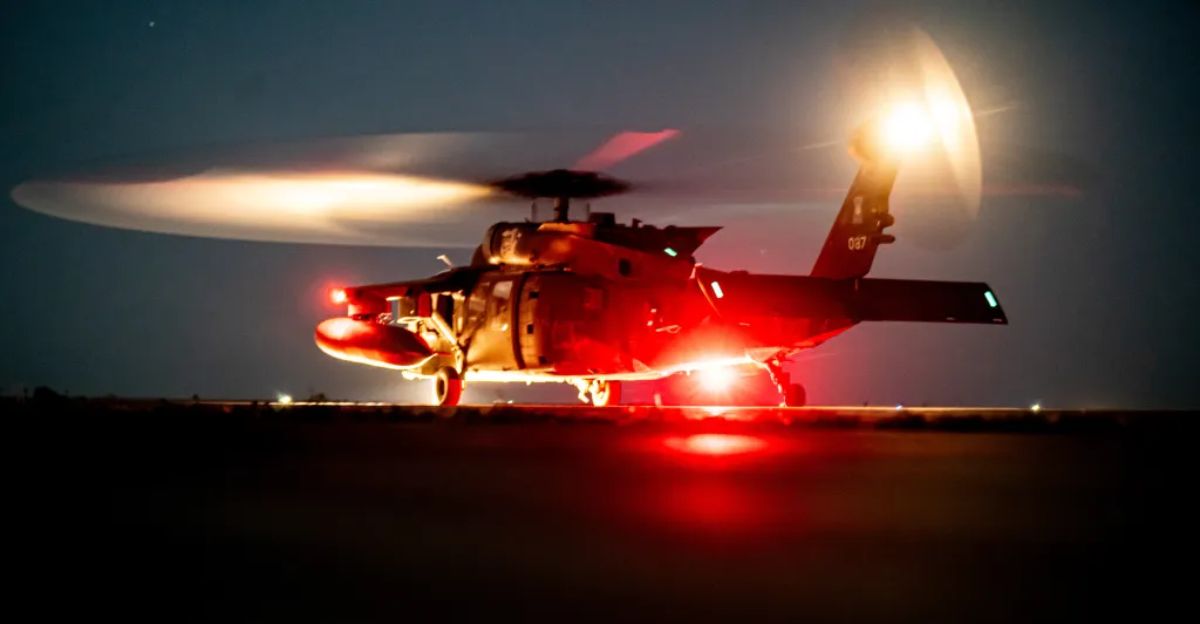
Ukraine activated nearly every available layer of air defense. Aviation units, anti-aircraft missile troops, electronic warfare systems, unmanned counter-UAV tools, and mobile fire groups all engaged incoming drones.
Interceptions occurred across north, south, and east Ukraine, reflecting the multi-vector launch strategy. By 09:00 local time, officials released preliminary results, though the fight was not yet fully over.
The Interception Effort
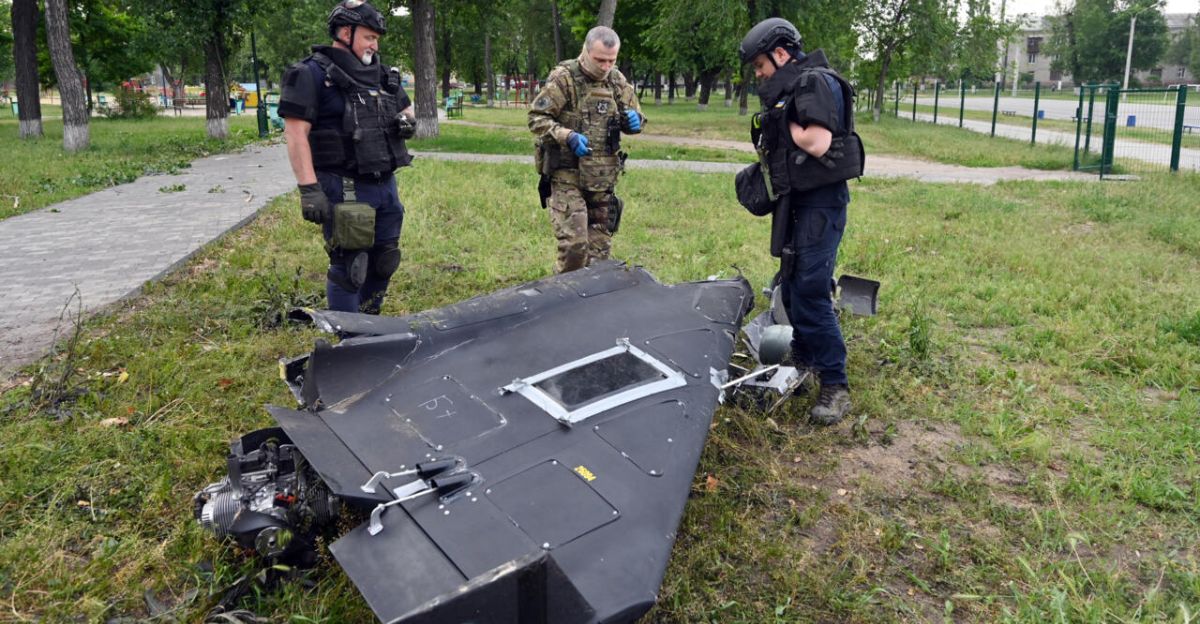
According to the Air Force of the Armed Forces of Ukraine, 131 drones were shot down or suppressed, representing an estimated 88% interception rate. The figure marked a significant defensive achievement compared to earlier phases of the war.
Yet percentages did not tell the full story. Even a small number of drones slipping through could cause outsized damage when aimed at power infrastructure or dense residential areas.
Where the Drones Got Through
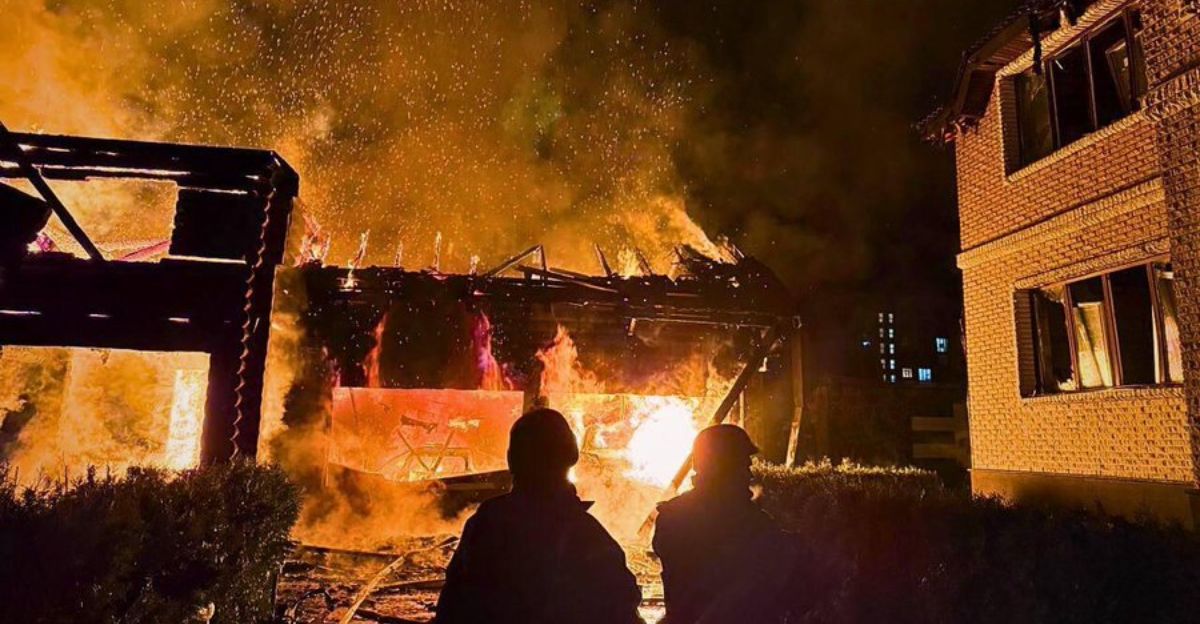
Officials confirmed that 16 attack drones struck targets across 11 locations nationwide. In addition, debris from downed drones fell at four other sites, creating secondary hazards.
The Ukrainian Ministry of Energy acknowledged direct damage to power infrastructure in multiple regions. Fires and localized outages followed, increasing strain on an already battered system.
Energy Infrastructure in the Crosshairs
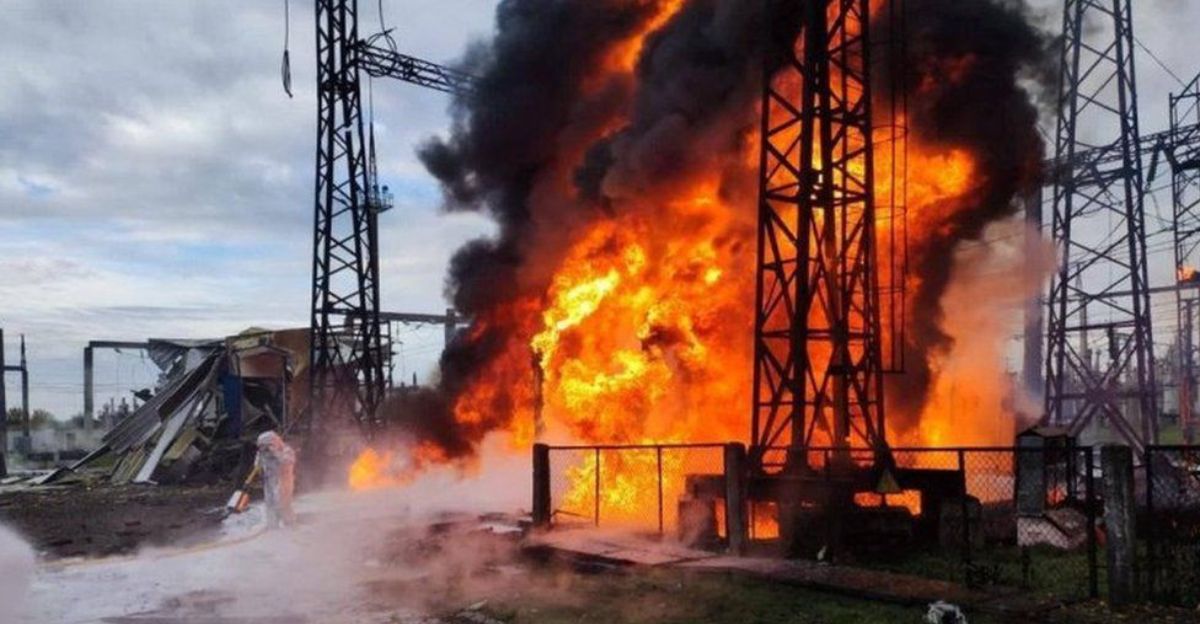
Russia’s focus on Ukraine’s energy grid followed a familiar pattern. Since 2022, drone and missile campaigns have increasingly targeted generation, transmission, and distribution nodes.
Officials warned that the December 8 attack was another deliberate attempt to pressure civilians through cold and darkness. With repairs already lagging from earlier strikes, even limited damage risked cascading failures.
Okhtyrka’s Residential Strike
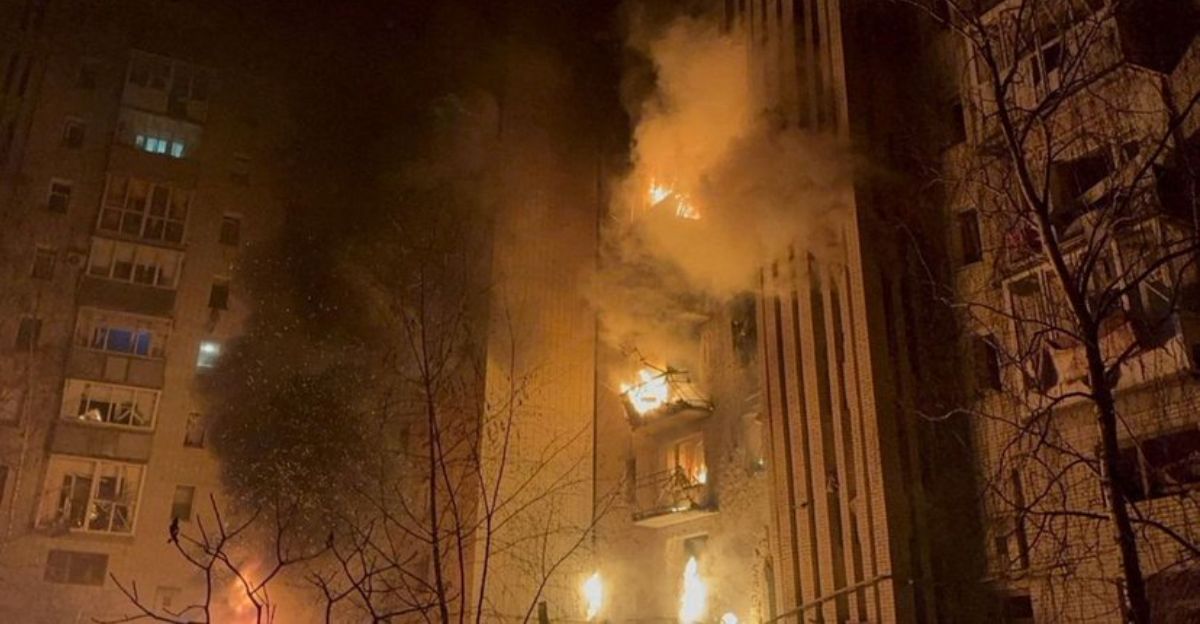
Beyond infrastructure, the human cost became visible in Okhtyrka, Sumy region. A drone slammed into a nine-story residential building, injuring seven civilians.
Emergency crews responded amid shattered windows and structural damage. The strike underscored how civilian buildings remain exposed even during attacks described as infrastructure-focused.
A Night of Nationwide Alerts
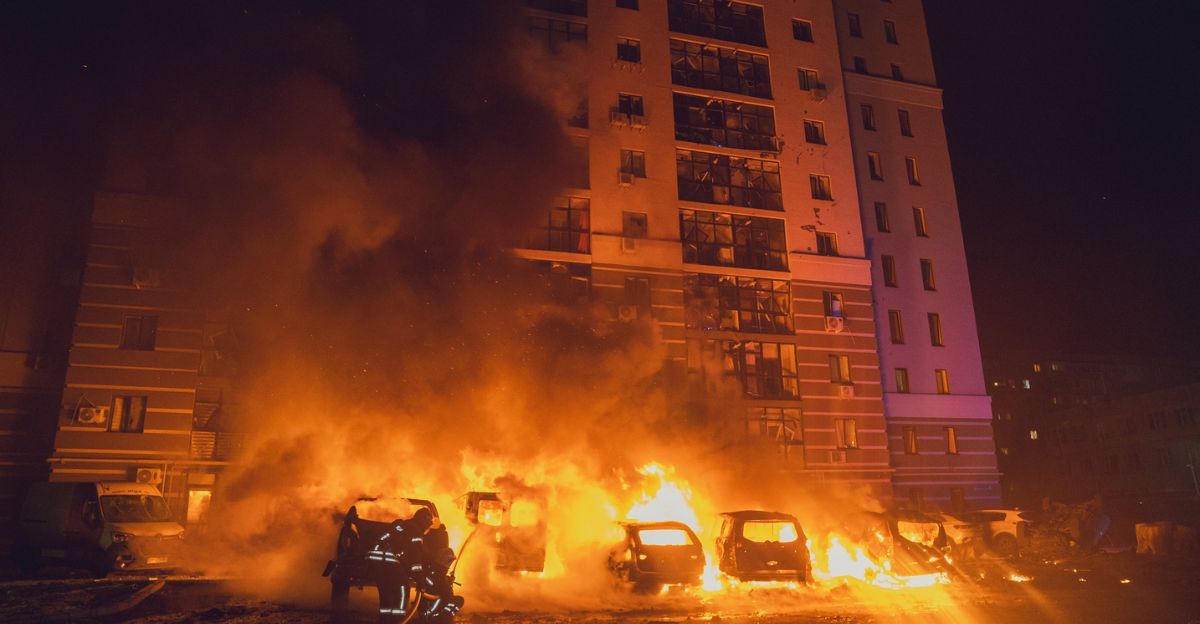
As the swarm unfolded, air-raid alerts stretched across vast portions of the country. Based on coverage zones and prior alert patterns, 10 to 20 million Ukrainians were likely under warning at some point during the night.
Families sheltered in basements, corridors, and subway stations while defenses engaged overhead. Even areas spared direct hits felt the psychological toll of hours-long sirens and uncertainty.
The Launch Network Exposed

The geography of the attack revealed Russia’s evolving launch network. Drones originated from northern Russia, southern coastal regions, and occupied Crimea, spanning an estimated 1,300-kilometer arc.
This dispersion complicated interception timelines and forced defenders to anticipate shifting flight paths. The reliance on Shahed-style drones highlighted Moscow’s strategy of applying pressure at scale.
The Cost of the Swarm
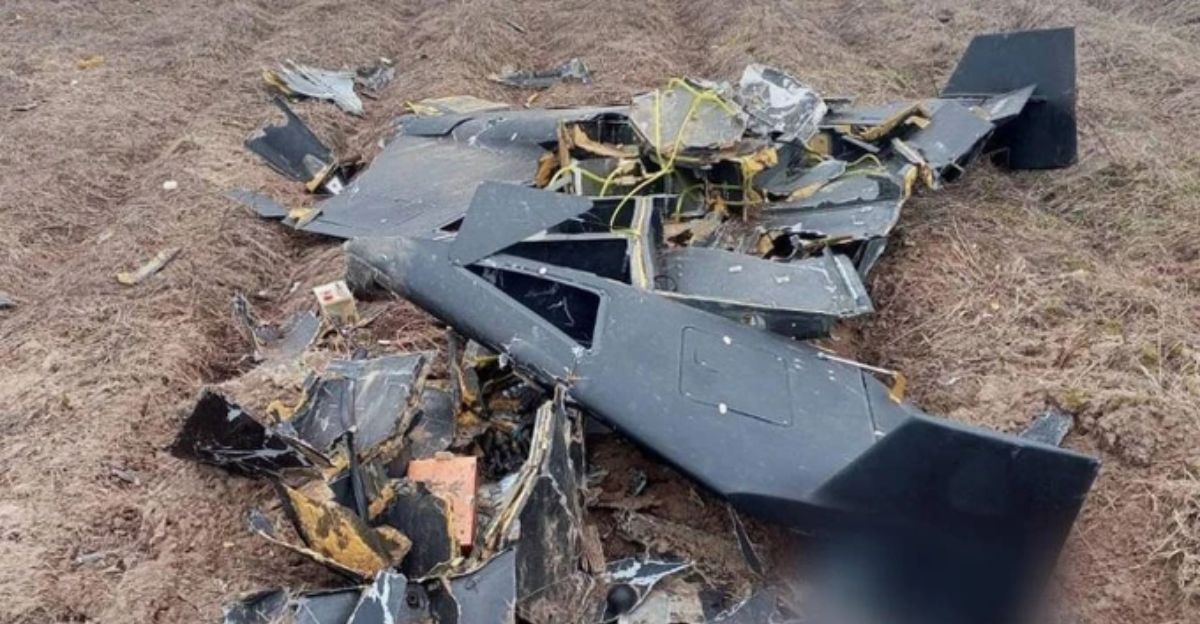
While Ukraine absorbed the damage, Russia paid a different price. Based on estimated unit costs of $100,000 to $200,000 per drone, the 149-drone swarm likely represented $15–30 million in deployed assets.
With 131 drones neutralized, Ukrainian defenses may have destroyed $13–26 million worth of Russian equipment in a single night, underscoring the financial cost of this large-scale aerial offensive.
Winter Strategy in Action
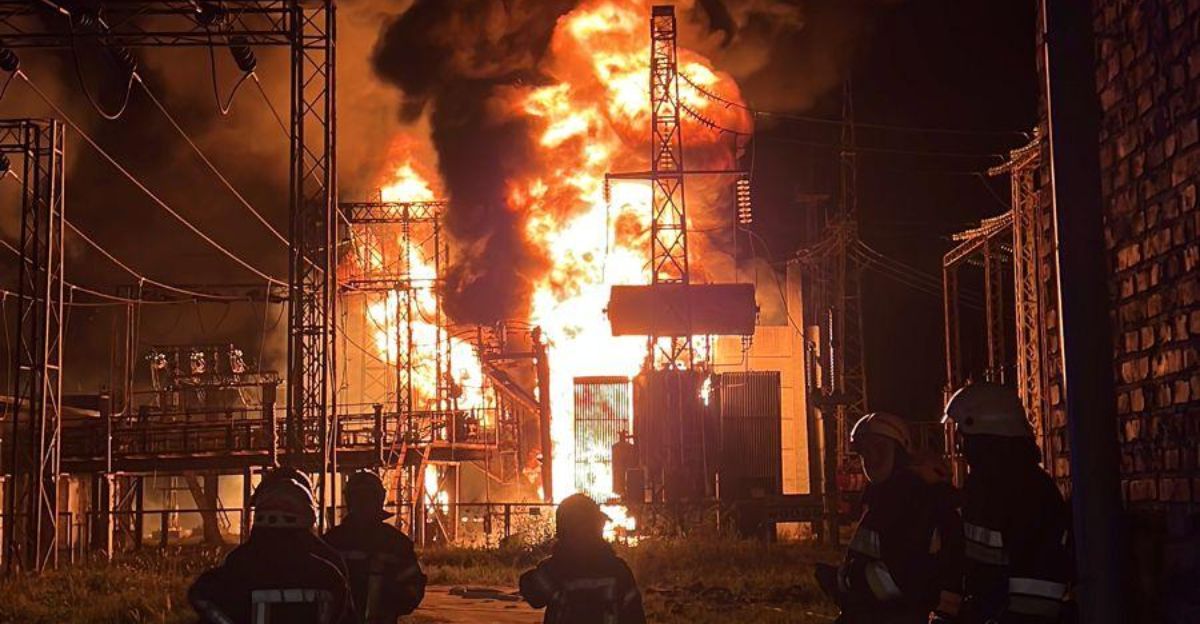
The timing of this attack was crucial, targeting Ukraine’s energy infrastructure at the onset of winter. Past campaigns in December have resulted in blackouts that crippled daily life and public services.
This assault fit that historical pattern precisely. Cold weather magnifies the impact of even short disruptions, affecting heating systems, hospitals, and communications.
Quick Response and Repairs
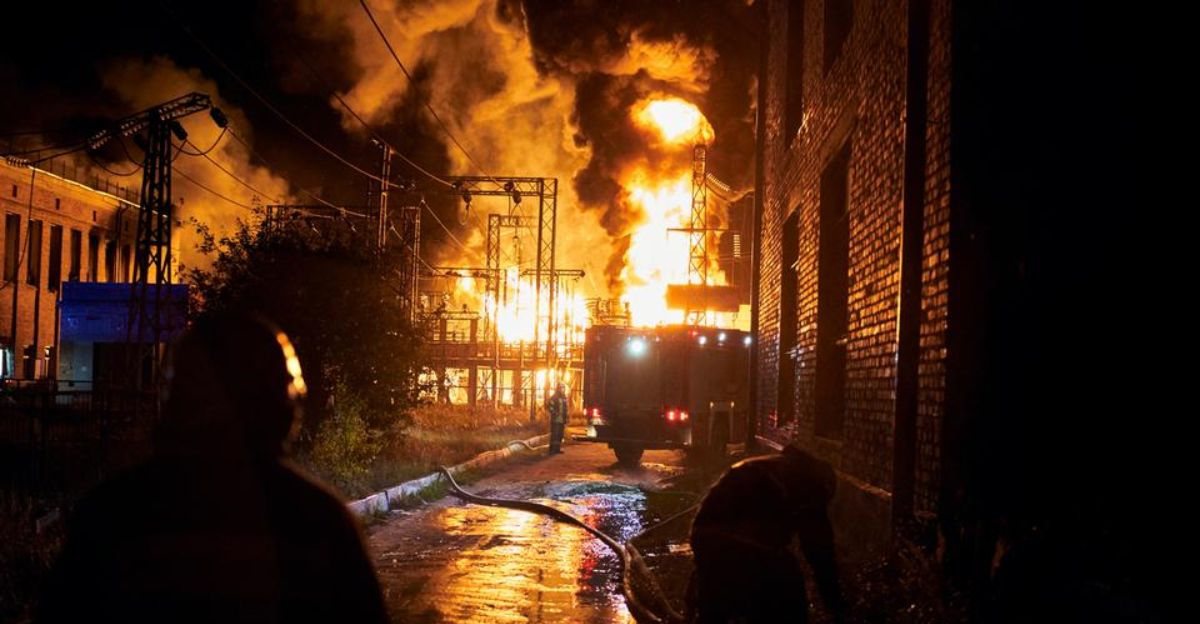
Following the assault, Ukraine launched emergency repair operations. Energy crews deployed mobile generators and initiated black-start protocols at affected facilities.
Authorities confirmed work underway at 11 damaged sites, with plans for temporary electricity imports from European partners. Progress, however, depended on avoiding repeat strikes.
The Ammunition Dilemma

Experts caution that high interception rates come at a cost. Shooting down 131 drones in one night consumes missiles, ammunition, and electronic warfare capacity.
Sustained attacks of this scale risk depleting stockpiles faster than resupply timelines allow. Even effective defenses face limits when confronted with near-industrial drone production.
The Human Cost of the Strike
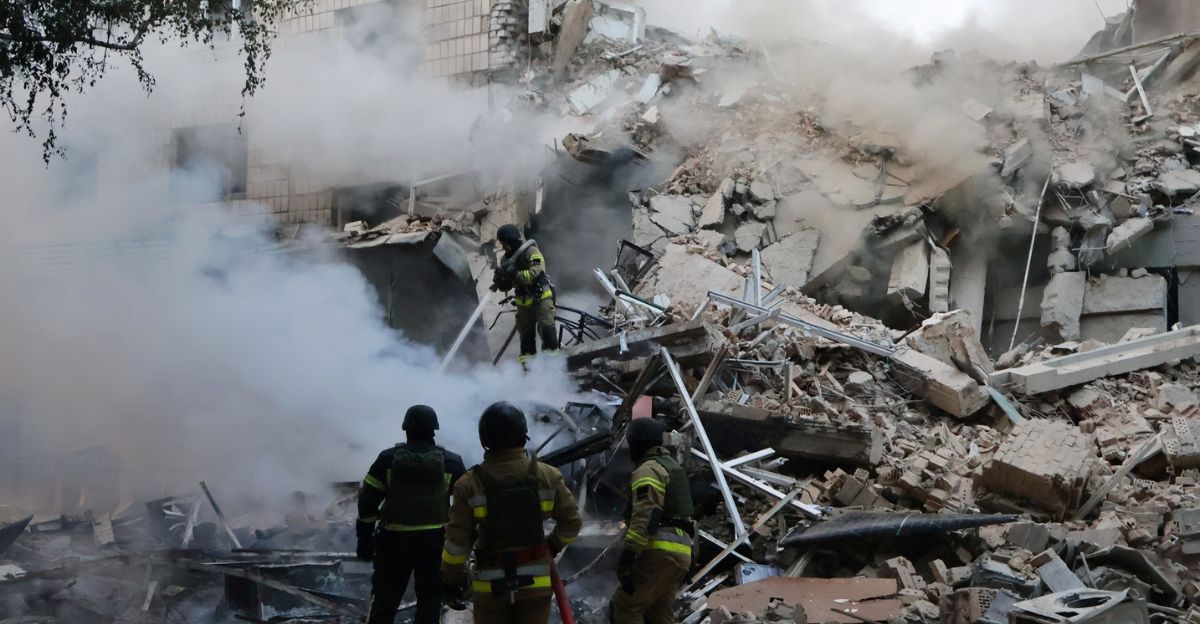
The Okhtyrka strike and the broader attack on infrastructure highlighted the human cost of modern warfare. Civilian buildings are not immune from drone strikes, and this incident adds to the growing concern for non-military sites.
For civilians, survival often depends not on strategy but on where a drone falls when intercepted—or not. This attack revealed the increasing risk to Ukrainian citizens in the conflict.
Sources:
Ukrainska Pravda (English edition) — “Russians attack Ukraine with 149 UAVs, 131 of which fail to reach their targets” — December 8, 2025
Kyiv Independent — “Ukraine war latest: Kyiv shifts focus to soldier training and safety amid continued Russian offensive, Syrskyi says” — December 8, 2025
Ukrinform — “Russian drones attack Okhtyrka in Sumy region, leaving seven people injured” — December 7-8, 2025
Eurasian Crisis — “Russian Drone And Missile Barrage Devastates Ukraine” — December 9, 2025
CBS News — “2 killed in Russia while Ukraine’s energy infrastructure is targeted and peace talks press on” — December 13, 2025