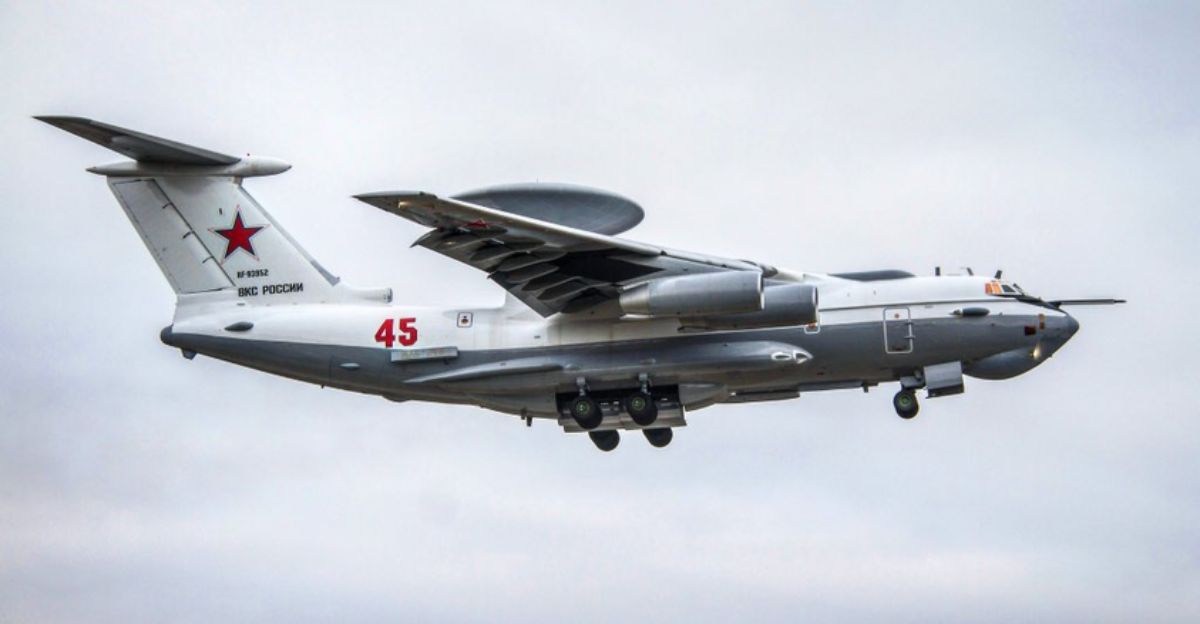
Smoke and flame at a remote airfield on the Sea of Azov may have ended one of Russia’s most unusual research aircraft programs: the Beriev A-60, a Soviet‑era Il‑76 transport converted into a flying high‑energy laser laboratory. For decades, the aircraft embodied Moscow’s ambition to project directed‑energy beams from the sky, yet it never became an operational weapon and its final fate now hinges on fragmentary wartime reporting and ambiguous satellite images.
Cold War Race for Airborne Lasers
The A-60 project began in the 1970s as the USSR searched for ways to undermine high‑altitude reconnaissance aircraft and emerging space‑based sensors without using missiles. Engineers at the Beriev design bureau in Taganrog were tasked with fitting a powerful gas‑dynamic laser into the roomy Il‑76 airframe, which offered the stability and payload capacity needed for experiments at altitude. From the outset, the aircraft was conceived as a scientific platform to test how a laser beam behaved in real atmospheric conditions, not as a ready‑to‑use combat system.
Built Around a Modified Transport
The first prototype, labeled 1A, took to the air in August 1981 with its main laser system housed in the cargo bay and a prominent retractable turret on the upper fuselage to steer the beam. Test campaigns in the mid‑1980s reportedly demonstrated the ability to track and damage high‑altitude balloons, showing that under carefully controlled circumstances an aircraft‑mounted laser could deliver energy onto a distant airborne target. Supporting systems included the Ladoga radar and optical sensors for tracking, but engineers quickly encountered fundamental physical limits. Atmospheric absorption, vibration, beam spreading, and thermal blooming all sapped power from the beam before it reached its target, forcing operators to fire only brief pulses measured in seconds and sharply constraining realistic engagement ranges.
A Program Disrupted, Then Revived

The original testbed’s career ended abruptly in 1989 when a fire destroyed the 1A aircraft, but work continued on a second platform known as 1A2, which entered trials around 1991. Within a few years, the collapse of the Soviet Union and the economic turmoil of the early 1990s froze the effort; by 1993 the program was effectively on hold as Russia’s defense industry struggled to maintain even conventional projects. In the early 2000s, the airframe and concept were pulled back into service under the classified Sokol‑Eshelon initiative. The emphasis shifted away from balloon targets toward understanding how lasers might interfere with space‑based infrared and optical sensors, reflecting broader Russian interest in counter‑surveillance measures. Even then, the A‑60 remained a research asset with limited power, short firing windows, and performance heavily affected by atmospheric conditions, never crossing the line into an operational airborne strike system.
Taganrog Under Threat
By the mid‑2010s, open‑source observers saw the distinctive Il‑76‑based aircraft parked at Beriev’s Taganrog facility for long stretches with few visible flights, and Russian officials kept public comments on airborne laser research deliberately vague. Taganrog itself is a critical node in Russia’s niche aviation sector, supporting maritime patrol aircraft, airborne early‑warning platforms, and experimental designs, and for years it sat far enough from the front lines to be considered relatively secure. That perception eroded as Ukraine expanded its long‑range strike abilities in 2023–2024, using improvised drones and adapted missiles to hit refineries, air bases, logistics hubs, and defense‑industrial sites deep inside Russian territory. The emerging reach of these attacks undercut assumptions that geography alone could shield rear‑area facilities from precision strikes.
Disputed Reports of the A-60’s Destruction
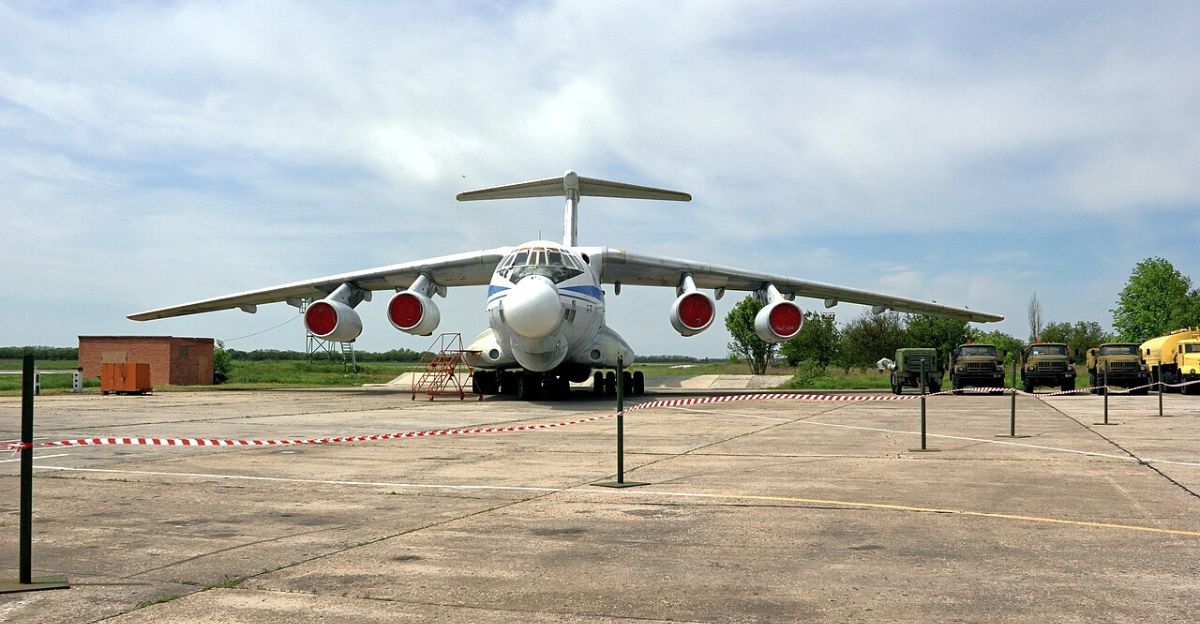
In late 2025, multiple Ukrainian and Russian sources described a significant attack on military infrastructure in Russia’s Rostov region, including the Taganrog airfield area and the adjacent Beriev complex. Video clips and local testimonies pointed to explosions and fires in or near the facility, but tight information controls and the limits of publicly available imagery left the full extent of the damage unclear. Some Ukrainian‑aligned commentators and open‑source analysts argued that the rare A‑60 had been destroyed, citing post‑strike satellite photos that appeared to show burned Il‑76‑type aircraft on the apron. Analysts caution, however, that differentiating among Il‑76 variants from commercial satellite images is difficult, and Russia has not publicly acknowledged losing the laser testbed. Without unmistakable imagery of the A‑60’s characteristic dorsal turret, independent assessments treat its status as unconfirmed. Whatever its physical condition after the reported strike, specialists note that the program’s most valuable legacy was less the airframe itself than the decades of experimental data and the niche expertise in optics, power systems, tracking, and atmospheric physics accumulated around it. Recreating a comparable airborne laser laboratory from scratch would demand significant time, funding, and specialized skills, underscoring the wider strategic implications if the platform has indeed been lost.
Sources
The War Zone, “Unique Russian A-60 Laser Testbed Jet Destroyed In Ukrainian Attack,” November 24, 2025,
Laser Wars, “Ukraine Destroys Russia’s Rare A-60 Laser Plane,” November 28, 2025,
The War Zone, Op. cit.; Wikipedia, “Beriev A-60,”
Wikipedia, “Beriev A-60”
The War Zone, Op. cit.
Laser Wars, Op. cit.; Wikipedia, “Beriev A-60”
Laser Wars, Op. cit.