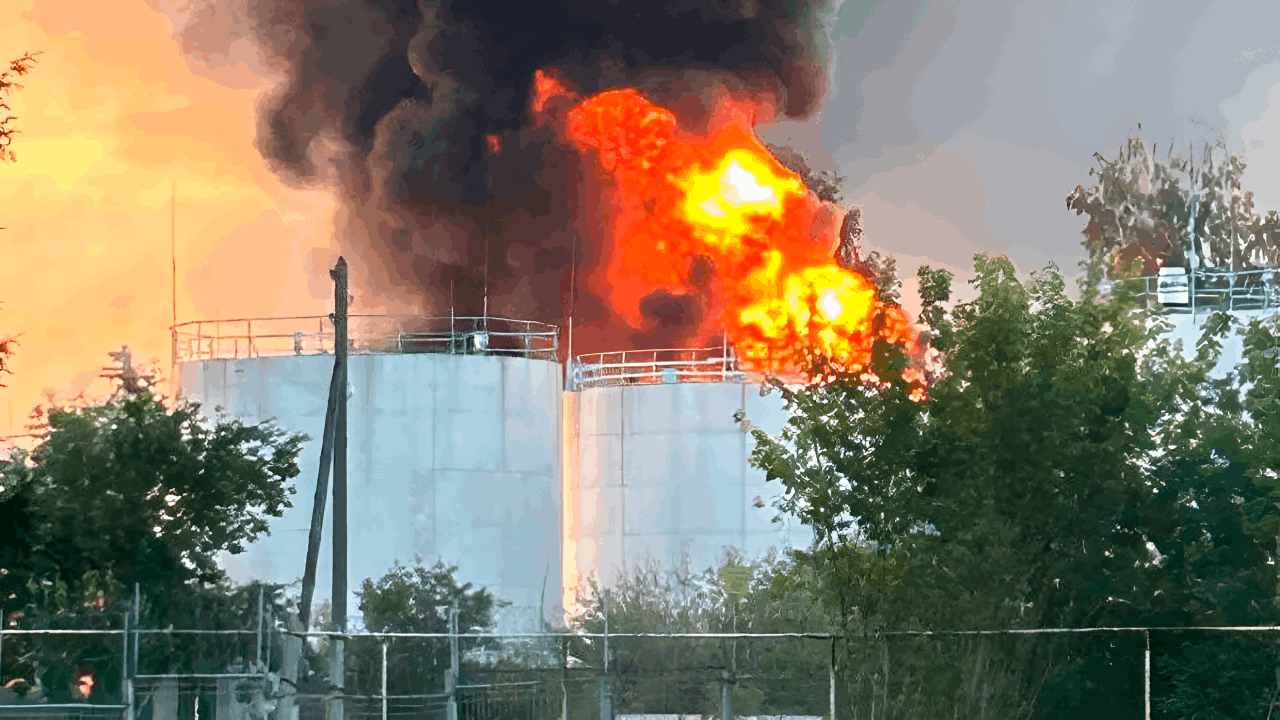
On October 23, 2025, Ukraine launched the most expansive drone offensive of the war—139 unmanned aircraft striking ten Russian regions in a single, meticulously coordinated operation. It wasn’t chaos in the skies; it was choreography.
Nearly 1,000 kilometers of Russian territory came under synchronized assault, marking a night that redrew the map of modern warfare. Beyond the staggering scale, the message was unmistakable: Ukraine’s reach now extended far beyond the front lines.
Russia’s Fuel Heartbeat
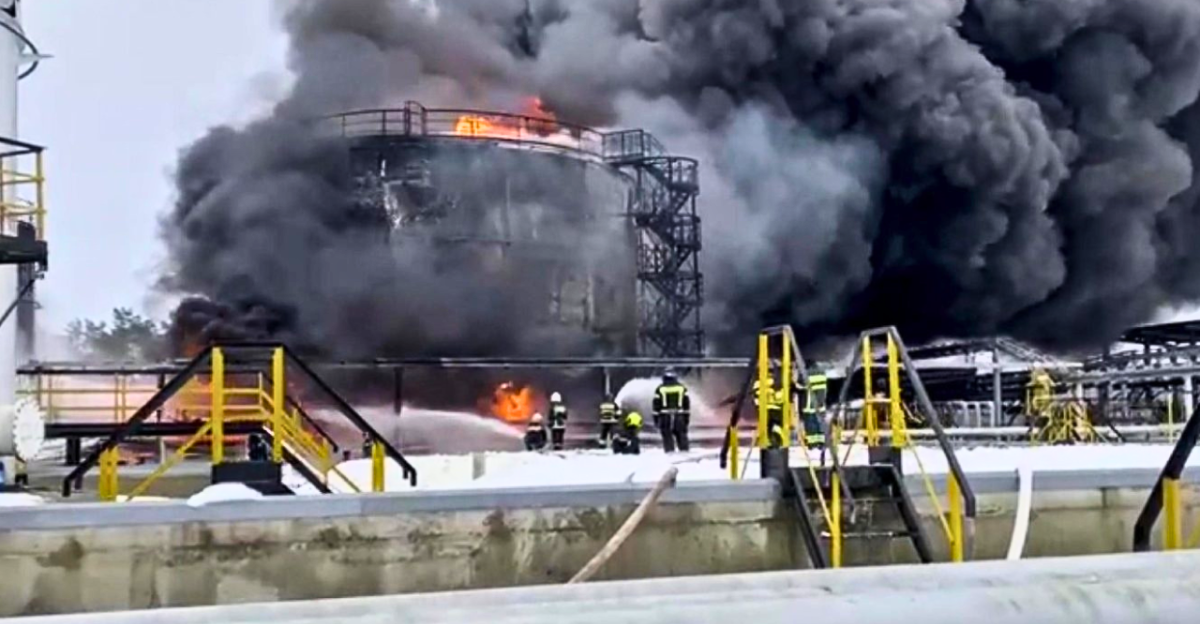
Rosneft’s Ryazan Oil Refinery, located roughly 200 kilometers southeast of Moscow, was the centerpiece of the assault. Within hours, flames engulfed one of Russia’s most critical energy hubs, crippling its ability to fuel both military operations and civilian life.
The refinery isn’t just another facility; it’s one of four pillars sustaining Russia’s vast fuel network, processing more than 17 million tons of crude oil annually and accounting for around 5% of the nation’s refining capacity.
What Was at Stake 2024 Output
In 2024 alone, Ryazan produced 2.2 million tons of gasoline, 3.4 million tons of diesel, 4.3 million tons of fuel oil, and 1 million tons of jet fuel. These figures aren’t mere statistics; they represent the fuel that powers tanks, aircraft, and logistics convoys.
Ukraine knew precisely what it was striking when it targeted this facility. The economic and strategic implications of losing even partial capacity rippled across Russia’s entire military logistics network.
AI-Powered Drone Coordination
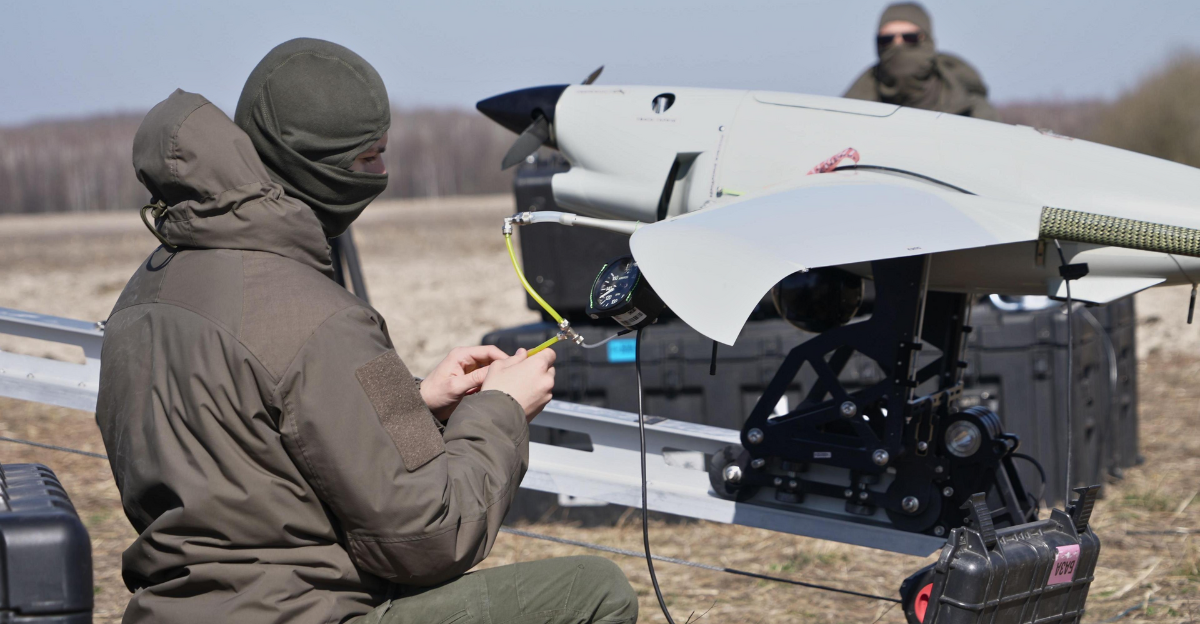
What set October 23 apart wasn’t just the number of drones and how they worked together. Rather than 139 isolated flights, Ukraine unleashed what analysts later called a “swarm strategy,” a hallmark of next-generation warfare.
The drones reportedly used AI-assisted coordination, adjusting course and timing mid-flight to evade Russian defenses. Their routes diverged and converged in calculated patterns, confusing radar systems built for conventional aircraft. The result was a synchronized operation that traditional air defenses couldn’t keep up.
Ten Regions Under Attack
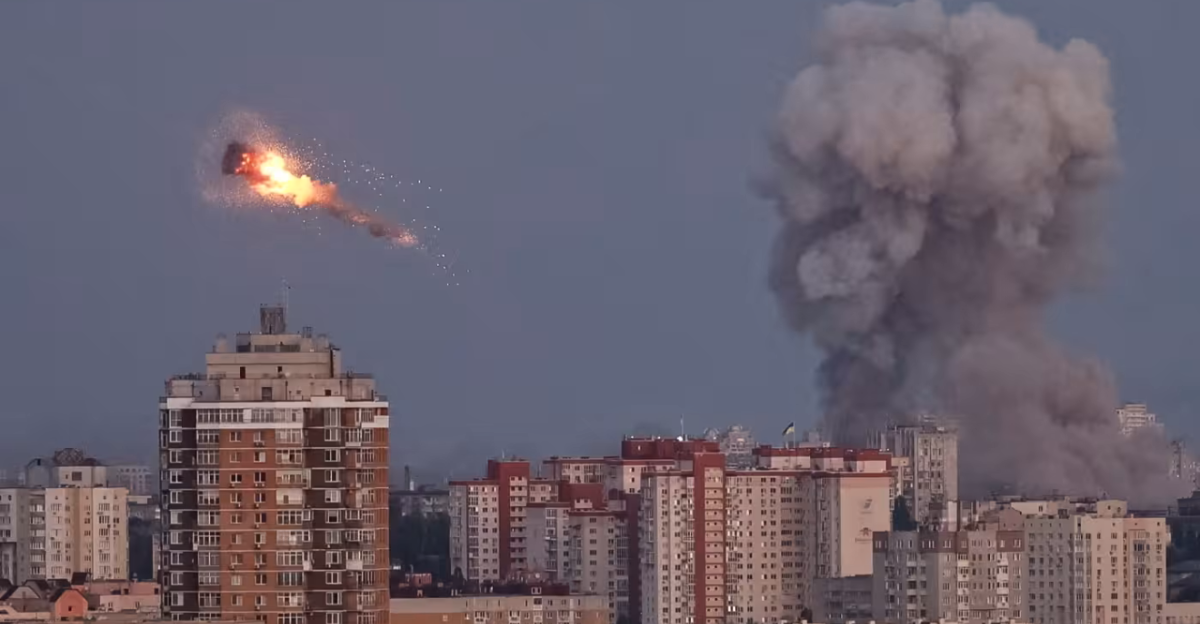
According to Russia’s Defense Ministry, drones struck Belgorod, Bryansk, Kursk, Oryol, Tula, Voronezh, Tambov, and Ryazan—ten regions in all. Belgorod bore the brunt, with 56 drones in its skies; Bryansk and Voronezh saw more than twenty each; fourteen reached Ryazan.
The variety of targets—refineries, ammunition depots, military outposts—revealed the operation’s intent: to stretch Russia’s defenses thin, forcing them to protect everything at once and effectively protect nothing.
Direct Hits and Cascading Damage
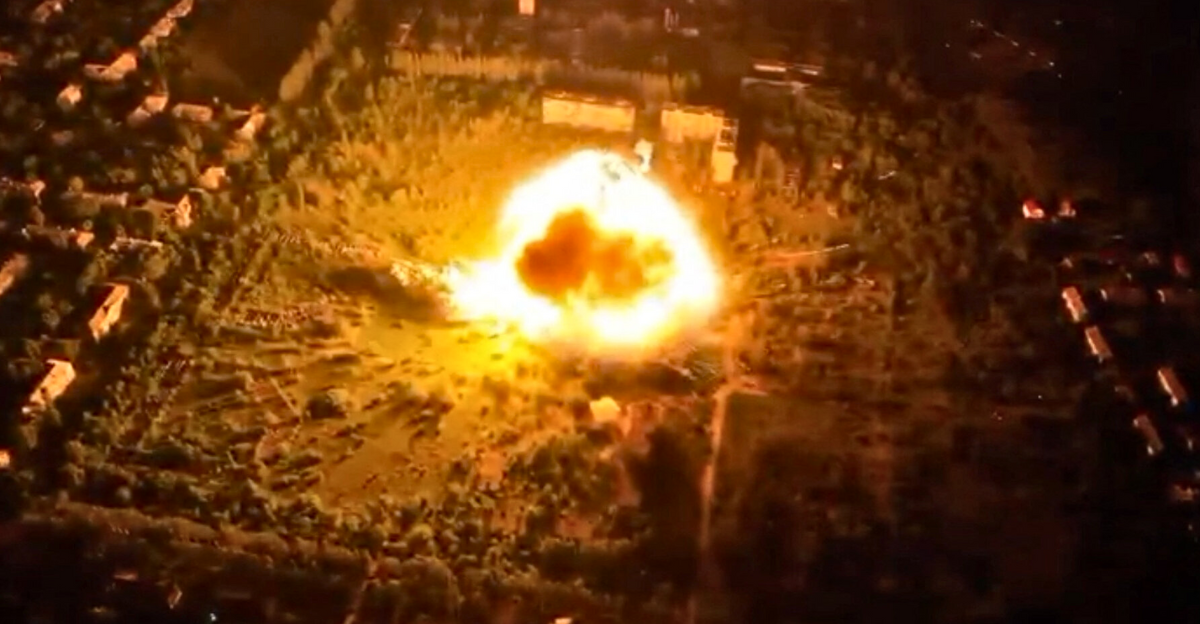
As drones descended on Ryazan, explosions ripped through the night. “Explosions were observed in the target area, followed by a large-scale fire,” Ukraine’s General Staff confirmed. Videos from nearby towns captured columns of flame rising high enough to be visible for miles.
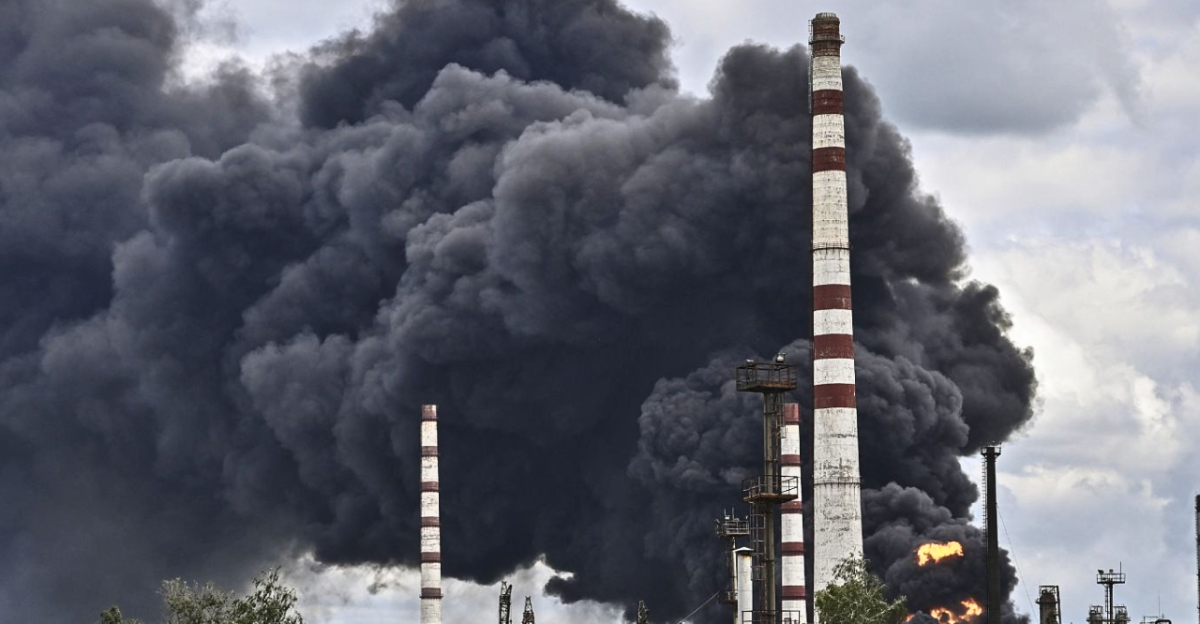
Satellite imagery later verified the damage: heat signatures blanketed the refinery’s main processing units, while black smoke trailed into the upper atmosphere. The facility’s critical CDU-4 crude distillation unit—responsible for 4 million metric tons of oil yearly—was hit directly and shut down.
The Second Wave: Ammunition Depot Strike
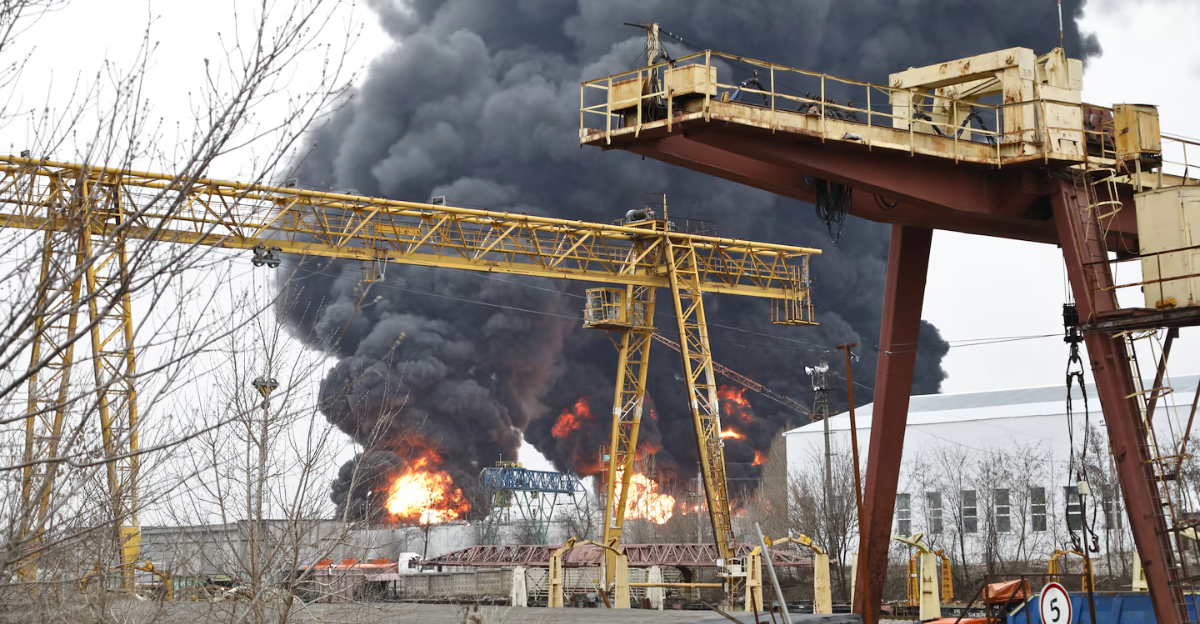
While Ryazan burned, a second wave of drones targeted an ammunition depot near Valuyki in Belgorod Oblast. The explosions that followed lit the night with chain reactions as ammunition stores detonated one after another.
Russian officials first attributed the blasts to “falling debris,” but videos circulating online painted a different picture: direct hits and cascading secondary explosions. Ukraine’s ability to execute two complex, simultaneous strikes across distant regions highlighted a new level of military coordination.
Moscow’s Air Defense Claims vs. Ground Truth
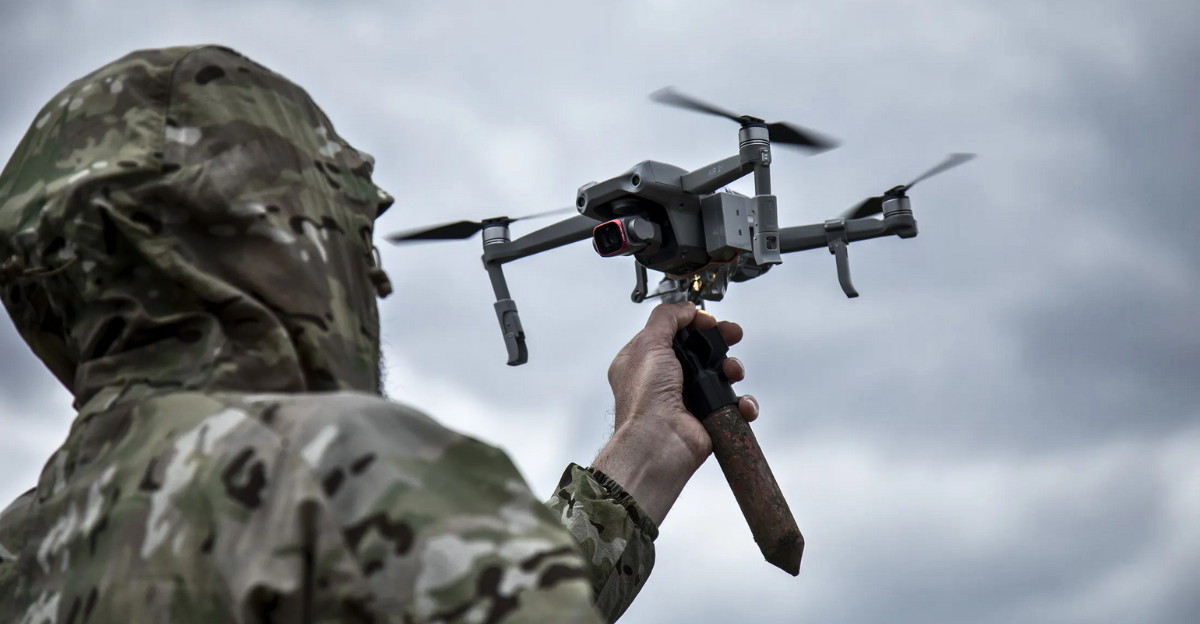
Moscow claimed its air defenses had shot down 14 drones over Ryazan Oblast, insisting “most threats were neutralized.” But evidence quickly contradicted that version. Satellite data, verified footage, and Ukrainian reports all confirmed multiple successful impacts.
Analysts noted how Ukraine’s swarm tactics—combining unpredictable flight paths with AI coordination—had overwhelmed Russian radar systems. Even areas once thought untouchable, within 200 kilometers of Moscow, were now vulnerable.
A Turning Point in Modern Warfare
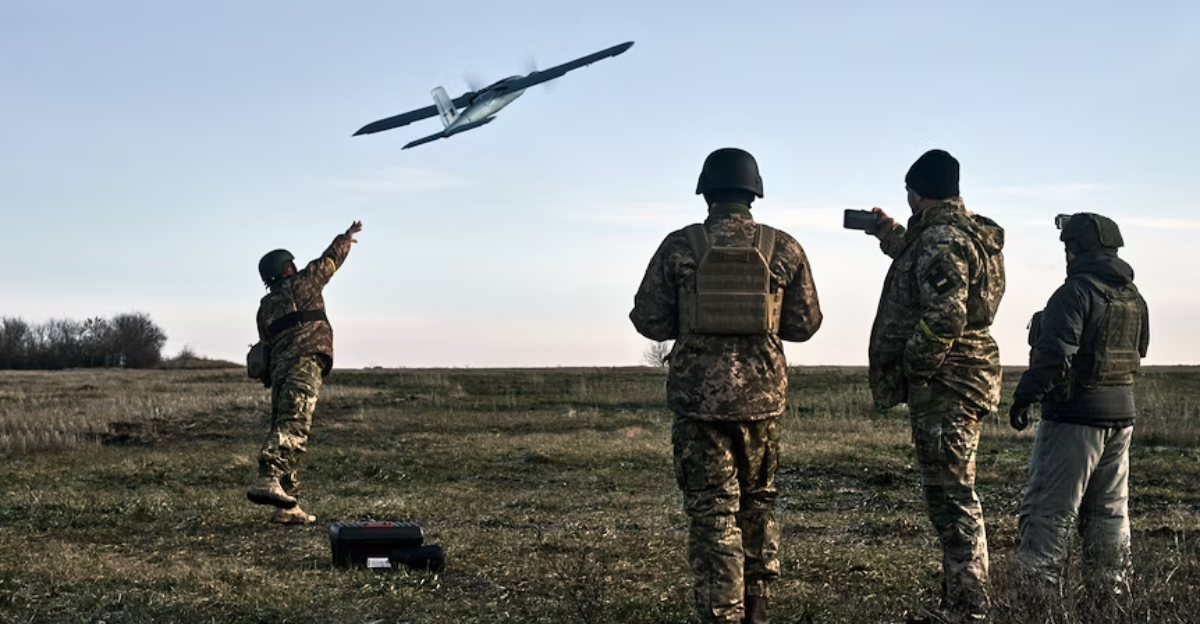
Analysts called the operation a turning point. Samuel Bendett, a defense advisor at the Center for a New American Security, has long described Ukraine’s evolving drone capabilities as “redefining warfare itself.” These aren’t remotely piloted kamikaze drones—they’re semi-autonomous systems executing coordinated strikes with minimal human input.
On October 23, Ukraine didn’t just strike targets—it demonstrated a model for future wars, where code and algorithms may matter as much as soldiers and strategy.
The Ripple Effect: Capacity Lost
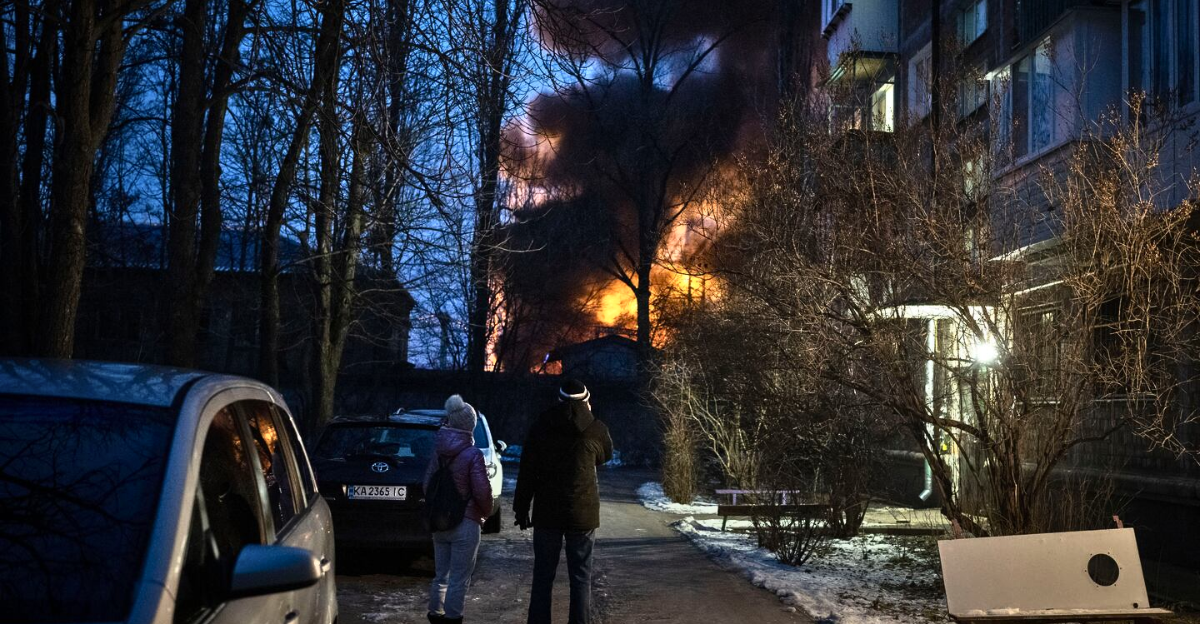
The Ryazan strike sent shockwaves through Russia’s energy infrastructure. The destroyed CDU-4 unit alone represented a quarter of the facility’s processing capacity—roughly 80,000 barrels a day. Reuters sources later reported that several secondary systems, including hydrotreaters and catalytic crackers, were also disabled.
For Russia, it was more than a localized fire. It was a rupture in the arteries that keep its military running. With winter approaching, the timing couldn’t be worse.
Winter Energy Crisis Looms for Russia
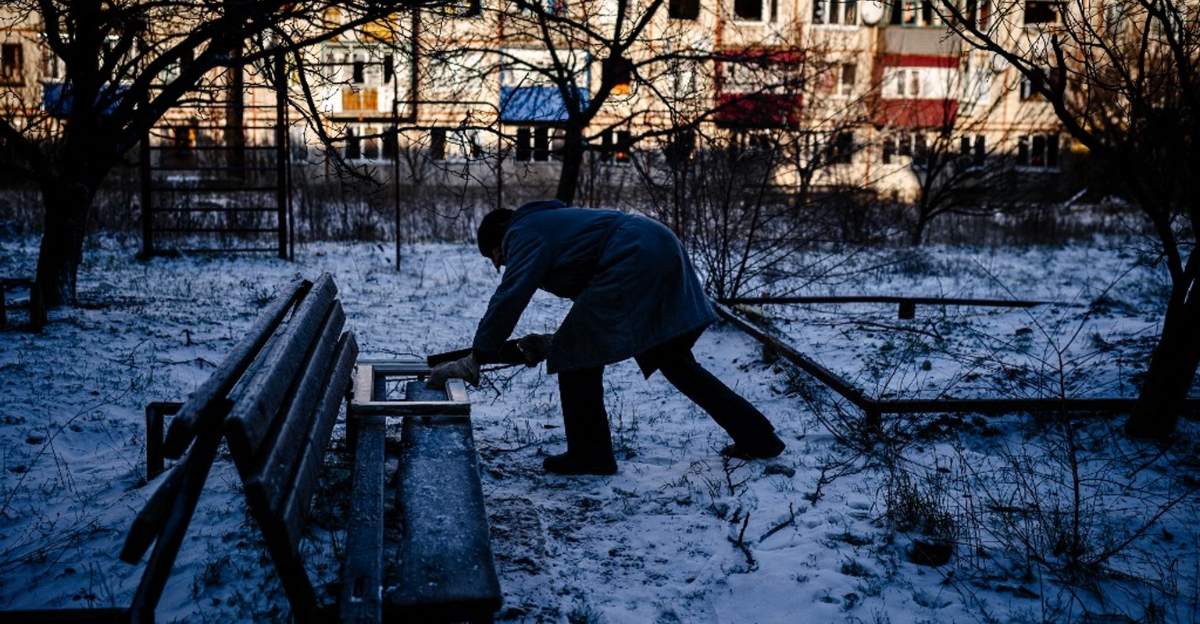
Beyond the military implications, Russia now faces a potential heating fuel shortfall across central regions. The damage won’t be undone in weeks; it will linger for months. Industry experts estimate that full repairs could take three to six months, possibly longer. The real obstacle isn’t manpower—it’s materials.
International sanctions have cut Russia off from much of the Western technology and specialized parts required for oil refining. To make matters worse, new U.S. sanctions imposed in late October 2025 tightened restrictions on oil transport and production equipment.
Sanctions and Strikes
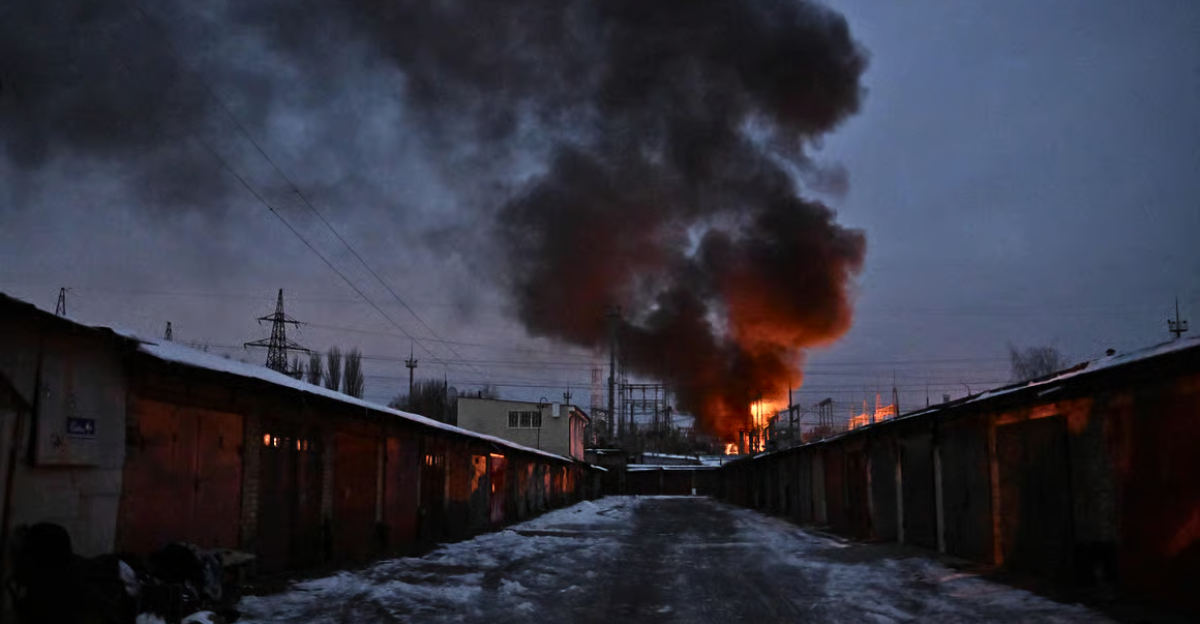
The timing of the Ryazan operation coincided with a fresh wave of Western sanctions targeting Russia’s energy exports. Ukraine made no public connection between its attacks and U.S. policy decisions, but the overlap was hard to ignore.
Analysts described it as “a perfect storm of pressure”—economic, diplomatic, and military. The result: Russia is increasingly cornered, and its once-stable energy backbone is now a point of acute vulnerability. Ryazan won’t be running at capacity anytime soon.
Infrastructure Targeting
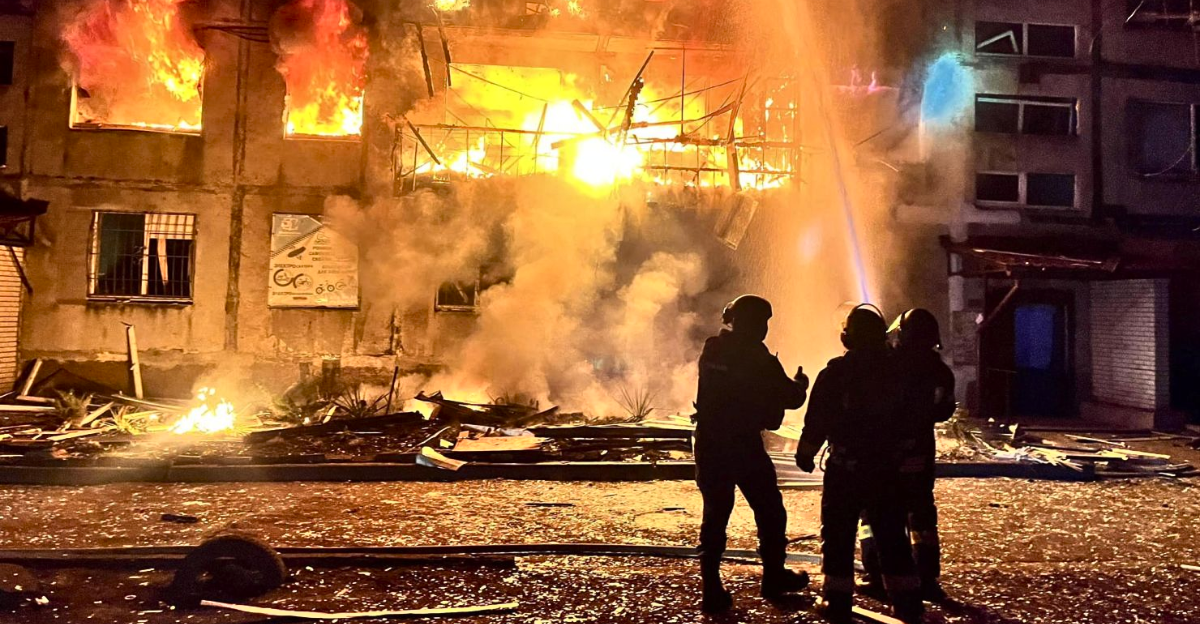
The Ryazan assault fits a larger pattern. Since August 2025, Ukrainian drones have hit more than two dozen refineries across Russia, including major facilities in Krasnodar, Volgograd, and Nizhny Novgorod. This shift from frontline strikes to deep infrastructure attacks has redefined Ukraine’s strategy—targeting not just troops, but the fuel, steel, and logistics systems that keep them fighting.
Analysts say this campaign is “altering the economic tempo of the war,” forcing Russia to stretch its defenses and rethink what safety means inside its own borders.
The S-400 Legacy Crumbles‘
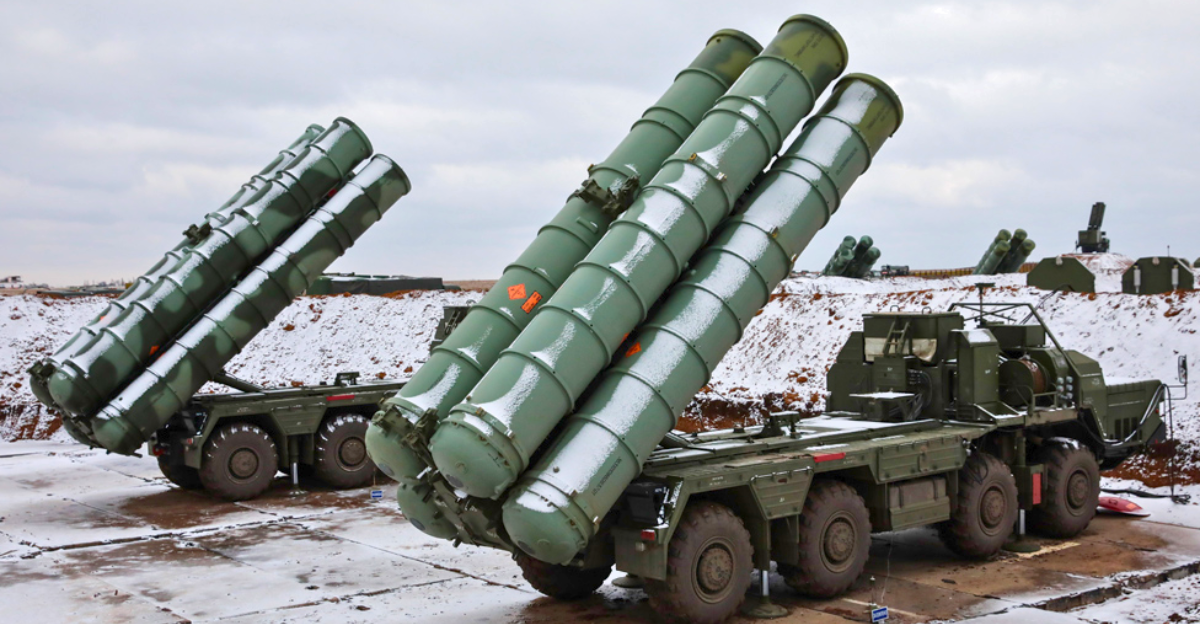
Russia’s air defense systems—like the S-400—were touted as impenetrable for years. On October 23, that myth unraveled. Military bloggers inside Russia accused commanders of complacency, and state television tried to calm viewers, but the damage was already done.
One hundred thirty-nine drones crossed Russian skies, reaching closer to Moscow than any Ukrainian operation before. The psychological blow was as severe as the physical one: Russia’s sense of invulnerability was gone.
What This Means for the War’s Future

When the fires finally dimmed over Ryazan, one fact remained: Ukraine had pulled off a historic operation that reshaped the war’s balance. The refinery—responsible for nearly 5% of Russia’s fuel production—lay crippled. Russia’s confidence in its air defenses was shaken. And the world had witnessed the emergence of a new kind of warfare—one where precision, coordination, and technological prowess outweigh sheer size.
The Ryazan operation was more than a headline; it was a preview of future wars. As winter draws near and supply lines grow more strained, Ukraine’s message echoes far beyond the battlefield: in this war, innovation has become the most powerful weapon.