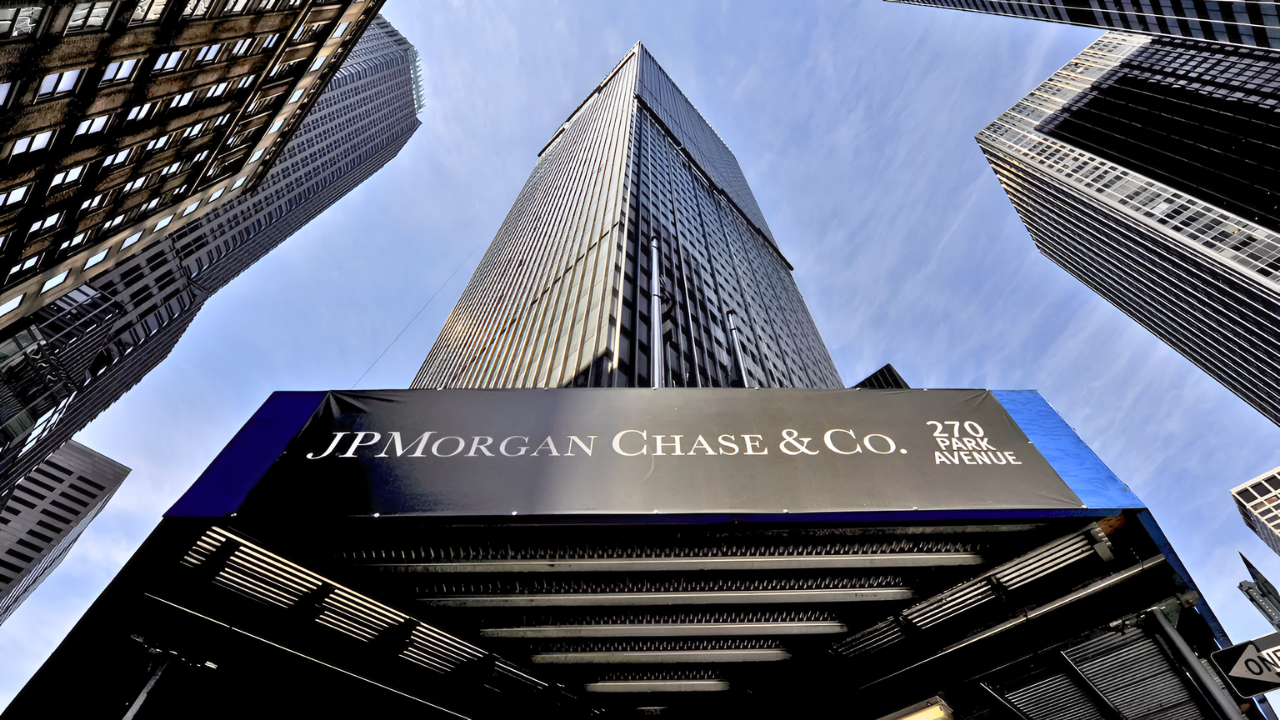
President Donald Trump has filed a $5 billion lawsuit against JPMorgan Chase, alleging that the bank closed his and related accounts for political reasons after the January 6, 2021, Capitol riot, a move he says caused major financial and reputational harm. The complaint, filed in a Florida court in the Miami area, names JPMorgan and its CEO Jamie Dimon as defendants. It alleges that on February 19, 2021—weeks after the Capitol events—the bank notified Trump, his businesses, and related parties that several accounts would be terminated, and that the decision was not based on genuine risk concerns. Trump’s legal team argues the closures were retaliation for his politics rather than standard risk management.
How the account closures unfolded
According to the lawsuit, JPMorgan sent a letter giving a 60‑day deadline to move funds, forcing Trump’s side to rapidly shift large balances and banking arrangements under that time pressure. The filing states that Trump and his businesses had maintained a long banking relationship with JPMorgan and had processed hundreds of millions of dollars through accounts tied to hotels, resorts, and real‑estate ventures. Trump’s attorneys contend that before 2021 the relationship had not involved major compliance violations flagged in those accounts.
Alleged blacklisting and “systemic” de-banking
The complaint further claims that JPMorgan effectively placed Trump‑related names on an internal blacklist or risk list, treating them as associated with problematic or “malfeasant” activity and thereby discouraging other institutions from providing services. Trump’s lawyers say this alleged risk labeling and information‑sharing across the industry magnified harm to his businesses by making it harder to secure banking relationships. They present the case as part of a broader pattern in which large banks sever ties with customers whose views clash with corporate leadership, describing this as a systemic “de‑banking” practice aimed at enforcing political conformity.
JPMorgan’s response and legal basis
JPMorgan firmly rejects the accusation that politics played any role in its decision. The bank says it closes or restricts accounts only when legal, regulatory, fraud, or other compliance risks warrant it, not because of customers’ political or religious beliefs, and has described Trump’s lawsuit as having no merit. The company emphasizes that it serves tens of millions of customers and that exiting relationships for risk reasons is a normal part of its responsibilities as a large, regulated financial institution. In its public comments, JPMorgan stresses that it aims to remain politically neutral even as its executives, including Dimon, sometimes feature in policy debates.
Trump’s lawsuit invokes Florida laws that restrict discrimination in banking based on political affiliation and other protected traits, and it adds business‑tort claims such as defamation, trade libel, and unfair trade practices. His lawyers argue that by attaching heightened risk labels to Trump‑linked accounts and allegedly conveying that assessment to others, JPMorgan damaged his reputation and interfered with business opportunities. They seek at least $5 billion in damages to cover alleged financial losses and reputational injury.
Previous de-banking disputes and parallels
The dispute mirrors earlier clashes between Trump‑aligned entities and major banks. In 2025, the Trump Organization sued Capital One in Florida over the closure of hundreds of accounts in 2021, including corporate and family‑related accounts, claiming the move was driven by political animus in the wake of January 6; Capital One has denied closing accounts for ideological reasons and says it acts based on risk and legal obligations. Commentators also point to the 2023 controversy involving UK politician Nigel Farage, whose accounts at Coutts, a NatWest unit, were closed, prompting a political outcry and a detailed review of how banks treat politically exposed customers, even though an independent review later found the decision to close his account was lawful.
What’s at stake for Trump, JPMorgan, and the industry
Trump and JPMorgan have had a long and, at times, complicated relationship, reflecting his broader history with Wall Street banks. Trump and his allies say the sudden 2021 closures forced them to scramble to relocate significant deposits and credit arrangements under tight deadlines, illustrating the operational strain that can accompany “de‑banking” decisions. Analysts note that this new lawsuit comes on top of Trump’s extensive legal docket, which already includes multiple civil, business, and defamation cases. Legal commentators expect a protracted fight in which JPMorgan is likely to seek dismissal on contractual and risk‑management grounds, while Trump’s team will try to use discovery to obtain internal communications about the account closures and any discussion of politics.
Banking and legal experts say the case highlights a growing tension between state‑level efforts to curb perceived political discrimination in finance and banks’ duties to manage regulatory, sanctions, fraud, and reputational risk. Florida and other states have advanced “fair access” concepts that push large financial institutions to serve lawful businesses without viewpoint‑based discrimination, while regulators still expect firms to exit customers who pose undue risk. Supporters of Trump’s challenge argue that if a prominent political figure can be cut off from a long‑standing banking partner, average customers with controversial views could face similar treatment. Critics warn that overly restricting banks’ discretion might weaken tools used to combat money laundering and financial instability or force institutions to keep high‑risk accounts they would otherwise exit.
The lawsuit against JPMorgan is still in its early stages, with no court ruling yet on the merits of Trump’s claims. Courts will ultimately have to weigh Trump’s allegations of politically motivated “de‑banking” against JPMorgan’s contention that it was acting within its standard risk‑management and compliance framework.
Sources:
“Trump sues JPMorgan for $5B, says the bank closed his accounts for political reasons.” Associated Press, 22 Jan 2026.
“Trump sues JPMorgan, CEO Jamie Dimon for $5 billion over alleged political debanking.” Reuters, 22 Jan 2026.
“Trump sues JPMorgan, Jamie Dimon for closing his bank accounts in Florida ‘debanking’ case.” USA Today, 22 Jan 2026.
“Trump takes JPMorgan Chase, Jamie Dimon to court in $5B suit over alleged political debanking.” Fox Business, 21 Jan 2026.
“Trump sues JPMorgan Chase for $5B in ‘debanking’ case.” Anadolu Agency, 31 Dec 2025.
“Trump Organization sues Capital One bank over account closures tied to Jan. 6 riot.” CNBC, 7 Mar 2025.