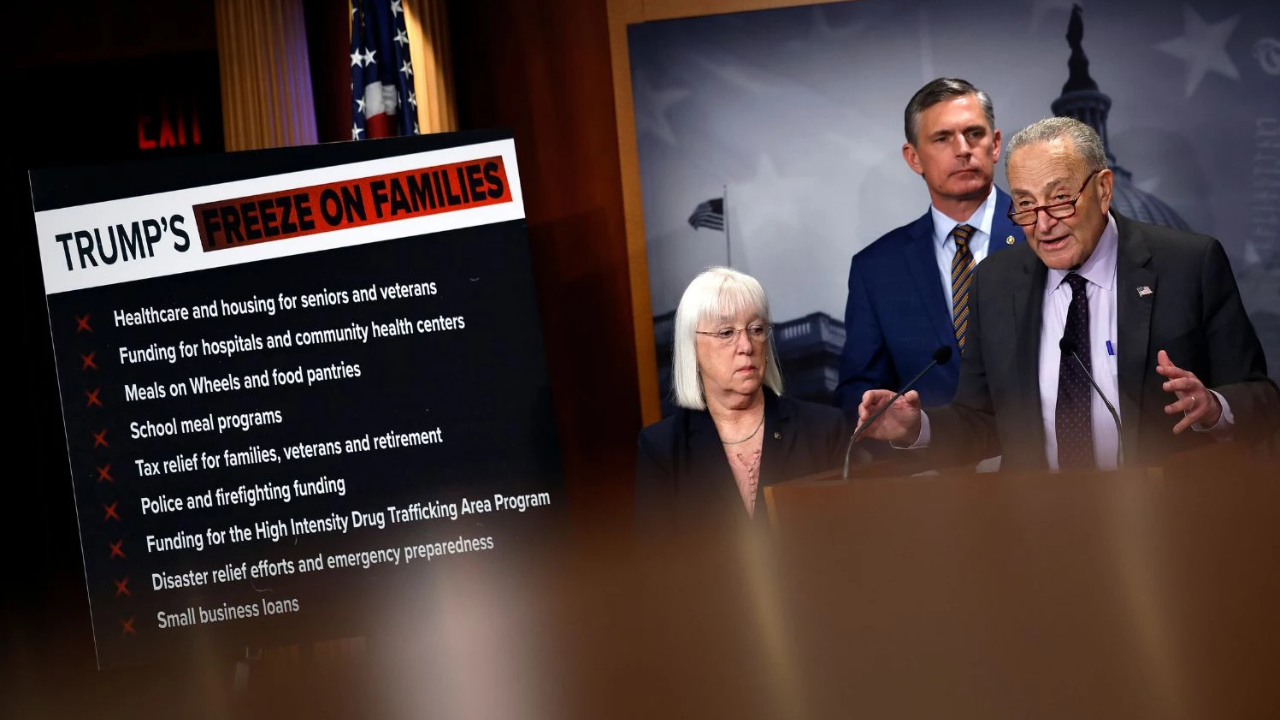
The federal government’s abrupt decision to freeze more than $10 billion in welfare and social-service funding has left hundreds of thousands of low-income families in five Democratic-led states uncertain about how they will pay for child care, food, and rent. The move affects California, Colorado, Illinois, Minnesota, and New York, and halts money that underpins core safety-net programs these states have relied on for decades.
Funding Halt Hits Three Pillars of the Safety Net
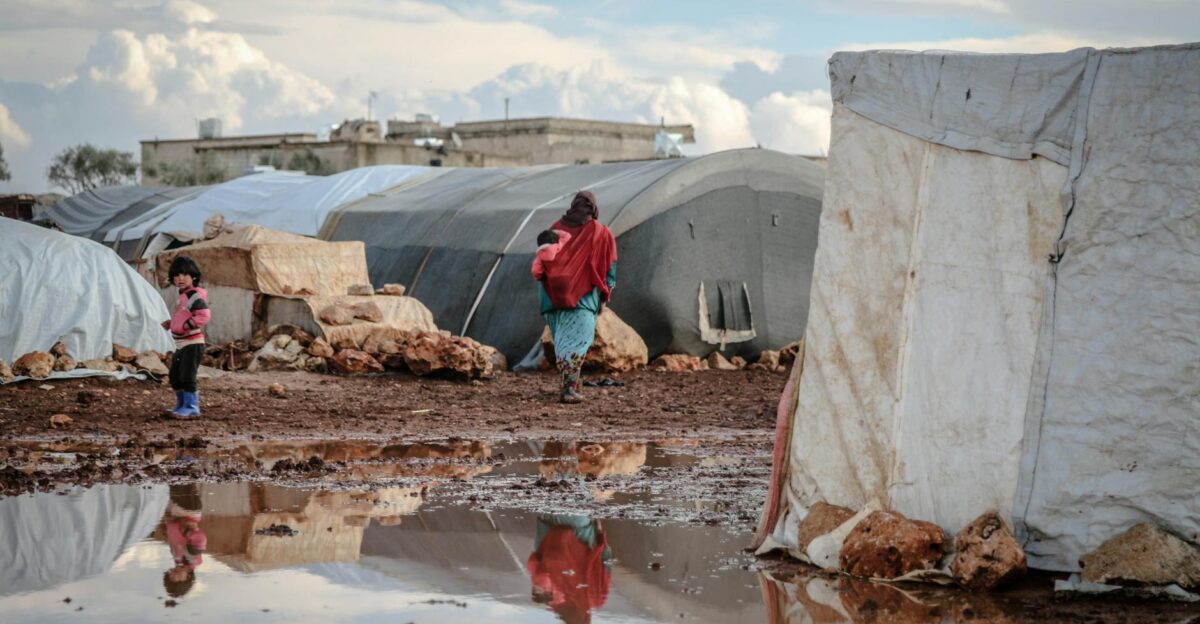
The freeze covers three major federal programs that support low-income households. Temporary Assistance for Needy Families (TANF) has been cut off from $7.35 billion. Federal child care subsidies are losing $2.4 billion. Social Services Block Grants (SSBG), which help finance a wide range of local services, lose $869 million.
These programs collectively fund child care assistance, cash aid, elder services, disability supports, and anti-hunger efforts across the five states. Officials say they are still trying to calculate how long existing state reserves can cover payments, and where service cuts will fall first, but they agree that the scale of the freeze leaves little room to absorb the shock.
State-Level Fallout: Families, Providers, and Politics

In Illinois, roughly 100,000 working families receive child care help partly financed by now-frozen federal dollars. Gov. J.B. Pritzker’s office estimates that more than 150,000 children could see their care disrupted if the freeze continues. The state’s SSBG allocation supports 275 organizations serving seniors, people with disabilities, and families facing food insecurity.
New York faces similar strain. In New York City alone, about 123,000 children depend on federally backed child care programs that have been placed on hold. Economists warn that if subsidies lapse, many parents will struggle to stay in jobs or complete their education because they cannot safely leave their children in care.
Governors in New York, Illinois, and Colorado have denounced the move and vowed to challenge it in court, arguing that the administration has not provided evidence of large-scale fraud in their systems. They say the decision punishes families and providers while politicizing basic assistance.
California and Colorado officials say they learned of the freeze from federal public statements referencing “rampant fraud” and claims of money going to undocumented immigrants, rather than through detailed findings specific to their states. Local leaders in California have described the action as driven more by national politics than by documented misuse of funds.
Minnesota’s Fraud Crisis and Its Wider Impact
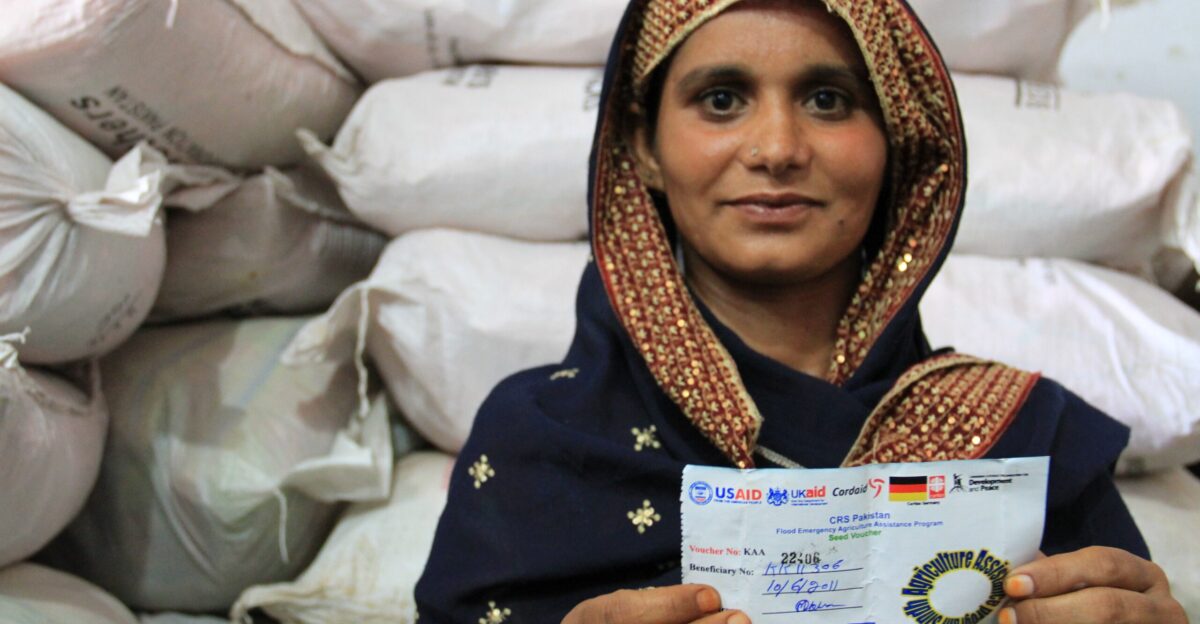
One state at the center of the controversy, Minnesota, does have extensive documented fraud. Federal prosecutors there have brought the “Feeding Our Future” case, in which 78 people were charged and 57 convicted in a scheme that stole roughly $250 million from a pandemic child-nutrition program. Separate investigations into welfare and Medicaid fraud have pushed total suspected losses into the hundreds of millions, with some estimates exceeding $1 billion.
Even before the current freeze, the federal government had halted about $185 million in annual child care funding to Minnesota. Officials in Washington now cite Minnesota’s fraud cases as a central justification for the broader five-state crackdown, even though similar large-scale scandals have not been documented in the other states.
The fallout has reshaped Minnesota politics. Gov. Tim Walz has announced he will not seek another term, linking his decision in part to the political damage from the fraud scandal and the subsequent federal actions. Federal prosecutors have called the misuse of pandemic-era public assistance in the state “staggering in its scale,” and Minnesota is now attempting to rebuild public trust in its oversight systems.
The Somali community in Minnesota has been especially affected by the public focus on fraud. After a viral video accused Somali-run child care centers of being “ghost” operations, state inspectors reported finding children present at most centers they checked. Still, community leaders say the rhetoric has fueled harassment and threats, and they worry that the crackdown is conflating criminal conduct by some actors with broader suspicion of immigrant-run businesses.
Federal Rationale, New Oversight Rules, and Legal Pushback
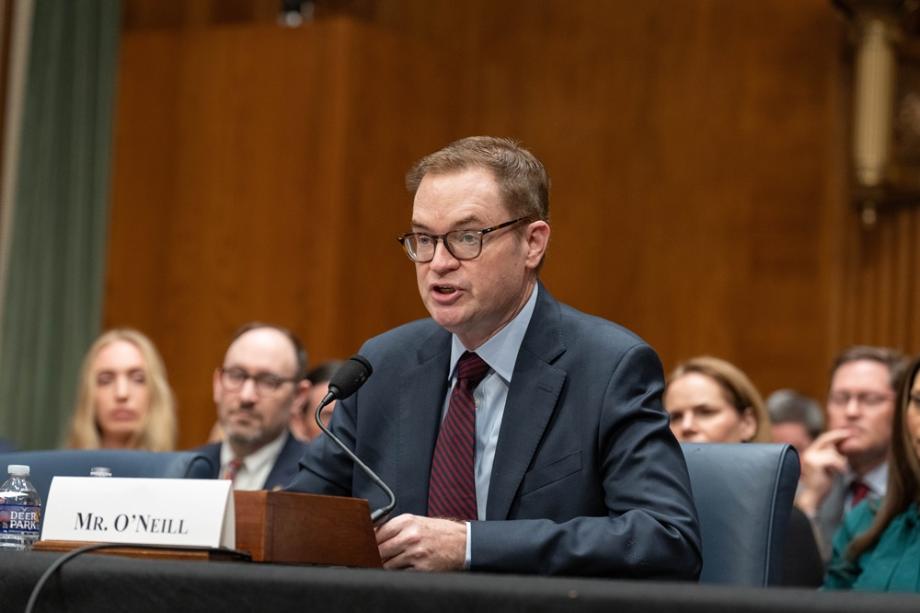
The funding freeze comes as the Department of Health and Human Services rolls out a new oversight system called “Defend the Spend,” which requires states to provide detailed documentation before money is released. HHS Deputy Secretary Jim O’Neill has said the system is designed to ensure federal dollars are backed by receipts or photographic evidence.
For the five states under the freeze, the requirements go further. They have been told to submit extensive records for every recipient, including names, Social Security numbers, dates of birth, and payment histories. Letters obtained by news organizations set a January 20 deadline for the states to deliver years of data covering millions of transactions. If they miss the deadline, the restrictions could tighten; if they comply, the information will be scrutinized for any discrepancies or ineligible payments that could justify continued holds.
HHS Secretary Robert F. Kennedy Jr. has said he acted because the five states “refuse to cooperate with developing plans that would end the fraud.” He argues that rooting out misuse ultimately benefits low-income families by preserving funds for legitimate recipients and denies that the targeting is political, saying states are being held accountable for their cooperation, not their party leadership.
Senior administration officials have also pointed to “rampant fraud” and alleged benefits going to undocumented immigrants as reasons for the freeze, although national news outlets report they have not been able to independently confirm large-scale payments to people lacking legal status outside of pending investigations. Public records to date show only Minnesota with large, fully documented fraud cases on the scale cited by federal officials.
Uncertain Outlook for Families and Local Economies
The freeze lands on top of longstanding funding pressures. TANF’s federal block grant has been fixed at $16.5 billion since 1996, losing roughly half its purchasing power to inflation. States have been stretching those static dollars to cover more families and more services, leaving few reserves to cushion sudden interruptions.
Child care providers, especially small centers and home-based programs, often operate with thin margins and limited cash flow. Advocates warn that even short delays in federal reimbursements can force staff layoffs, missed rent payments, or closures. Economists say each dollar in direct assistance typically generates two to three dollars in local economic activity, meaning a $10 billion freeze could disrupt tens of billions in spending as parents cut work hours or drop out of the labor force and centers reduce operations.
The five states are preparing lawsuits and hunting for temporary funding to keep critical services running. Federal officials say the money will remain frozen until the states fully document their programs and demonstrate that anti-fraud safeguards are adequate. With some deadlines measured in days and reviews expected to take weeks or longer, families, providers, and state agencies are facing a prolonged period of uncertainty over programs that form the backbone of everyday life for many low-income households.
Sources:
CBS News – RFK Jr. says Democrat-run states at center of funding freeze “refuse to cooperate with developing plans that would end the fraud”
HHS Press Room – HHS Freezes Child Care and Family Assistance Grants in Five States
The New York Times – Health Dept. Freezes $10 Billion in Funding to 5 Democratic-Led States
NPR – Who is Nick Shirley, YouTuber alleging day care fraud
CNN – Trump administration freezes billions in social services funding to five Democratic-led states
ABC News – Trump administration cites “rampant fraud” and “giving money to illegals” in $10 billion child care funding freeze