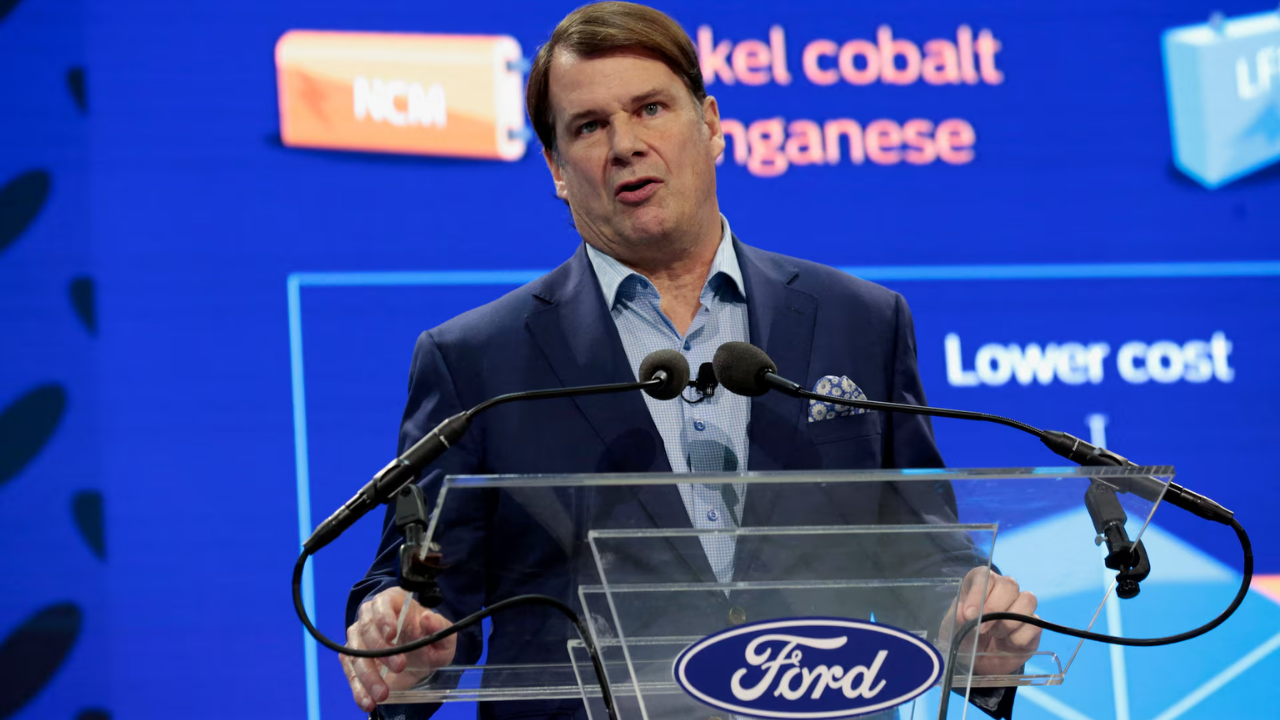
Ford’s recalibration of its electric vehicle ambitions highlighted a stark challenge: large electric trucks remain far from profitable. The company is taking about $19.5 billion in special charges tied to its EV strategy overhaul, reflecting slower demand, higher costs, and revised assumptions about the pace of EV adoption. Executives describe the move not as a retreat from electrification but as a strategic reset to preserve discipline amid uncertain market conditions.
Balancing Costs and Consumer Demand
Ford’s largest EV challenge lies in the high cost of batteries and uneven customer appetite for full-size electric pickups. Production of the F-150 Lightning has been scaled back and is ending in its current form as Ford transitions toward hybrid and extended-range versions, aligning output with real-world demand that has trailed expectations. The company now favors profitability over volume growth, a shift that executives say reflects a more realistic view of how quickly U.S. truck buyers will embrace battery-powered vehicles.
At the Rouge Electric Vehicle Center and other facilities, changing demand and strategic adjustments have contributed to production pauses and the eventual halt of Lightning production, while Ford repurposes capacity toward hybrids and other vehicles. These changes allow Ford to focus resources on high-demand gasoline and hybrid F-150s while maintaining flexibility to pursue EVs based on a new platform for smaller, more affordable models. The company has emphasized that these shifts are part of a broader strategic evolution rather than an abandonment of electrification.
Consumer Reluctance to Go Fully Electric
American truck owners have been hesitant to invest in large electric pickups, particularly given concerns about towing range and charging time. When hauling heavy loads, electric trucks can experience steep range losses, forcing more frequent recharging. For buyers accustomed to long-haul performance, these trade-offs remain difficult to accept. Since launching in 2022, the F-150 Lightning has sold well below its gasoline counterpart, underscoring persistent skepticism in the segment.
Industry data and reporting have also pointed to slower-than-hoped demand growth for EVs in the U.S. market, especially in higher-priced segments such as large trucks. Incentives and discounts have at times been used to stimulate EV sales industrywide, and many customers increasingly view hybrids as a practical compromise between efficiency and convenience.
Industry Adjusts Expectations
Ford’s cautious stance mirrors a broader reevaluation across Detroit’s automakers. General Motors and Stellantis have also slowed or adjusted rollouts of some large electric trucks, while exploring platforms that accommodate hybrids or range-extended configurations, reflecting a more gradual path to full electrification. Recent years have brought an emerging industry consensus: while electric pickup trucks remain part of long-term plans, widespread adoption is unfolding more slowly than once projected.
For Ford, hybrids have proven a profitable bridge. The F-150 hybrid and planned extended-range electric (EREV) versions aim to deliver strong towing capacity and extended range without full dependence on public charging infrastructure. Executives frequently cite hybrids and EREVs as scalable solutions that fit both customer preferences and regulatory goals. By emphasizing these models, Ford seeks to maintain momentum toward lower emissions while addressing practical concerns around affordability and use.
Cost Constraints and Battery Strategy
Despite improvements in material sourcing and design, battery costs continue to limit profitability in large EVs. Full-size trucks require massive battery packs, driving up expenses even as some input prices ease. Ford CEO Jim Farley has argued that very large EVs with huge batteries are “never going to make money,” underscoring the pressure on margins for such vehicles. The company acknowledges that, under current conditions, margins on big-battery models are too thin to justify aggressive expansion.
Ford still plans to expand LFP (lithium iron phosphate) and other battery-related projects, including repurposing some battery facilities for energy storage systems, as part of a long-term strategy to lower costs and diversify revenue. These efforts are expected to support smaller EVs and battery energy storage solutions, where cheaper and more durable chemistries can be particularly advantageous. Workforce shifts have accompanied these changes, with some EV roles affected while hiring continues in emerging technologies and new business lines such as battery energy storage.
A Pragmatic Turn Toward Hybrids
Policy uncertainty and changing U.S. regulatory signals, combined with a more cautious EV consumer market, have reinforced Ford’s determination to follow market demand rather than chase rapid expansion of large, fully electric trucks. Company leaders stress that regulations and demand must move in tandem for electrification to succeed sustainably. In this environment, hybrids and EREVs have emerged as a pragmatic middle ground for many truck and fleet customers.
Commercial and retail buyers often prioritize reliability, range, and uptime—areas where hybrids and extended-range systems can hold advantages over current large battery-electric trucks. Investor and analyst reactions to Ford’s EV overhaul and associated charges have generally framed the move as a bid for financial discipline and a clearer path to profitability, rather than an outright retreat from electric vehicles. Looking ahead, Ford expects its next wave of EV growth to concentrate on smaller and midsize vehicles with more manageable battery costs and broader consumer appeal, while large trucks in the near term lean on hybrid and EREV technology until long-range fully electric solutions become economically viable.
Sources:
Detroit News, Dec. 2024: Ford halts F-150 Lightning production amid inventory buildup and supplier issues
Kelley Blue Book (KBB), Dec. 2024: F-150 Lightning sales lag, inventory analysis, and hybrid buyer trends
MotorTrend, Dec. 2024: Industry pivots: Ford, GM, Stellantis adjust large EV plans; workforce impacts
Ford.com, 2024: Official announcements on hybrids (F-150 PowerBoost), battery plants, and future vehicles
AP News, 2024: Ford’s Marshall LFP battery plant and CATL licensing details
EPA.gov, 2024: Multi-pollutant emissions standards and EV targets
Ford Q4 Earnings / SEC Filings, 2024: $10.7B non-cash charge on Model e unit