` The US Was Hit By A Billion-Dollar Disaster Every 10 Days In 2025 - Ruckus Factory

The US Was Hit By A Billion-Dollar Disaster Every 10 Days In 2025

ABC News – Youtube

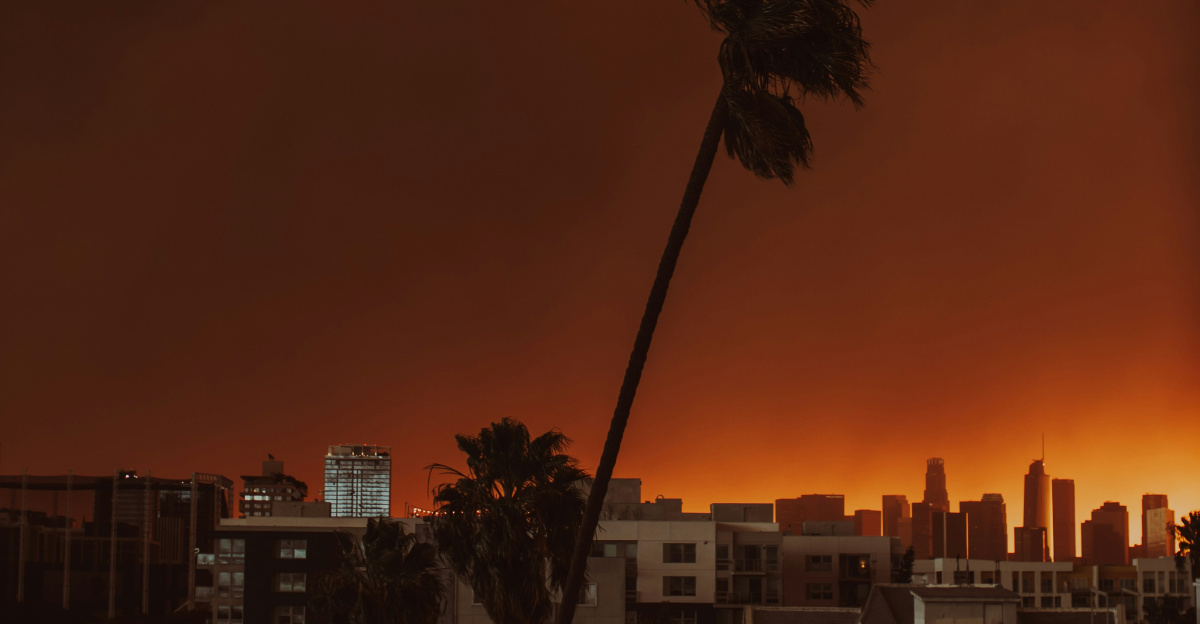
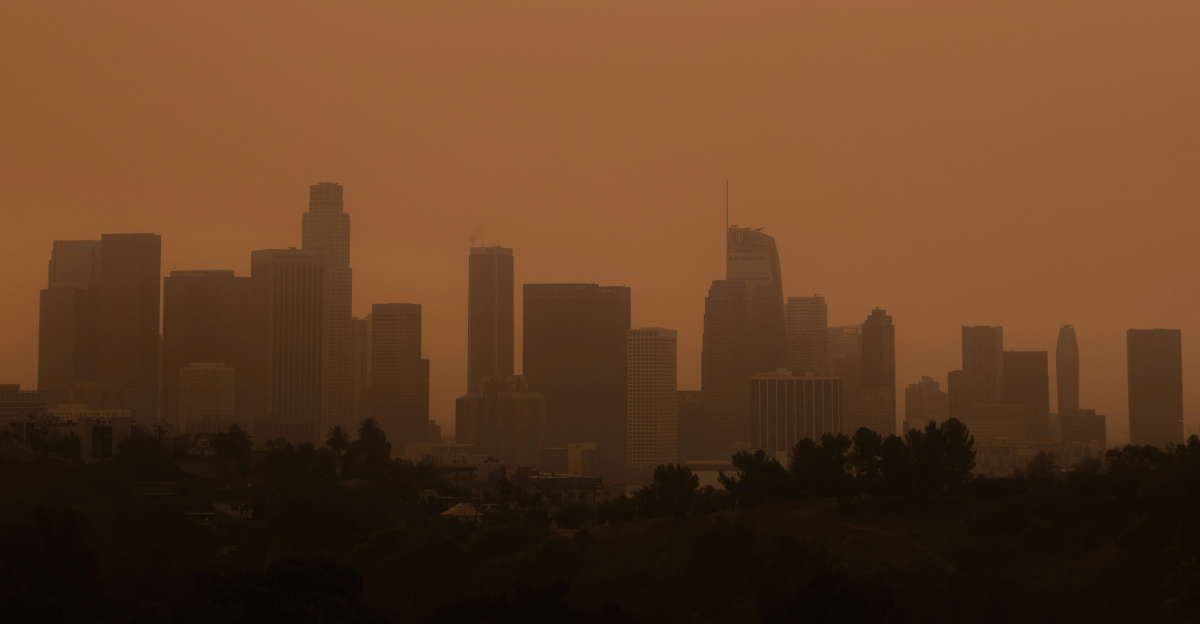
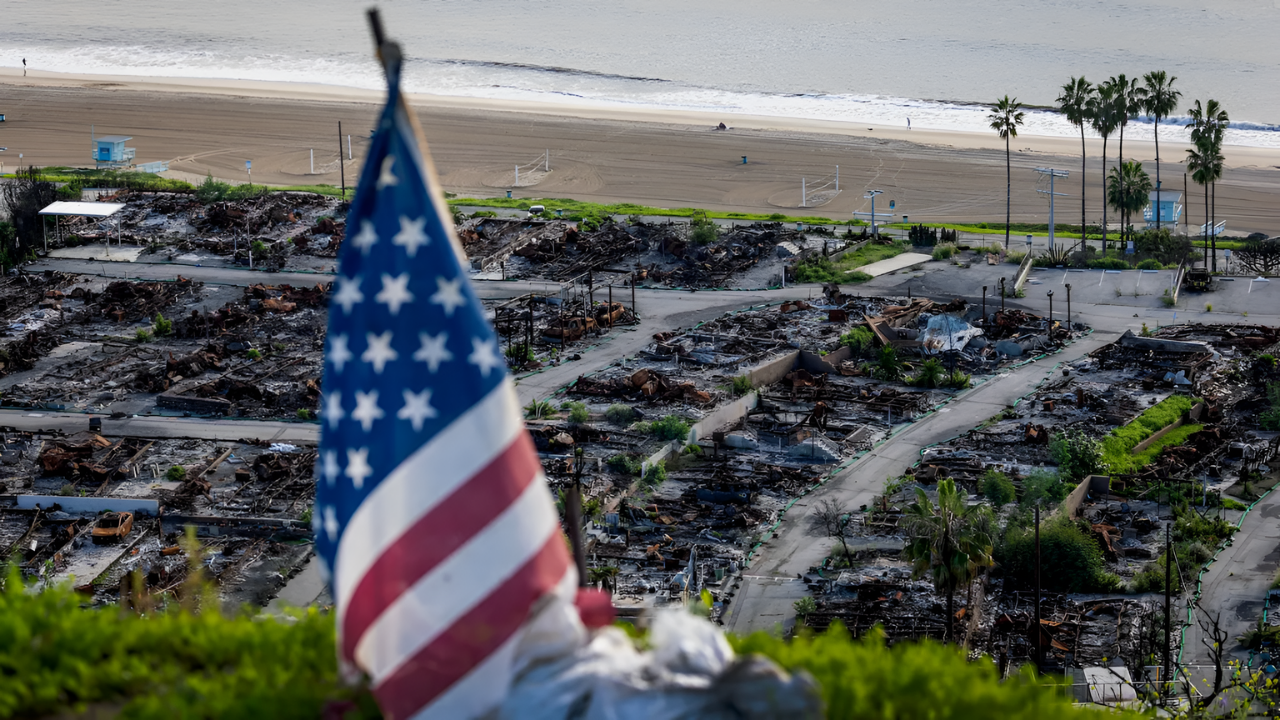
Smoke darkened Los Angeles skies as flames tore through neighborhoods in January 2025. Sirens echoed, evacuation orders stacked by the hour, and entire blocks vanished in days. This wasn’t a once-in-a-generation catastrophe—it was one of many.

By year’s end, the U.S. would log 23 billion-dollar weather disasters, averaging one every 10 days, killing 276 people and causing $115 billion in damage. What unfolded next shocked even disaster experts.

Relentless Pace

A palm tree in front of a city skyline
Photo by Jessica Christian on Unsplash

In 2025, billion-dollar disasters struck with unprecedented speed. On average, the nation barely had 10 days between catastrophes—storms, fires, floods, and tornadoes stacking before communities could recover. Entire regions cycled from cleanup to evacuation repeatedly.

Compared to the 1980s, when disasters were separated by 82 days, this represented an eightfold acceleration, redefining what “normal” disaster frequency looks like in America.

Tracking the Legacy
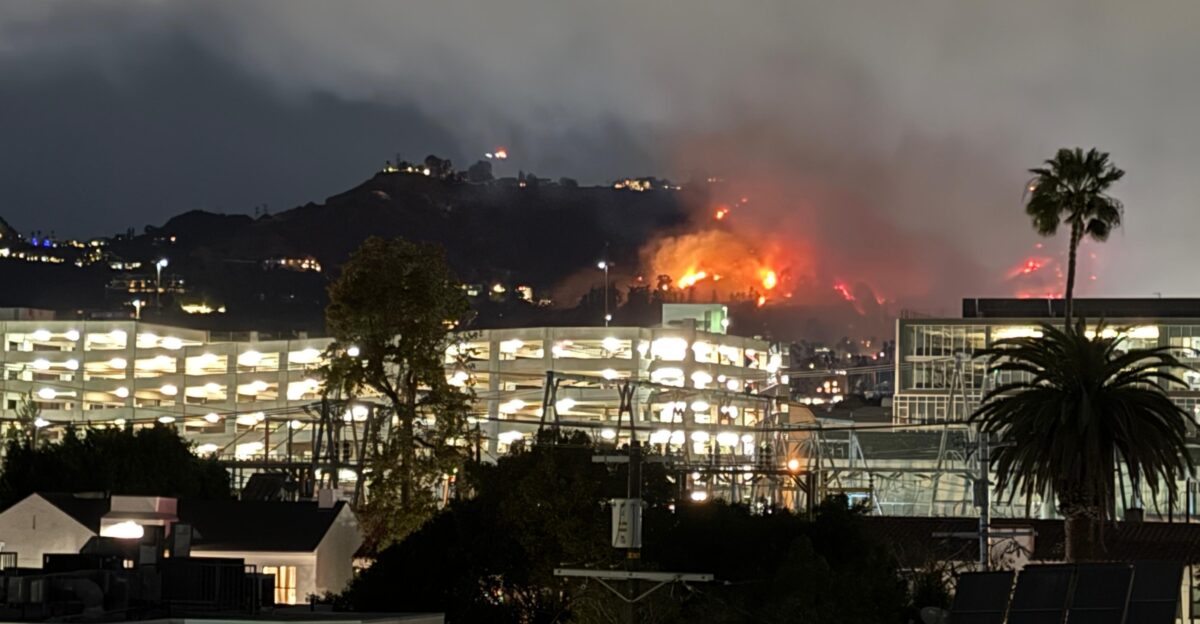
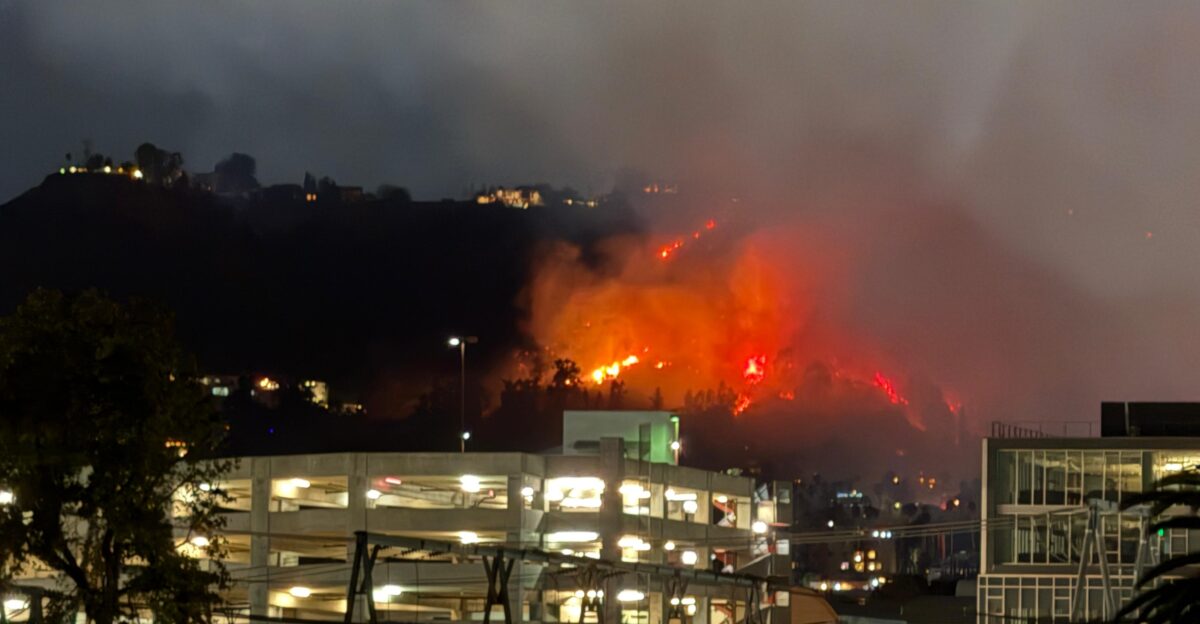
January 2025 Sunset fire from a rooftop in West Hollywood Los Angeles
Photo by YisroelB501 on Wikimedia

Since 1980, the U.S. has endured 426 billion-dollar disasters, costing $3.1 trillion and killing 17,194 people. NOAA’s tracking system became the gold standard for insurers, emergency planners, and governments measuring risk.

Yet in May 2025, at the very moment disasters surged to record levels, the Trump administration halted NOAA’s updates, citing shifting federal priorities. The timing raised immediate concern among scientists and first responders.

Data Handover
wildpixel via Canva

Facing mounting climate losses, Climate Central stepped in during October 2025 to preserve the dataset. The nonprofit rehired Adam Smith, NOAA’s former lead disaster economist, to continue tracking billion-dollar events adjusted for inflation.

As climate change intensified extremes, uninterrupted records became essential for understanding risk, insurance exposure, and long-term planning. Without consistent data, policymakers warned, communities would be navigating disasters blind.

Record Toll Revealed

January 2025 Sunset fire from a rooftop in West Hollywood
Photo by YisroelB501 on Wikimedia

Climate Central confirmed 23 billion-dollar weather disasters in 2025, killing 276 people and causing $115 billion in damages. That made 2025 the third-worst year on record, trailing only 2023 and 2024.

Severe storms dominated, accounting for 21 of the 23 events—the most ever recorded in a single year. On average, each disaster caused roughly $5 billion in damage nationwide.

Wildfire Epicenter

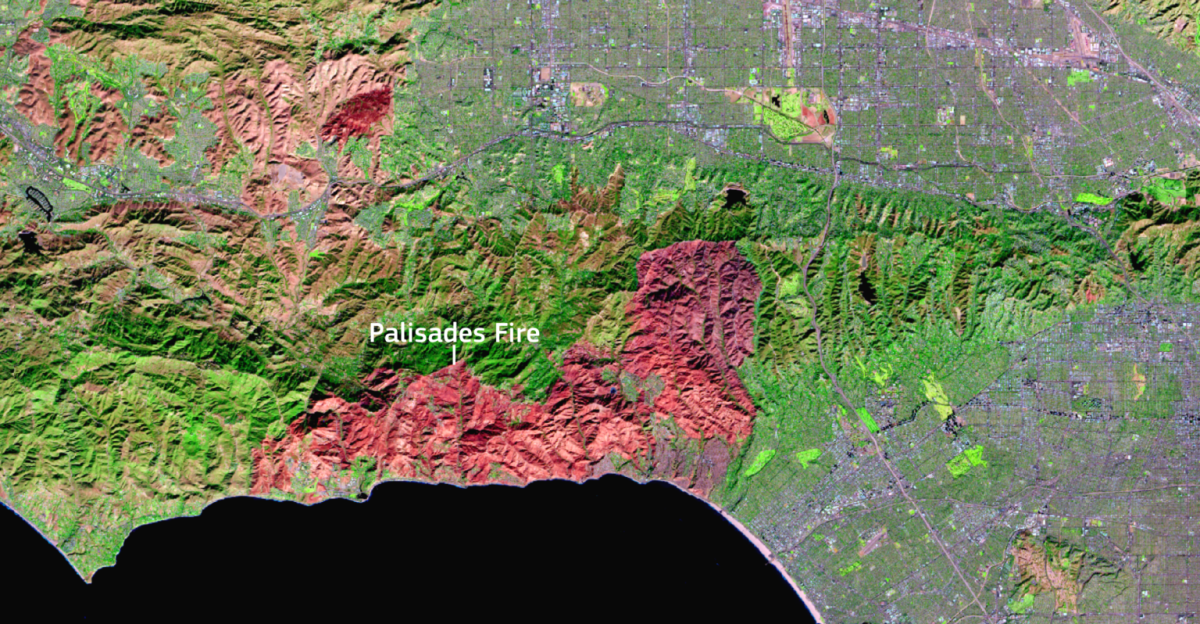
As of 13 January 2025, the three fires affecting Los Angeles, California since 7 January continue to burn, spurred on by strong winds. The fires have been deemed among the most destructive in the city’s history, claiming at least 24 lives. The largest fire, in the Palisades neighbourhood, has burnt over 9,000 hectares and destroyed around 5,300 structures. Throughout Los Angeles, over 12,000 structures have been destroyed by the blazes, with 105,000 people under evacuation orders and an additional 87,000 people facing evacuation warnings. This Copernicus Sentinel-2 image, acquired on 12 January 2025, shows the burn scars of the three wildfires affecting Los Angeles. Open data from the Copernicus Sentinel satellites is an essential resource for tracking global wildfires, helping to assess their impacts on affected communities.
Photo by European Union, Copernicus Sentinel-2 imagery on Wikimedia

From January 7–28, 2025, Los Angeles endured the costliest wildfire in U.S. history. The fires caused $61.2 billion in damage, destroyed 16,000+ homes and businesses, and forced 200,000+ evacuations.

Hot, dry winds accelerated flames through dense wildland-urban zones, overwhelming firefighters. The toll eclipsed previous wildfire records by nearly double, marking a turning point in urban fire risk.

Tornado Devastation

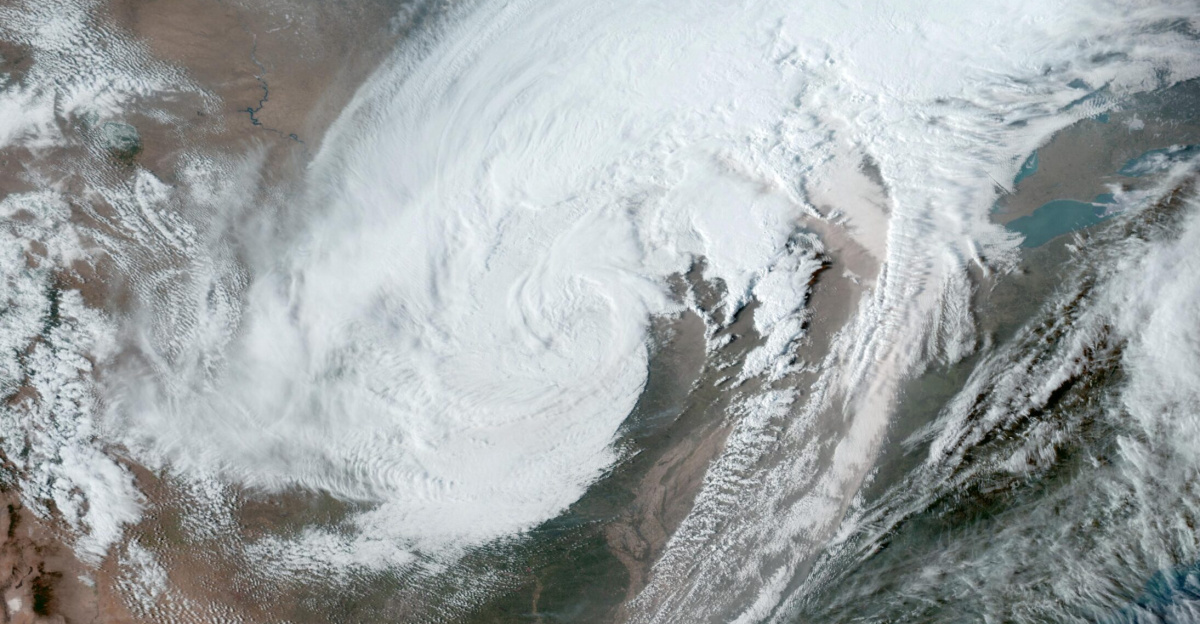
Satellite image of the Mid-March 2025 North American blizzard, as seen on March 19, 2025.
Photo by NASA Worldview on Wikimedia

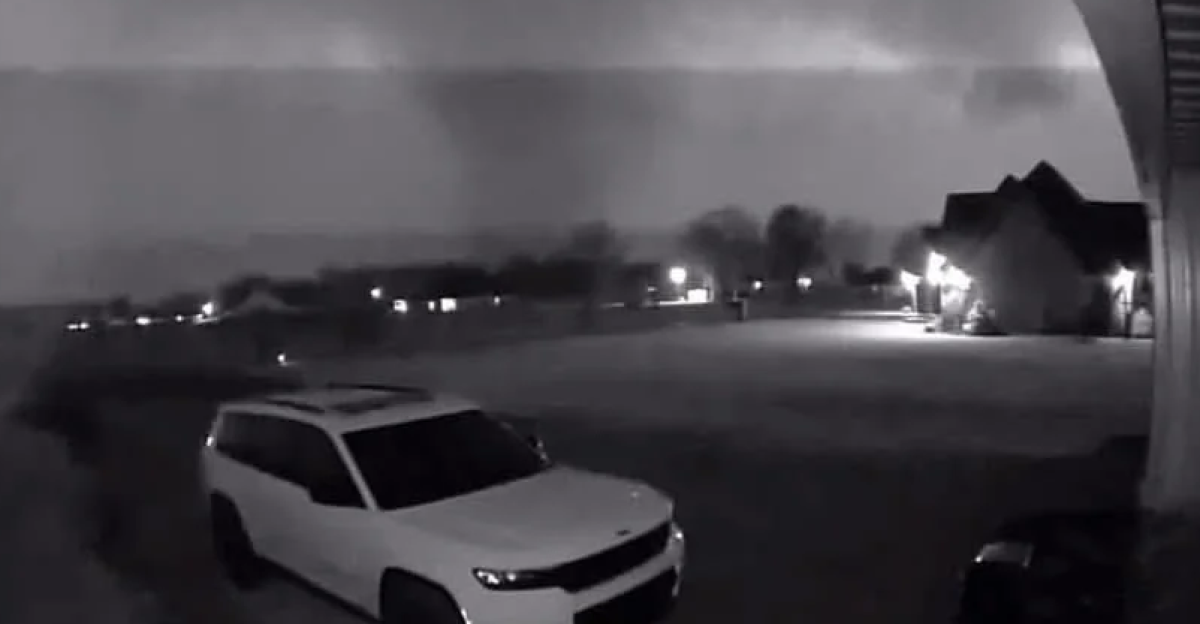
Between March 14–16, a massive tornado outbreak unleashed 180+ tornadoes across central, southeastern, and eastern states. The storms killed 43 people and caused $11 billion in damage.

Just two months later, a May 15–17 outbreak added $6.3 billion more, killing 29 and knocking out power to 600,000+ customers. Entire towns were flattened before warning systems could catch up.

Insurance Strain

A violent (EF4+) tornado that hit Diaz, AR, seen from a driveway security camera.
Photo by Blink security camera on Wikimedia

Insurers increasingly described 2025 as “the new normal.” With disasters arriving relentlessly, companies warned of premium hikes, coverage pullbacks, and regional exits.

Supply chains also suffered: Southern agriculture faced repeated storm losses, while Midwest manufacturers endured shutdowns from flooding and power outages. As federal disaster tracking paused, insurers leaned heavily on nonprofit data to recalibrate risk.

Climate Amplifier

america drought 2025
Photo by Cornelius M Keyes on Wikimedia

Warmer Gulf waters fueled heavier rainfall across the South, while Western heat intensified drought and wildfire risk. Since the 1980s, the average gap between billion-dollar disasters shrank from 82 days to just 16, hitting 10 days in 2025.

At the same time, population growth in fire-prone regions dramatically raised costs. Climate change didn’t act alone—it amplified exposure already built into modern development.

Storms Record Shattered

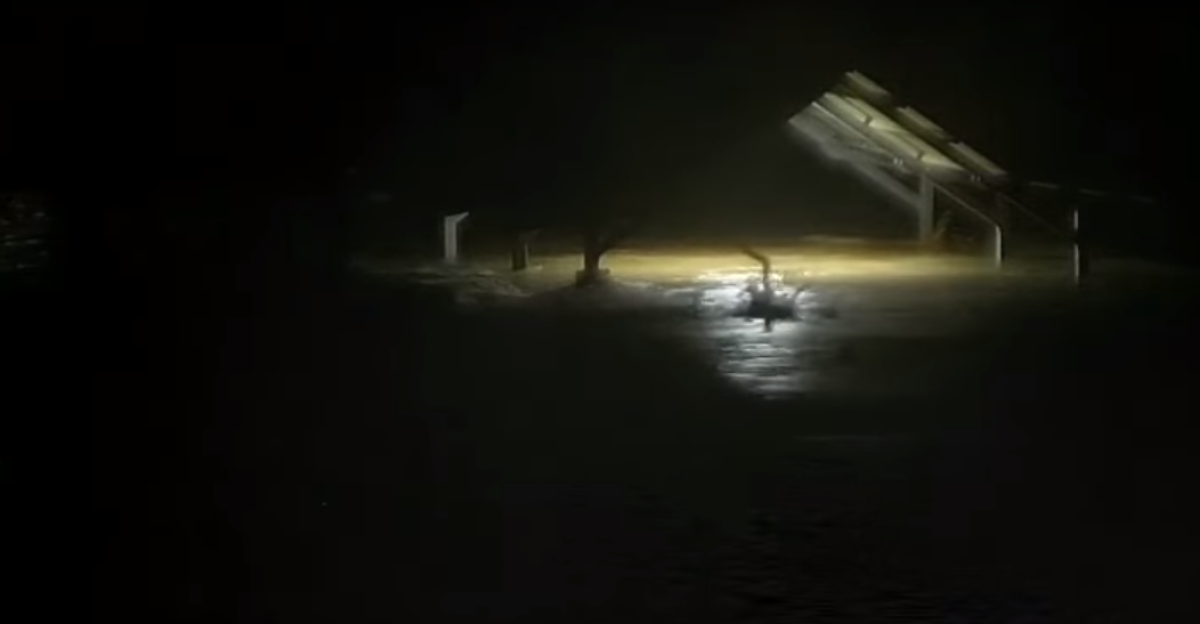
A security camera still of a devastating river surge that killed at least 13 people in Central Texas (seen from Kerrville, Texas) on July 4, 2025. Hundreds remain unaccounted for as of July 4.
Photo by Security camera on Wikimedia

A record 21 billion-dollar severe storms defined 2025, accounting for 91% of all disasters. Hailstorms battered Texas and Colorado, while flash flooding struck multiple regions.

Notably absent were major hurricane landfalls, due to a rare atmospheric pattern shielding the Southeast. Experts warned that without this anomaly, total damages could have exceeded $200 billion.

Expert Alarm

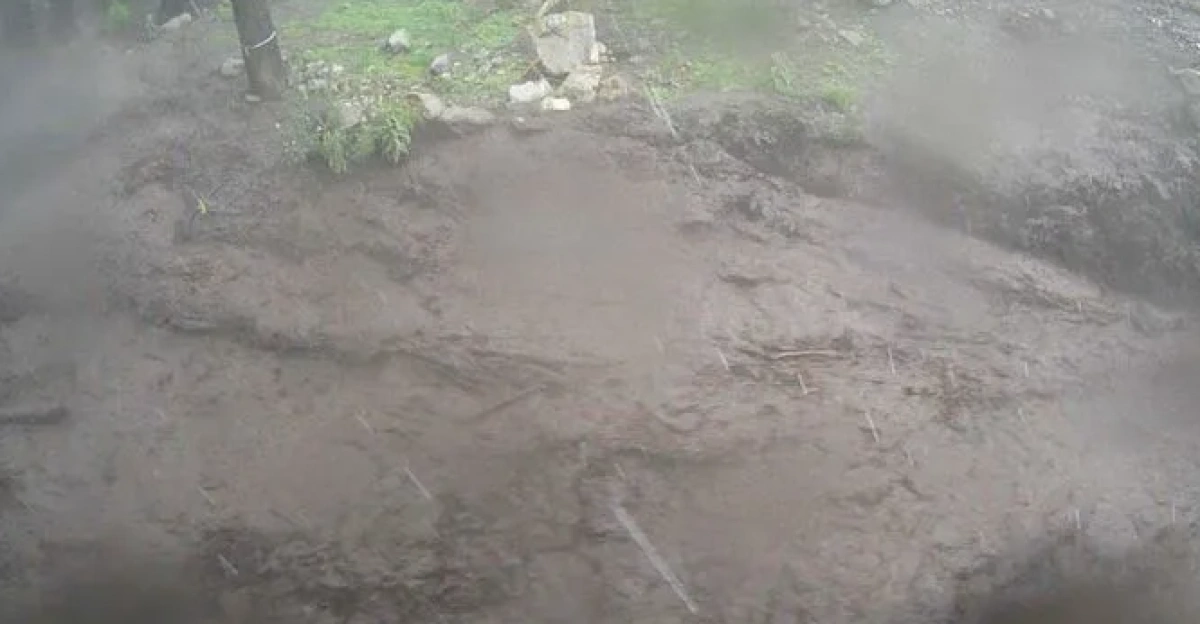
Historic flooding of the Rio Ruidoso near Ruidoso, New Mexico on July 8, 2025. At least three people were killed.
Photo by Flood monitor camera on Wikimedia

Adam Smith criticized NOAA’s decision to halt disaster tracking in May 2025, stressing that the data demonstrates the economic impact necessary for decision-making. Emergency managers and researchers echoed the concern.

As extreme events escalated, the absence of official tracking tools sparked debate over federal responsibility during a climate-driven crisis.

Leadership Pivot

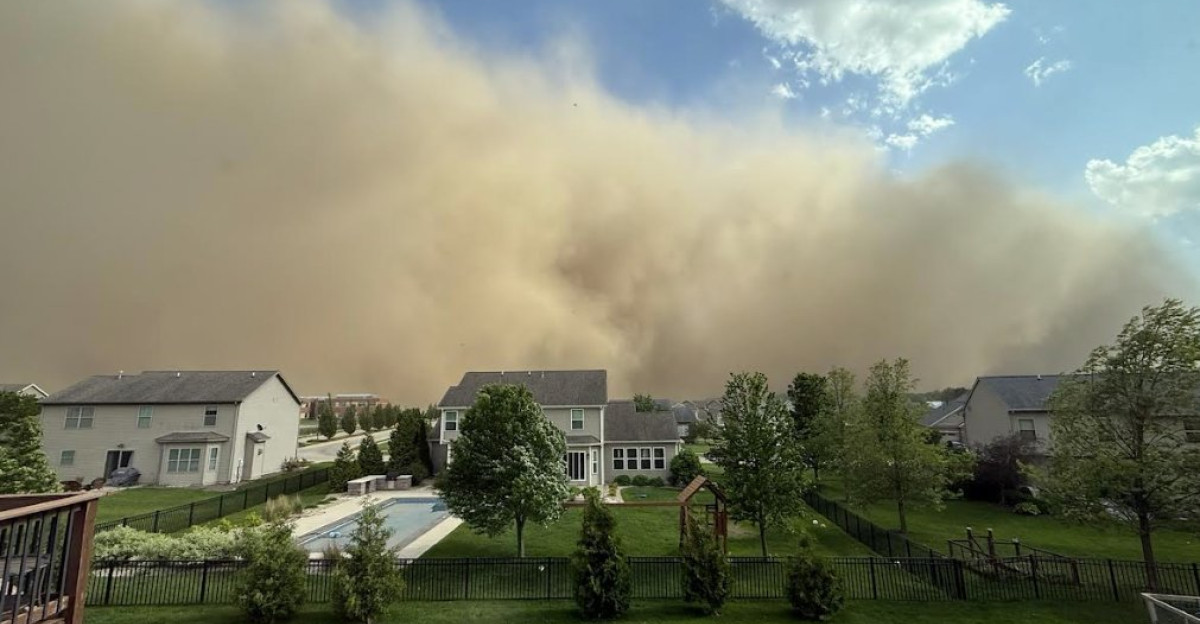
Dust storm approaching Bloomington Illinois
Photo by Chicago NWS Jason Borchardt on Wikimedia

Climate Central formally hired Adam Smith to lead the revived disaster database, ensuring continuity after NOAA’s withdrawal. Smith emphasized that current estimates still understate real losses.

Indirect impacts like long-term health effects from wildfire smoke remain largely uncounted. The federal decision effectively shifted responsibility for climate damage accounting to nonprofits.

Rebuild Efforts

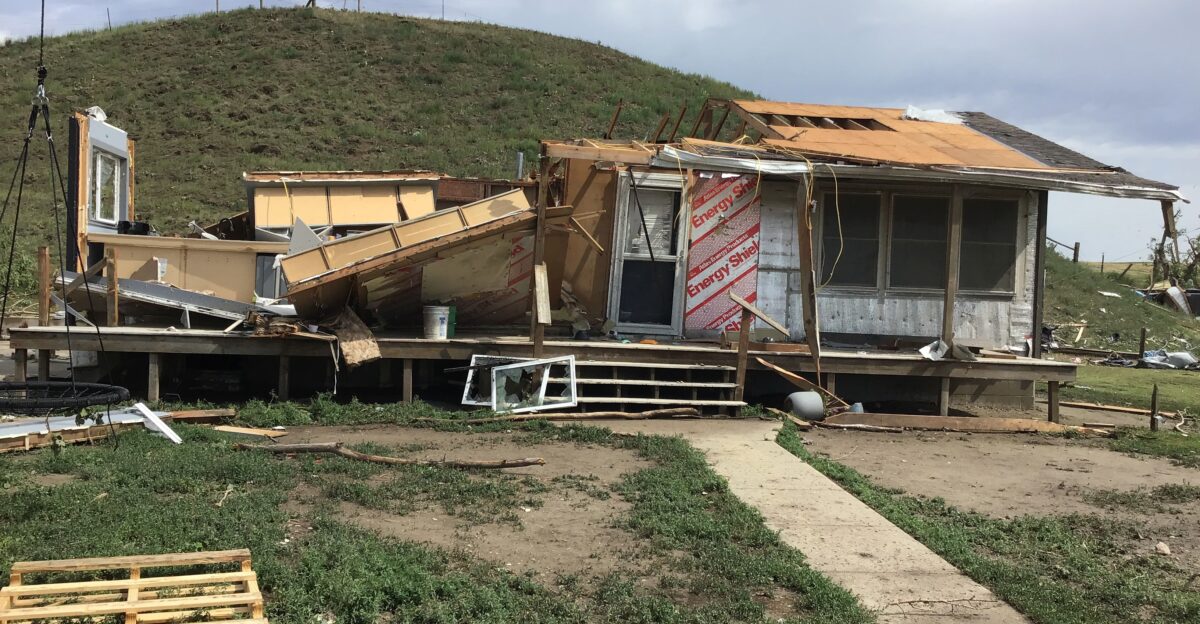
High-end EF2 damage to a home in SD
Photo by NWS office at Rapid City SD on Wikimedia

Recovery unfolded unevenly. Federal aid flowed to tornado-stricken states, while Los Angeles survivors faced prolonged displacement and mental health trauma from smoke exposure.

States expanded mitigation efforts: California widened firebreaks, and Midwestern utilities hardened grids. Meanwhile, insurers updated catastrophe models as communities rebuilt under looming threat.

Skeptical Outlook

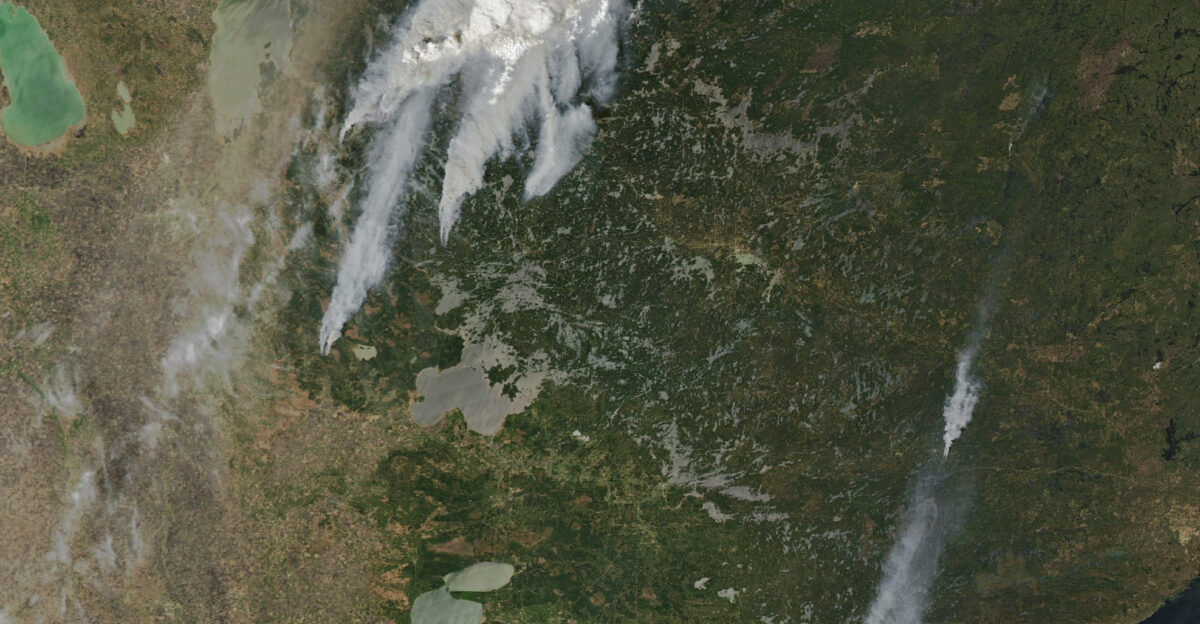
Wildland fires broke out in forests along the Manitoba-Ontario border in Canada and in northern Minnesota in the United States in May 2025 Several blazes grew rapidly in size amid hot dry and windy conditions in the region Smoke from multiple fires drifted hundreds of kilometers across northern forests on the afternoon of May 13 when the MODIS Moderate Resolution Imaging Spectroradiometer on NASA s Aqua satellite captured this image Some of the largest fires seen here started the previous day and had expanded rapidly by the time this image was acquired For comparison the right image shows the same area in false color MODIS bands 7-2-1 to help distinguish smoke cyan blue from clouds white Bright red-orange indicates visible fire fronts Large smoke plumes billowed from blazes near Lac du Bonnet in eastern Manitoba One fire close to the rural municipality burned thousands of hectares and threatened infrastructure Another one to the northeast near Nopiming Provincial Park exhibited extremely volatile fire behavior on May 13 officials said and grew to 100 000 hectares 250 000 acres Authorities closed multiple provincial parks due to the fires and issued evacuation orders for several communities in both Manitoba and Ontario In the U S multiple fires broke out in northern Minnesota on May 11 and 12 The two largest Camp House and Jenkins Creek had burned a combined 7 600 hectares 18 800 acres about 65 kilometers 40 miles north of Duluth as of May 13 In and around the town of Brimson they destroyed more than 100 structures and damaged bridges and roadways according to news reports Unseasonably hot and dry conditions elevated fire risk in the region Winnipeg Manitoba reached 35 2 degrees Celsius 95 4 degrees Fahrenheit on May 12 topping the previous daily high temperature record set in 1958 Duluth Minnesota saw a high temperature of 30 C 86 F that day also a new record Eighty of Minnesota s 87 counties were under a Red Flag Warning due to the extreme fire danger on May 12 April and May are typically busy months for wildland fires in the state said Patty Thielen forestry director for the Minnesota Department of Natural Resources in a briefing However she noted the area already burned statewide in 2025 is roughly triple the amount burned in an average year NASA Earth Observatory image by Michala Garrison using MODIS data from NASA EOSDIS LANCE and GIBS Worldview Story by Lindsey Doermann
Photo by NASA Earth Observatory image by Michala Garrison using MODIS data from NASA EOSDIS LANCE and GIBS Worldview Story by Lindsey Doermann on Wikimedia

Experts caution that 2025’s totals are conservative. Many deaths from smoke exposure and mental health stress go uncounted in official disaster tallies.

The absence of major hurricanes masked the year’s full destructive potential; analysts estimate damages could have reached $215 billion. With oceans at record heat, disaster frequency is unlikely to slow.

Horizon Warning

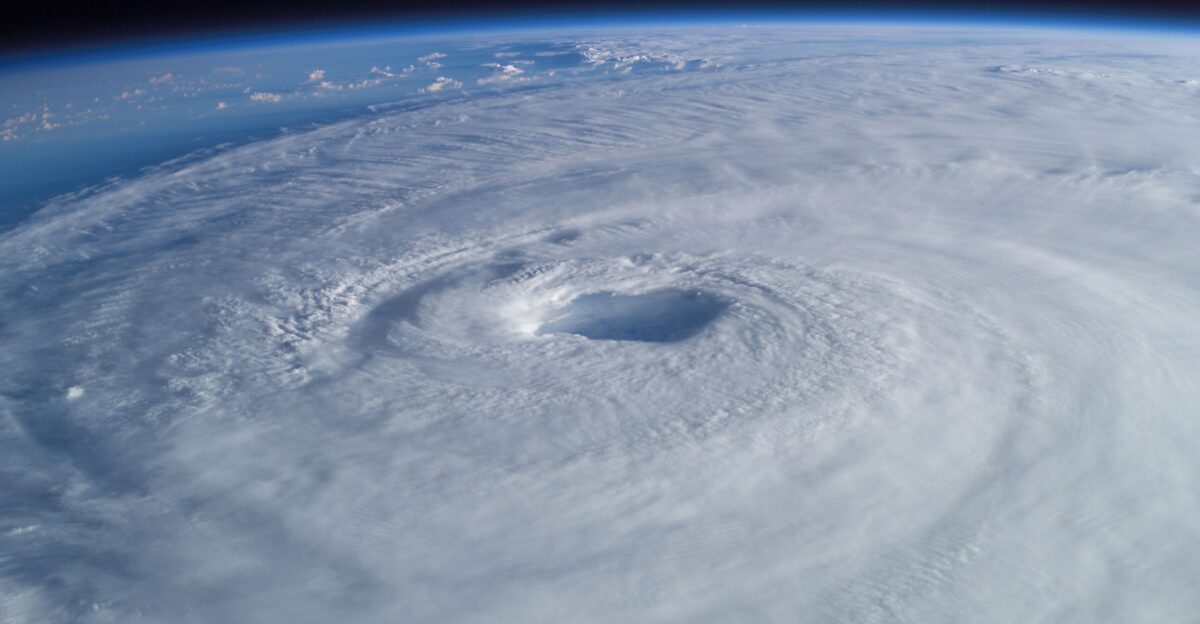
From his vantage point high above the Earth in the International Space Station Astronaut Ed Lu captured this broad view of Hurricane Isabel The image ISS007-E-14750 was taken with a 50 mm lens on a digital camera
Photo by Image courtesy of Mike Trenchard Earth Sciences Image Analysis Laboratory NASA Johnson Space Center on Wikimedia

Could 2026 surpass 2025? Climate Central plans database upgrades to reassess past events and track emerging risks.

Warmer seas raise the likelihood of rapidly intensifying hurricanes, while inland flooding and heat-driven drought expand disaster categories, exposing preparedness gaps nationwide.

Policy Fallout

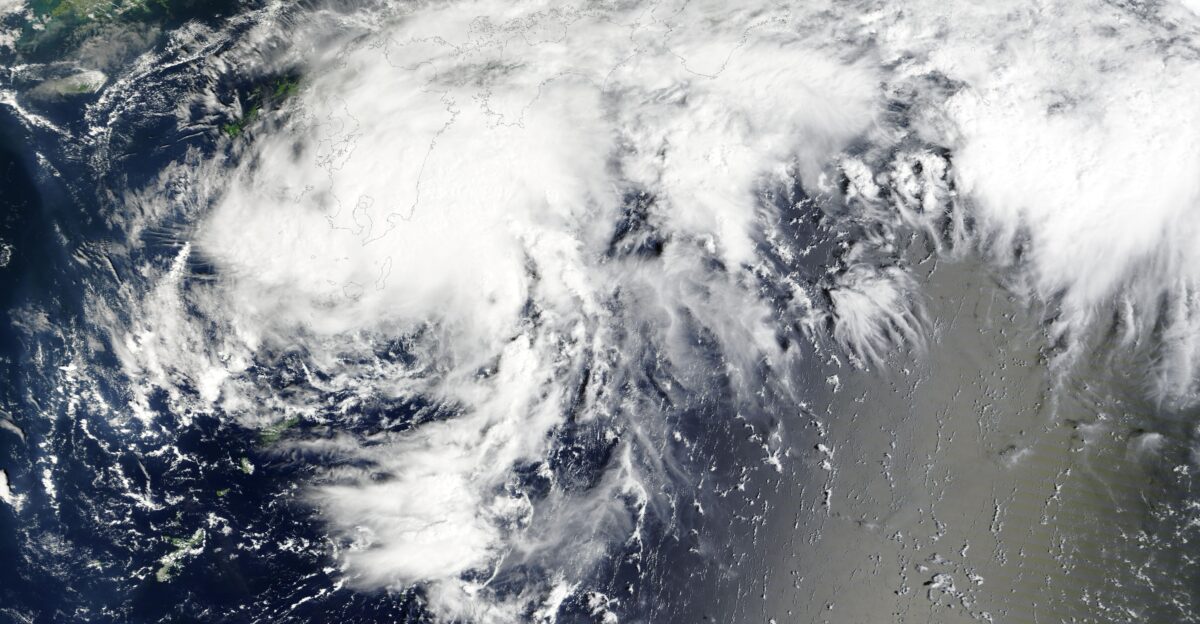
On the morning of September 4 2025 the Moderate Resolution Imaging Spectroradiometer MODIS on NASA s Terra satellite acquired this true-color image of Tropical Storm Peipah approaching a double landfall in Japan Near the time this image was captured the center of the storm was located about 210 kilometers 131 miles south of Kagoshima City carrying maximum sustained winds of 65 kilometers per hour 40 4 mph Tropical Storm Peipah skimmed the southern coast of Japan between September 4-5 first passing very close to southern Kyushu Island before making its first landfall over Sukumo Kochi Prefecture on Shikoku island around 1800 UTC 2 00 p m EDT on September 4 according to ReliefWeb It then moved eastward for a second landfall over Wakayama Prefecture Honshu island on September 5 It then quickly moved towards the northeast over the Pacific Ocean where it temporarily strengthened before becoming extra-tropical and dissipating on September 6 Although the storm s maximum sustained winds stayed at tropical storm strength as it interacted with Japan strong gusts and heavy rain caused substantial damage Local media reported that the at least 370 houses were damaged or destroyed and 24 people were injured in Shizuoka Prefecture on the island of Honshu in eastern Japan Strong gusts knocked out power to at least 10 000 in the same region NKH World Japan reports that meteorological officials have yet to determine if damage was caused by a tornado spun up by the storm or multiple strong gusts Prior to striking Japan wind and rain associated with the forming Tropical Storm Peipah combined with the effects of the Southwest Monsoon to severely affect the Philippines According to ReliefWeb more than 93 000 people were affected across four region of the country and an additional 1 300 people were displaced
Photo by MODIS Land Rapid Response Team NASA GSFC on Wikimedia

NOAA’s tracking halt deepened partisan divides. Democrats introduced bills to restore federal disaster monitoring, while Republicans emphasized budget constraints.

The standoff complicated long-term risk planning during the 15th consecutive year of above-average disasters, leaving communities without a unified national strategy.

Global Echoes

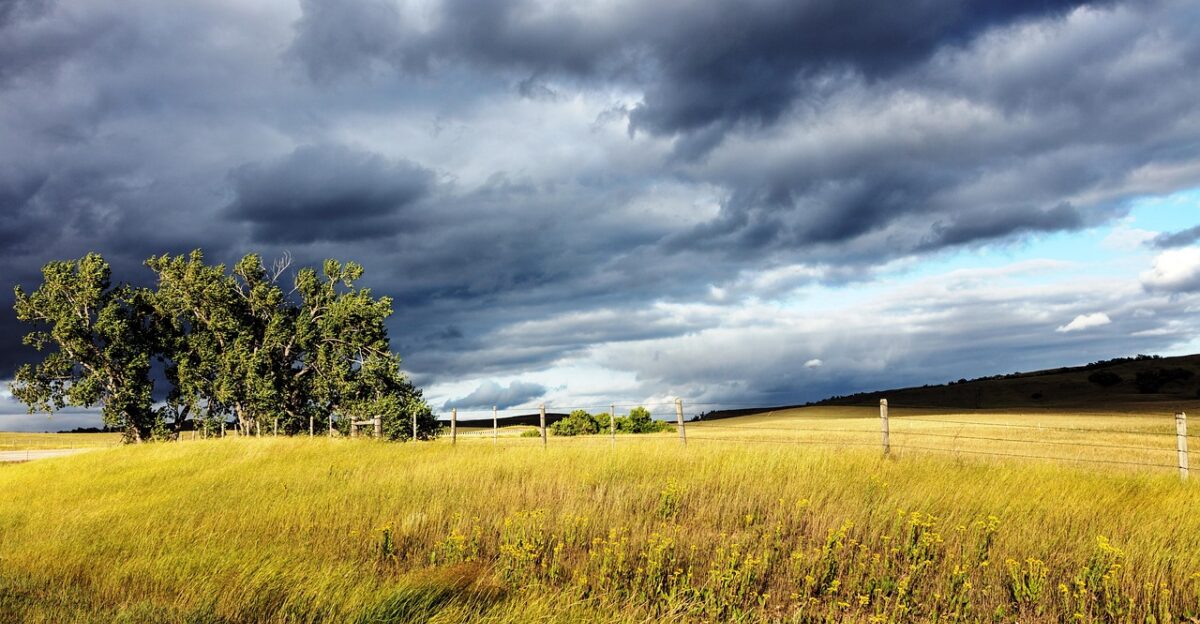
wyoming prairie hulett usa america north america nature storm clouds storm clouds weather
Photo by Falkenpost on Pixabay

Globally, weather disasters caused $220 billion in losses during 2025. U.S. extremes mirrored deadly floods and cyclones elsewhere.

In the Caribbean, Hurricane Melissa’s rapid intensification offered a preview of future Atlantic threats, underscoring how climate-amplified disasters cross borders.

Eco Legal Battles

SUMALI IBNU CHAMID from Alemedia id via Canva

The Los Angeles fires triggered lawsuits alleging utility negligence, while Western drought intensified water-rights conflicts.

As development pushes deeper into fire-prone landscapes, environmental regulations faced renewed scrutiny, turning courts into battlegrounds over climate risk responsibility.

Societal Shift

An airplane flying over a city with a hazy sky
Photo by Valeriia Neganova on Unsplash

Public attitudes hardened in 2025. Younger generations, shaken by 276 deaths and back-to-back disasters, demanded stronger climate action.

Repeated emergencies fueled disaster fatigue but also strengthened mutual-aid networks, as communities redefined preparedness as ongoing survival.

New Normal Dawns
a view of a city from the top of a hill
Photo by Qi Li on Unsplash

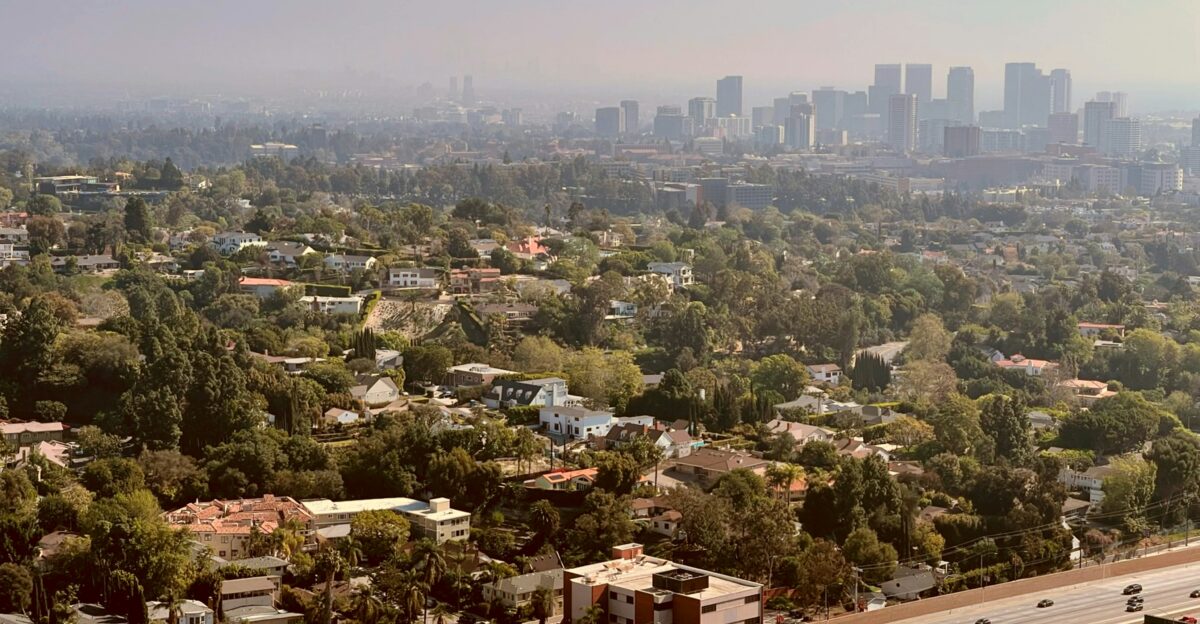
With 23 billion-dollar disasters in a single year, 2025 confirmed a stark reality: extreme weather is now routine.

As intervals shrink and costs soar, rebuilding smarter is no longer optional. Climate change’s toll is accelerating, raising urgent questions about how fast resilience can keep pace.

Sources:
LAist/Grist, “In 2025, the US suffered a billion-dollar disaster every 10 days”, January 2026
Earth.org, “2025 Third-Highest Year for Billion-Dollar Climate Disasters in US”, January 2026
ABC News, “The US experienced nearly two dozen billion-dollar weather and climate disasters in 2025”, January 7, 2026
Climate Central, “Now at Climate Central: U.S. Billion-Dollar Weather and Climate Disasters”, October 2025