Holiday shopping is reaching its peak, yet millions of Americans are changing how they spend. Instead of supporting major corporations, many are joining a wide wave of December boycotts that challenge long-standing business practices across retail, food, technology, and entertainment.
These campaigns highlight concerns over labor conditions, immigration enforcement collaboration, diversity rollbacks, and ethical sourcing. They also reflect a growing belief that consumer spending can influence powerful institutions.
This shift in purchasing behavior raises an important question for the season. Are companies listening, or are these concerns being pushed aside? Here is a closer look at what is happening.
Retail Giants Under Rising Pressure

Boycotts against Amazon remain active as workers and advocacy groups criticize warehouse conditions, union suppression, and AWS contracts that support immigration enforcement operations. The global “Make Amazon Pay” movement spans 30 countries and continues to organize strikes demanding safer working environments, clean-energy commitments for data centers, and transparency on artificial intelligence usage. Workers have documented strict productivity expectations and limited break periods inside fulfillment centers.
Target is facing sustained fallout after abruptly ending its two billion dollar REACH diversity initiative in January 2025. Public criticism mounted, and CEO Brian Cornell resigned in August 2025, followed by Michael Fiddelke’s appointment. Activists are now urging renewed investments in Black-owned financial institutions and historically Black colleges. Target’s stock declined roughly 60 to 64 percent from 2021 highs, mirroring investor concerns over DEI rollbacks.
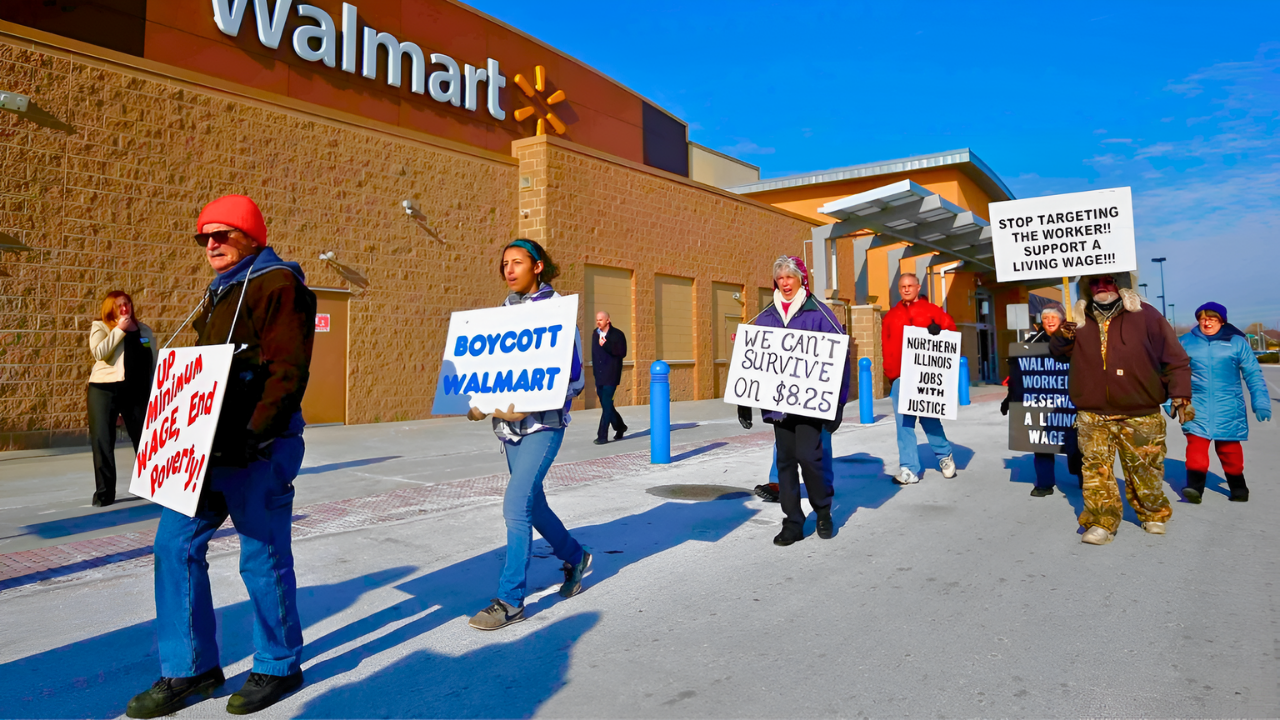
Home Depot and Walmart face their own controversies. Home Depot is criticized for allowing immigration enforcement operations outside store locations, while Walmart continues to receive scrutiny for wages, benefits, and scaling back diversity programs in late 2024.
Food and Beverage Brands Under Boycott
Starbucks is confronting a renewed surge of labor actions. Workers launched strikes across 120 stores in 85 cities on November 28, 2025, calling for better wages and addressing documented unfair labor practices. Since 2022, the National Labor Relations Board has issued more than 80 complaints against the company, fueling ongoing activism.
McDonald’s is also a major target following its January 2025 decision to discontinue diversity goals. Senators Elizabeth Warren, Bob Casey, and Ron Wyden reported that the company achieved 79 percent net income growth between 2020 and 2023, while worker pay stagnated. Consumers critical of these disparities have joined boycott efforts, deepened by rising menu prices that have exceeded inflation.
Meanwhile, Walmart’s rollback of diversity initiatives has added the company to broader campaigns. Costco is included in worker-led efforts to improve wage standards across food and retail. Nestlé remains under long-standing scrutiny over child labor concerns in cocoa supply chains, water extraction practices, and marketing in developing nations.
Technology and Entertainment Firms in Focus

AT&T and Palantir are at the center of campaigns tied to immigration enforcement contracts. Palantir’s “ImmigrationOS” platform provides data analytics that support ICE operations, prompting the “Not With Our Dollars” movement to demand cancellations of these agreements and the adoption of comprehensive human rights policies.
Spotify continues to face criticism over artist compensation models. Musicians and advocacy groups argue that the current pay structure undervalues creative work, and calls for reform have intensified throughout the year.
Disney is included in boycott campaigns connected to workplace treatment and resistance to union organizing among its theme park and media employees. Ben & Jerry’s, though widely associated with social justice initiatives, is also named in broader corporate accountability efforts tied to worker and supply chain concerns.
How Consumer Choices Are Reshaping Holiday Spending
The December boycotts show how public action can directly influence corporate reputation during the most profitable shopping period of the year. The National Retail Federation projects holiday sales will surpass one trillion dollars in 2025, marking a historic milestone that underscores the financial weight behind consumer decisions.
Organizers are urging people to redirect spending toward independent shops, worker-owned cooperatives, and community-based businesses. This shift reflects expanding interest in aligning personal values with purchasing habits. Supporters say these alternatives help promote better labor conditions, environmental responsibility, and ethical sourcing.
The consumer movement is also prompting new discussions within industries that have long prioritized profit and scale. As participation grows, companies may face increasing pressure to revisit policies and redefine how they engage with their workforce and customers.
Conclusion

The boycotts unfolding this December highlight a broader cultural and economic reality. Public sentiment is shaping where money flows, and large corporations are experiencing new forms of accountability from customers demanding ethical practices. These campaigns reveal how coordinated action can challenge long-standing corporate norms, especially during the busiest shopping season of the year.
Whether these companies make meaningful policy changes remains to be seen. Yet the movement signals a powerful shift in consumer expectations across labor rights, diversity commitments, and supply chain oversight. December’s boycotts demonstrate that public pressure is more than symbolic. It is becoming a force that influences corporate strategy, investor confidence, and the larger conversation about responsibility in American business.
Sources:
Reuters – Starbucks strike expansion, Target DEI rollback, McDonald’s diversity policy changes, Walmart DEI rollback (2024-2025)
National Retail Federation (NRF)
CNN Business – Target CEO resignation, DEI rollback coverage (2025)
The Guardian – Target DEI impact analysis, Amazon protests (2025)
National Labor Relations Board (NLRB)
U.S. Immigration and Customs Enforcement (ICE) contract records
The People’s Union USA – Boycott campaign announcements and coordination (December 2025)