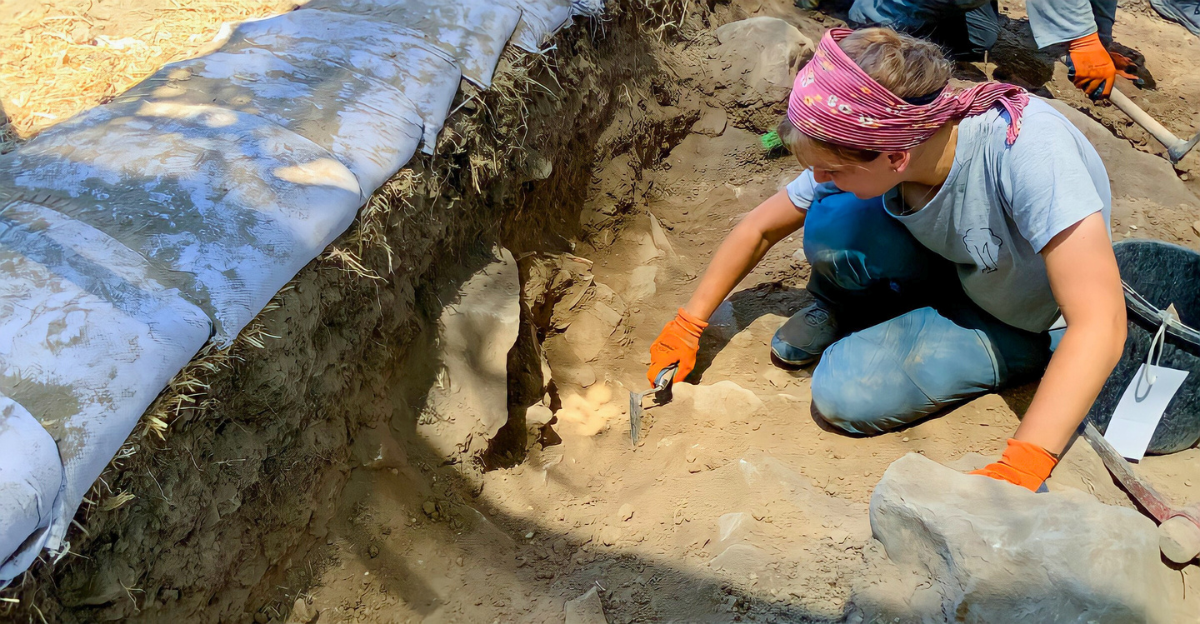
On a routine summer excavation in Orkney’s Rousay, archaeology student Katie Joss experienced a moment she would never forget. “We were lifting a slab when the head rolled out towards us,” she recalled, describing her astonishment. The sandstone head, intricately carved and hidden for centuries, has since become a focal point for archaeological discourse.
This extraordinary find not only shocked the academic community but has also reignited interest in Orkney’s rich heritage. As Joss and her team examined their unique discovery, it became clear that the story of Rousay was deeper and more complex than anyone had anticipated.
The Allure of Orkney
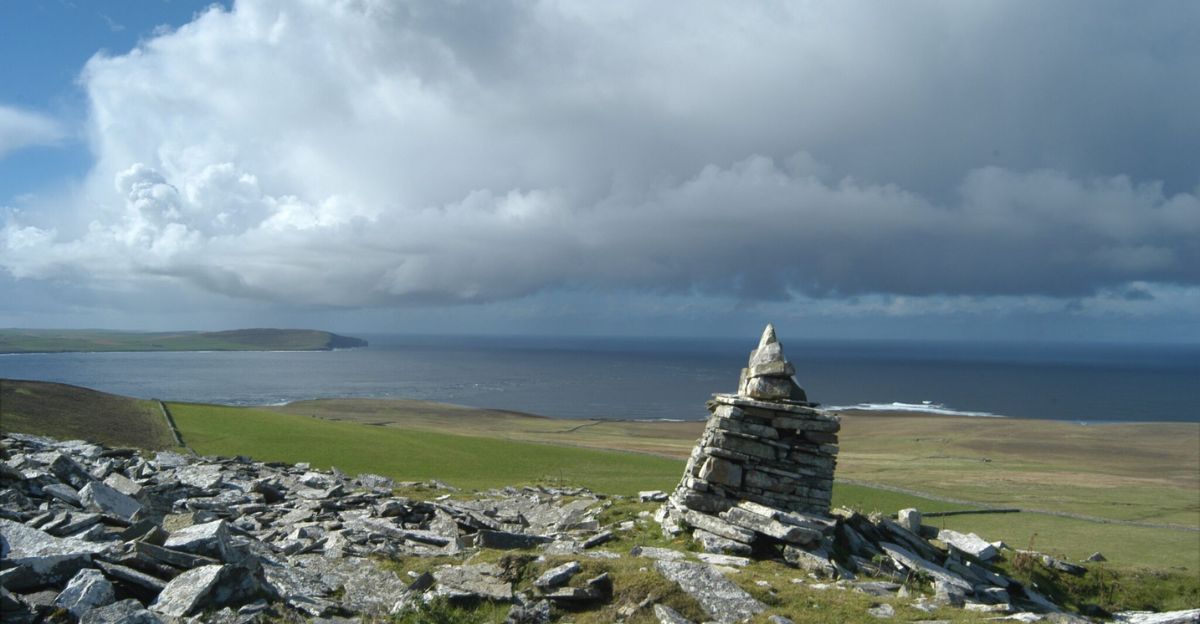
Rousay, often referred to as the “Egypt of the North,” boasts hundreds of archaeological sites packed into just a few square miles. In 2024 alone, the island attracted over 173,000 visitors, with a striking 81% indicating that ancient sites were the main reason for their visit.
Local resident and farmer Iain Muir shared, “People come here not just for the scenery, but because they want to walk through history.” As tourism continues to flourish, the engaging stories of the past drive an influx of curiosity and admiration for this captivating place, making Orkney a cornerstone of historical exploration.
The Viking Era
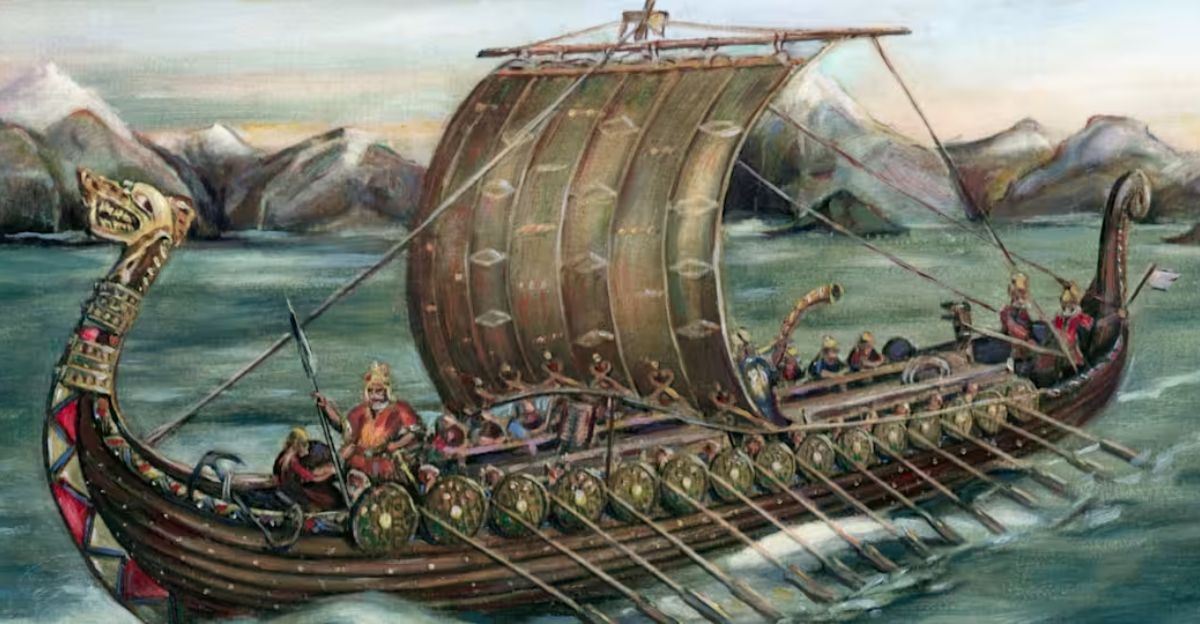
Long before Scotland’s sovereignty was established, Orkney was under Norse rule, a time that continues to shape its legacy. In the 12th century, Viking chieftain Sigurd of Westness made Rousay his stronghold, influencing not just the island’s landscape but also its history. “We still find remnants of the Viking era in our fields,” said local historian Margaret Sinclair.
“These discoveries remind us of the layers of culture that have shaped who we are.” As excavations uncover artifacts from this period, they enrich the narrative of Orkney, connecting it to significant historical movements across Northern Europe.
A Complex Palimpsest
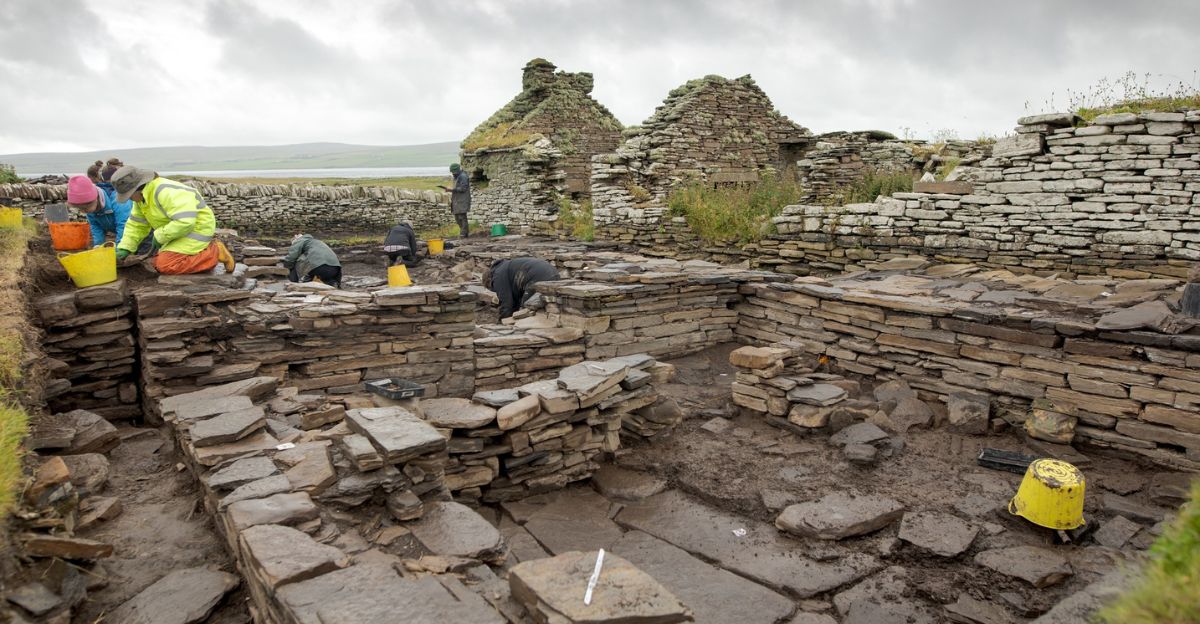
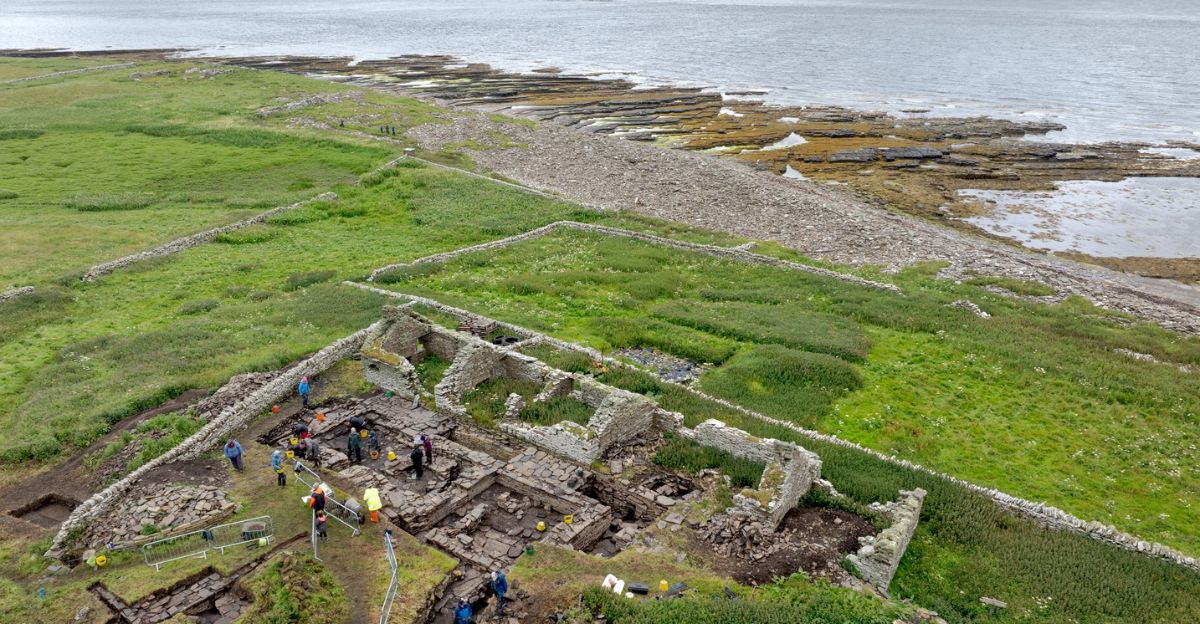
The excavation at Skaill Farm is transformative, revealing a rich tapestry of history buried beneath the surface. The site’s 18th-century foundations rest atop the remnants of Norse halls and medieval tower houses, connecting countless generations. Archaeologist Dr. Sarah Jane Gibbon remarked, “Each layer we uncover tells us something new about human habitation.
It’s a palimpsest of life itself.” The multiple layers of settlement speak to the resilience and adaptation of the island’s inhabitants over centuries, piquing the interest of scholars globally and showcasing the depth of Orkney’s archaeological narrative.
The Emergence of the Hidden Head
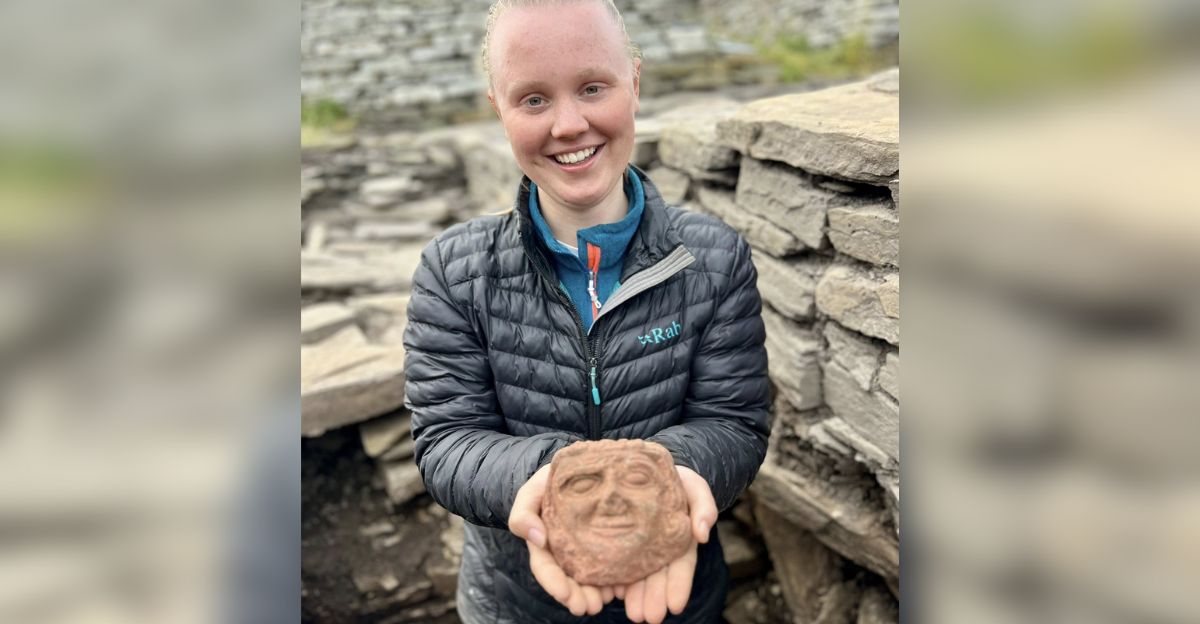
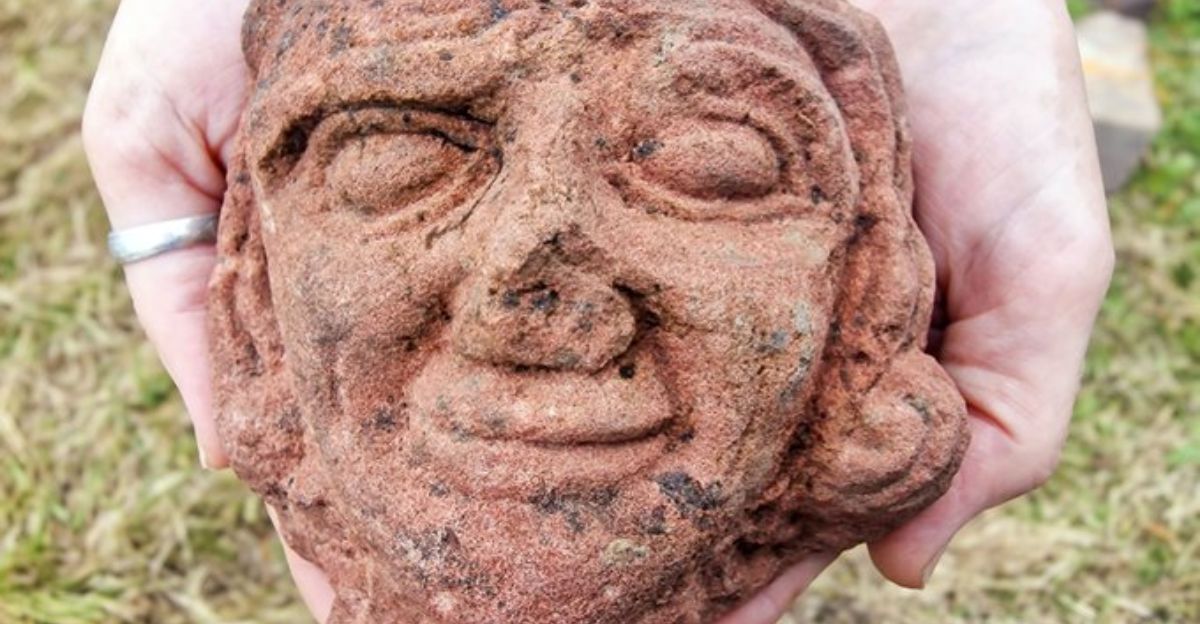
On July 24, 2025, while excavating Skaill Farm’s wall, Joss unearthed an intricately carved human head made from red sandstone. Featuring closed eyes, a gentle smile, and a broken nose, this find is unprecedented in Orkney’s archaeological record.
Joss expressed her excitement, saying, “I couldn’t believe my eyes when it rolled out!” The discovery electrified the dig team, highlighting both the skill of ancient artisans and the broader implications for understanding ceremonial practices in the region. This remarkable artifact has quickly become a centerpiece of discussion among archaeologists, raising questions about its purpose and origin.
The Economic Ripple
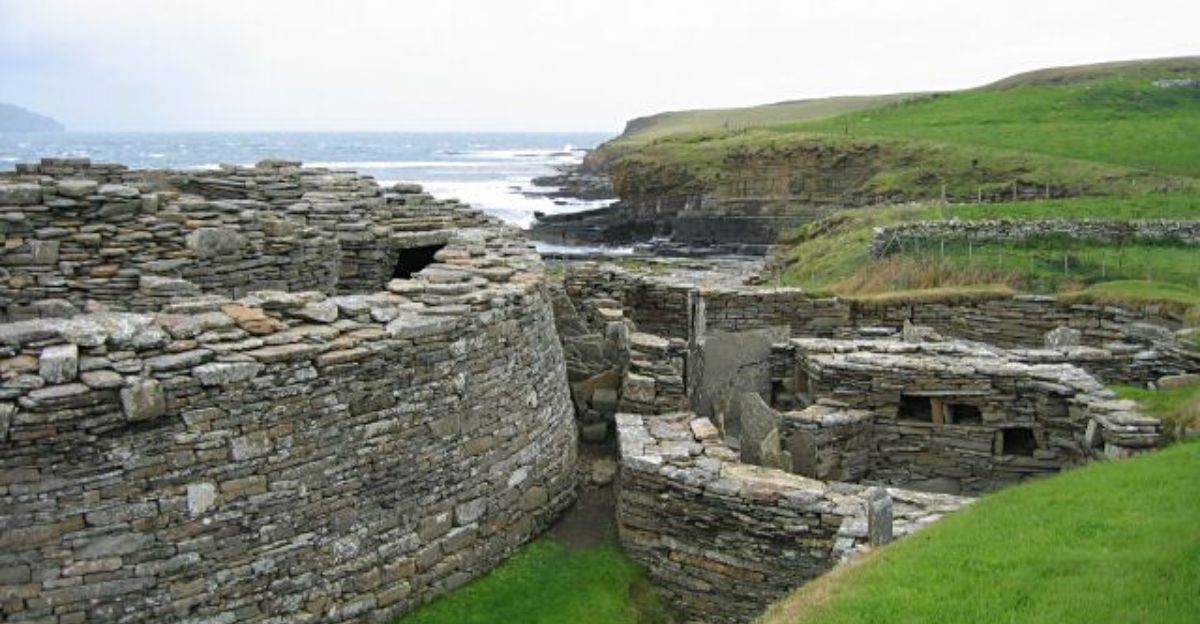
Tourism is vital for Rousay’s economy, supporting its small population of approximately 216 residents. Discoveries like the sandstone head provide significant economic boosts, bringing in funding and attention to the island. Local shop owner Fiona Kerr stated, “Each find like this brings more tourists, which helps our small businesses thrive.”
However, as tourism increases, so does the pressure on fragile heritage sites and limited infrastructure. Balancing economic benefits with preservation becomes critical, highlighting the need for sustainable tourism practices to protect Rousay’s invaluable historical treasures.
A Moment of Thrill
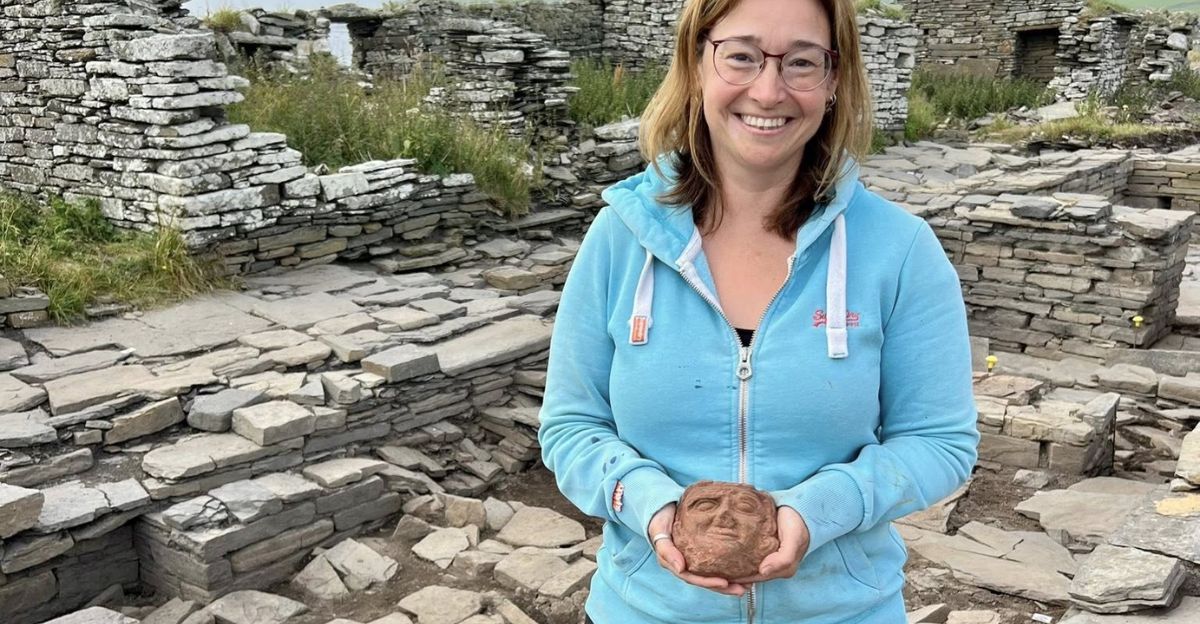
Katie Joss vividly describes the exhilaration of her discovery: “It was really exciting!” Co-director Dr. Sarah Jane Gibbon termed the find “extraordinary,” noting it was unprecedented in ten previous years of excavation. The enthusiasm rippling through the team was palpable; discoveries like this galvanize both the local community and the academic world.
Gibbon elaborated, “This head might redefine our understanding of Orkney’s ancient practices.” Such moments reinvigorate the passion for archaeology, illuminating the intricate dance between past cultures and present-day discoveries.
Craftsmanship from Eday
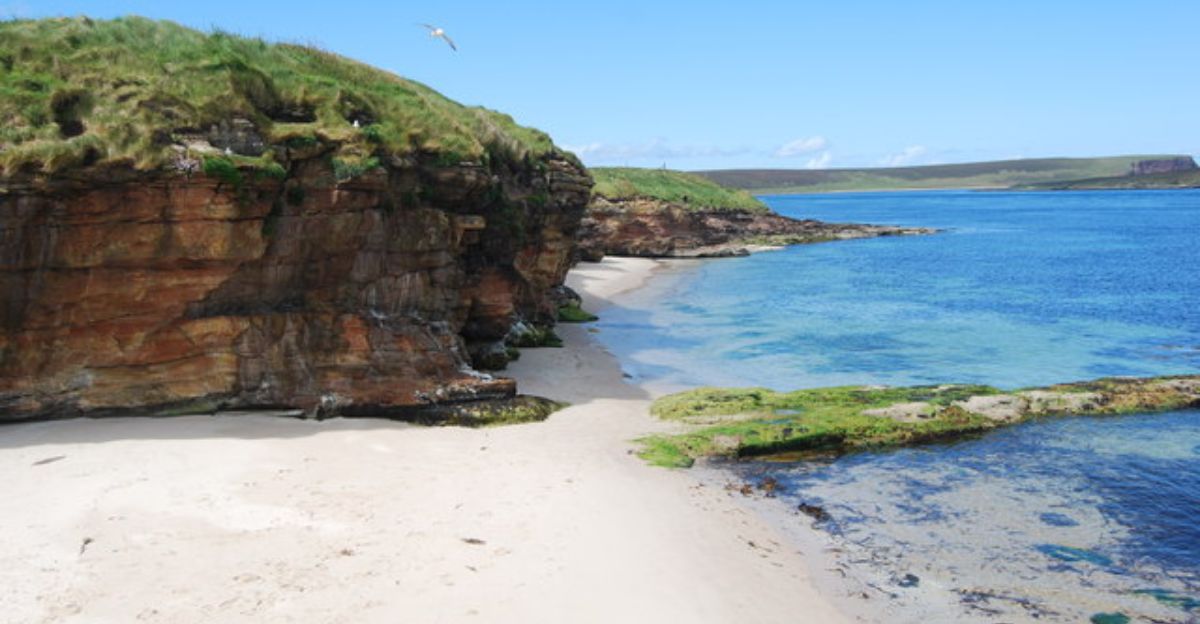
Researchers believe that the sandstone head likely originated from Eday, another island in Orkney. Its material aligns with sandstone utilized in the nearby St. Mary’s Old Parish Church and St. Magnus Cathedral in Kirkwall, indicating a shared craftsmanship tradition during the medieval period.
Dr. Gibbon remarked, “This connection to other sites suggests a broader network of artisans who contributed to Orkney’s cultural fabric.” The artistry depicted in the head underscores medieval craftsmanship’s legacy, opening pathways for future research on regional influences and connections.
A Rich Heritage
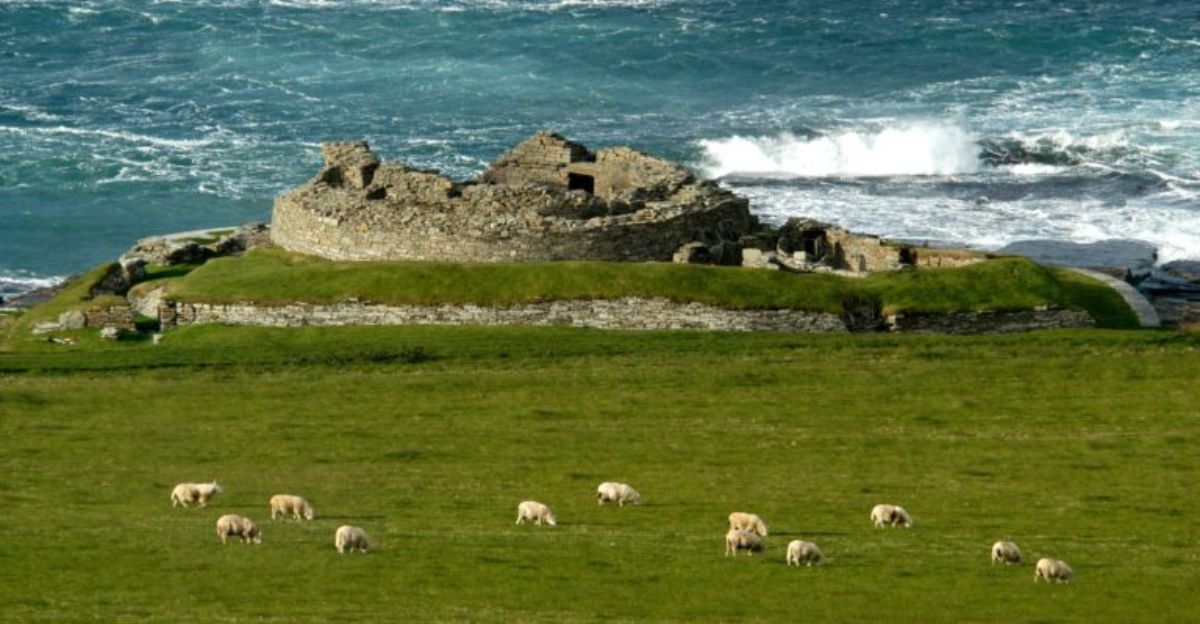
Rousay’s archaeological bounty stretches beyond the Viking era, reflecting a continuum from Neolithic to Norse times. As international scholars flock to the island, they find themselves drawn to its extraordinary layers of history.
Philanthropist and heritage advocate James Harding stated, “Orkney has an unrivaled archaeological narrative that connects ancient civilizations to our modern world.” This rich heritage further solidifies Orkney’s standing as a prominent global heritage destination, encouraging further exploration and study among historians and archaeologists alike.
The Enigma of the Head
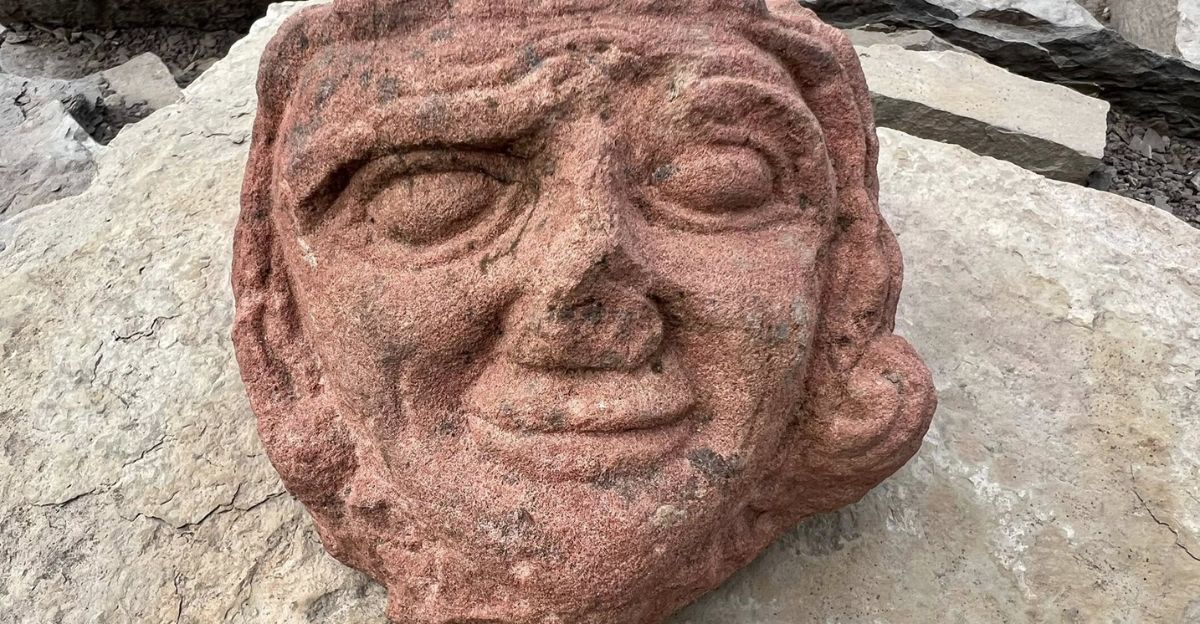
Despite its exquisite craftsmanship, the exact function of the sandstone head remains a mystery. While comparisons have been drawn to cathedral carvings, the implications of its expression and style hint at potential ceremonial or symbolic uses.
Experts emphasize the need for continued research, as Dr. Gibbon noted, “There’s a great deal we still don’t understand.” This “enigma” surrounding the head serves as a reminder of the complex narratives entwined within Orkney’s archaeological realm, urging further inquiry into the past.
Heritage Under Pressure
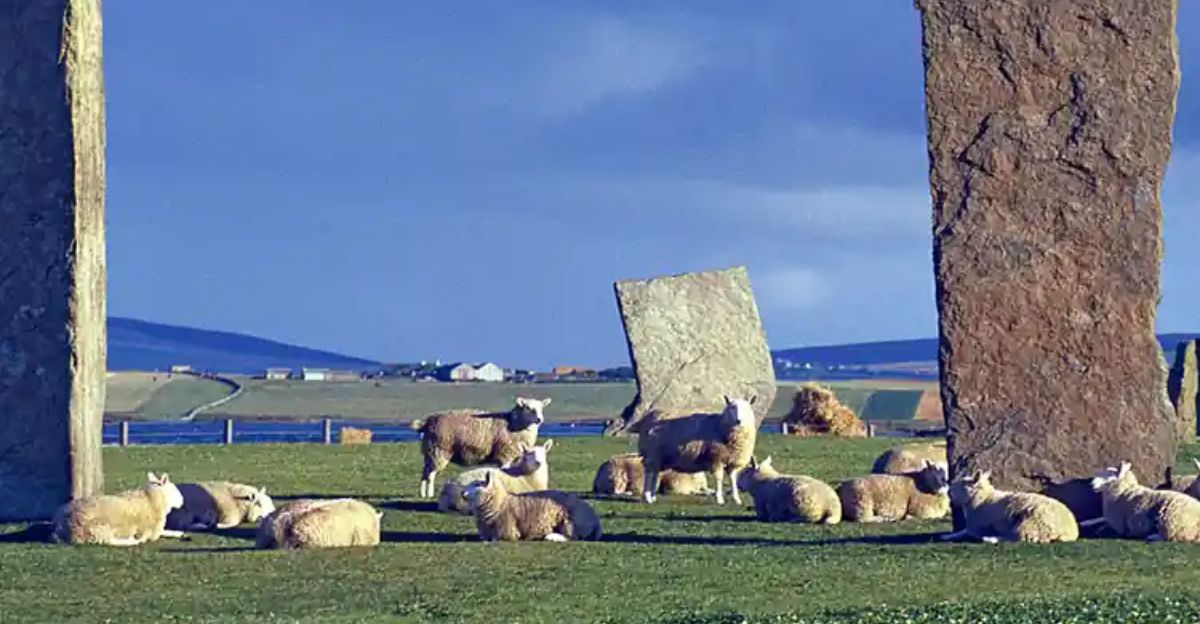
While archaeological discoveries are celebrated, they also present challenges to Orkney’s fragile heritage. Community surveys reveal that 88% of locals report damage from increasing visitor pressure on heritage sites. “Our history is precious, but we’re struggling to maintain it in the face of tourism,” voiced resident and farmer Claire Thomson.
This tension is exacerbated by rising tourist numbers, necessitating a balance that respects and preserves both cultural and environmental integrity. Finding sustainable solutions is vital for protecting these monuments while continuing to share their stories with the world.
Conservation Efforts
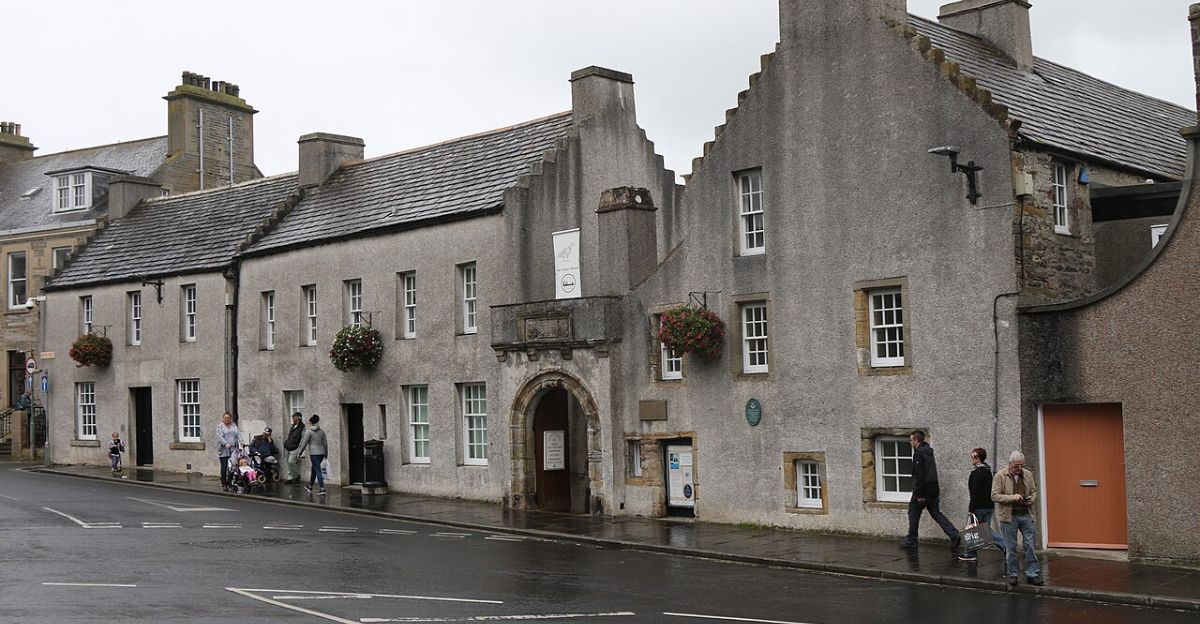
The fragile sandstone head is currently undergoing meticulous conservation, a costly and resource-intensive process for the Orkney Museum. With its preservation budget stretched thin, museum director Alan McGregor acknowledges the challenge, stating, “We want to ensure every piece leaves a lasting legacy, but funding is always a concern.”
The ongoing efforts to care for such finds highlight the importance of supporting local institutions tasked with preserving Orkney’s rich archaeological heritage for future generations, prompting discussions on resource allocation for conservation.
Striking a Balance
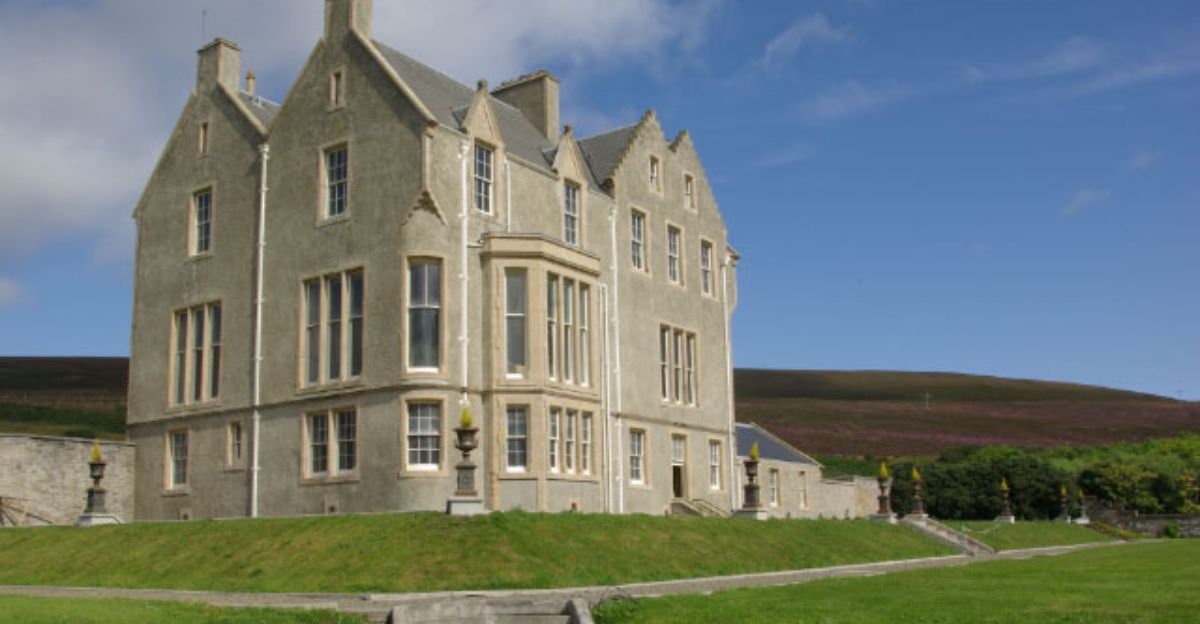
Local leaders recognize the significance of tourism but are also keenly aware of the need for strategies that prevent overtourism. “We embrace the visitors, but we must protect what makes Rousay special,” commented councilor Anne Reid. Providing educational initiatives and implementing traffic management solutions can maintain both cultural integrity and service availability.
It is crucial that approaches to tourism development focus on sustainability, ensuring that the island’s stories and heritage continue to thrive without sacrificing the beauty and authenticity of Rousay.
Ongoing Research
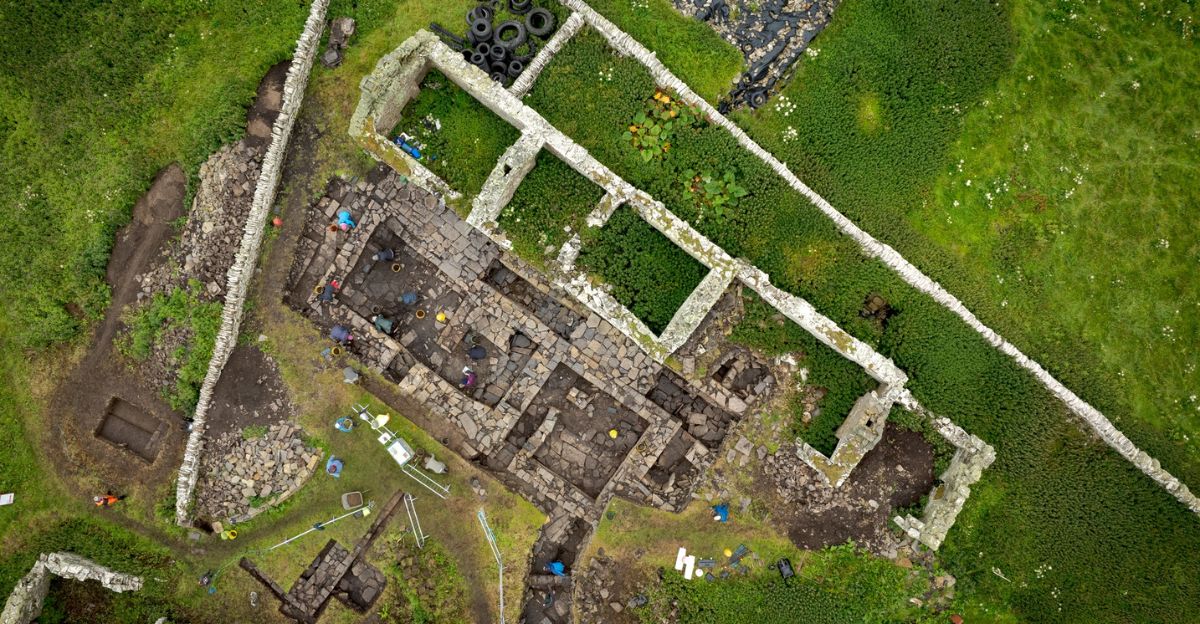
Dr. Gibbon and her team stress that the recent discoveries raise more questions than answers. Ongoing research will involve comparisons to similar carvings found in Orkney’s churches and cathedrals, which may eventually elucidate the head’s significance.
“Each excavation reveals a wealth of information, but we need time and collaboration to piece it together,” Dr. Gibbon explained. As research progresses, the potential to decode the mystery surrounding the head could offer profound insights into Orkney’s ancient cultures and rituals.
The Future of Exploration
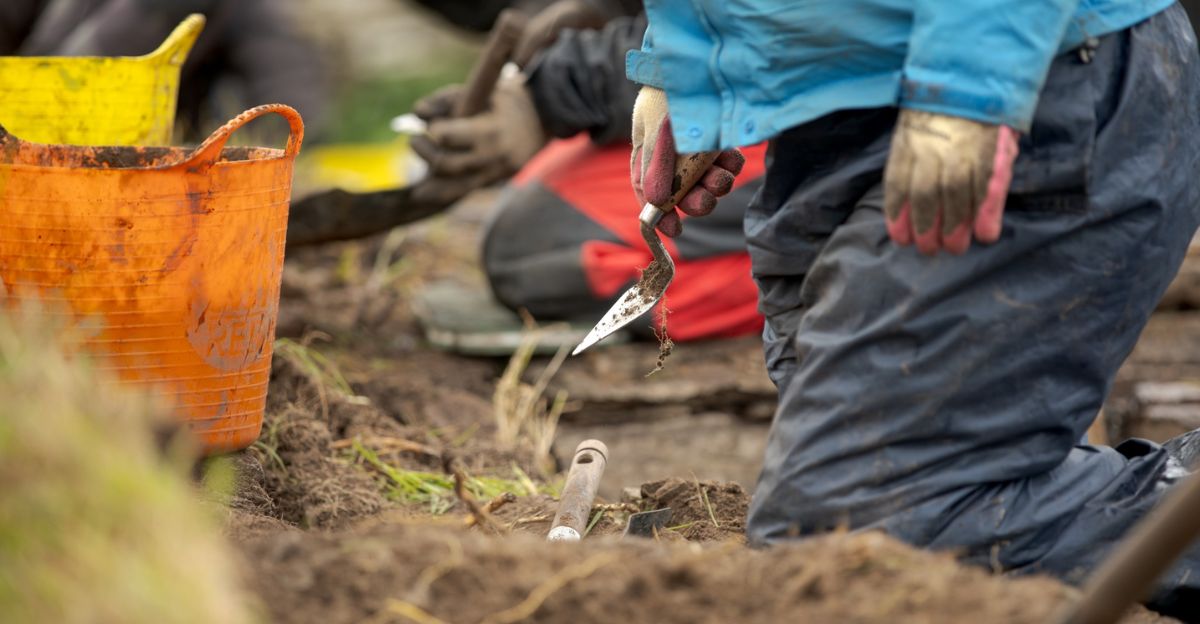
As Orkney’s archaeological past garners increased interest, a significant challenge lies in striking a balance between sharing treasures like the Skaill head with visitors and protecting fragile sites. Local educator Fiona Campbell articulated, “We want people to experience this richness, but we must be careful about how we share it.”
Ongoing dialogue among stakeholders is essential to ensure that the narrative of Orkney’s heritage is preserved for future generations while inviting people to engage with its rich history today.
Policy Changes Ahead
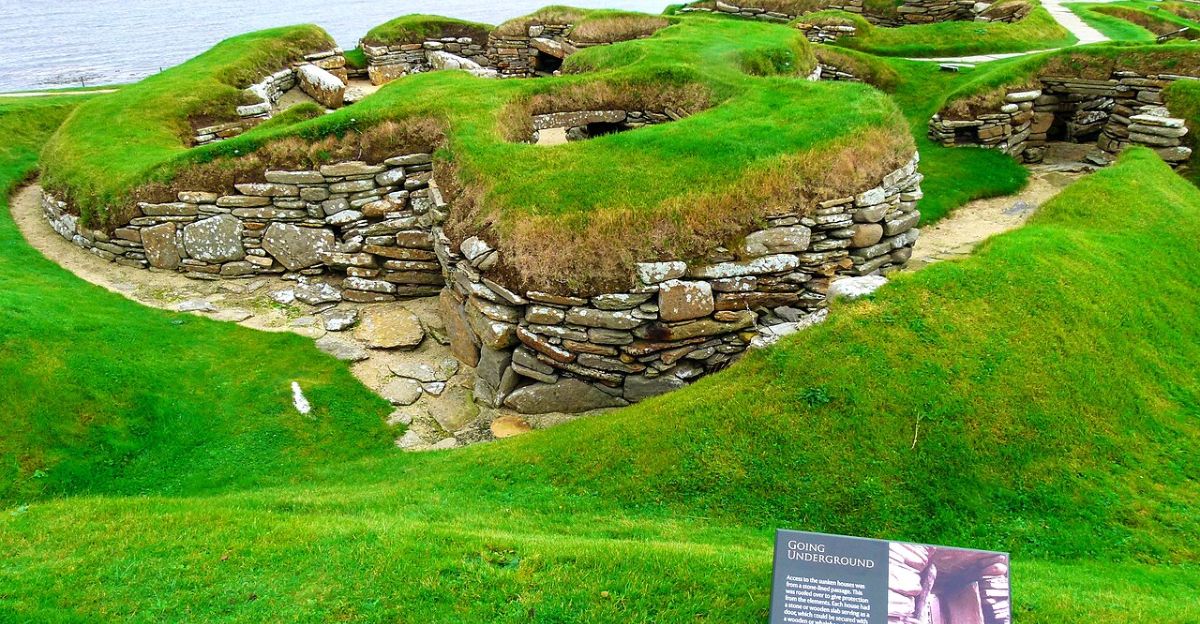
UNESCO’s designation of the Heart of Neolithic Orkney as a World Heritage Site brings stricter management protocols that affect how the region addresses excavations and visitor policies. “It’s a double-edged sword; the recognition helps protect our heritage but also imposes constraints,” said local historian Mark Hale.
Future ten-year conservation plans will require strategic collaboration between local authorities and cultural organizations, emphasizing the importance of policy frameworks that prioritize preservation while accommodating sustainable tourism.
A Global Spotlight

The recent discovery of the sandstone head garnered worldwide attention, reinforcing Orkney’s status as a premier archaeological destination. According to tourism data, 42% of 2024 visitors were from international locations. “Orkney is now on the map for many people seeking an immersive historical experience,” remarked visit coordinator Sarah Hunter.
This surge in interest is encouraging researchers and tourists alike to explore Orkney’s breathtaking landscapes and rich narratives, fostering a sense of global community surrounding its archaeological treasures.
Environmental Challenges
With rising visitor numbers comes heightened risk to Orkney’s delicate ecology and ancient sites. Locals express concern over erosion driven by foot traffic, fluctuating weather patterns, and climate change. “We’re watching our land change in ways we never anticipated,” noted environmental activist Jamie Brooks.
Ongoing efforts aim to mitigate harm while preserving natural habitats and historical landmarks. Collaborative efforts between local conservation groups and tourism agencies are crucial for ensuring that Orkney’s natural beauty remains intact for future generations while allowing cultural exploration.
Heritage in Harmony
The intersection of tourism and heritage preservation can be harmonious, but it requires proactive measures. Engaging the community in discussions about tourism’s impact ensures that local voices are heard.
Councilor Anne Reid emphasizes, “Our heritage is our identity, and we must advocate for it.” Education programs and volunteer initiatives can inspire residents and visitors to work together towards shared goals, fostering a sense of ownership and stewardship over Orkney’s precious cultural and natural resources.
A Vision for Tomorrow
Looking ahead, balancing archaeological wonders with sustainable tourism practices will define Rousay’s future. As interest grows, local leaders and residents are committed to preserving the island’s rich cultural legacy while welcoming those eager to explore its treasures.
“We’re crafting a narrative that honors our past while thinking about our future,” said tourism advisor Keith Morrison. Rousay stands as a living testament to history, a place where every stone tells a story, and preserving those stories is a collective responsibility that resonates through generations.