The ocean’s deepest regions harbor remarkable creatures that thrive in extreme conditions. Scientists have discovered massive animals, including squids with dinner-plate-sized eyes and giant worms near underwater volcanoes.
These findings highlight the incredible ability of life to adapt and survive in Earth’s most challenging habitats.
Supergiant Amphipod
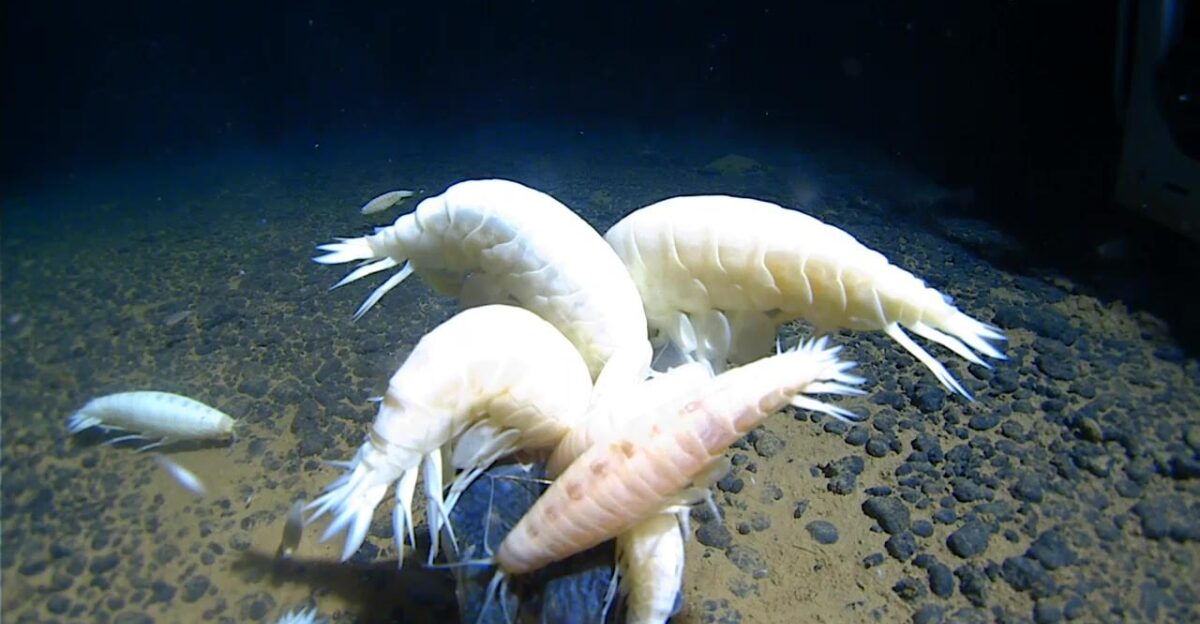
Dr. Paige Maroni from the University of Western Australia reports that the supergiant amphipod, once considered rare, may inhabit 59% of the world’s oceans.
These crustaceans can grow up to 34 centimeters and are found in ocean trenches over 8,900 meters deep. As deep-sea exploration increases, more evidence suggests that this species is far from rare.
Giant Phantom Jelly
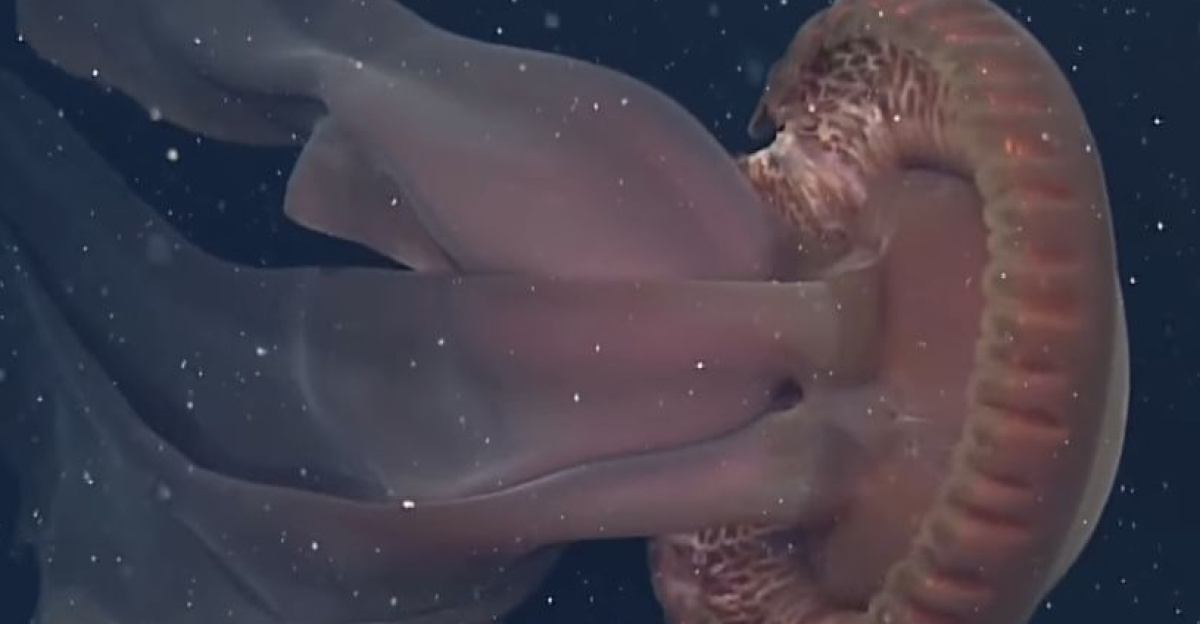
The Giant Phantom Jelly is a fascinating deep-sea creature found at depths of up to 6,665 meters. With its large bell and ribbon-like arms that can reach 10 meters, it has been sighted over 110 times by researchers from the Monterey Bay Aquarium Research Institute (MBARI).
Its ghostly appearance makes it nearly invisible in the dark ocean depths. Scientists believe it uses its long arms to capture drifting prey, acting like fishing nets as it moves through the water.
Bigfin Squid
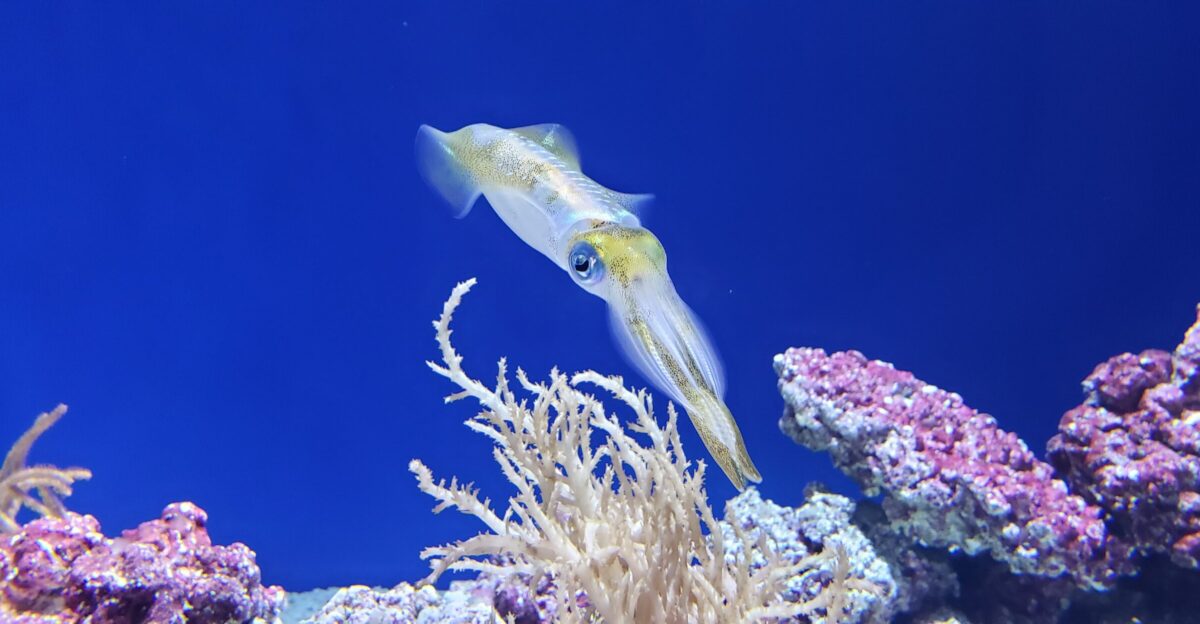
The bigfin squid inhabits some of the deepest waters of any squid species, with sightings reaching depths of 6,212 meters in the hadal zone. These intriguing cephalopods have 8-meter arms and tentacles held perpendicular to their bodies, creating a unique “elbowed” appearance.
Researchers have captured footage of them at depths of 3,300 to 4,000 meters in Pacific trenches, yet their feeding habits and reproduction in the deep ocean remain largely unknown.
Xenophyophore
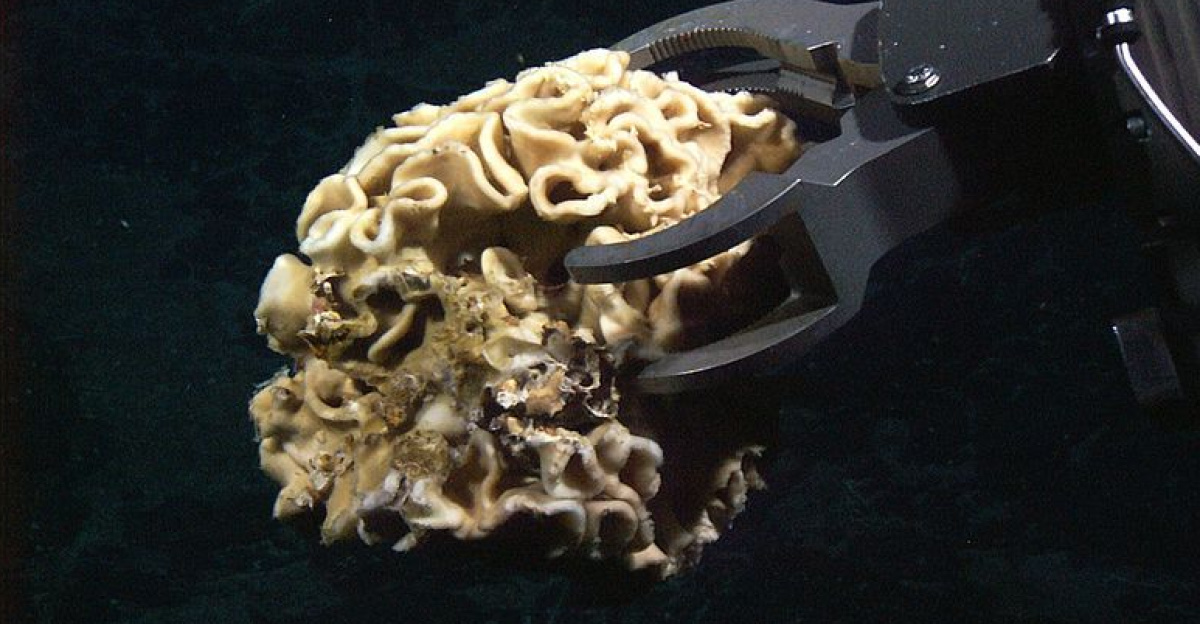
Xenophyophores are the largest single-celled organisms on Earth, reaching up to 20 centimeters in diameter. Found on abyssal seafloors, particularly in the Clarion-Clipperton Zone at depths over 4,000 meters, these giant protists construct tests from surrounding sediments.
They play a vital role in providing habitat structures that support various abyssal organisms, contributing to the biodiversity of these deep-sea ecosystems.
Dumbo Octopus
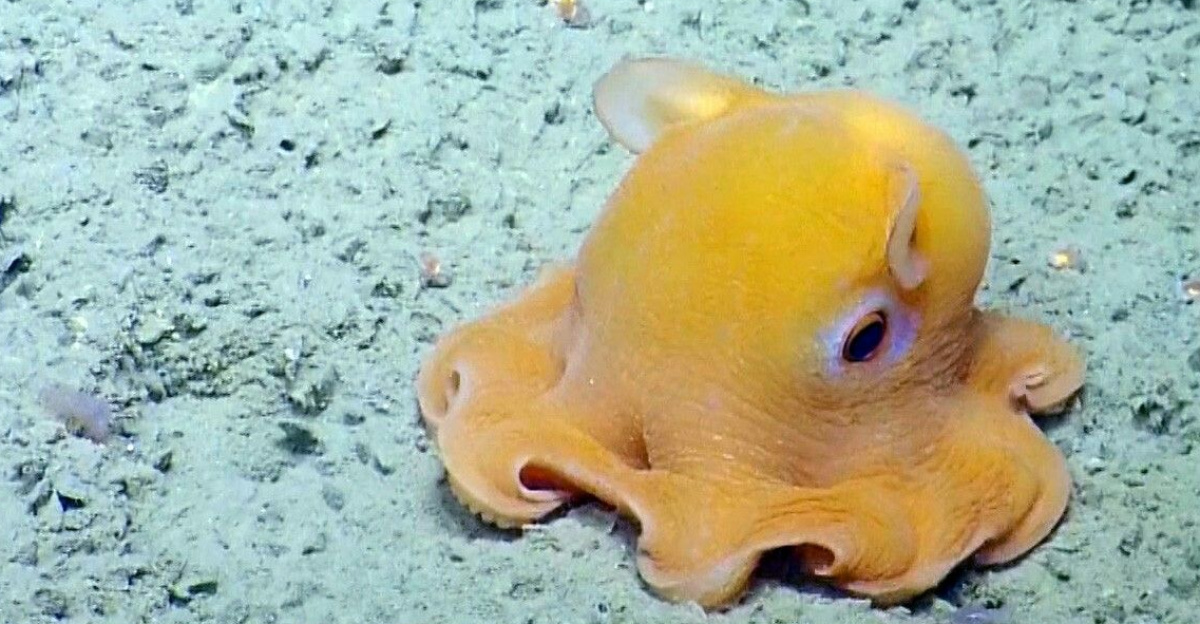
Dumbo octopuses, named for their distinctive elephant-ear fins, are the deepest-living octopuses known to science, with seventeen species found at depths of 3,000 to 7,000 meters. The largest can grow over 6 feet long and weigh 13 pounds.
These creatures propel themselves by flapping their fins. Unlike shallower octopuses, they lack ink sacs and rely on color-changing for defense.
Deep-Sea Brisingid Starfish
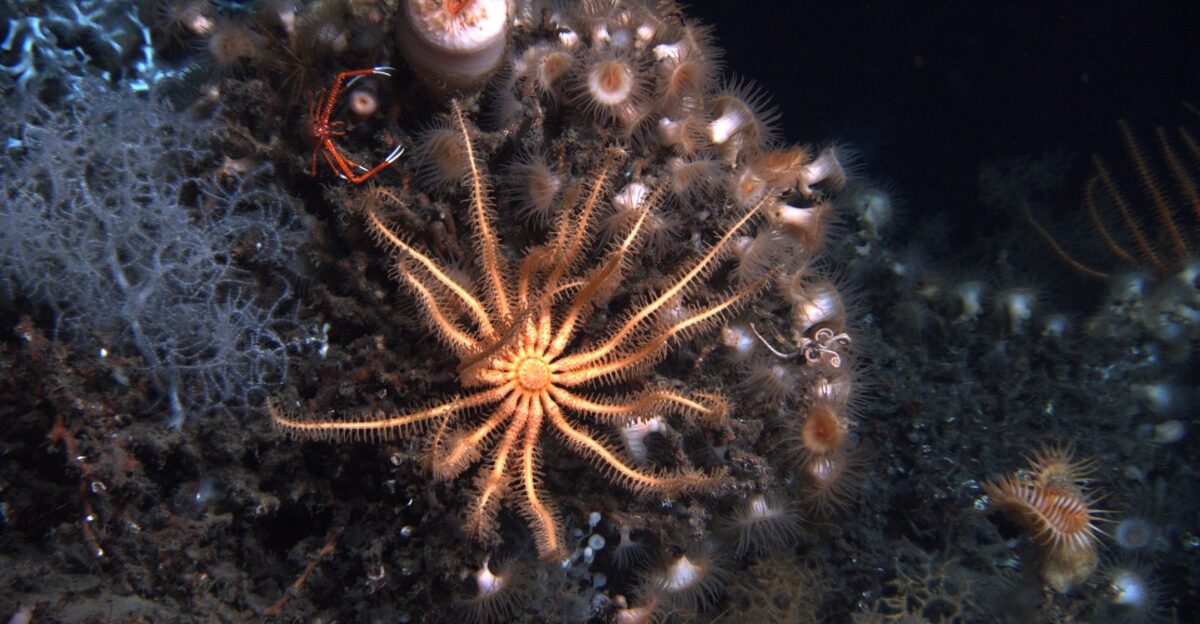
Brisingid sea stars are remarkable for their long arms, which extend over three feet at depths of 4,000 to 6,000 meters. Due to their unique feeding strategy, researchers from Woods Hole refer to them as “the Velcro of the deep sea.”
Unlike typical coastal starfish, brisingids can have up to 20 arms arranged like flowers. They thrive around hydrothermal vents and cold seeps in the world’s abyssal plains and trenches.
Giant Sea Pig
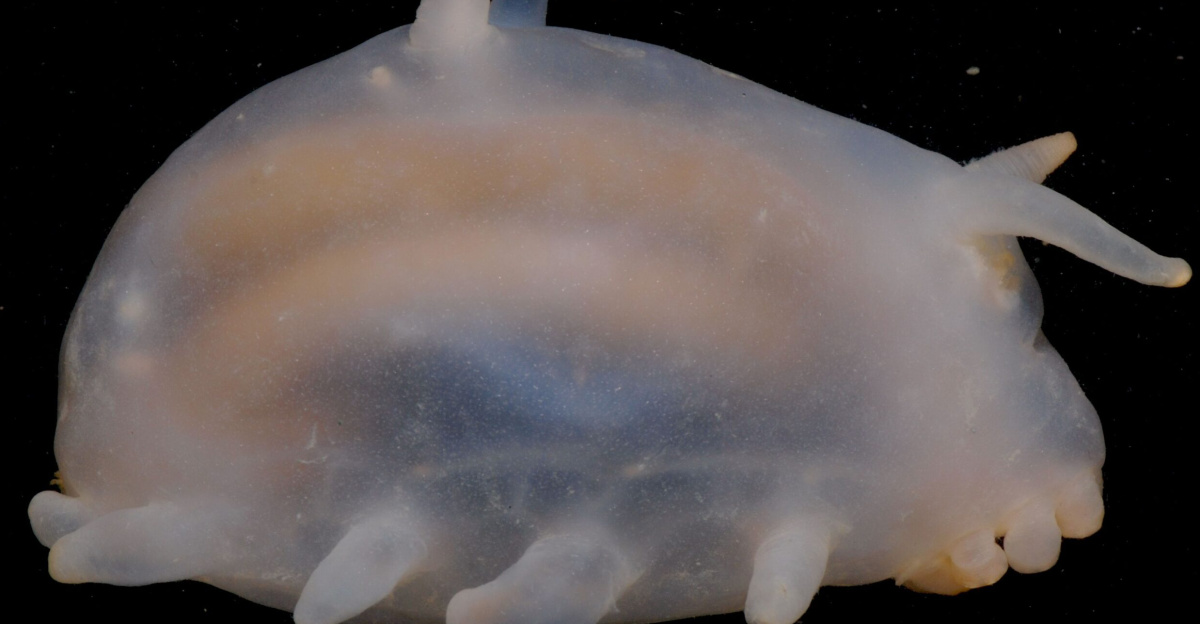
Sea pigs are remarkable creatures found on abyssal plains at depths over 4,000 meters, growing up to 7 inches long. They walk on elongated tube feet to avoid sinking.
MBARI research shows that 96% of sea pigs carry baby king crabs for protection, and their populations reflect the availability of food that descends from surface waters above.
Hadal Snailfish
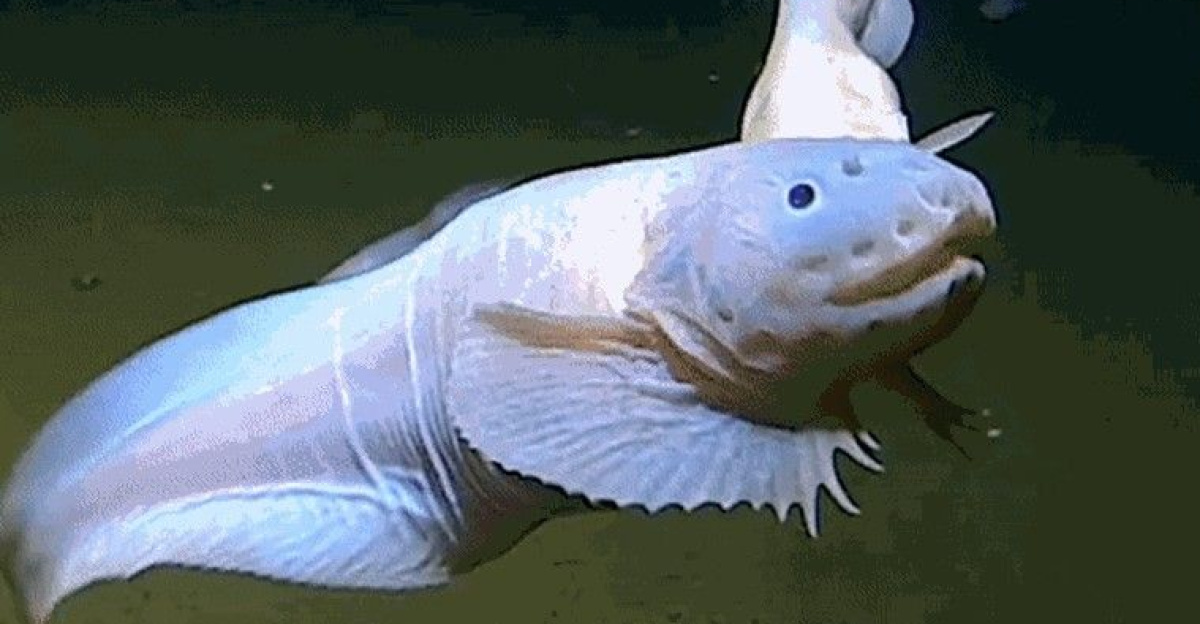
The hadal snailfish is the deepest fish in the world, recorded at 8,336 meters in ocean trenches. These translucent fish thrive under immense pressure, living in complete darkness and near-freezing temperatures.
They have jelly-like skin, fewer bones, and pressure-resistant proteins. As small yet formidable predators in the hadal zone primarily feed on tiny crustaceans.
Fangtooth
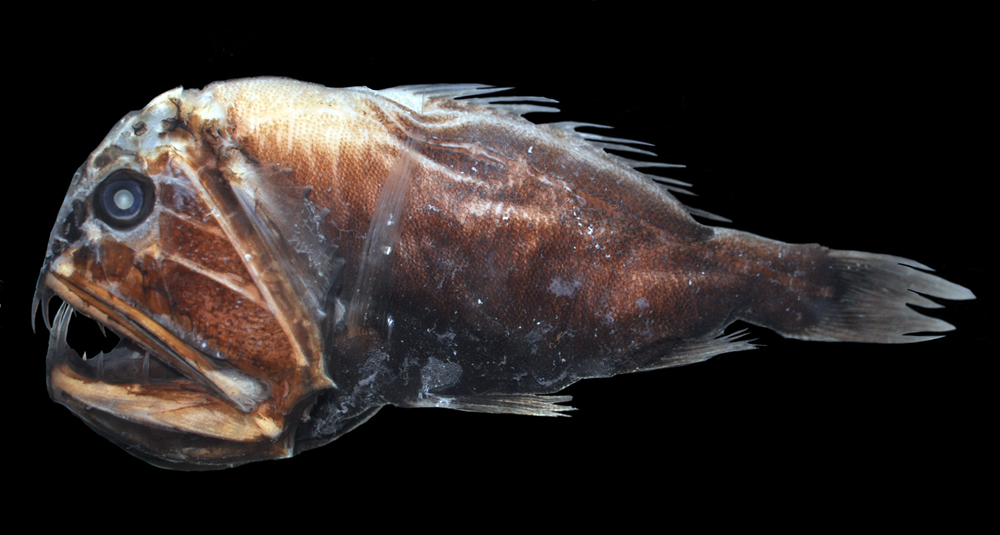
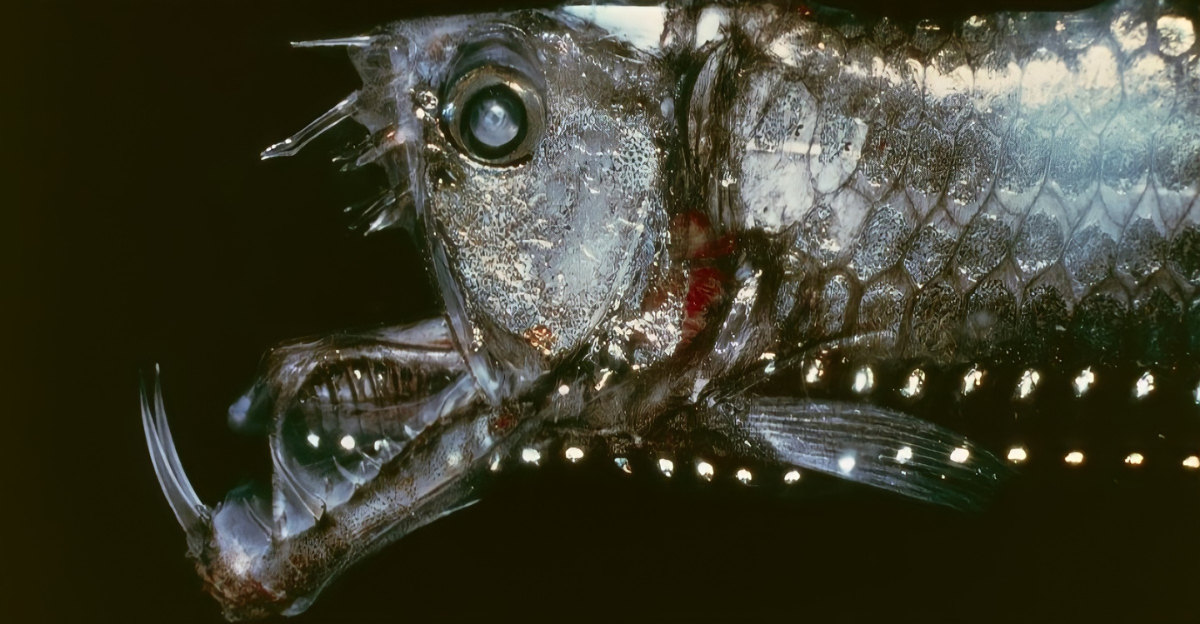
The fangtooth is a fascinating fish known for having the largest teeth relative to body size. It can reach depths of up to 5,000 meters in the abyssal zone. Its oversized fangs fit into specialized jaw sockets to avoid injury to the brain.
At around 6 inches long, these predators contribute to the balance of abyssal ecosystems by using their massive teeth to catch scarce prey in their deep-sea environment.
Giant Abyssal Amphipods
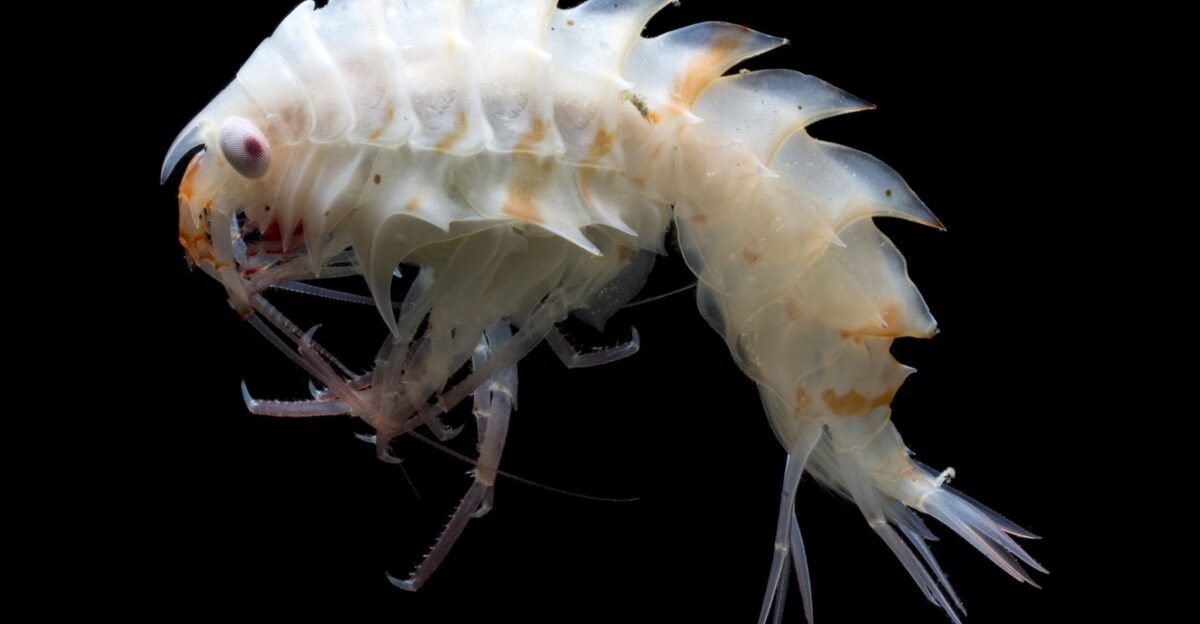
Giant hadal amphipods are crustaceans that thrive in the deepest ocean trenches, living at depths over 10,000 meters. These transparent creatures can grow up to 34 centimeters long and are well-adapted to extreme pressures, exceeding 1,000 times that of sea level.
Recent expeditions to the Mariana Trench have found these remarkable animals abundant, highlighting their resilience in one of Earth’s most challenging environments.
Abyssal Sea Spider
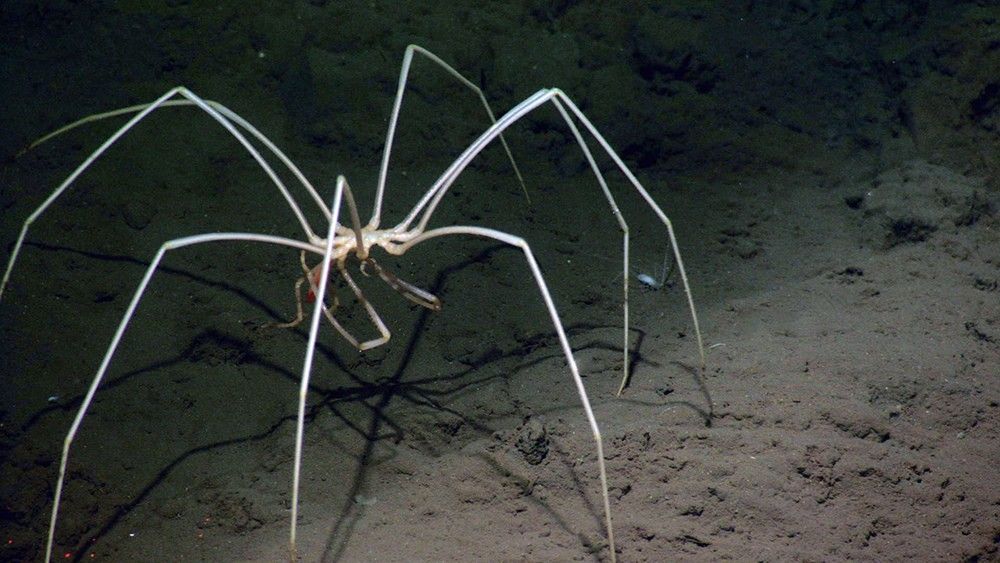
Abyssal sea spiders display remarkable gigantism, with legs reaching 40-50 centimeters while their bodies remain tiny. These arthropods crawl across the seafloor at depths exceeding 4,000 meters throughout the world’s abyssal plains.
Some species exhibit bioluminescence in the eternal darkness. Their elongated legs help them navigate the soft sediments of abyssal seafloors while searching for prey among the sparse deep-sea fauna.
Giant Abyssal Isopod
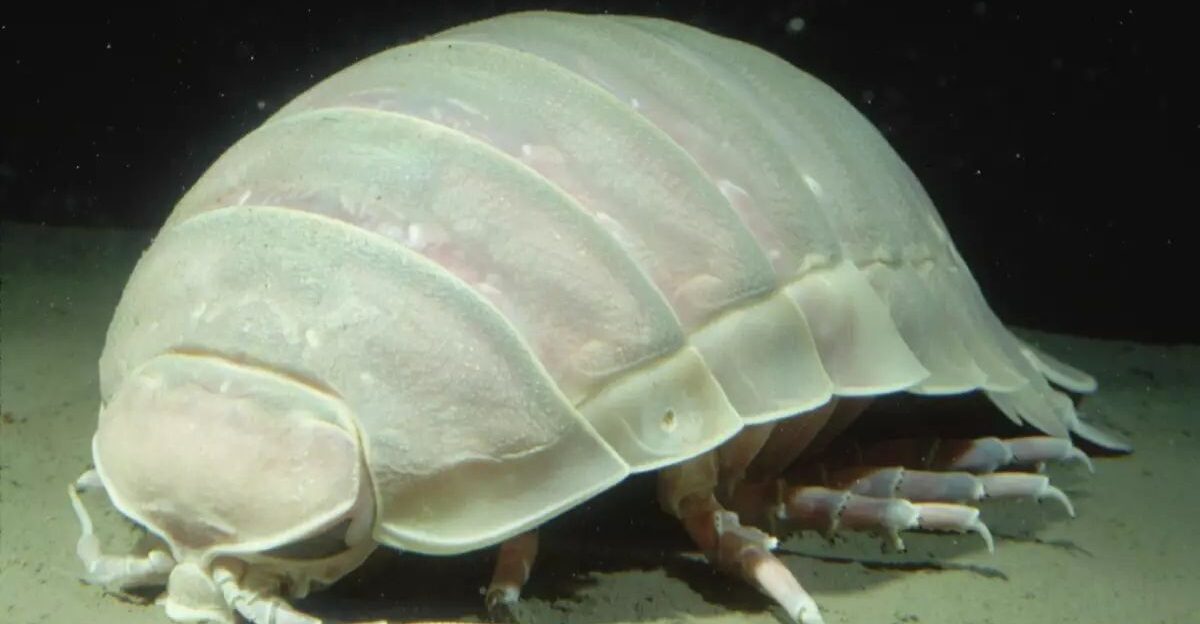
Giant isopods represent the largest members of the crustacean order Isopoda, growing up to 50 centimeters long on abyssal seafloors. These armored scavengers inhabit depths from 310 meters to over 2,000 meters across the world’s deep oceans.
Living fossils of the abyss, they can survive years without food by dramatically slowing their metabolism. Their powerful mandibles crush through any organic matter falling from the surface waters above.
Deep Abyssal Tube Worms
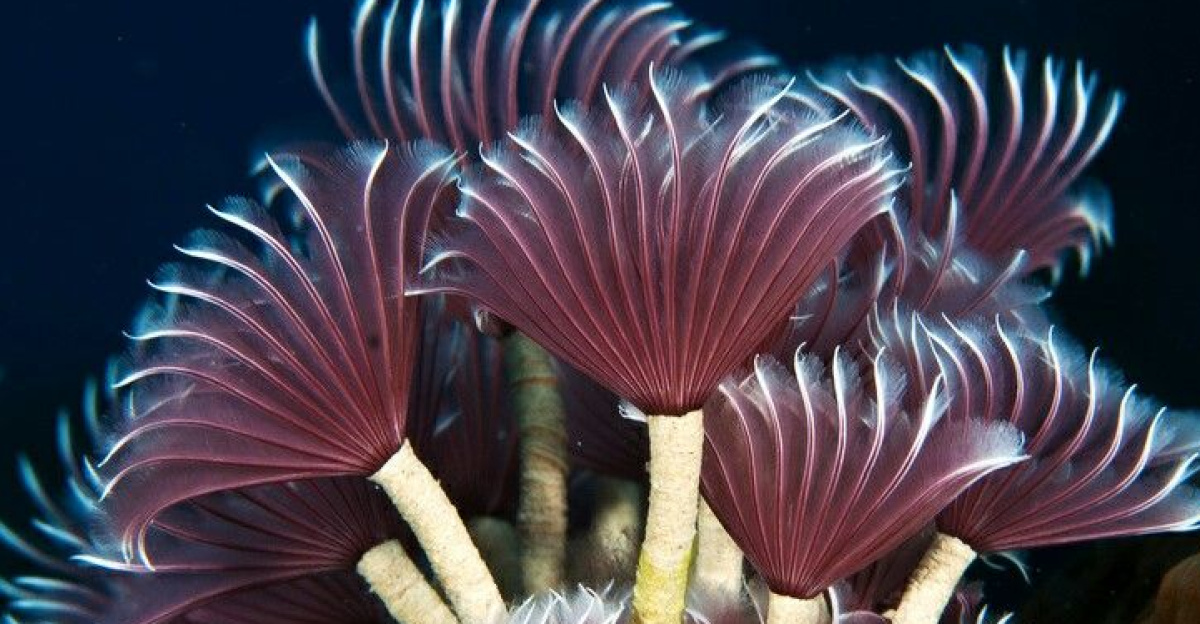
Giant tube worms create spectacular colonies around deep-sea hydrothermal vents at abyssal depths, reaching lengths up to 2.4 meters. These remarkable creatures have no mouth or digestive system; they host symbiotic bacteria.
Scientists recently discovered tube worm colonies thriving beneath the seafloor in abyssal sediments. Their bright red plumes filter scalding water containing hydrogen sulfide and other chemicals for their bacterial partners.
Abyssal Grenadier Fish
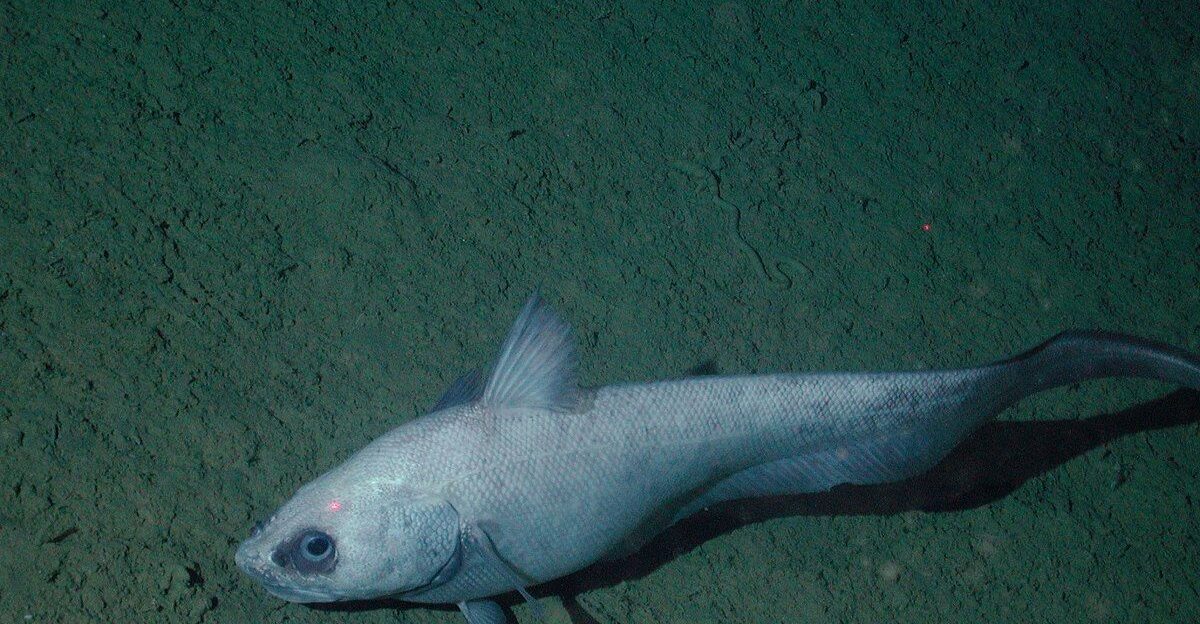
Abyssal grenadiers represent the most common fish family in the deep ocean, inhabiting depths 2,000-6,000 meters worldwide. These large-headed fish can grow over a meter long while patrolling the vast abyssal plains.
Their large eyes help detect bioluminescent prey in the eternal darkness. Scientists use these fish as indicators of abyssal ecosystem health across the world’s deep ocean basins.
Giant Abyssal Ostracod
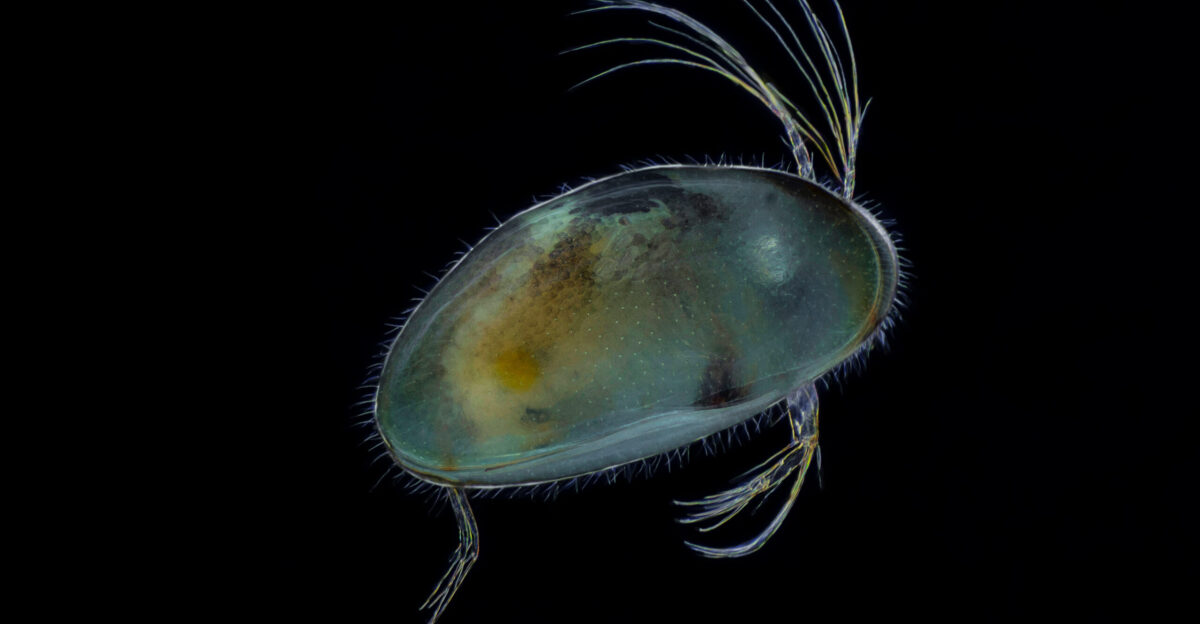
Giant ostracods grow to extraordinary sizes in abyssal waters, reaching up to 32 millimeters compared to their shallow-water relatives’ 2-millimeter maximum. These transparent crustaceans drift through the water column at depths exceeding 4,000 meters.
Their huge eyes help them detect prey and predators in the dim abyssal environment. Scientists consider them living examples of deep-sea gigantism among microscopic organisms.
Abyssal Cusk Eel
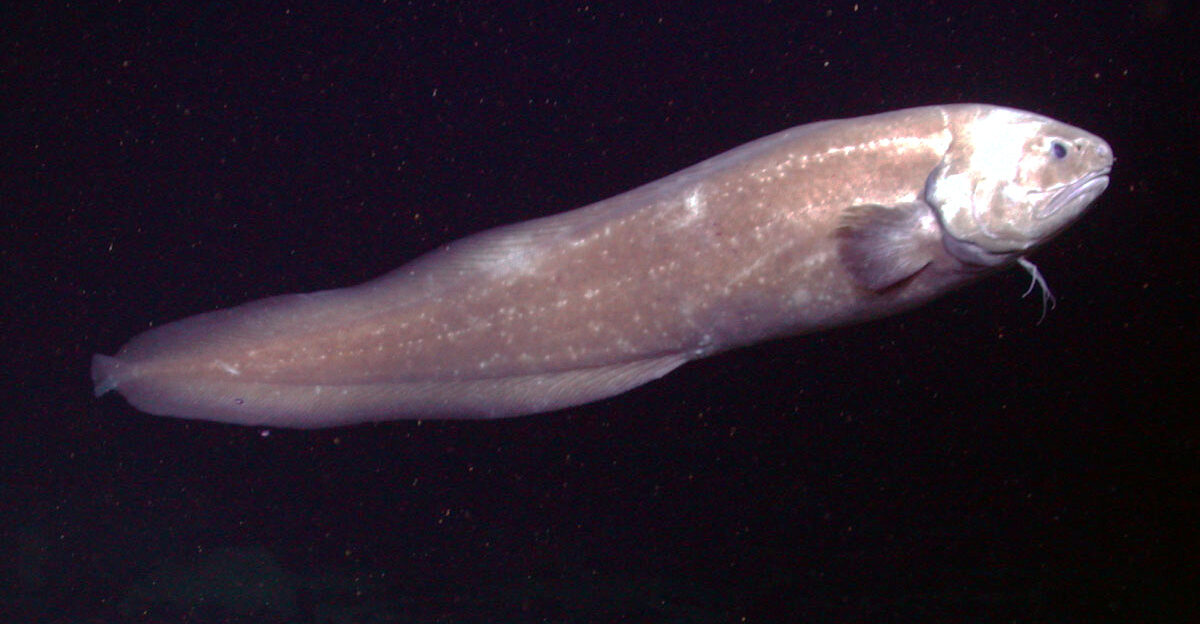
Abyssal cusk eels represent some of the deepest-dwelling bony fish, inhabiting depths up to 8,000 meters in ocean trenches. These elongated fish lack swim bladders and possess antifreeze proteins to survive near-freezing abyssal temperatures.
Their eel-like bodies help them navigate the harsh abyssal environment. Recent expeditions have discovered multiple new species of cusk eels in the world’s deepest trenches.
Giant Abyssal Polychaete Worms
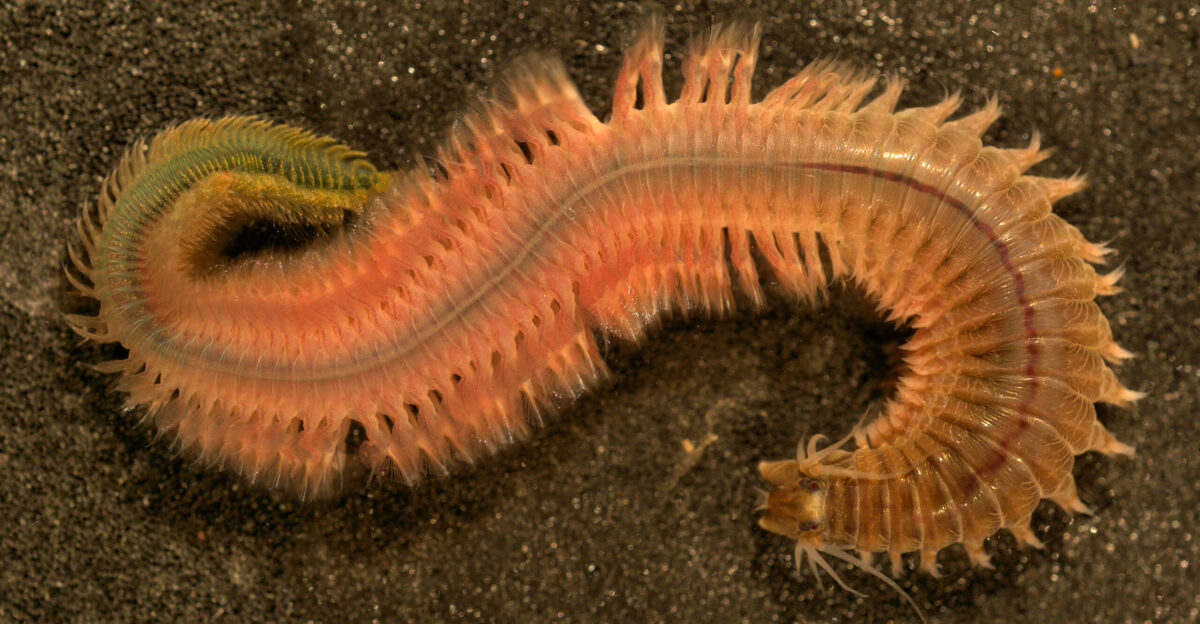
Giant polychaete worms create massive colonies on abyssal seafloors, with individual worms reaching over a meter in length. These segmented worms can live for centuries while slowly building calcium carbonate tubes.
Scientists estimate some colonies may be over 300 years old. Their tubes provide crucial habitat structure for other abyssal organisms in the flat, featureless deep-sea environment.
Deep Abyssal Basket Star
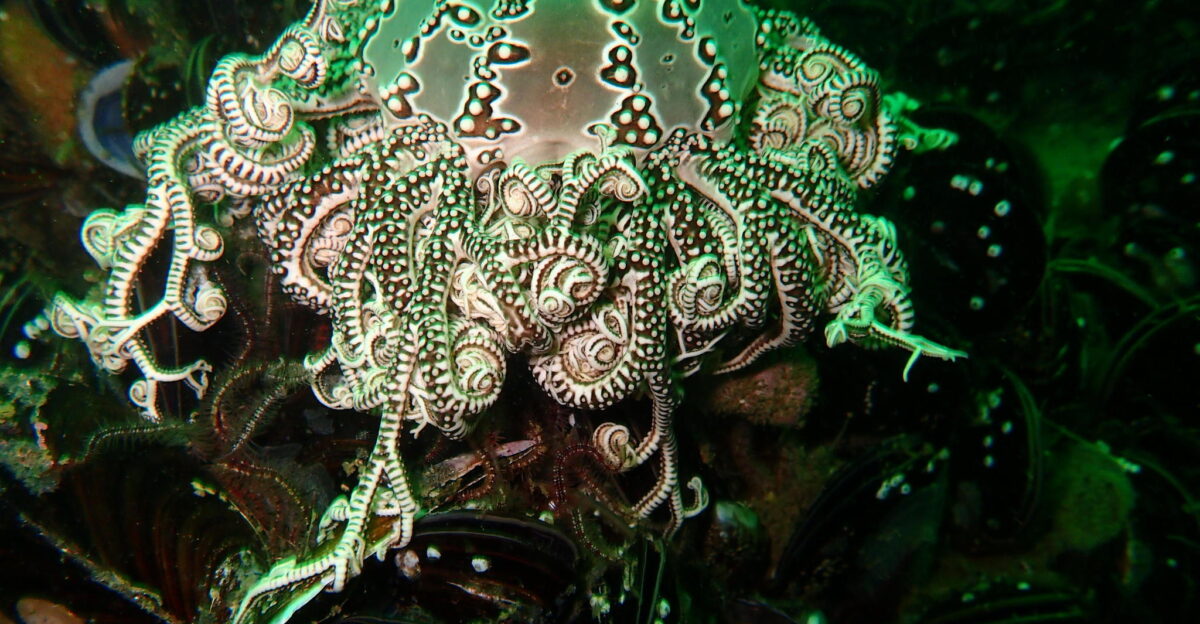
Abyssal basket stars spread their branching arms up to 70 centimeters across while perched on seamounts and rocky outcrops at depths exceeding 4,000 meters. These echinoderms filter tiny organisms from passing currents using their intricate arm networks.
Their complex branching pattern maximizes surface area for feeding in the nutrient-poor abyssal environment. Scientists consider them among the most structurally complex animals in the deep ocean.
Guardians of the True Abyss
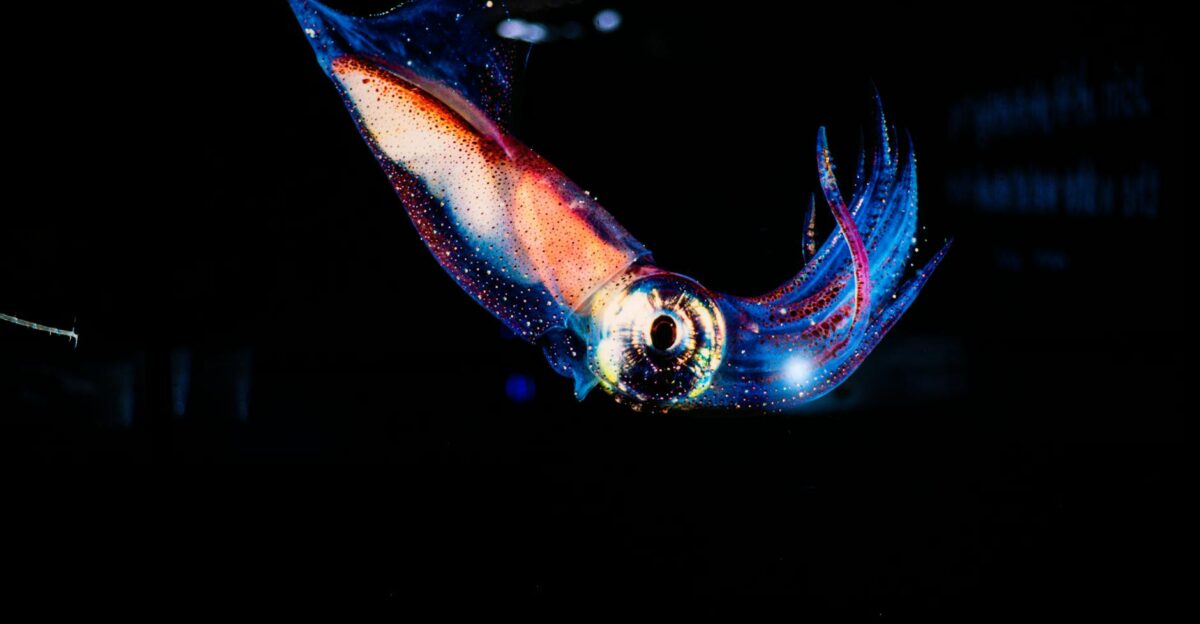
These abyssal giants represent the remarkable life thriving in Earth’s deepest waters below 4,000 meters. Each species demonstrates extraordinary adaptations to crushing pressure, eternal darkness, and near-freezing temperatures that define the abyss.
As deep-sea exploration technology advances, scientists continue documenting these incredible creatures, revealing that even Earth’s most extreme environments harbor complex ecosystems of truly gigantic proportions.