
Seven distant stars have sparked an unexpected stir among astronomers. “Astrophysical phenomena cannot easily account for” their unusual infrared radiation, the Project Hephaistos team reported in June 2024. Using five million stars from Gaia, 2MASS, and WISE, researchers flagged these M-dwarfs as potential Dyson sphere candidates—structures once purely theoretical. While confirmation remains uncertain, the discovery challenges how scientists search for advanced civilizations. Here’s how these stars stood out from millions of others.
Who Led Project Hephaistos?
The international research effort was led by Matías Suazo at Uppsala University, with support from eight co-authors across Sweden, India, the UK, and the U.S. Funding was provided by the Royal Swedish Academy of Sciences, the Magnus Bergvall Foundation, AI4Research, and India’s SPARC project, demonstrating global collaboration.
This diverse team set the stage for a search combining astronomy and machine learning techniques.
What Was Project Hephaistos?

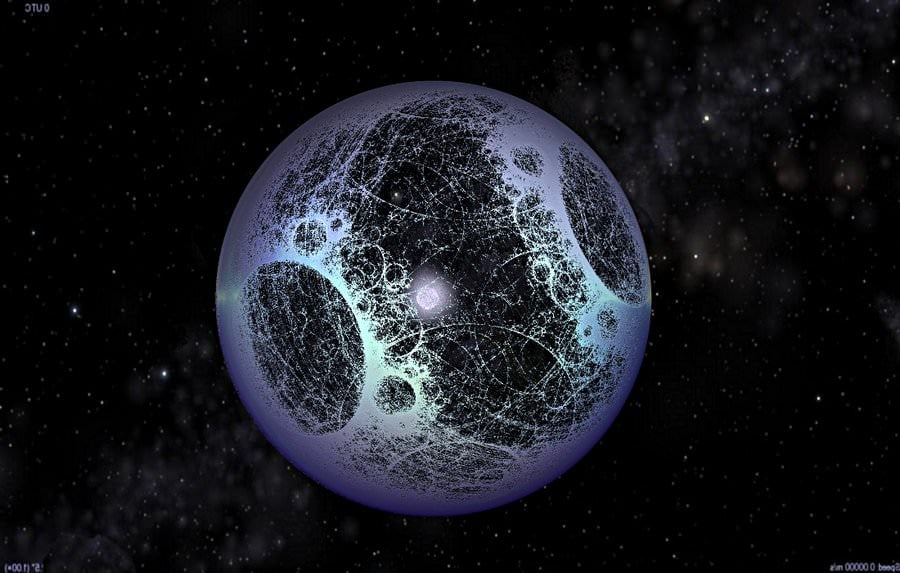
Project Hephaistos systematically searched for partial Dyson spheres, theoretical megastructures that advanced civilizations could build to harvest stellar energy. The focus was on detecting anomalous infrared emissions inconsistent with known astrophysical phenomena. Named after the Greek god of fire, the project aimed to explore the universe for technosignatures.
But how did the team filter five million stars down to just seven candidates?
How Candidates Were Identified
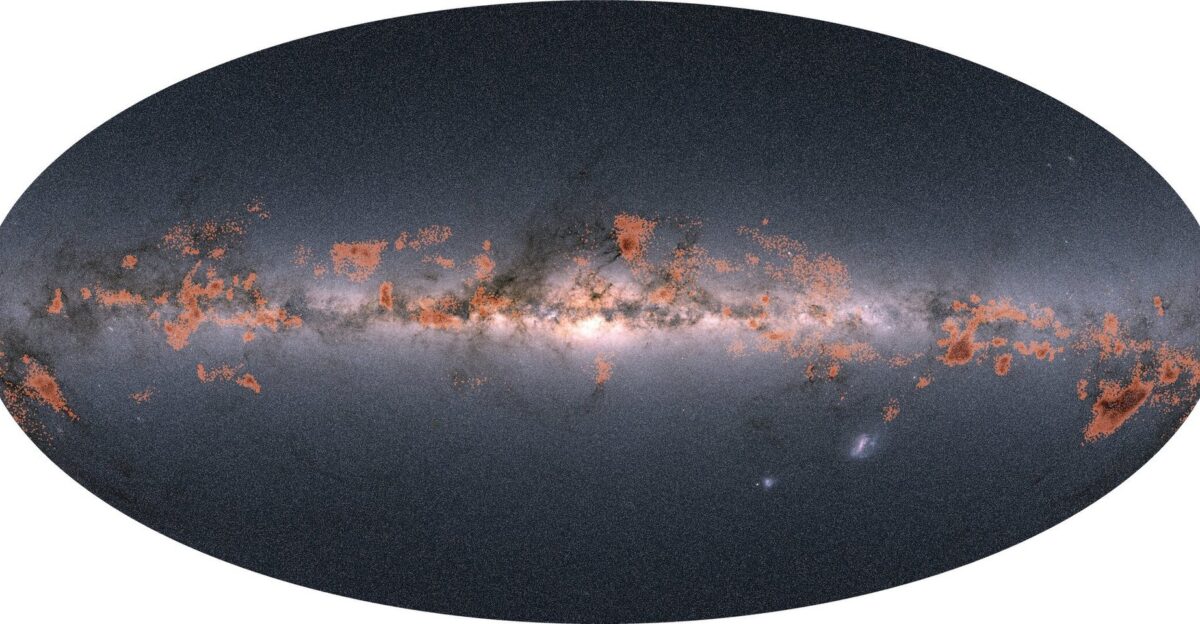
The pipeline utilized data from Gaia, 2MASS, and WISE, filtering stars within a distance of 300 parsecs. Mid-infrared detection in WISE W3 and W4 bands was required. After photometric fitting, nebular removal using CNNs, and signal-to-noise checks, only seven M-dwarf stars remained as potential Dyson sphere candidates.
These stars stood out for their unexpected infrared excess, raising immediate scientific curiosity.
Why Focus on M-Dwarfs?

M-dwarf stars are the most common in the Milky Way, comprising 75-85% of stars. Their longevity and frequent habitable zones make them prime targets for potential extraterrestrial civilizations. Rarity of debris disks around older M-dwarfs also reduces natural explanations for unusual infrared readings.
Still, infrared excess alone doesn’t confirm alien activity—it only flags stars for further study.
The Infrared Excess Explained

All seven candidates exhibited unusually strong radiation in the W3 (12 μm) and W4 (22 μm) bands. The paper states, “astrophysical phenomena cannot easily account for” these signals. The team noted this difficulty does not equal impossibility, acknowledging natural causes like debris disks or binaries could still be responsible.
Next, let’s see the technological methods that helped isolate these unusual stars.
Advanced Pipeline and CNN Use

Researchers developed a Convolutional Neural Network trained on 960 images to remove false positives from nebulae. CNN validation reached 93% accuracy, with 95% on test data. This automated filtering allowed high-confidence detection of 368 sources, eventually narrowed to seven through visual inspection and astrophysical criteria.
The machine learning approach marked a key advancement in technosignature searches.
Key Quote From the Research

“It is essentially impossible to prove the existence of Dyson spheres based on photometric data only, so this search can be considered a standard search for infrared excess sources biased towards excesses that are consistent with Dyson spheres,” the team wrote in June 2024.
This caution underscores the difference between candidates and confirmed alien structures.
When the Findings Were Published

Project Hephaistos Phase II, identifying seven candidates, was submitted May 5, 2024, accepted June 2024, and published on June 12 in the Monthly Notices of the Royal Astronomical Society. The work builds on Phase I published in 2022 using Gaia DR2 and WISE data.
Publication timing matters for interpreting subsequent follow-up research.
Historical Context of Dyson Spheres

Freeman Dyson proposed the concept in 1960 in Science, inspired by Olaf Stapledon’s 1937 novel Star Maker. Dyson theorized that advanced civilizations could build megastructures to harvest energy, emitting infrared waste heat. Project Hephaistos represents the first large-scale, modern search for such technosignatures using five million stars.
This historical perspective helps explain the project’s significance.
Where the Research Happened

Lead work was conducted at Uppsala University, Sweden, in collaboration with researchers at IIT Indore, India, Imperial College London, and Penn State, USA. The survey encompassed stars within 300 parsecs, roughly 978 light-years. Data were obtained from ESA and NASA centers, while follow-up radio observations utilized e-MERLIN and EVN in Europe.
Next, we’ll examine which stars were ultimately impacted.
Location of Candidate Stars

The seven M-dwarf stars are distributed throughout the local Milky Way neighborhood. Their specific coordinates were not highlighted, but each passed rigorous filters for mid-infrared excess. The spatial scope emphasizes the precision and computational scale of Project Hephaistos.
Despite the candidates’ positions, verification required independent follow-up observations.
Independent Verification Efforts

Researchers Tongtian Ren, Michael Garrett, and Andrew Siemion at Jodrell Bank conducted radio observations in mid-2024. Their work identified background contamination from Hot DOG galaxies in three of the seven candidates. Candidate G, definitively confirmed in January 2025, was contaminated by a background AGN, not an alien megastructure.
This shows why follow-up validation is crucial in astronomy.
Quote From Follow-Up Study
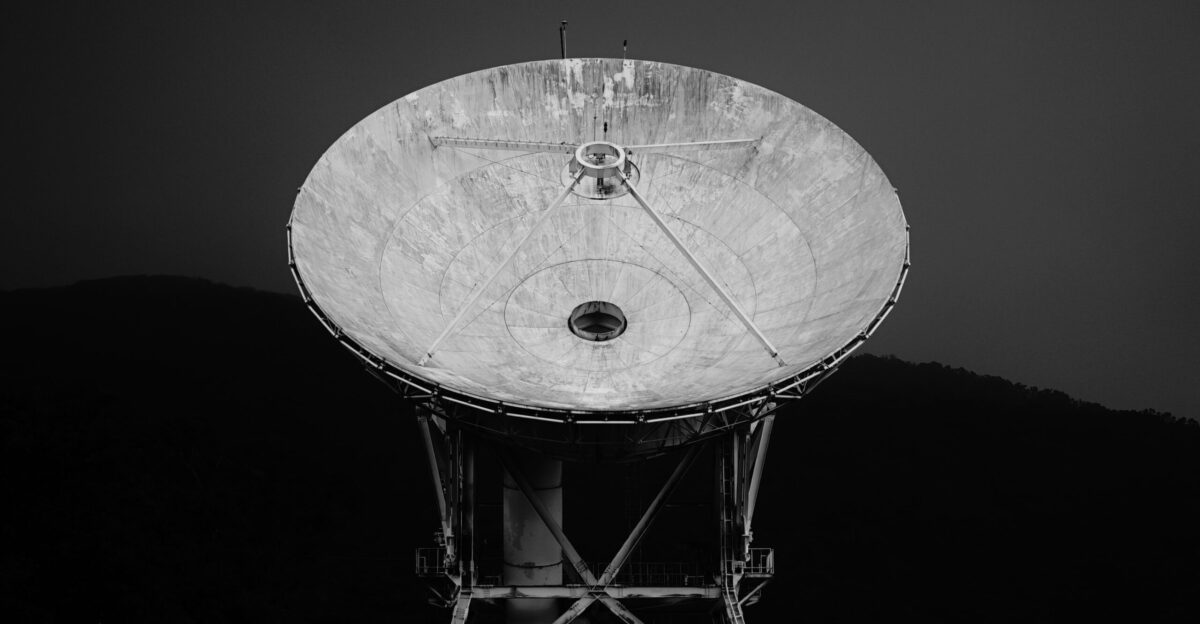
“High-resolution e-MERLIN and EVN radio observations of J2335−0004 reveal compelling evidence that the MIR excess previously attributed to a potential Dyson Sphere is instead the result of contamination by a background AGN,” stated the January 2025 paper.
This correction refined interpretations of the original Project Hephaistos findings.
Financial and Resource Context
The search relied on massive infrastructure investments: Gaia (~$1.02 billion), WISE (~$320 million), and 2MASS (~$100 million). Combined public spending exceeded $1.4 billion. Project Hephaistos employed astronomers, data scientists, computational physicists, and software engineers across multiple continents, demonstrating the scale of human and financial resources involved.
Next, we’ll explore the implications for the wider SETI community.
Impact on SETI Research

The discovery captivated SETI researchers, prompting both excitement and scrutiny. By targeting technosignatures instead of communication signals, Project Hephaistos opened new avenues for searching intelligent life. Public and scientific interest was heightened, influencing funding priorities and encouraging rigorous follow-up studies across the field.
The project also highlighted the importance of statistical caution in cosmic searches.
Fermi Paradox Connection

Project Hephaistos relates directly to the Fermi Paradox: if intelligent life is common, why haven’t we detected it? Partial Dyson sphere candidates could offer evidence, yet the absence of confirmed megastructures underscores the “Dyson Dilemma,” highlighting the challenge of detecting advanced civilizations at cosmic distances.
The paradox frames the larger significance of this investigation.
Dissecting the Title Claims

The title stated, “Scientists Confirm 7 ‘Alien’ Heat Profiles—And Rule Out Any Astrophysical Causes.” Reality: the paper only identified seven candidates and cautioned it was premature to presume alien origins. Astrophysical causes like debris disks, binary contamination, and nebular dust remain plausible.
Sensational headlines differ greatly from cautious scientific language.
Current Status of Candidates

Of the seven stars, three show clear signs of contamination. Candidate G is definitively explained by a background AGN. The remaining four remain unverified, but statistical models suggest similar contamination is possible. Verification is ongoing, highlighting the iterative nature of astrophysical research.
Next, we’ll consider what this means for future technosignature searches.
Lessons for Future Searches

Project Hephaistos demonstrates the need for meticulous data pipelines, advanced machine learning, and independent verification. Even with billions invested and five million stars analyzed, contamination is a major concern. The findings emphasize caution, rigorous methodology, and the importance of skepticism in interpreting potential technosignatures.
Future searches will build on these lessons to refine detection strategies.
Why This Matters Scientifically

Despite setbacks, Project Hephaistos represents a landmark in large-scale technosignature exploration. It combines historical insight, advanced computational methods, and careful follow-up to explore one of humanity’s most profound questions: whether we share the galaxy with advanced civilizations.
Even when natural causes explain the candidates, the study advances our understanding of infrared anomalies.