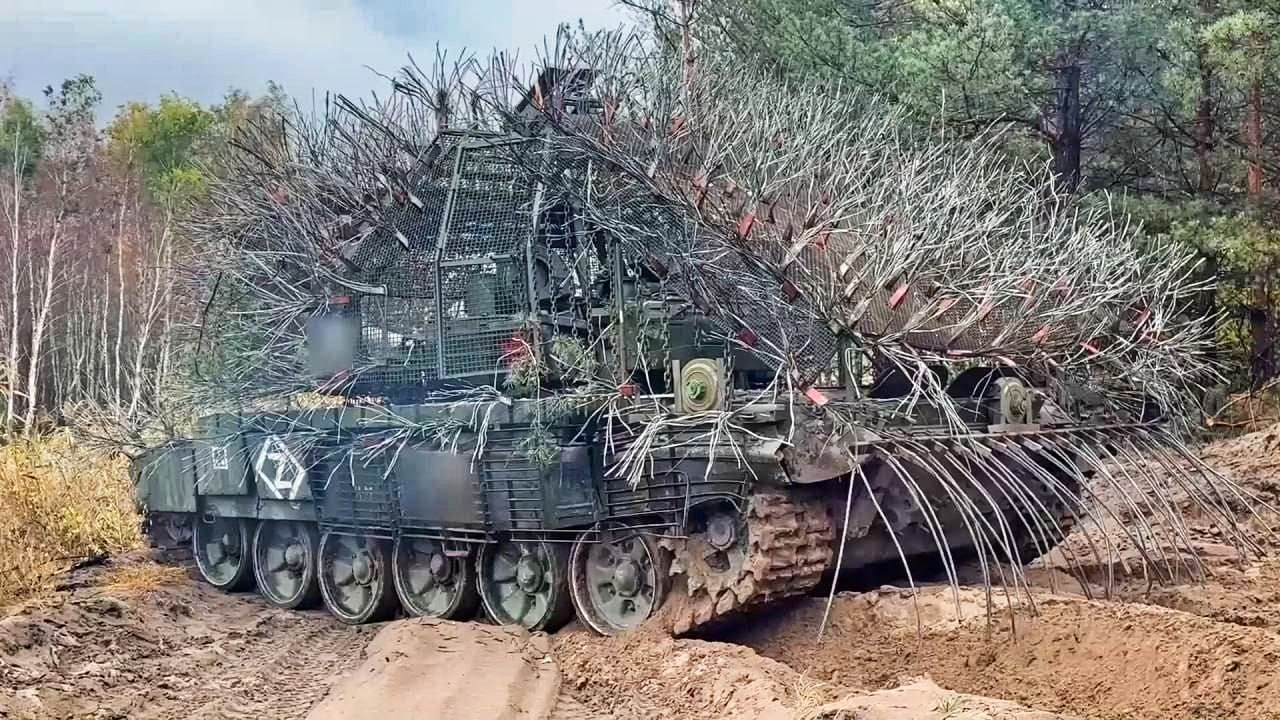
In a brief, violent sequence captured on video in 2024, a Ukrainian first-person-view drone dived through an open hatch of a Russian “turtle tank” near Bakhmut and detonated inside, destroying the vehicle. Ukraine’s Ministry of Defense later shared the footage with a warning that such lapses would not be forgiven, using the strike to underscore how a single human mistake can negate heavy armor and reshape battlefield calculations.
Turtle Tanks And Their Purpose
The targeted vehicle was a so-called turtle tank, a Russian main battle tank covered by a cage-like metal shell extending over the hull and turret. These improvised additions are intended to stop or prematurely detonate incoming drones, especially low-cost FPV models that now routinely hunt armored vehicles. The full-coverage design, widely adopted in 2024, has been described as Russia’s first large-scale improvised armor upgrade of this type since the Second World War.
The cages add a layer of protection against top-attack drones and loitering munitions by forcing warheads to explode away from the main armor. In some documented cases, turtle tanks have endured extensive punishment. One vehicle operating near Siversk in mid-2024 reportedly survived dozens of mines and FPV strikes before finally being disabled, suggesting that the add-on structures can significantly prolong a tank’s time in combat.
But the Bakhmut incident highlighted the limits of this approach. While the steel shell can blunt external attacks, it cannot compensate for mistakes made by the crew inside. The drone succeeded not by overpowering the armor from the outside, but by exploiting a small oversight in its operation.
A Precision Strike By A Veteran Unit
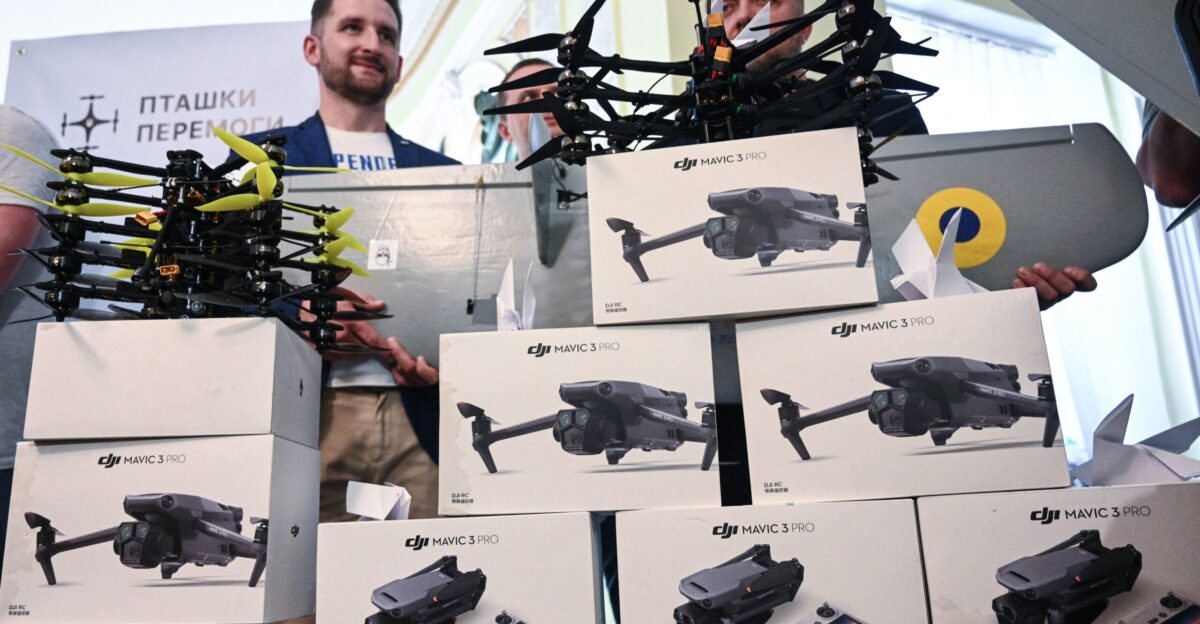
The drone that hit the turtle tank was launched by Ukraine’s 93rd Mechanized Brigade “Kholodnyi Yar,” a unit heavily engaged in the Bakhmut sector. Operating as a so-called kamikaze platform, the FPV drone was controlled by an operator wearing video goggles, steering it in real time as it approached the target.
Instead of ramming the outer cage, the operator waited for an opening. Tank crews operating inside turtle tanks often struggle with poor visibility and heat buildup; to cope, they sometimes leave hatches open for ventilation when they believe the immediate threat has passed. In this case, that decision created a direct path into the crew compartment.
The drone dropped vertically through the open hatch and detonated inside the tank, triggering an internal explosion that killed the vehicle in a single strike. Analysts noted that Ukrainian forces typically require multiple FPV drones—often six to eight—to disable a well-sealed turtle tank. In efficiency terms, the Bakhmut attack delivered the same effect at a fraction of the usual cost in equipment and time.
Cost Pressures And Production Mismatch
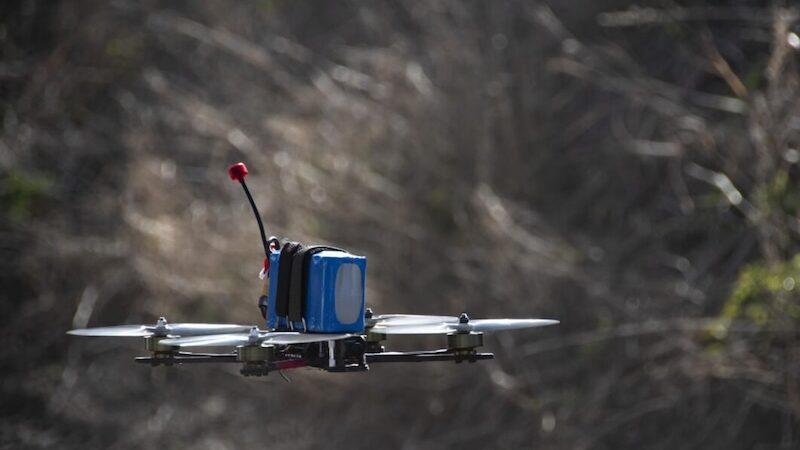
The economics of the engagement are stark. An FPV kamikaze drone used by Ukrainian units commonly costs around $400 per unit. By contrast, modern Western anti-tank guided missiles such as the Javelin can cost tens or even hundreds of thousands of dollars per shot, depending on the specific model and support equipment. That means a single missile can be hundreds of times more expensive than one improvised drone.
Russia’s turtle tanks, meanwhile, demand substantial investment. Each vehicle requires significant quantities of steel, welding work, and maintenance resources that could otherwise be directed toward repairing standard armored hulls. The cost is not only financial but also industrial, as workshops and crews must be devoted to building and sustaining the cages.
Ukraine’s drone fleet is largely supplied by a loose network of civilian laboratories, volunteer groups, and small workshops. This decentralized ecosystem can adapt designs quickly and ramp up production with relatively modest infrastructure. Russia, by comparison, relies more heavily on centralized heavy industry to refurbish and modify tanks, a process that is slower to adjust and more resource-intensive. The result is an asymmetric race: Russia must upgrade each tank individually, while Ukraine needs only to expand its supply of small, inexpensive drones.
Escalating Measures In The Drone-Armor Contest
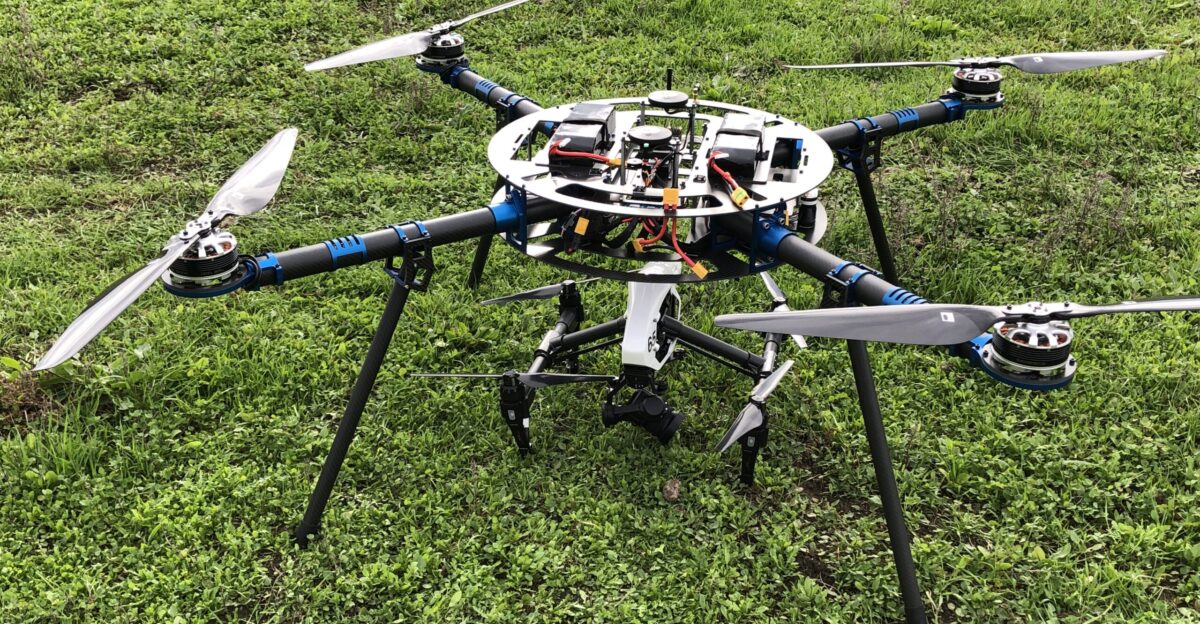
The Bakhmut strike is part of a wider evolution in the contest between armored vehicles and unmanned systems. As turtle tanks appeared on the front lines in early 2024, Ukrainian operators refined their tactics to look for gaps—open hatches, weak points in the cage design, or moments when crews exposed their vehicles during maneuvers.
At the same time, Ukrainian units began experimenting with new payloads. One development has been the fielding of so-called Dragon Drones by various formations. These FPV platforms carry thermite-based charges capable of burning at temperatures that can melt or cut through metal shells. By attacking the cages themselves, such drones can degrade or remove the protective structures that turtle tanks rely on.
Each adaptation prompts a response. As crews learn to keep hatches closed longer, they increase internal heat and reduce situational awareness, raising the risk of other types of attack. As Russia strengthens cages or changes their geometry, Ukrainian engineers adjust drone approach angles, fusing, or payload types. This rapid cycle has turned the frontline into a constant test of which side can innovate faster.
Future Of Tanks Under Drone Threat
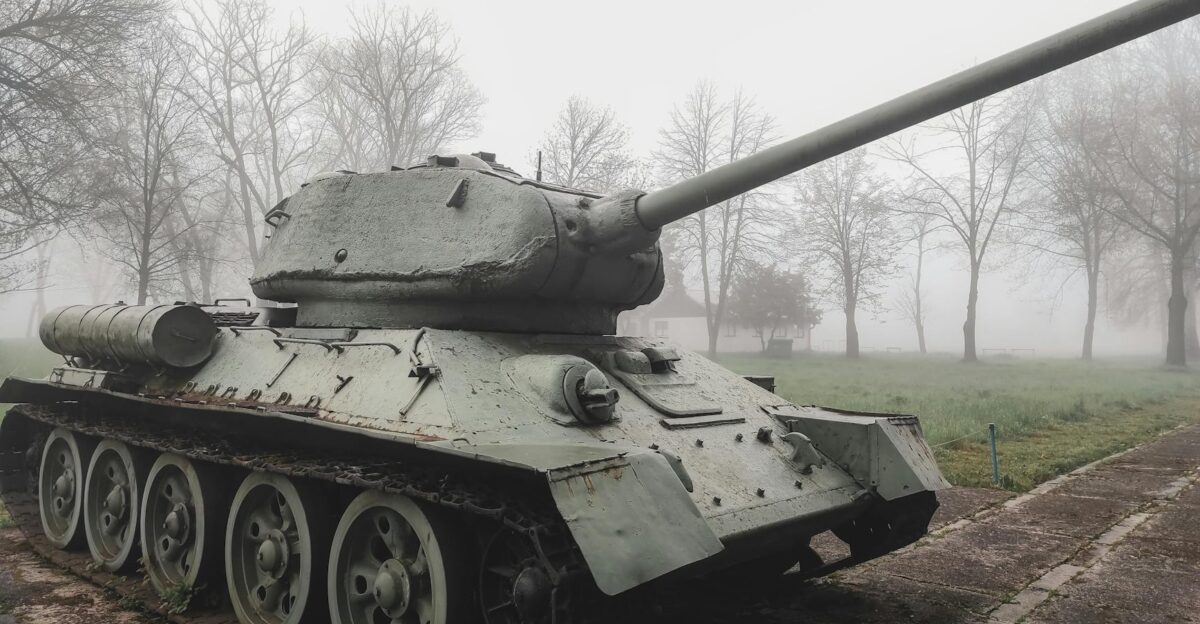
Strategists view the Bakhmut incident as emblematic of a broader challenge to traditional armored doctrine. For decades, main battle tanks have been among the most expensive single systems on the battlefield, often costing millions of dollars to produce, equip, and crew. Now, they are increasingly vulnerable to weapons that can be assembled for a fraction of that price from commercially available components.
The psychological impact is also significant. By publicizing the strike and warning that basic mistakes will be punished, Ukraine’s Defense Ministry sought to send a message to Russian crews that even heavy improvised armor cannot guarantee survival. Knowing that an overlooked hatch or a brief lapse in attention can lead to destruction adds another layer of pressure to already stressful combat conditions.
Looking ahead, both sides are expected to continue iterating on designs and tactics, from improved sensors and automated defenses on tanks to more agile, precise, and destructive drones. The outcome of this contest will influence how militaries worldwide think about armored forces, cost-effective firepower, and the balance between protection and agility on future battlefields.
Sources
Ukraine Ministry of Defense official statement, 5 June 2024
Business Insider reporting on video release and geolocation, 5 June 2024
93rd Separate Mechanized Brigade “Kholodnyi Yar” operational reports
CSIS Missile Threat FGM-148 Javelin cost analysis, 2024
Forbes analysis of turtle tank vulnerabilities and drone costs, July–October 2024
Institute for the Study of War (ISW) Bakhmut sector assessments