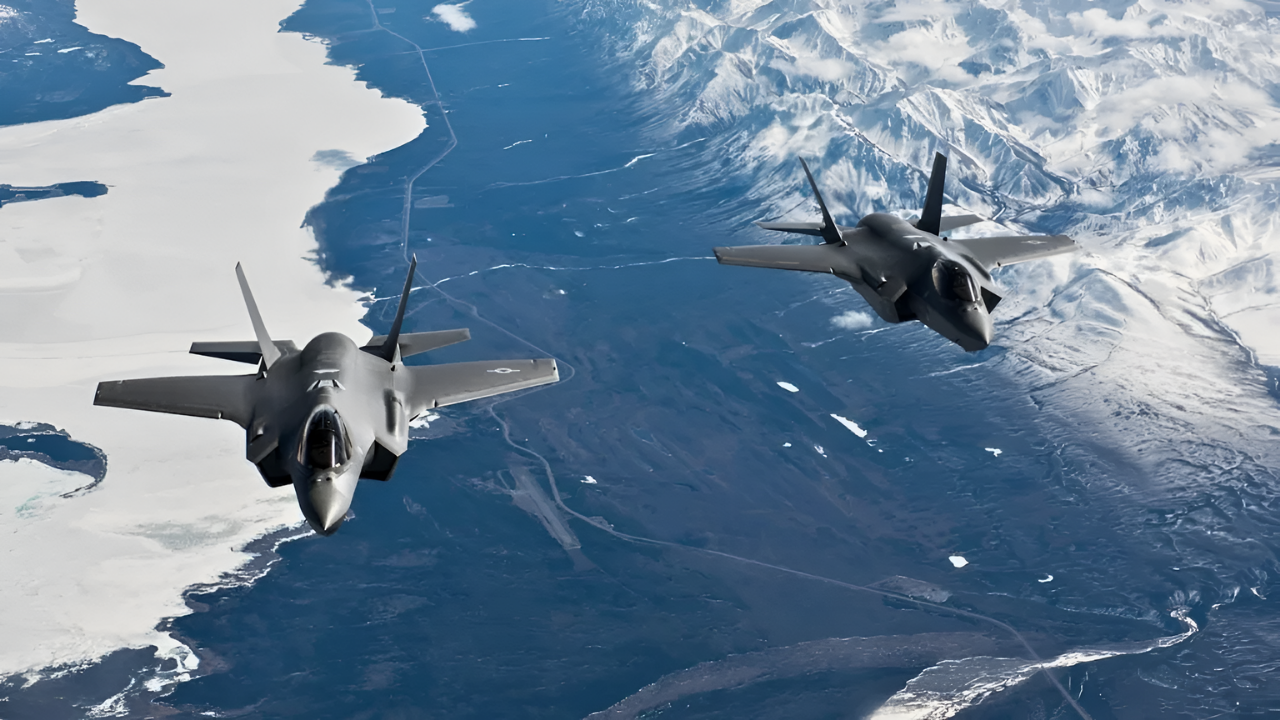
For decades, Russia’s military jets have skirted the edges of North American airspace, testing responses. In 2024, the frequency of incursions into Alaska’s Air Defense Identification Zone reached levels unseen since the collapse of the Soviet Union, with NORAD conducting intercepts at the highest operational tempo in over three decades.
The numbers tell a story of escalating scrutiny: more flights, tighter margins, thinner lines between routine and reckless.
A Zone That Divides the Peace
Alaska’s Air Defense Identification Zone extends up to 200 miles from the U.S. coastline into international airspace where no nation holds sovereign control.
Since 1950, the U.S. has maintained this zone under Federal Aviation Regulation (14 CFR 99) as a tool to “identify, locate, and control all aircraft in the interest of national security.” Foreign military aircraft can legally transit it, but their presence triggers automatic scrambles and visual identification protocols. September 2024 would test whether those protocols could prevent catastrophe.
The Legacy of the Cold War Gaze
NORAD, the bi-national U.S.-Canadian command established in 1958, was born from fears of Soviet bombers appearing without warning over the Arctic. The Alaska ADIZ became its listening post, the place where American and Russian air forces met without shooting.
Throughout the Cold War and beyond, Russian long-range aviation (Tu-95 Bear bombers, reconnaissance aircraft) filed no flight plans, transmitted no identifying codes, and approached defensible U.S. territory unannounced. It was provocation by protocol: legal, documented, and utterly calculated to probe response readiness.
Pressure Mounting in the Arctic
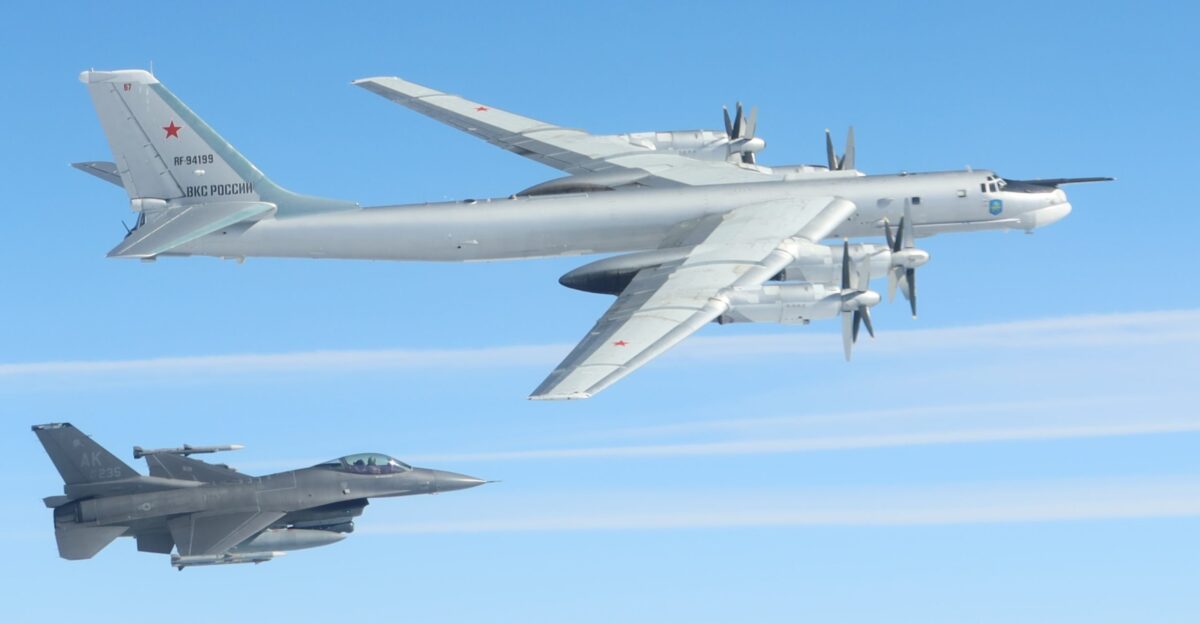
By mid-2024, the pattern was unmistakable. NORAD had scrambled to intercept Russian aircraft in Alaska’s ADIZ 25 times in 2023; 2024 was tracking even higher. In July, a historic threshold was broken: two Russian Tu-95 bombers and two Chinese Xian H-6K nuclear-capable bombers flew together near Alaska for the first time, a “new area of joint operations,” Moscow declared.
It was the eighth joint Sino-Russian patrol since 2019, but the first to take place near U.S. soil. U.S. Senator Dan Sullivan called it “an escalation.” At the same time, NORAD’s newly appointed commander, Gen. Gregory Guillot (who had assumed control just five months earlier), began preparing the command for what would become its most fraught season in decades.
The Moment It Happened
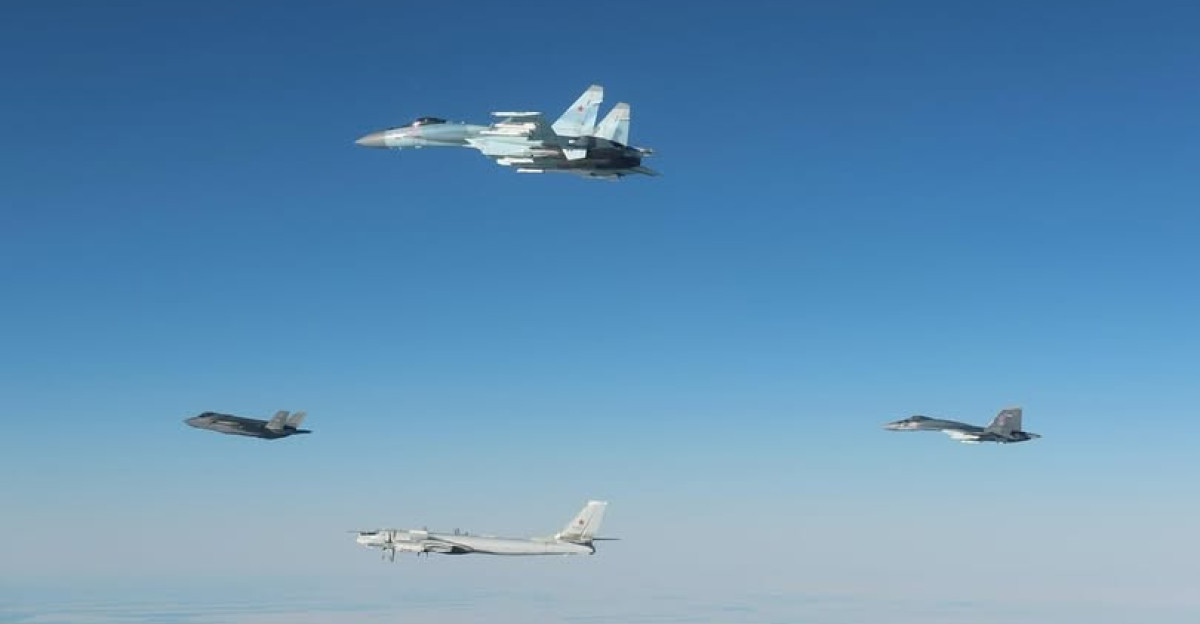
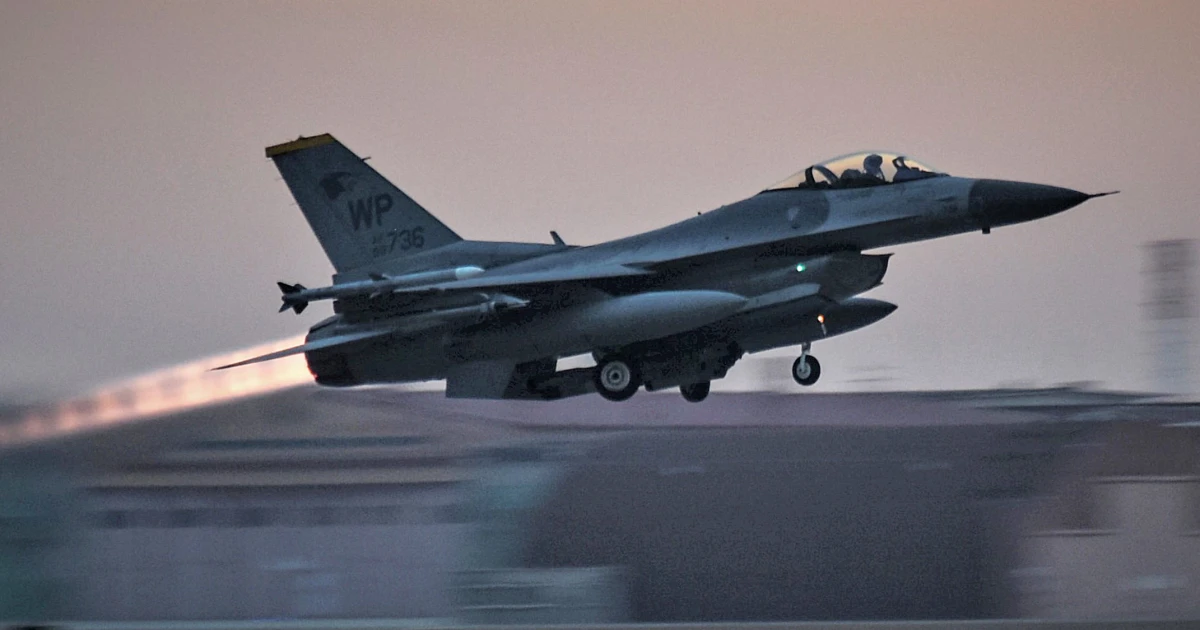
On September 23, 2024, at approximately 8:30 AM local time, two Russian Tu-95 “Bear” bombers and two Su-35 “Flanker” fighter escorts entered the Alaska ADIZ. NORAD scrambled two F-16 Fighting Falcons from the 18th Fighter Interceptor Squadron, based near Elmendorf-Richardson, to conduct a routine visual intercept standard procedure to confirm identity and monitor the transit.
One F-16 positioned itself behind and below the trailing Tu-95, maintaining a safe distance while collecting intelligence. Within minutes, one of the escort Su-35s performed a sharp, unannounced 90-degree banking turn directly across the American jet’s nose, cutting the distance between them to just a few metres in what NORAD officials would later condemn as “unsafe, unprofessional, and endangered all.”
In the Cockpit: A Split Second
The F-16 pilot’s reaction was captured on the jet’s forward-facing camera in a 14-second video released by NORAD on September 30 that would become evidence of the encounter’s severity. The Su-35 “suddenly blasts into frame,” according to FlightGlobal’s technical analysis, its blue-grey camouflage filling the windscreen as it crossed at extreme proximity.
The F-16 pilot, trained for intercept protocols but not expecting an aggressive maneuver during a peacetime operation, uttered an expletive before executing a sharp evasive maneuver, quickly pulling away and to the right. The Russian fighter disappeared from frame as suddenly as it arrived. No collision. No damage. No visible warning before the pass.
A Command Under Fire Responds
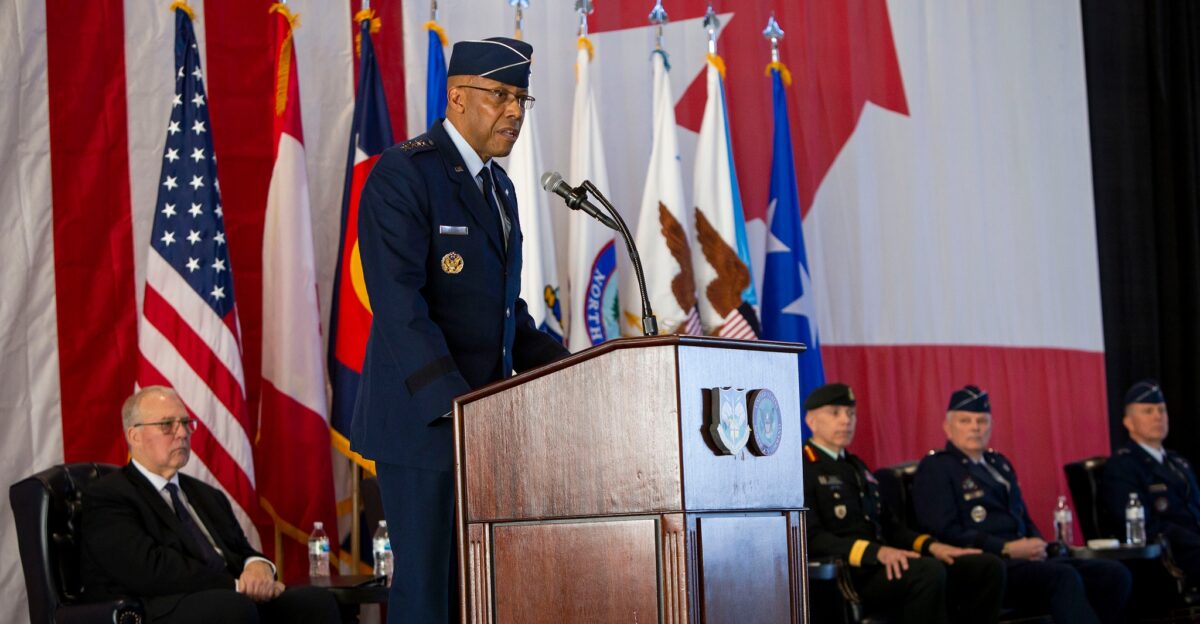
General Gregory Guillot, NORAD’s commander since February 2024, issued a formal statement the same day the video was released. “NORAD aircraft flew a safe and disciplined intercept of Russian military aircraft in the Alaskan ADIZ,” Guillot said. “The conduct of one Russian Su-35 was unsafe, unprofessional, and endangered all, not what you’d see in a professional air force.” The language was restrained, official, and scathing.
Guillot, a 35-year career Air Force officer and former deputy commander of U.S. Central Command, had inherited NORAD during a period of heightened Russian and Chinese activity. Within months, he was condemning a hostile act in international airspace by a nuclear-armed adversary.
The Asymmetry of Air Combat: Su-35 vs. F-16
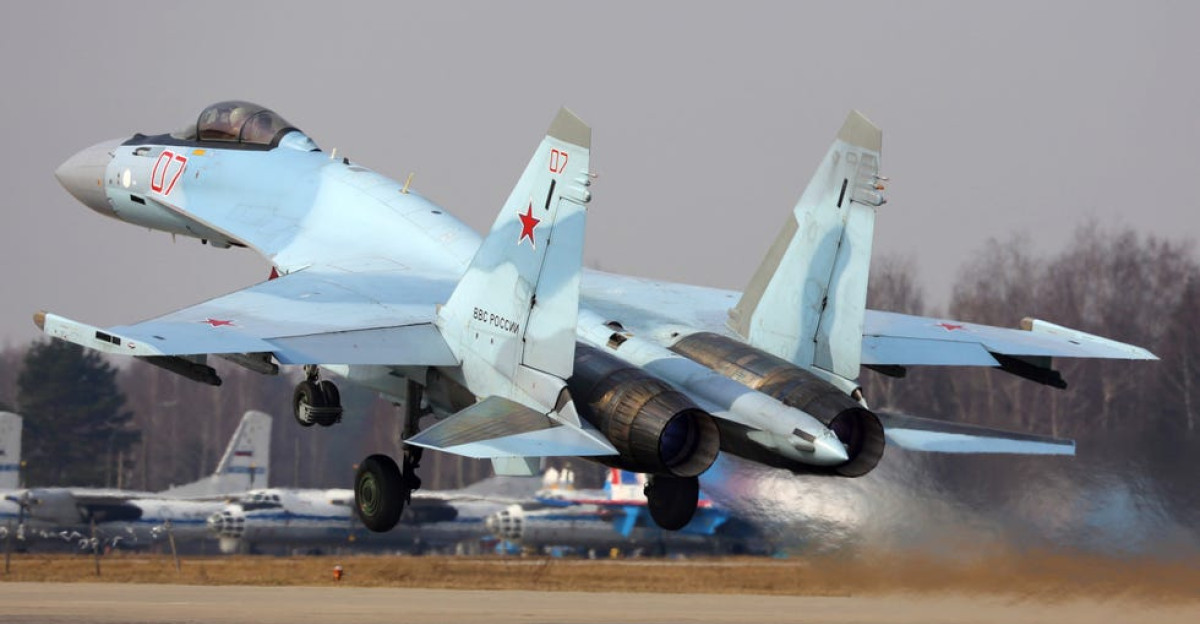
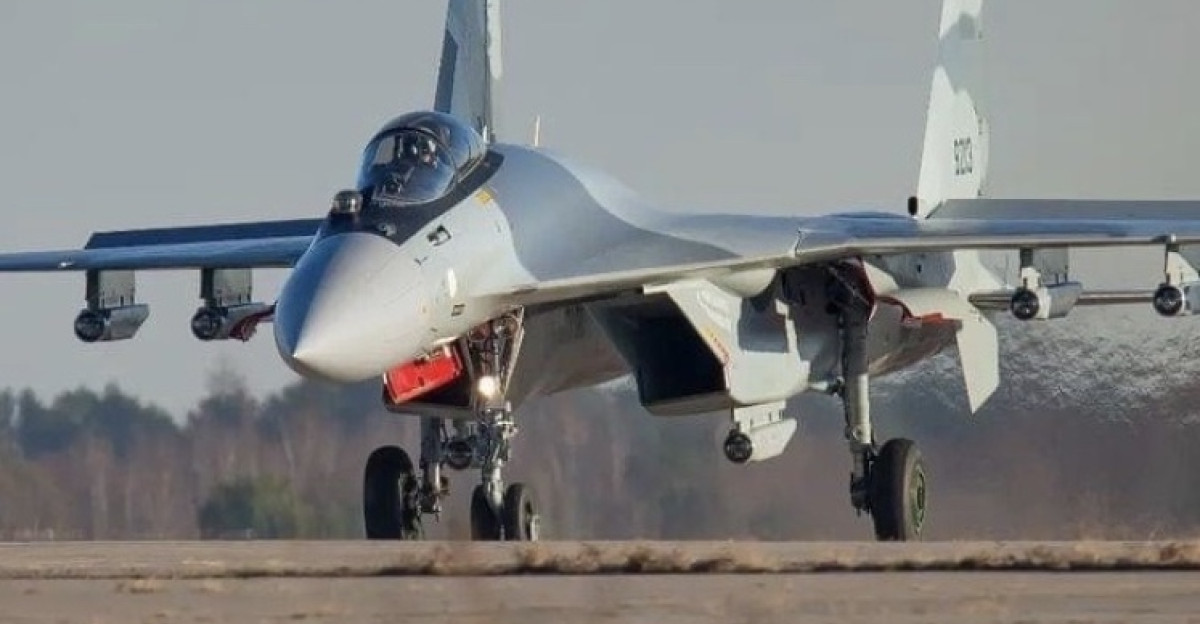
On paper, the two aircraft represent fundamentally different design philosophies. The Su-35, a heavily upgraded variant of the 1980s-era Su-27, is a heavyweight, weighing over 18 tons, with a 72-foot fuselage and a 50-foot wingspan that is roughly 50 percent larger and twice the weight of the F-16. It features thrust-vectoring engines capable of 9-G maneuvers and “supermaneuverability,” allowing for post-stall maneuvering at speeds where conventional fighters typically stall.
Its Irbis-E radar can detect and track targets over 200 miles away and simultaneously manage up to 30 targets. The F-16, weighing 9 tons and measuring 50 feet in length, compensates with superior electronics, NATO datalink integration, and a design philosophy that prioritizes energy management. In close-range dogfights where the Su-35’s agility is unleashed, the Russian jet has the advantage. But the September 23 encounter wasn’t combat; it was intimidation.
NATO’s Broader Concern: The Scramble Rate Climbs
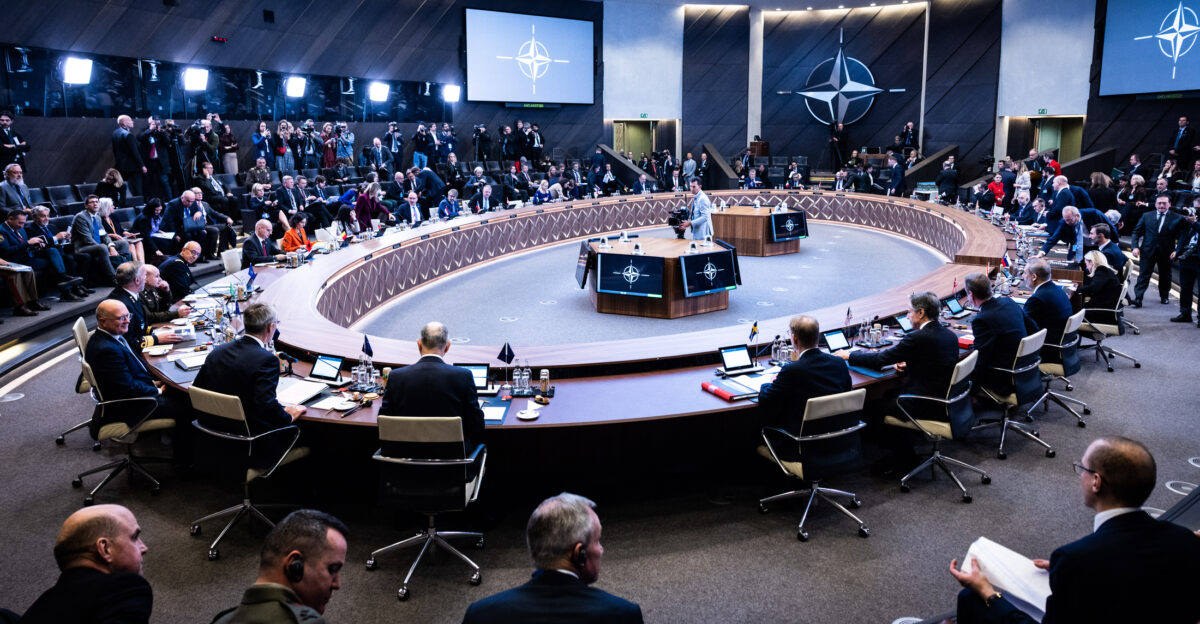
Across NATO’s European frontier, the pattern mirrored Alaska’s. In 2024, NATO forces scrambled fighter jets over 400 times to intercept Russian military aircraft approaching European allied airspace, a figure nearly identical to 2023, but reflective of persistent Russian testing.
Most intercepts were safe and professional, according to NATO’s own assessment, but the frequency left no room for error. A Russian fighter not transmitting a transponder code, not filing a flight plan, and not communicating with air traffic control; these omissions were deliberate provocations designed to force a response and measure reaction time. The Alaska incident fit this pattern exactly: a message delivered without words.
The First-Ever Sino-Russian Bond Over Alaska
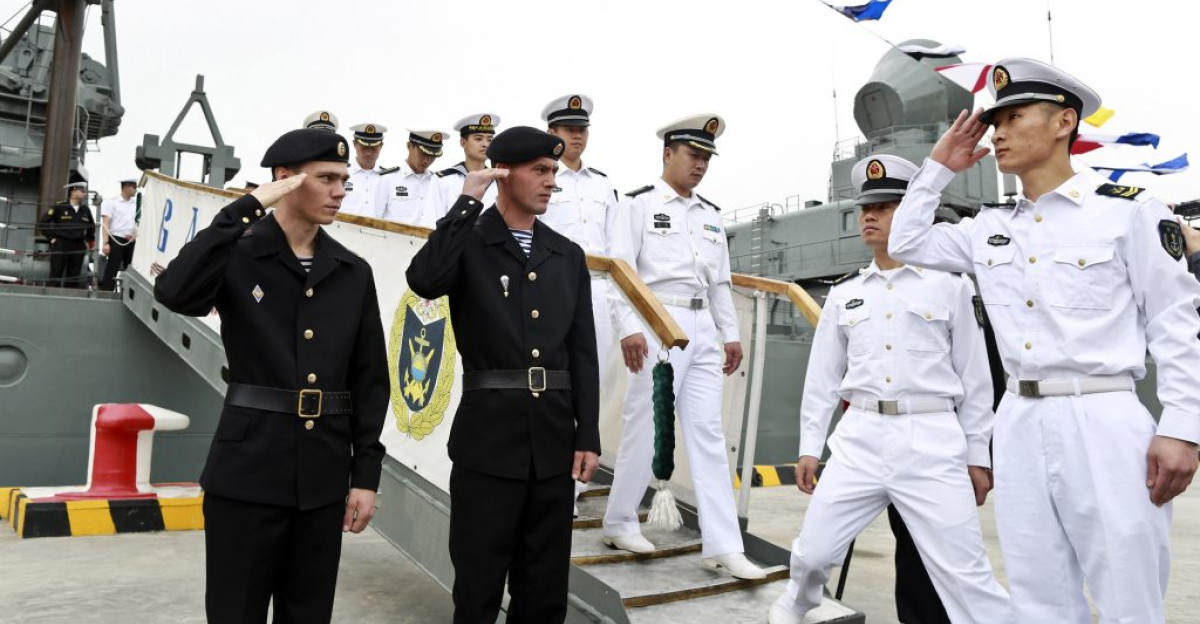
Beneath the Su-35’s reckless pass lay a more profound strategic shift few analysts had anticipated. Just two months before the September 23 incident, China and Russia had jointly operated military aircraft near Alaska for the first time, a deliberate expansion of their “no limits” partnership declared in Beijing in February 2022.
The July 24 flight involved two Chinese H-6K nuclear-capable bombers and two Russian Tu-95s, escorted by Russian fighters, flying within 200 miles of the Alaskan coast. U.S. intelligence assessed the maneuver not as a one-off but as a rehearsal for sustained operations, proof that Beijing and Moscow had aligned their strategic air operations to challenge U.S. homeland security paradigms. The Su-35’s September aggression, therefore, was neither isolated nor accidental; it was part of a coordinated campaign to establish new norms of proximity and behavior in North American airspace.
The Pentagon’s Quiet Alarm
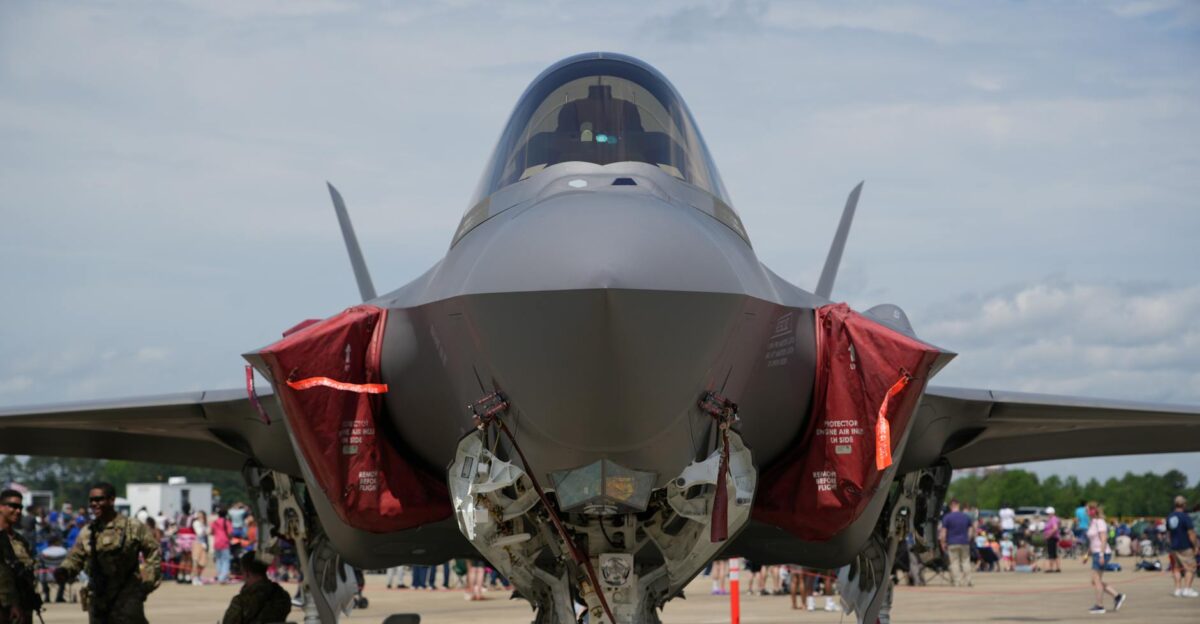
Behind closed doors, the U.S. Department of Defense began reassessing assumptions about deconfliction of the Cold War protocols that had prevented accidental escalation between superpowers. The phrase “deconfliction” implies a mutual interest in avoiding catastrophe; however, if an adversary weaponizes proximity itself, deconfliction becomes a form of negotiation.
NORAD’s rulebook, refined over 66 years, held no chapter for this scenario: a Su-35 pilot deliberately violating the unwritten distance safety margin. Officials quietly acknowledged that, in traditional diplomatic channels, the Military-to-Military Deconfliction (MMD) line between Washington and Moscow had lost leverage. Russia was signaling that the rules had changed, and deniability was built into the system.
Scrambles and Strain: Alaska’s Frontline Readiness
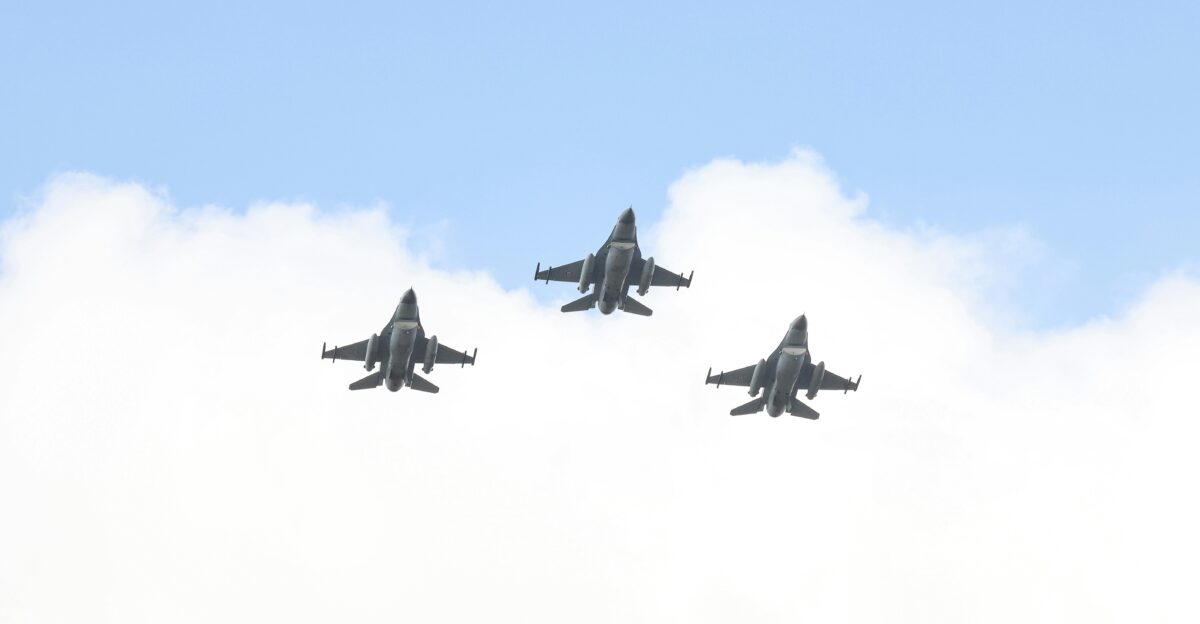
The 18th Fighter Interceptor Squadron, based at Joint Base Elmendorf-Richardson outside Anchorage, bore the weight of responding to every incursion. With only about 60 F-16s permanently assigned to Alaska (split across combat and training missions), the squadron’s pilots were being asked to launch 15-30 times per month, a pace that strains both equipment and personnel.
Each scramble burns fuel, accelerates airframe fatigue, and demands alert pilots ready to launch within minutes. By autumn 2024, the squadron’s commander was reporting operational tempo pressures in internal assessments: equipment maintenance was being deferred, rotation cycles were being compressed, and pilot fatigue was rising. A single unsafe maneuver like the Su-35’s pass could spiral into a broader crisis if one exhausted pilot made a mistake.
Political Consequences: Senators Respond with Fury

U.S. Senator Dan Sullivan of Alaska, a former Marine and long-time critic of Russian aggression, seized on the video as proof of escalating danger. “The reckless and unprofessional maneuvers of Russian fighter pilots within just a few feet of our Alaska-based fighters put the lives of our brave Airmen at risk,” Sullivan declared publicly, citing the September 23 incident.
He called for increased defense spending in Alaska, expanded military presence, and formal condemnation through diplomatic channels. His colleague, Senator Lisa Murkowski, also from Alaska, framed the broader context of Sino-Russian cooperation as “unprecedented provocation.” The incident became a talking point for expanded military budgets and a symbol of America’s vulnerability in its own backyard.
The Aftermath: NORAD Under Scrutiny
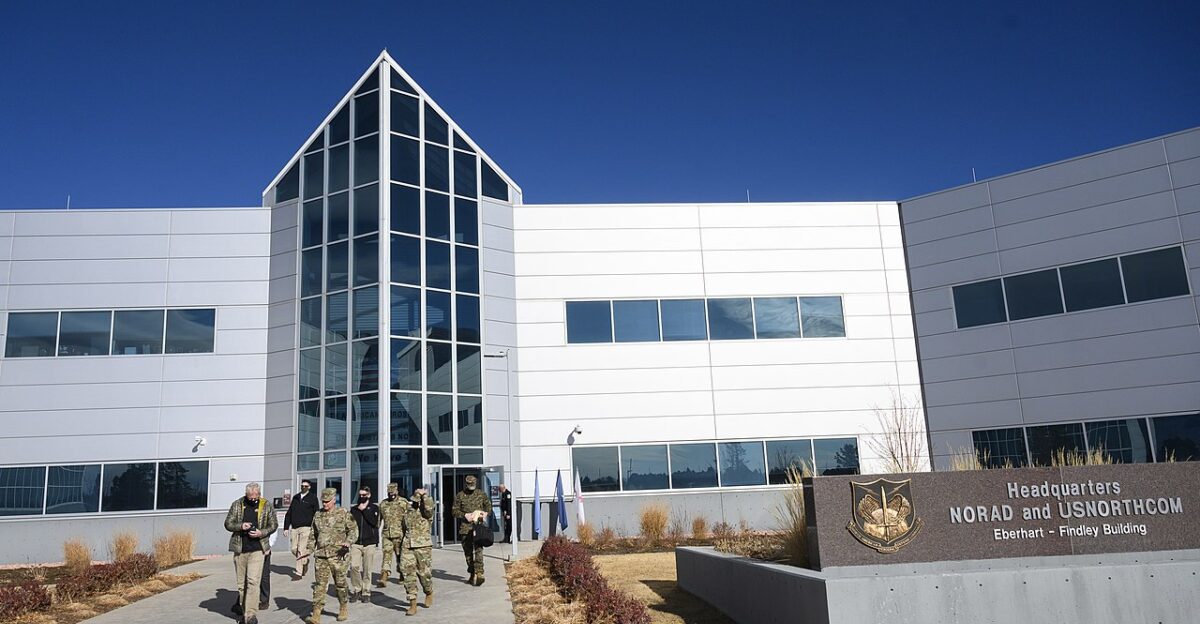
Within weeks, General Guillot convened a review board to examine the intercept protocols and assess whether NORAD’s response, characterized as “safe and disciplined” by the official account, had exposed vulnerabilities. The board’s classified findings were restricted, but unclassified summaries indicated that the incident had exposed gaps in coordination between satellite detection, ground-based radar, and airborne assets during rapid intercepts.
The Su-35’s maneuver, though swift, should have been detectable earlier. Gillot authorized a $40 million upgrade to NORAD’s Alaska-based radar and sensor systems and accelerated the deployment of new air defense systems to the region. The incident, which caused no damage or injuries, nonetheless catalyzed the most extensive peacetime modernization of Alaska’s airspace defenses since the end of the Cold War.
The Question That Won’t Fade
As 2024 closed, the overarching question remained: Was the Su-35 pass a one-time provocation by an overaggressive Russian pilot, or a deliberate signal that the post-Cold War rules of engagement were being rewritten? Did the Sino-Russian joint patrols represent a sustainable new operational norm, or a fleeting demonstration of capability?
And most pressingly: If Russia could conduct this maneuver in peacetime and face only diplomatic condemnation and accelerated defense spending, what restraint would it exercise if a geopolitical crisis over Taiwan, the Arctic, or Eastern Europe converted routine airspace encounters into strategic battlegrounds? General Guillot, overseeing NORAD’s 66-year-old mission to guard North American skies, had no simple answer. The skies over Alaska, once a zone of vigilant but stable deterrence, had become a space where one jet’s passing could shake strategic assumptions.
Sources:
NORAD Press Releases (September 23, 2024 – Detection Announcement; September 30, 2024 – Official Statement; July 24, 2024 – Joint Russian-Chinese Detection)
FlightGlobal (Russian Su-35 Nearly Collides with US F-16, September 29, 2024)
Air & Space Forces Magazine (Russian Fighter Cuts Off US F-16, September 29, 2024; NORAD Intercepts Russian Bombers and Fighters, July 23, 2025)
CSIS Analysis (Why Did China and Russia Stage Joint Bomber Exercise Near Alaska, July 29, 2024)
Defense News (NATO Intercepts Stable in 2024, January 12, 2025)
General Gregory M. Guillot Biography (USAF Official Record)