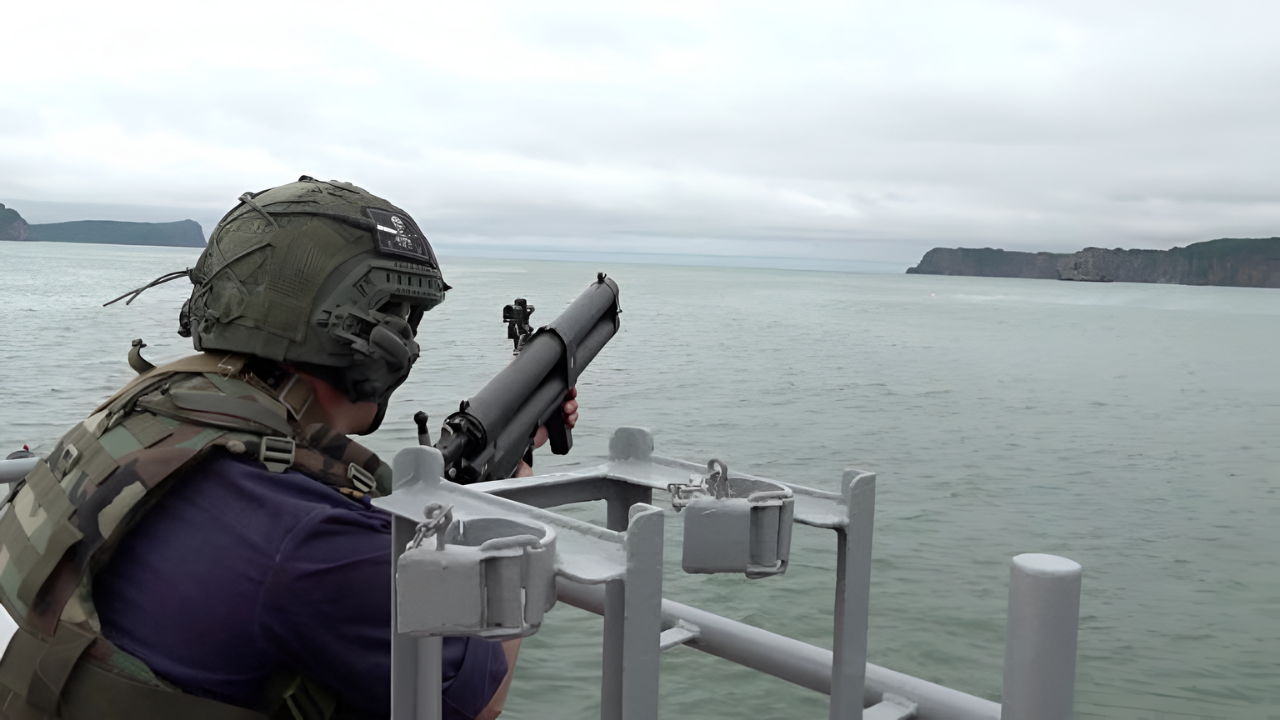
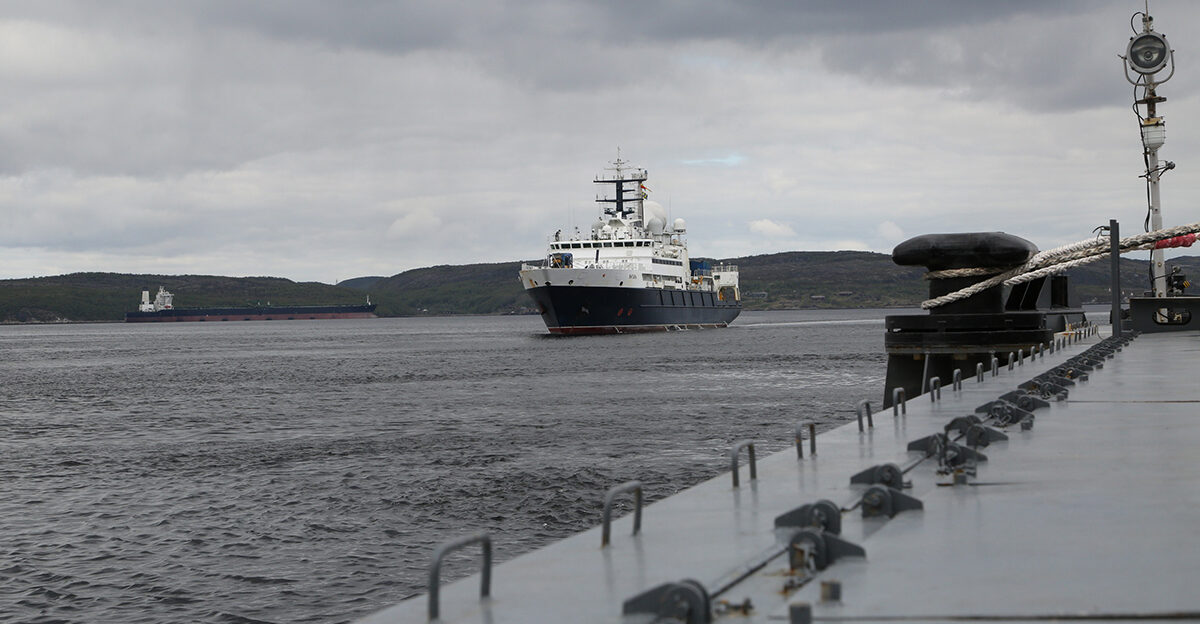
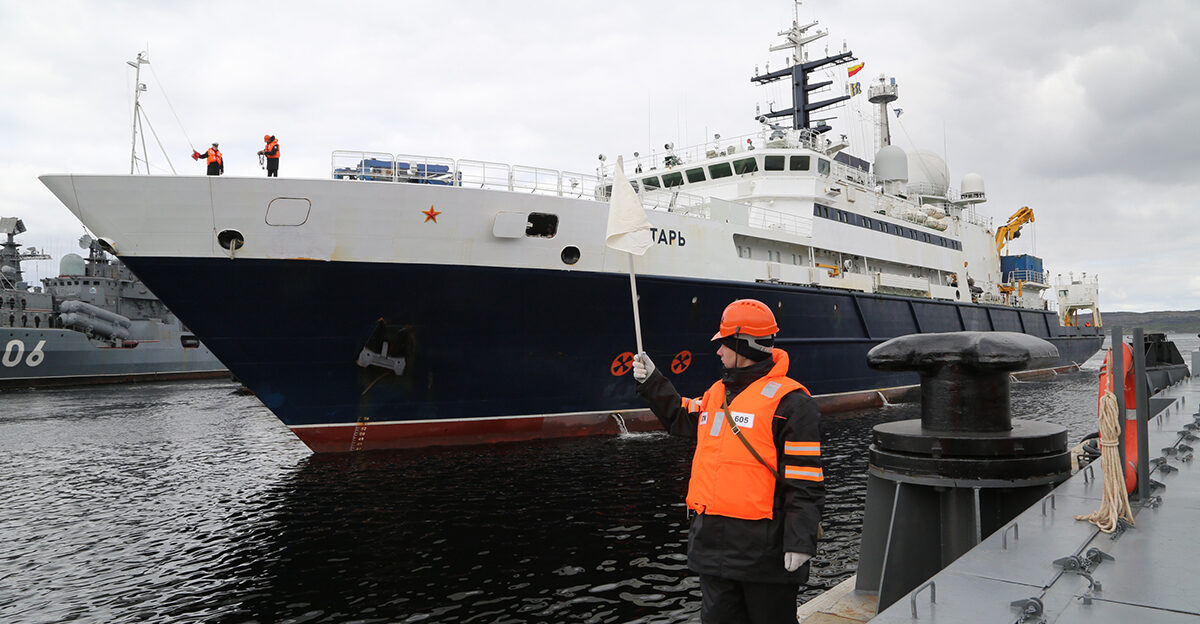
A Russian vessel has ventured into British waters with a brazen new tactic: directing lasers at Royal Air Force pilots. The incident marks a dramatic escalation in Moscow’s campaign against the United Kingdom’s critical infrastructure, prompting Defense Secretary John Healey to issue a stark warning on November 19: “We see you, we know what you’re doing, and if the Yantar travels south this week, we are ready.”
The Yantar, which Russia claims is conducting oceanographic research, has entered UK waters for the second time this year. British intelligence paints a far more sinister picture. According to Healey, the vessel is designed for gathering intelligence and mapping undersea cables—the invisible infrastructure carrying approximately 99 percent of Britain’s international digital communications. These roughly 60 cables branching from British shores power everything from international financial transactions worth trillions of dollars daily to NHS cloud-based medical records.
A Shadowy Military Unit Behind the Operation

The Yantar operates under GUGI, the Main Directorate of Deep-Sea Research, a classified Russian military unit so secretive that even most Russian naval officers know little about it. According to the Financial Times, GUGI can deploy submersibles capable of diving to 6,000 meters—ten times deeper than conventional submarines. These vessels are equipped with manipulator arms designed to tap cables or plant explosives for later detonation.
Britain’s Swift Response
The Ministry of Defence deployed HMS Somerset, a Type 23 frigate, alongside RAF Poseidon P-8 maritime patrol aircraft to track the Yantar’s movements. During this surveillance mission, Russian crew members directed lasers at British pilots—a move Armed Forces Minister Al Carns called “a highly dangerous and reckless attempt to disrupt our surveillance.” While pilots were medically assessed and reported no injuries, the threat remains serious. Lasers aimed at aircraft can temporarily blind pilots or cause permanent vision damage, potentially triggering catastrophic accidents.
The provocation didn’t stop there. As HMS Somerset tracked the Yantar, the frigate and nearby civilian vessels experienced GPS jamming—what the Ministry of Defence described as “unprofessional behaviour, intended to be disruptive and a nuisance.” Fortunately, Somerset’s combat capabilities remained unaffected, but the incident underscored Russia’s willingness to interfere with navigation systems in international waters.
Part of a Broader Campaign
This incident represents just one front in an escalating pattern of Russian aggression across Europe. Defense Secretary Healey declared Britain is entering “a new era of threat,” noting that Russian incursions into NATO airspace have doubled in the past year. Days before the Yantar incident, an explosion ripped through a Polish railway line used to transport aid to Ukraine—what Prime Minister Donald Tusk called an “unprecedented act of sabotage” orchestrated by Russian intelligence.
On November 19, NATO scrambled fighter jets over Poland and Romania following massive Russian drone and missile strikes on western Ukraine that killed at least 25 people. Romanian airspace has been breached 13 times since Russia’s 2022 invasion, with the latest incursion on November 25 penetrating deeper than any previous breach.
The Vulnerability Beneath the Waves

A parliamentary committee recently warned that Britain’s government has been “too timid” in defending its undersea infrastructure. These cables don’t merely carry internet traffic—they underpin financial systems, military communications, and emergency services. A coordinated attack could trigger cascading failures across the economy. Over the past two years, UK Defence systems have faced more than 90,000 cyberattacks linked to hostile states—more than double the number in the previous two-year period.
Defense Secretary Healey described the escalating digital assault bluntly: “The keyboard has become a weapon of war.” Britain is responding with a new Cyber and Electromagnetic Command and over £1 billion in AI and hacking capabilities.
Moscow’s Defiant Denial
Russia’s embassy in London dismissed Healey’s accusations as “provocative remarks,” insisting the Yantar is simply an oceanographic research vessel operating in international waters. The embassy blamed Britain’s “Russophobic stance” for exacerbating European security deterioration—a familiar pattern of denial while hybrid operations continue unabated.
As the Yantar lingers on the edge of UK waters, the message from Moscow appears unmistakable: they are testing how far they can push before facing serious consequences. Armed Forces Minister Al Carns captured what’s truly at stake when he told Parliament that Russian spy ships “pose a threat, indeed, to our economy and our way of life.” This confrontation extends far beyond geopolitical posturing—it concerns the infrastructure that keeps modern Britain functioning.