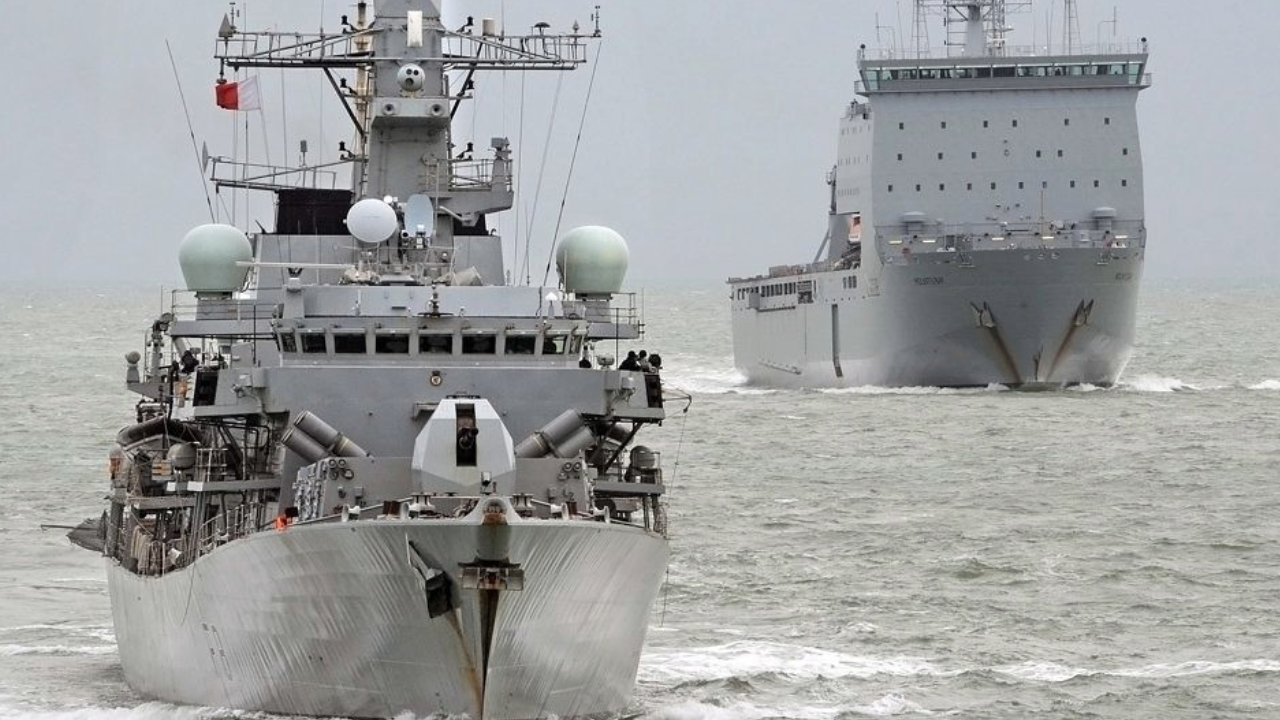
In early January 2026, a dramatic maritime standoff unfolded along NATO’s southern flank. Russian naval forces deployed a heavily armed destroyer to shield sanctioned cargo vessels heading toward the Mediterranean.
Just 48 hours earlier, U.S. forces seized a Russian-flagged oil tanker after chasing it for 18 days across the Atlantic. This escalation marked sharp enforcement against Russia’s sanctions-evasion network.
Intelligence analysts described the convoy’s movement through international waters near Portugal as strategically significant.
The Shadow Fleet Grows
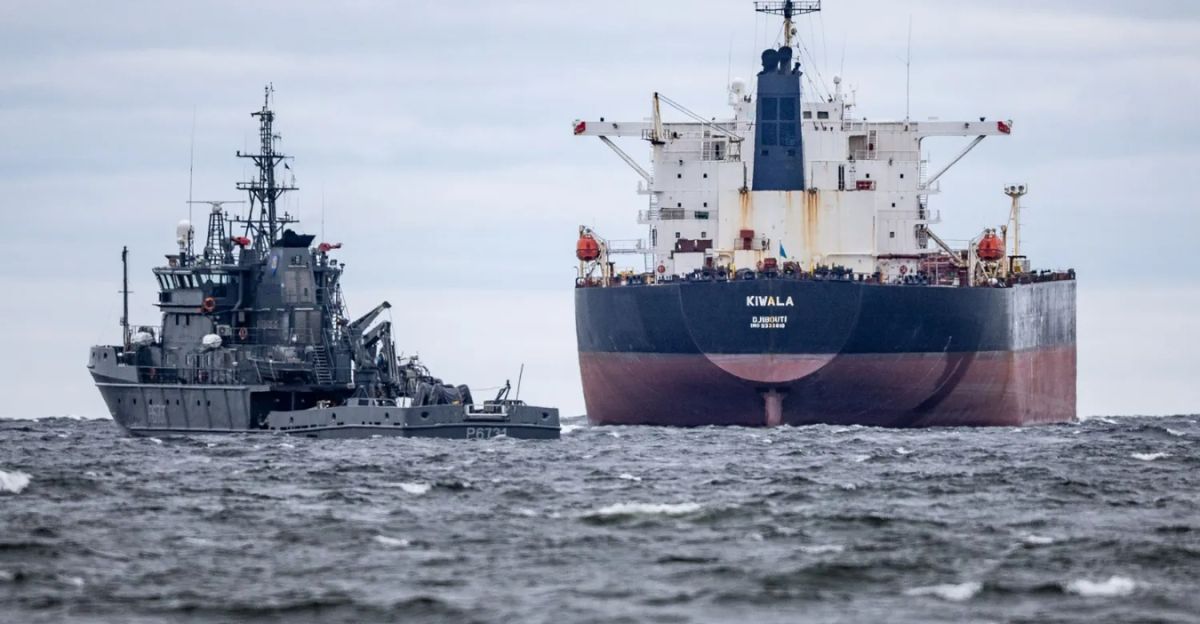
Russia’s clandestine maritime network expanded dramatically. From roughly 600 vessels in late 2022, it grew to between 1,100 and 1,400 ships by December 2025. These “shadow” or “dark” ships operate outside standard maritime rules. They employ fake ownership structures, flag-hopping, and falsified documents to conceal the true origins of sanctioned cargo.
Only 118 vessels were listed on the U.S., EU, and UK sanctions lists. This meant roughly 90% of shadow ships avoided direct sanctions. Estimates suggest that Russia’s shadow fleet generates between $87 billion and $100 billion annually in energy sales.
The Arctic LNG Connection
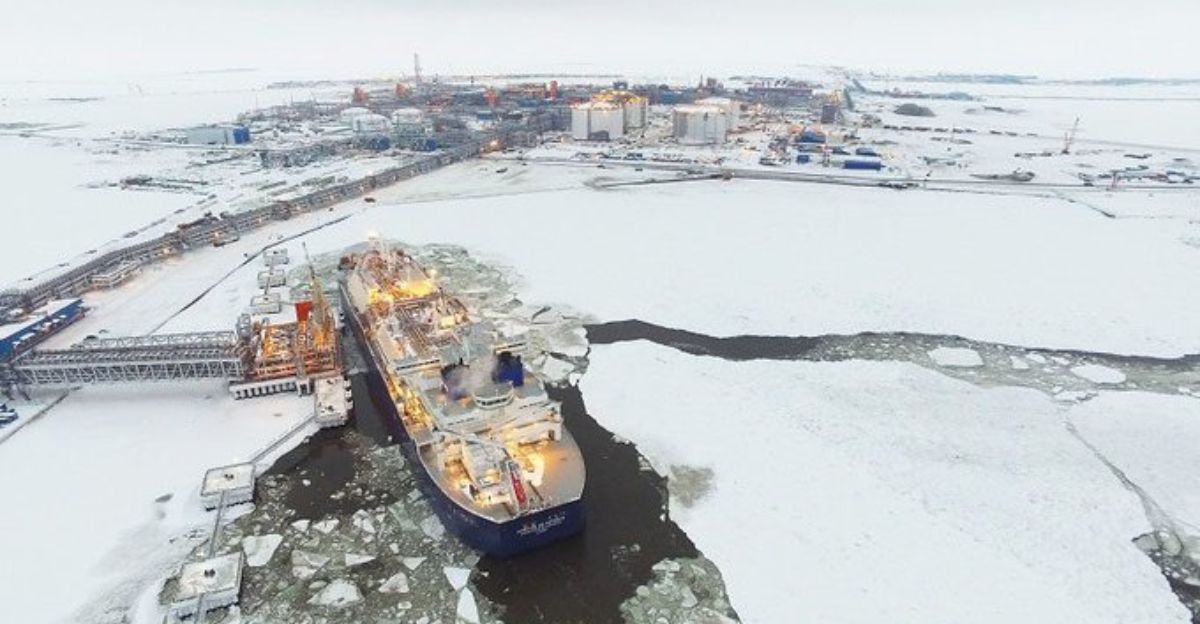
One cargo ship in the January convoy—MYS ZHELANIYA—links directly to Russia’s Arctic LNG projects. Western sanctions severely constrained this energy initiative since 2023. Ukrainian defence intelligence confirmed the vessel works “with the sanctioned Russian company Eco Shipping LLC,” supporting “the Arctic LNG-2 project of sanctioned company Novatek.”
Another sanctioned entity, Transstroy LLC, plays a similar role. Arctic LNG 2 faces severe delays. Key icebreaker shipbuilding stopped. Sanctions targeting shipyards pushed timelines from early 2024 to indefinite.
Moscow’s Escalating Response
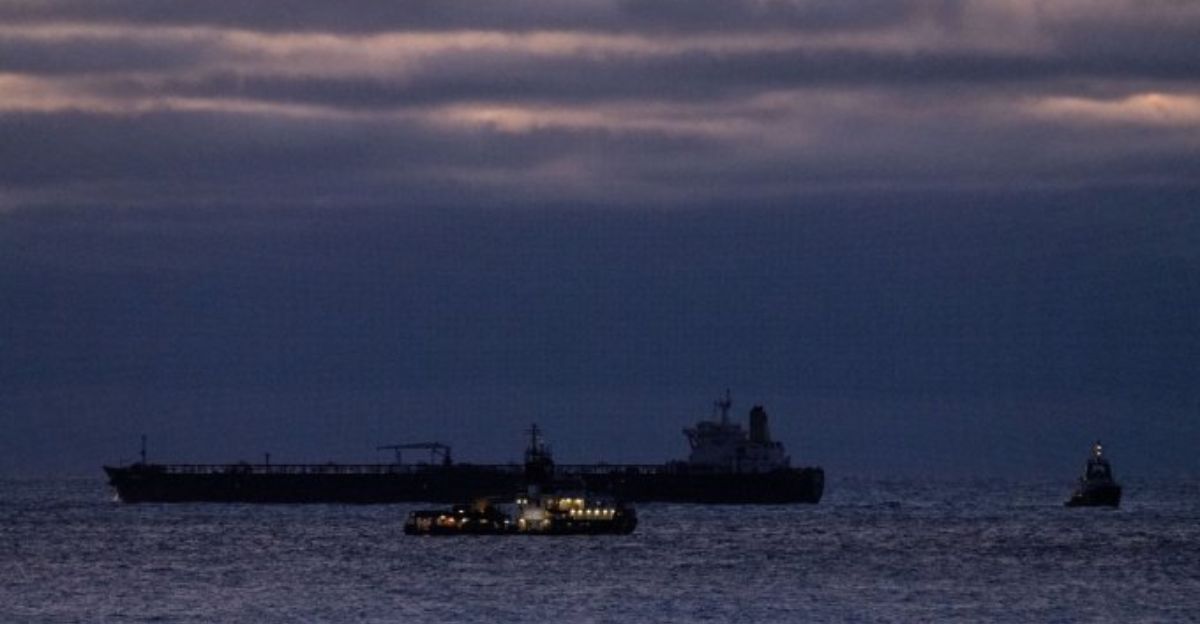
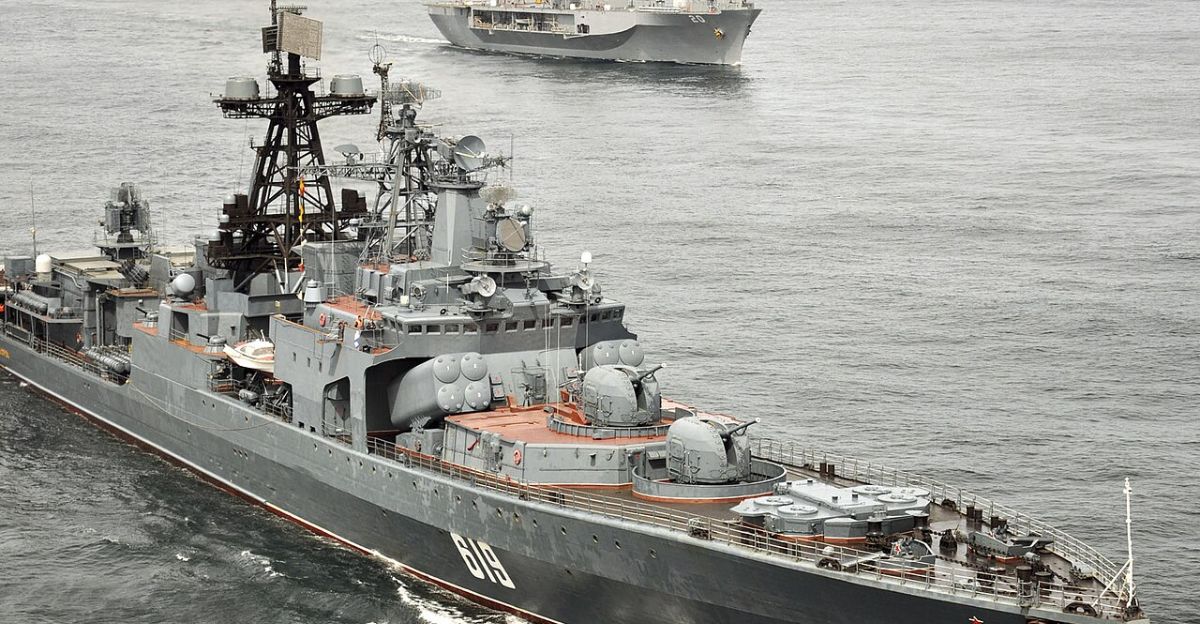
Russia’s use of military escorts for shadow fleet operations marks a dramatic tactical shift. Starting in June 2025, Russian Navy vessels began accompanying sanctioned cargo convoys. By January 2026, Russia deployed the Severomorsk, an advanced Udaloy-class destroyer.
The ship is equipped with long-range sonar, anti-submarine missiles, and two Ka-27PL helicopters. Its 535-foot hull displaces 7,570 pounds at full load. The destroyer travels 4,278 miles at economical speed. Naval analysts noted Russia shifted from protecting individual tankers to “protecting logistics corridors.”
The Convoy Detected
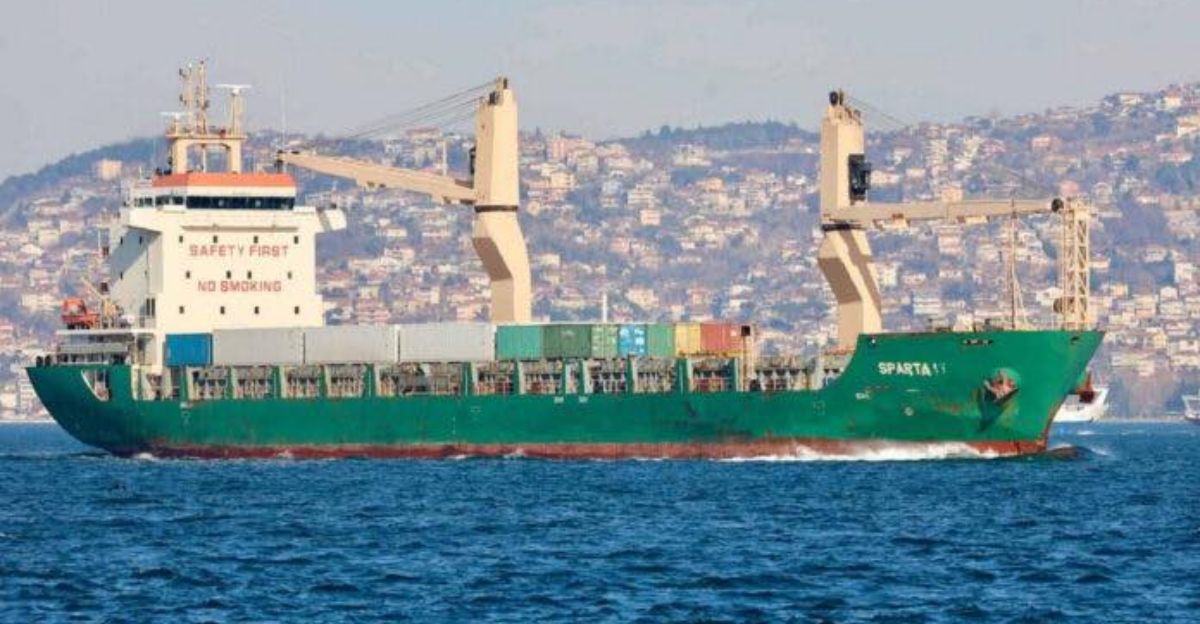
On January 9, 2026, the Russian destroyer Severomorsk escorted two sanctioned cargo vessels—SPARTA IV and MYS ZHELANIYA—south of Portugal. Both headed toward declared destinations in Egypt. Intelligence agencies suggested likely onward routes to Syria’s Tartus naval base and possibly Libya.
Russia deployed a combat destroyer to directly shield cargo ships tied to its military-industrial complex. Multiple open-source intelligence platforms tracked and confirmed the convoy. Both vessels appeared on official U.S. sanctions lists from May 2022 to May 2024.
The Strategic Challenge for Portugal

Portugal, a founding NATO member since 1949, found itself hosting a dramatic maritime confrontation. NATO Deputy Secretary General Radmila Shekerinska visited Lisbon on January 7-8, 2026. She addressed defence investment and NATO’s strategic challenges. Just 48 hours later, the convoy appeared near Portuguese waters.
Portuguese authorities monitored the destroyer-led convoy with intelligence assets. No interdiction occurred. Portugal reported that Russia sharply increased shadow fleet activity through Atlantic waters. Nearly one-third of the 2025 Arctic cargo involved vessels that were sanctioned. The Strait of Gibraltar guarantees freedom of navigation under international law.
The Marinera Pursuit
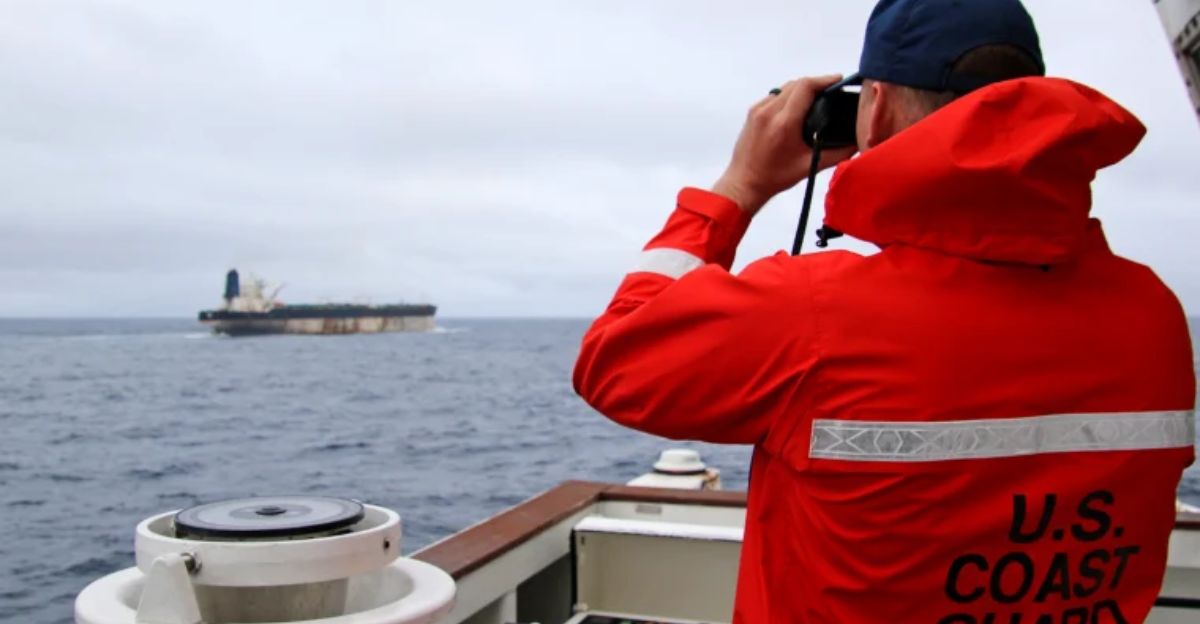
Just two days before the Severomorsk convoy appeared, U.S. forces completed an 18-day capture of the Russian-flagged oil tanker Marinera (formerly Bella 1). The vessel was originally registered in Venezuela. The U.S. had sanctioned it since June 2024.
The U.S. Coast Guard cutter Munro and Navy SEALs pursued the ship across thousands of miles of the Atlantic. The crew painted a Russian flag on the vessel’s hull mid-voyage. They attempted to evade by changing course into open Atlantic waters. U.S. Homeland Security Secretary Kristi Noem praised the Munro’s crew.
Oboronlogistika’s Network
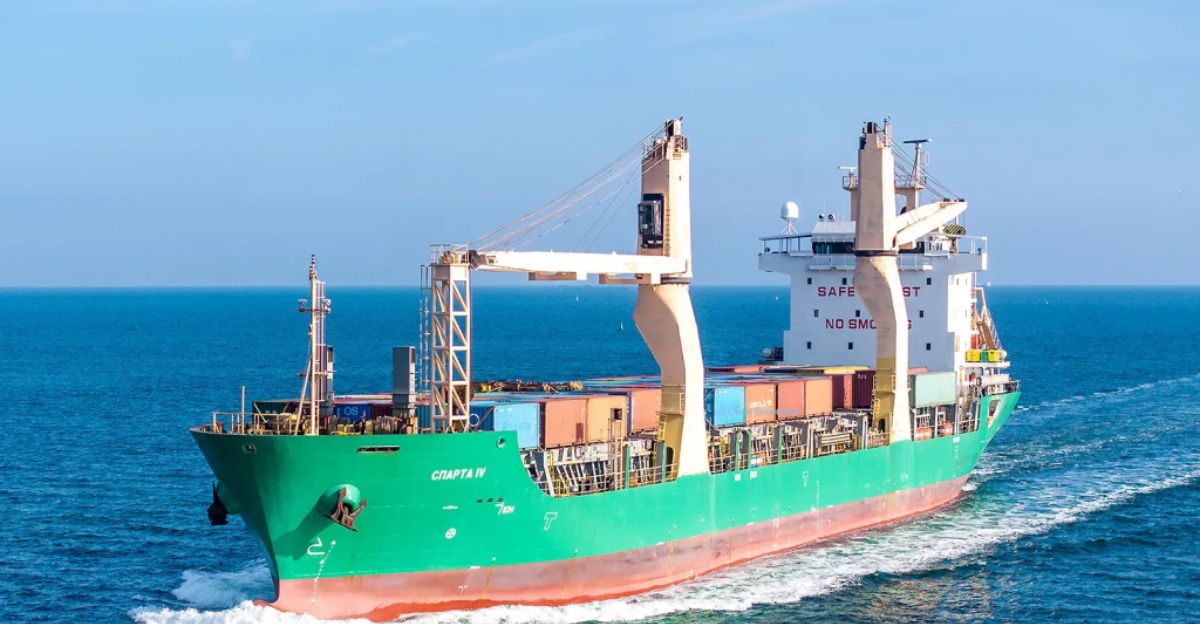
SPARTA IV—the second cargo ship in the convoy—is managed by SC-South LLC. This subsidiary operates under Oboronlogistika LLC, Russia’s Defence Ministry logistics monopoly since 2016. The U.S. Treasury confirmed Oboronlogistika operates “as part of the military construction complex of the russian ministry of Defence.”
It serves as “the sole provider of transportation services for the Ministry of Defence of Russia.” The company transfers weapons between Syria and Russia. SPARTA IV logged at least six voyages between Tartus, Syria and Novorossiysk, Russia in 2023. This established a clear pattern in military logistics.
Tartus Under Pressure
The Severomorsk’s protection of cargo bound for Tartus occurs during a period of profound uncertainty for Russia’s Mediterranean presence. Bashar al-Assad’s regime fell in December 2024. Syria’s new government—Hayat Tahrir al-Sham (HTS)—began renegotiating terms with Moscow. Reports in late December 2025 indicated Russia faced restrictions on its freedom of movement in Syria.
Putin granted Assad asylum. New Syrian authorities acknowledged that Russian diplomatic missions would be respected. Russia’s access to Tartus remains contingent on political developments in Damascus. The armed escort suggests Moscow is hedging. Supply lines supporting operations in Libya and North Africa remain critical.
The Arctic LNG Shadow Army
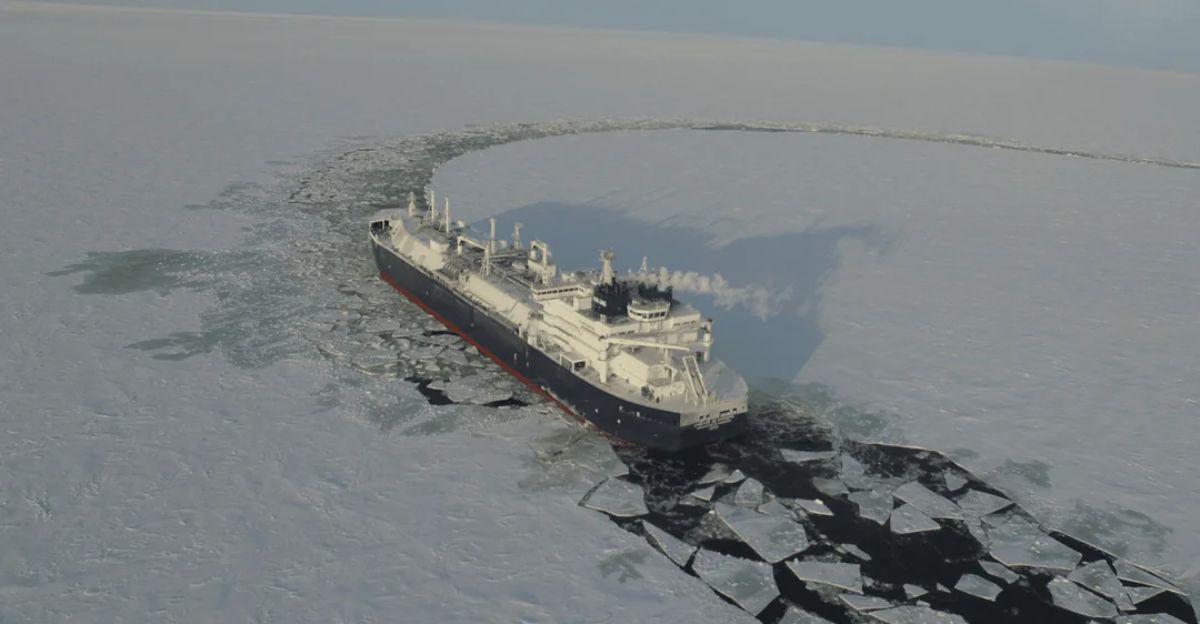
A secondary insight emerges from the composition of the convoy. Both cargo vessels linked to Arctic infrastructure projects are severely crippled by Western sanctions. Arctic LNG 2 was supposed to double Russia’s Arctic LNG production capacity. The project experienced cascading delays. Icebreaker shipbuilding ground to a halt.
The U.S. sanctioned Zvezda shipyard, Russia’s primary ice-capable tanker builder. Secondary sanctions threatened South Korean and Chinese shipyards. By January 2026, no new icebreaker-LNG tankers entered service. Arctic LNG 2 remains commercially unviable. Russia uses military-escorted shadow fleet vessels as a workaround strategy.
Sanctions Enforcement Fractures
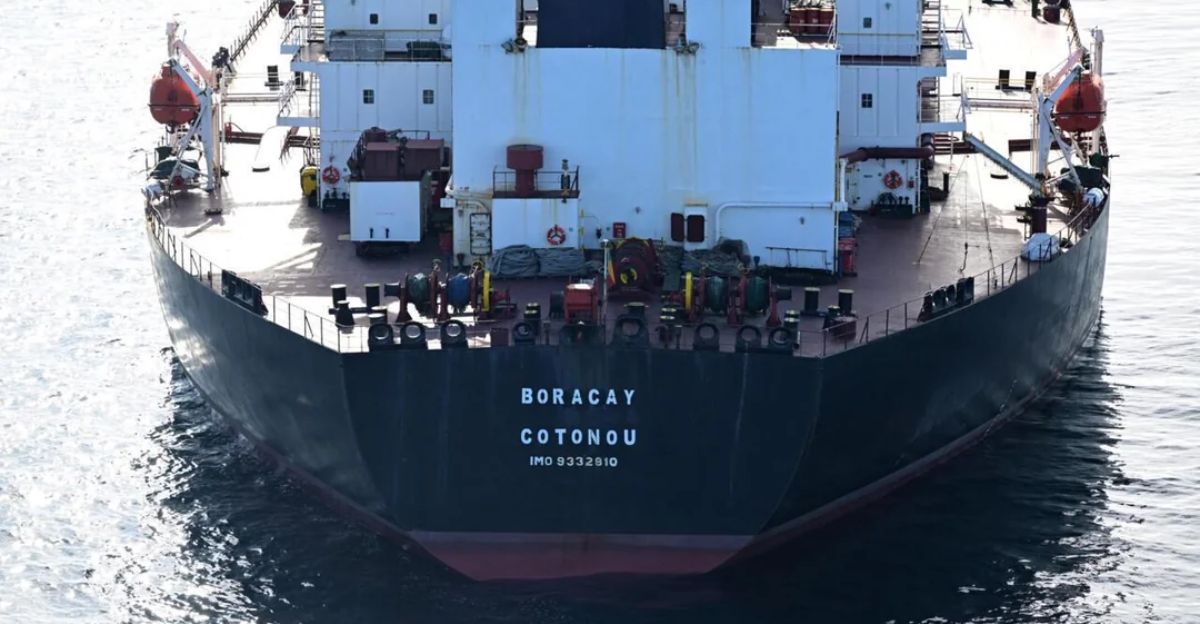
By late 2025, more than 1,000 sanctioned vessels were listed across the U.S., EU, and UK. Yet regulatory fragmentation created enforcement gaps. The European Union adopted its 19th sanctions package in January 2026. It included provisions against Russian LNG transshipments. But divergence between Washington, Brussels, and London slowed coordinated action.
The EU emphasised targeting enablers: flag registries, insurance providers, and financial intermediaries. The U.S. focused on vessel seizures. Maritime compliance teams reported that deceptive practices outpaced the effectiveness of screening tools. Roughly 1,000 vessels had been falsely re-flagged by mid-2025.
NATO’s Limited Options
NATO’s response to the January 9 convoy was muted. The organisation deployed the Baltic Sentry initiative in January 2026. Yet NATO lacks a direct maritime enforcement role. Member states enforce sanctions. Portugal monitored the convoy but took no action. The Strait of Gibraltar guarantees freedom of navigation under UNCLOS.
Spain had no legal basis to interdict a convoy in international waters. The U.S. alone possesses global maritime enforcement capacity. The Marinera seizure consumed significant Naval, Coast Guard, and SEAL resources. The Russian military presence in the vicinity of the seized tankers has increased. This complicated future boarding operations.
The Reflagging Strategy
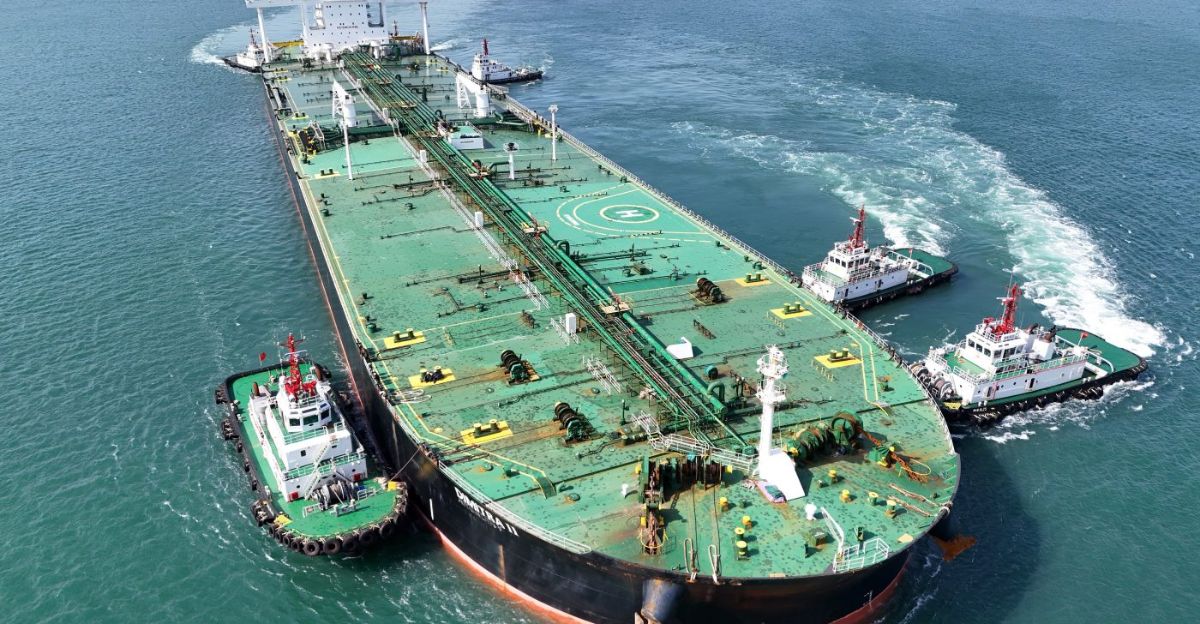
Russia’s protection of shadow fleet operations reflects a fundamental strategic shift documented in late 2025. Rather than relying on open registries like those of Panama or the Marshall Islands, Russia began re-registering shadow fleet vessels under its own flag. This sought state-backed legal protection against U.S. boarding operations.
The Marinera crew’s mid-voyage flag-painting was not improvisation. It was part of a coordinated strategy. Windward AI analysis stated Russia is “folding the most exposed elements of its dark fleet into its national flag.” Placing vessels under Russian registry with military escort transforms grey-zone commerce into state-protected logistics.
Cracking the Logistics Network
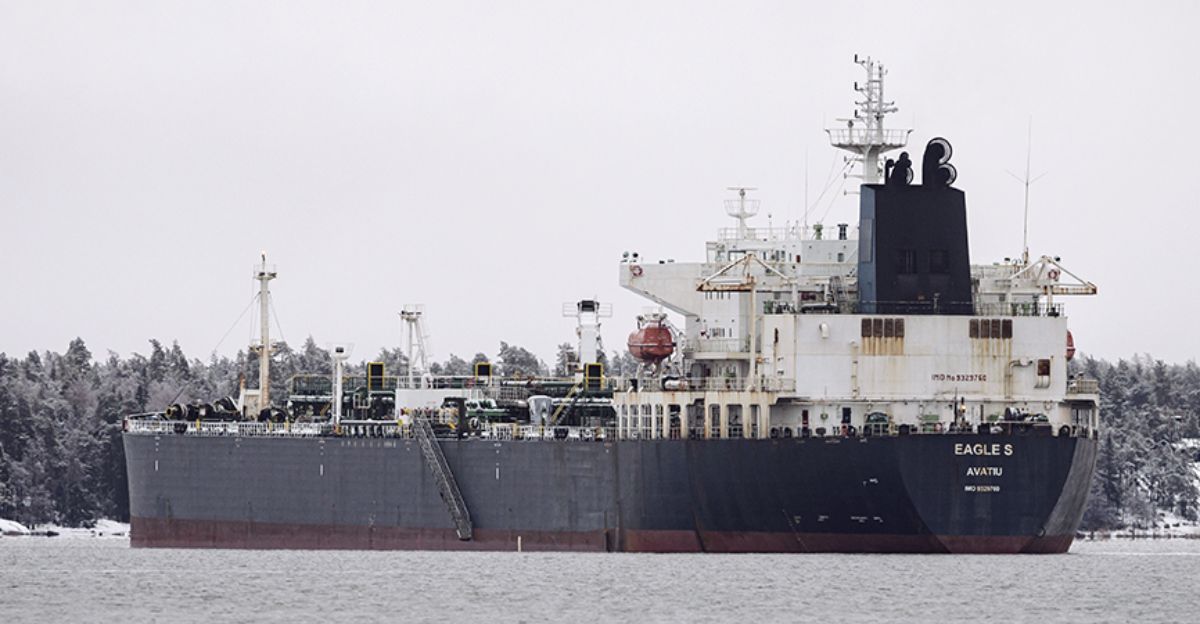
Experts studying Russia’s military-industrial complex have noted that the shadow fleet has become operationally critical. It sustains both the Ukraine war efforts and Arctic energy projects. Analyst Vitaly Yermakov, cited in CEPA’s December 2025 report, emphasised that “Russia has succeeded in deterring Baltic Sea nations.”
Russia appears to believe it can deter Atlantic and Mediterranean naval forces from aggressively interdicting convoys with military escorts present. Sustained U.S. enforcement suggests an emerging strategy. The Trump administration’s renewed focus on sanctions enforcement, combined with the capacity of its allies in maritime operations, may create increased enforcement pressure. Military escorts become visible, trackable, and politically significant.
The Unresolved Question
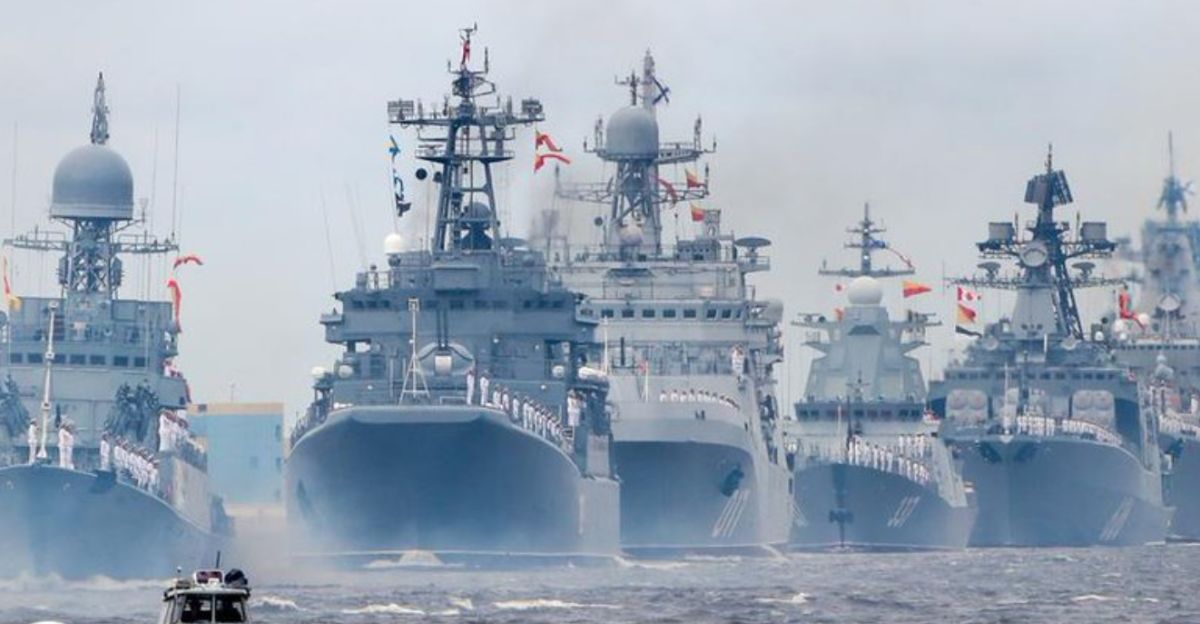
As Russia’s Navy continues to escort shadow fleet convoys toward Syria and North Africa, a critical question lingers. Will this military protection ultimately prove sustainable, or will it merely represent desperation masquerading as resolve? The Severomorsk deployment signals Moscow’s determination to maintain logistics corridors.
Yet each protected convoy becomes a tracking opportunity. Each military escort concentrates adversary attention. Each interdiction attempt risks escalation from grey-zone commerce warfare to direct naval confrontation. Ukrainian drone strikes on shadow fleet vessels in the Black Sea (November-December 2025) demonstrated limits. Military escorts cannot guarantee safety in contested waters.
Sources:
CEPA,various analysis reports, December 17, 2025
NBC News, U.S. seizes Russian-flagged oil tanker linked to Venezuela, January 7, 2026
Windward AI, Russia Reclaims Its Dark Fleet as Venezuela Tankers Come Under Attack, January 4, 2026
United24Media, Russian Warship Escorts Sanctioned Ship Near NATO—Days After US Seized a Similar One, January 9, 2026
Wikipedia, Russian shadow fleet, December 17, 2024
NPR, U.S. seizes tanker that raised Russian flag after weeks-long chase in North Atlantic, January 8, 2026