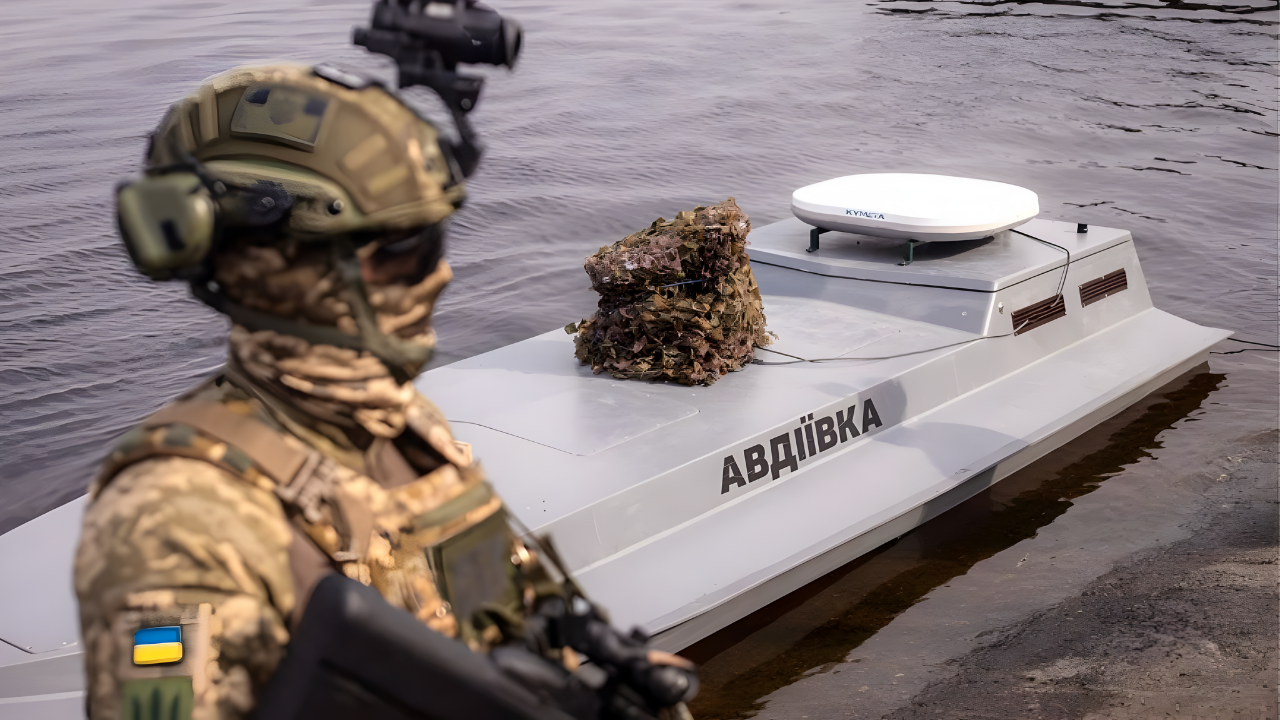
Russian warships in the Black Sea are operating under unprecedented constraints as Ukrainian sea drones steadily erode Moscow’s naval dominance and complicate global energy flows. Ukraine’s maritime drone campaign has pushed major units of the Black Sea Fleet close to shore, driven up transport and insurance costs, and turned key shipping routes into a proving ground for new forms of unmanned warfare.
Black Sea Fleet Pulled Back
Ukrainian commanders say Russia’s large warships now rarely sail more than about 25 miles, or 40 kilometers, from their home ports, and typically dash out only long enough to launch missiles before retreating. The ships are described as “constantly hiding,” a marked contrast to the fleet’s earlier freedom of movement in the region.
Western defense analysts broadly agree that the Black Sea Fleet has lost the ability to project power far from the coastline. Instead of patrolling widely, vessels cluster near heavily defended bases in Crimea and along Russia’s Caucasus shore, limiting their role largely to stand-off missile strikes.
Drone Threat at Sea and in Ports
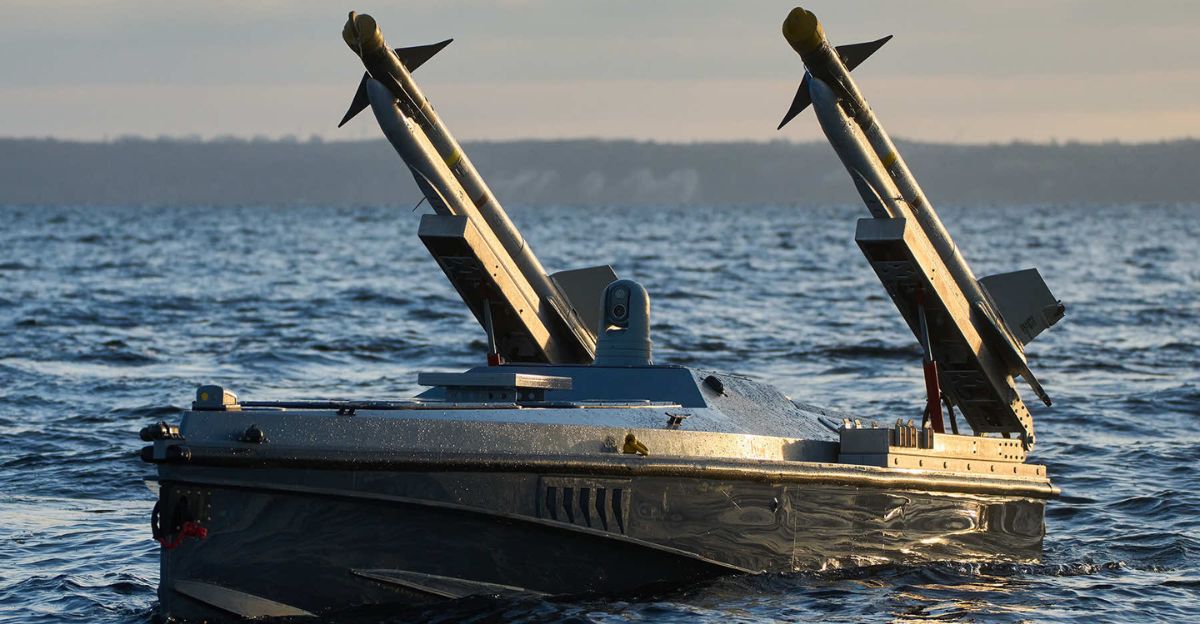
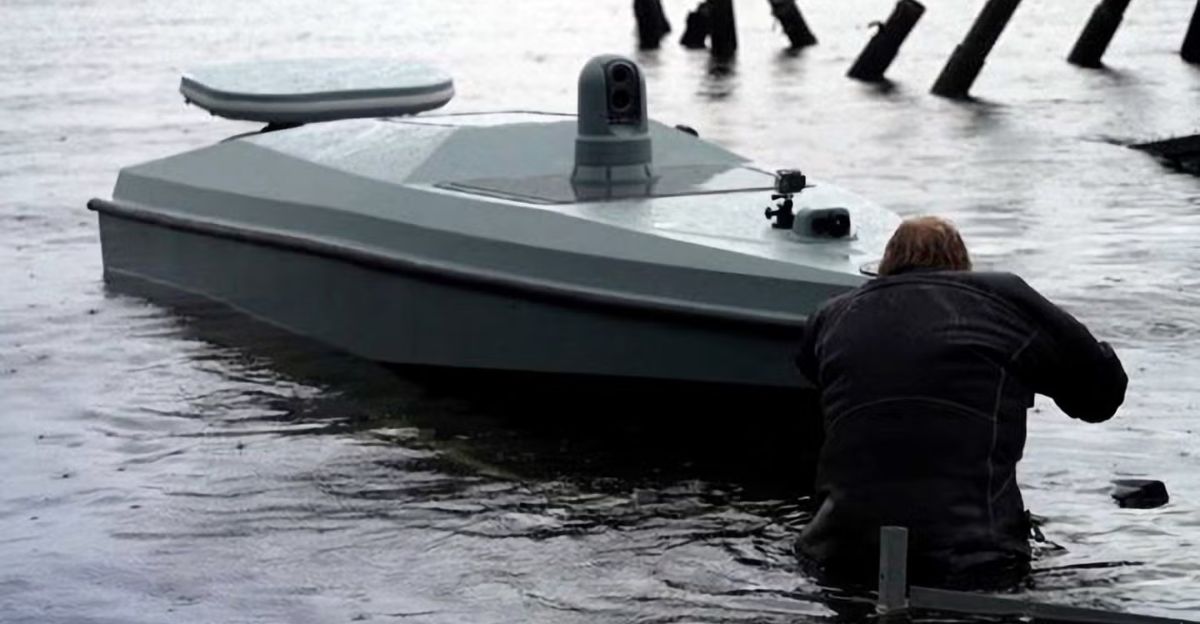
At the center of this shift is Ukraine’s expanding arsenal of unmanned surface vessels, notably the Magura series and domestically developed Sea Baby craft. These fast, low-profile drones carry explosive payloads or, in newer variants, guided weapons. Since 2022 they have repeatedly struck Russian ships at anchor and underway, forcing Moscow to reinforce harbor defenses and restrict movements in open water.
Kyiv’s maritime intelligence unit, known as Group 13, operates many of these systems. Crews control the drones from compact consoles equipped with joysticks, displays, and multiple safety interlocks. The unit has logged extensive mission footage and sensor recordings, which Ukrainian officials say now feed artificial intelligence tools used to refine navigation, targeting, and autonomous functions for next-generation designs.
In May 2025, a Magura drone reportedly downed a Russian fighter jet, in what Ukrainian sources describe as the first known case of a sea-based unmanned platform destroying an aircraft. If confirmed, the incident would underscore how these systems can threaten both surface and air assets, further complicating Russian operations near contested waters.
Shadow Fleet and Oil Export Vulnerabilities
Ukraine’s maritime campaign extends beyond warships to Russia’s so‑called shadow fleet, the network of older, often anonymously owned tankers used to move oil outside Western tracking and sanctions mechanisms. Kyiv has claimed responsibility for strikes on several of these vessels, including the Comoros‑flagged Dashan and earlier incidents involving tankers such as Kairos and Virat.
Each damaged or disabled tanker represents a significant loss in ship value and cargo, potentially totaling tens of millions of dollars. Ukrainian officials say their goal is to make participation in sanctions‑evading transport “too risky” from a financial standpoint, narrowing Moscow’s room to bypass G7 and European Union price caps and export restrictions.
Attacks have also targeted Russian port infrastructure at Novorossiysk and Tuapse on the Black Sea coast. Disruptions at these terminals complicate crude loading operations and slow export flows. Western officials increasingly view these strikes as an informal but potent complement to formal sanctions, adding friction to Russia’s energy trade without new legal measures.
Insurance, Trade Routes, and Energy Costs
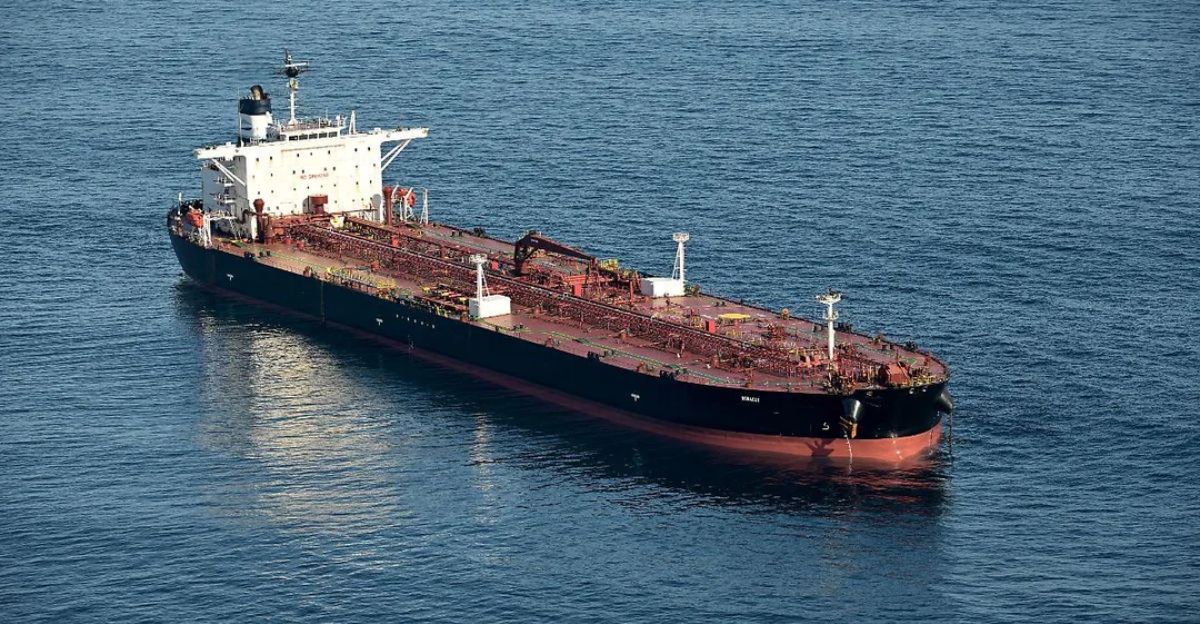
Unmanned attacks have altered the wider shipping environment in the Black Sea. War‑risk insurance premiums have risen, particularly for tankers transiting near Ukrainian or Russian ports. Underwriters reassess exposure frequently, and some shipowners now reroute vessels away from areas where drones are active, even when formal corridors remain open.
To avoid hazardous zones, exporters and traders are turning to alternate supply chains: redirecting volumes through overland pipelines, increasing purchases from non‑Russian suppliers, or using longer maritime routes. These adjustments add distance and time to journeys, raising transport costs that feed into the prices of gasoline, diesel, and heating fuels, especially during periods of high demand in Europe, Turkey, and the South Caucasus.
Crews report additional operational pressures as they navigate a more hostile environment. Many vessels reportedly sail at maximum speed with transponders switched off when passing near the conflict zone, hoping to reduce the chance of detection. While such practices may lower targeting risks, they increase the likelihood of collisions and complicate traffic management in already busy sea lanes.
Environmental Risks and Regional Impact
Repeated strikes on tankers and fuel infrastructure have raised concerns about potential pollution in a semi‑enclosed sea shared by Ukraine, Russia, Turkey, and other coastal states. Authorities and environmental experts warn that a major spill in congested shipping corridors could damage fisheries, coastal tourism, and marine ecosystems.
So far, there have been no widely reported large‑scale spills linked directly to drone attacks. However, the combination of aging tankers, risky routing, and explosive strikes keeps the environmental risk elevated. Regional governments and international organizations monitor each incident closely, mindful that cleanup options could be limited if a major rupture occurs far from specialized response assets.
New Models of Naval Warfare
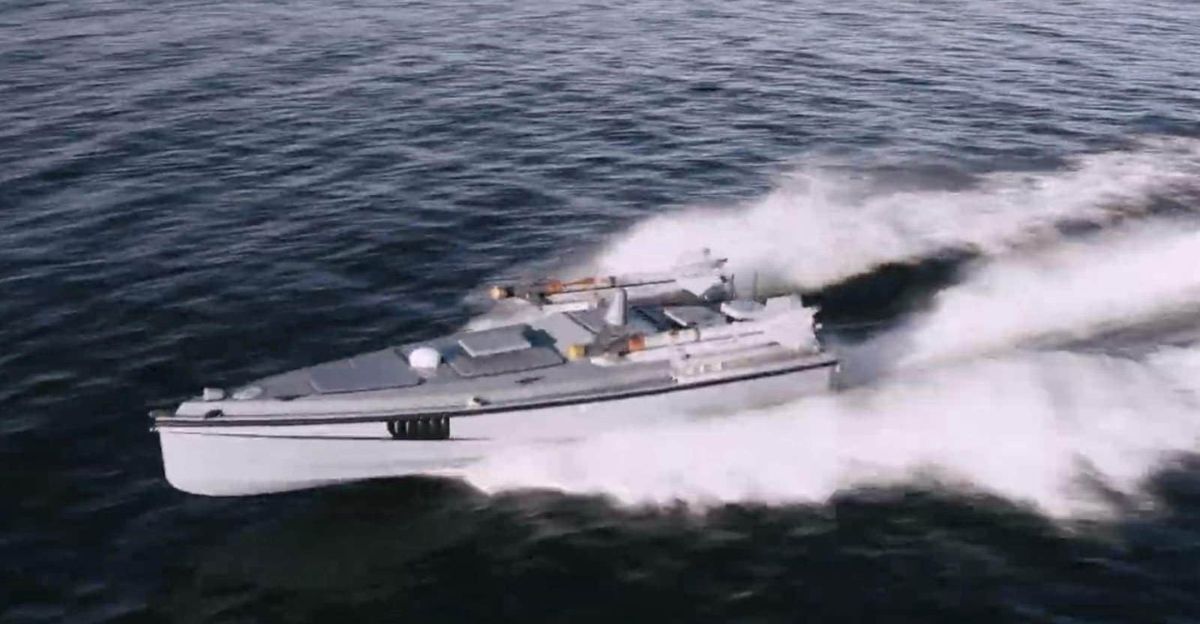
Military observers increasingly describe the Black Sea as a test case for how relatively inexpensive unmanned systems can constrain a larger conventional navy. Ukrainian sea drones have forced Russian ships to operate under tight spatial and temporal limits, relying on layered defenses and coastal cover rather than cruising freely.
Defense industries and armed forces around the world are watching the conflict for lessons. Ukraine’s state defense conglomerate and foreign partners, including firms in the United States and Europe, are investing in new maritime drones, sensor suites, and AI‑enabled control systems. Cooperation with allied states includes joint development, training, and intelligence sharing aimed at improving performance and discriminating more reliably between civilian and military targets.
Looking ahead, Ukrainian officials say they plan more complex operations with longer‑range, potentially submersible drones equipped with advanced autonomy. Russia, for its part, is adapting with reinforced port defenses, revised patrol patterns, and public accusations that drone strikes on commercial tankers amount to “piracy.” How both sides adjust will shape not only the balance of power in the Black Sea, but also future doctrines for sea control, sanctions enforcement, and the protection of commercial shipping in contested waters.
Sources:
Dawn (via Reuters) – multiple Reuters wire pieces rehosted by Dawn on:
Black Sea shipping risks and war-risk insurance
Attacks on Russia’s “shadow fleet” and terminals at Novorossiysk and Tuapse
Kremlin reaction and “piracy” accusations(Each is a Reuters news report; your text does not give the exact headlines.)
Kyiv Independent – several investigative and news articles on:
Economic pressure on Russia’s oil revenues
Ukraine’s campaign against Russia’s “shadow fleet” (Dashan, Kairos, Virat)