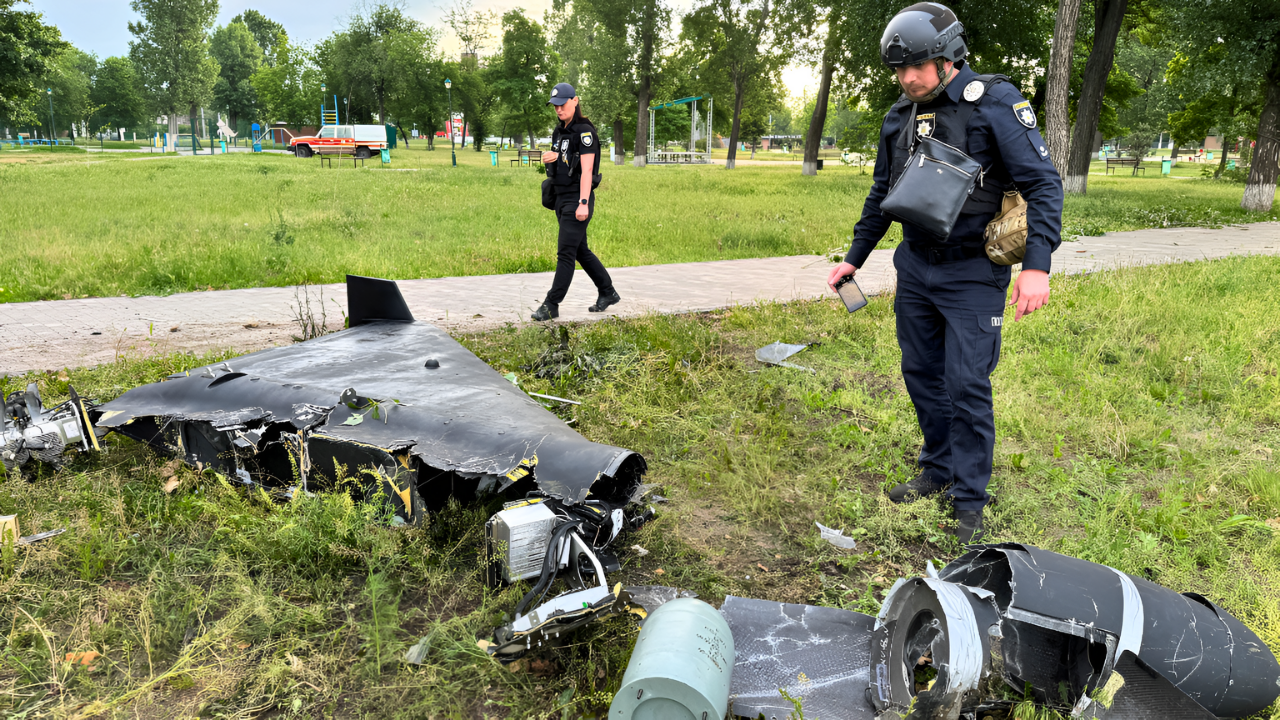
In one of the most punishing weeks of the war, Russian forces sent swarms of attack drones and missiles at Ukrainian cities through the night, turning the sky into a maze of glowing trails and interceptors.
Officials say this single week saw more than 1,300 kamikaze drones, roughly 1,050 guided aerial bombs and 29 missiles fired at targets across the country, a level of sustained bombardment rarely seen since the full-scale invasion began in 2022.
One Night, Six Regions Hit
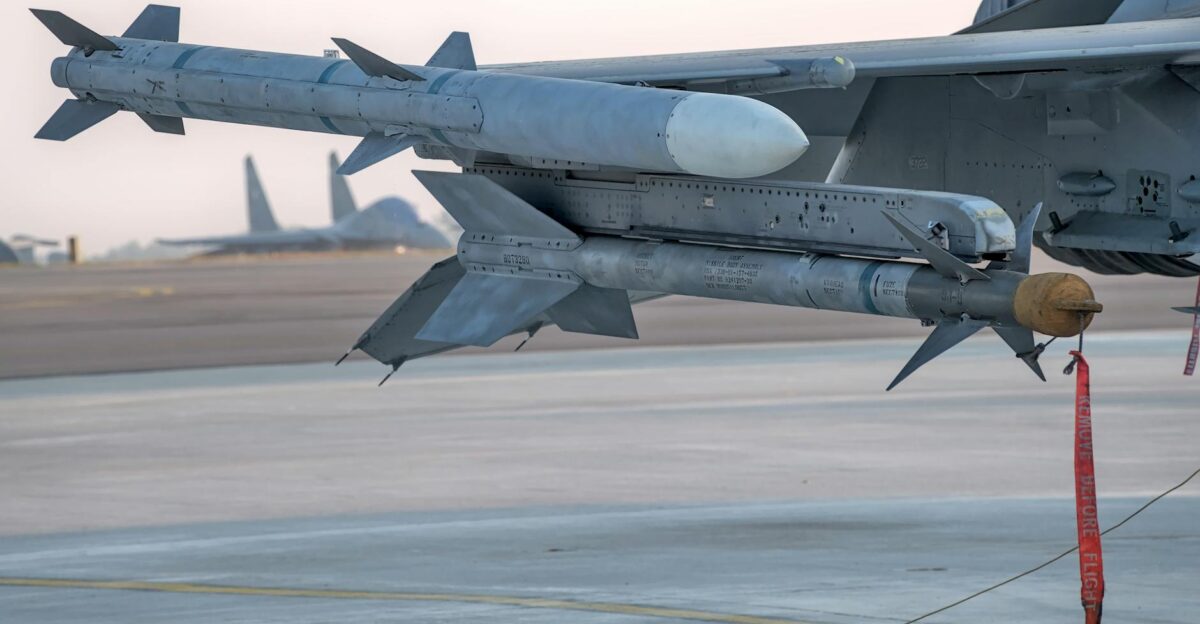
The latest overnight barrage stretched across much of Ukraine, with drones and missiles slamming into at least six regions: Sumy, Kharkiv, Dnipro, Zaporizhzhia, Khmelnytskyi and Odesa. Authorities report that more than 200 attack drones were launched in that single night, killing two people and injuring dozens, including children, as debris rained down on residential districts.
Air defenses shot down many incoming drones, but the sheer volume meant some still found their mark, igniting fires, shattering windows and ripping open streets in cities already scarred by nearly four years of war.
A War That Refuses To End
Russia’s full-scale invasion of Ukraine began in February 2022 and has since morphed into a grinding war of attrition, with front lines shifting far less than the intensity of the attacks on cities behind them. After early failures to quickly seize Kyiv, Moscow increasingly leaned on long-range missiles and cheap, Iranian-designed Shahed drones to hit infrastructure, spreading fear far from the front.
Over time, analysts say, Russia adapted its tactics, launching larger salvos of drones in overlapping waves to overwhelm radar and air defenses, a strategy described by the Center for Strategic and International Studies as a new salvo war.
Power System Under Direct Fire

Ukraine’s power grid has been a prime target since late 2022, when Russia first began large waves of strikes timed with the onset of winter, blowing up transformers and hitting thermal plants in coordinated attacks. Energy officials say nearly every major power facility in the country has been struck at least once, forcing constant rerouting of electricity and emergency repairs that are increasingly difficult to carry out under fire.
Recent strikes in October, December and now January have further eroded capacity, destroying generation units and severing key transmission corridors that once allowed power to be shifted from relatively safer western regions to the battered east. Ukraine’s new energy minister has warned that some frontline areas have gone days without heating or electricity as crews struggle in sub-zero temperatures and snow.
A Record Week Of Firepower
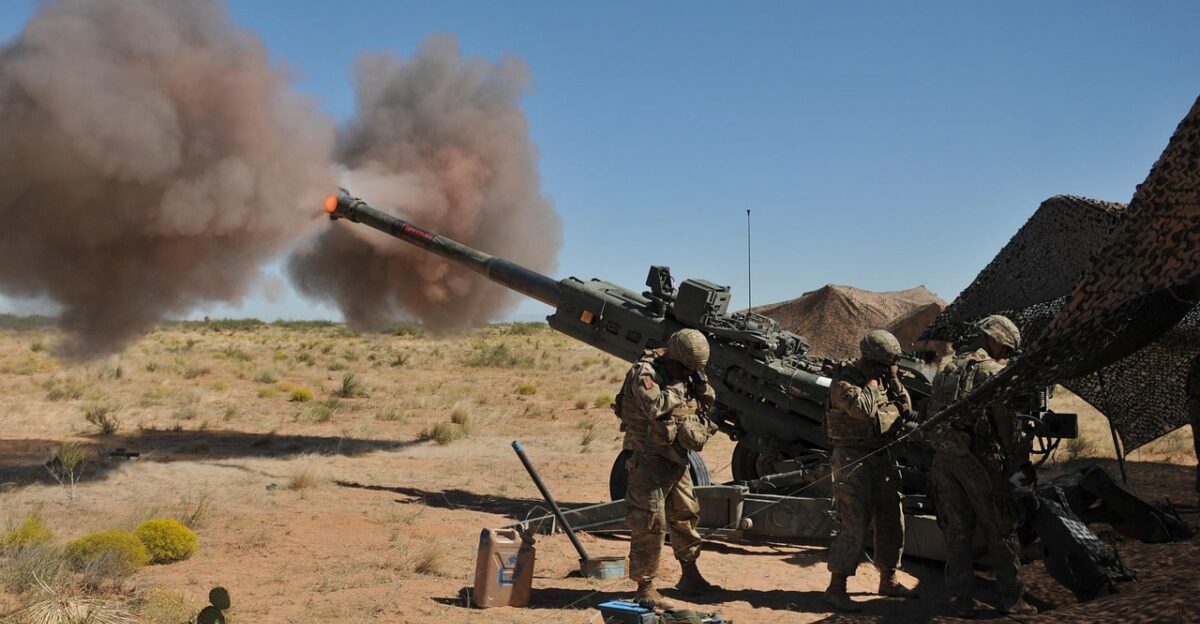
By the government’s own count, the last week has set a grim record. Zelenskyy told Ukrainians that “this week alone has witnessed more than 1,300 attack drones, approximately 1,050 guided aerial bombs, and 29 missiles of various types in total.”
That volume, nearly 2,400 munitions in seven days, illustrates how Russia has turned relatively low-cost drones into a central weapon of its campaign, reserving more expensive cruise and ballistic missiles for particularly hardened or symbolic targets. Military analysts say the goal is not only to destroy infrastructure but also to exhaust Ukraine’s air defense stockpiles, forcing commanders to decide which cities to protect most on any given night.
Cities Across The Map In Pain

The human cost of this strategy is etched across Ukraine’s map. In Kharkiv and Sumy in the northeast, residents report repeated strikes on power infrastructure and industrial zones, with drone fragments frequently landing in courtyards and playgrounds. In the central Dnipro region and Zaporizhzhia, explosions have damaged railway lines and warehouses, complicating both civilian logistics and military supply routes.
Khmelnytskyi in the west, once considered relatively safer, has seen mounting attacks on energy facilities as Russia tries to disrupt power transfers from there to the east. Odesa, the key Black Sea port, has suffered multiple outages after drones hit energy sites, leaving parts of the city in darkness and interrupting water supply pumps.
Lives In The Dark And Cold

Beyond the numbers, families are living through long, anxious nights without heat or light. In southeastern regions, where temperatures can plunge well below freezing, power cuts mean radiators fall silent, elevators stop, and electric stoves go dead just as people try to prepare meals or warm children. Officials estimate that hundreds of thousands have faced extended outages in recent days, some for more than 24 hours at a time.
Hospitals and critical infrastructure rely heavily on generators, but fuel costs and wear-and-tear are rising, pushing already stretched budgets to the limit. Zelenskyy has repeatedly accused Russia of using winter as a weapon, saying the strikes fall exactly under the definition of attacks meant to break a nation’s will by hitting civilians where they are most vulnerable.
Blackout In Occupied Zaporizhzhia
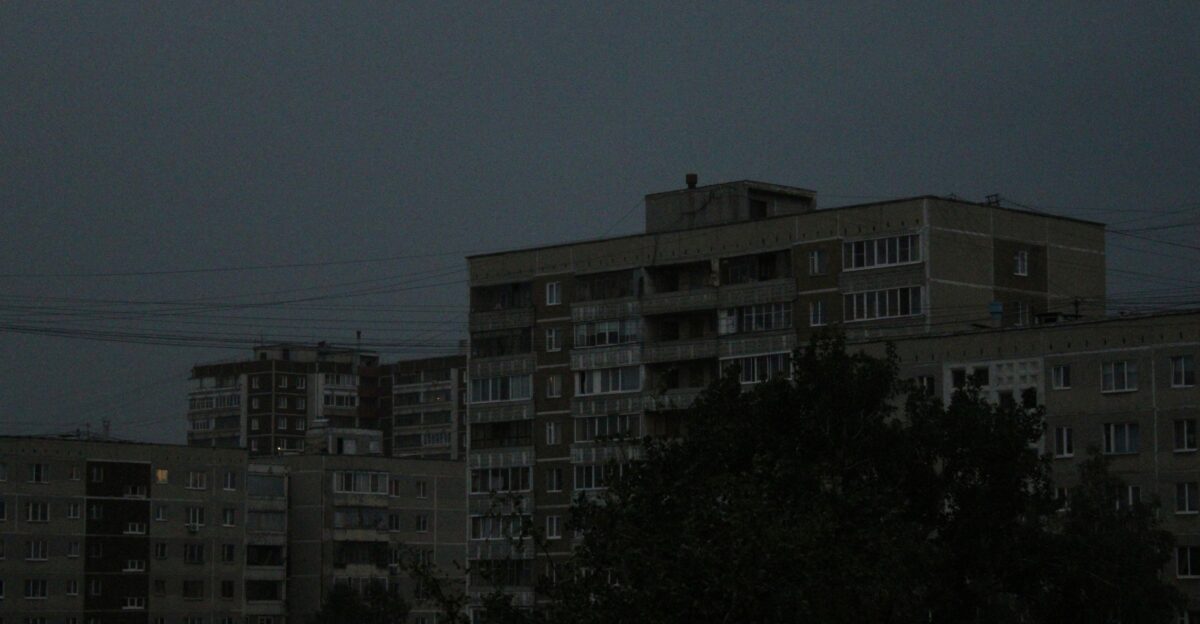
The drone war is not one-sided. Ukrainian forces have increasingly used their own drones to hit fuel depots, airfields and energy sites in Russian-controlled territory, including the occupied parts of Zaporizhzhia region.
In one recent strike, Kyiv’s forces targeted energy infrastructure under Russian control there, temporarily cutting power to more than 200,000 consumers in some 400 settlements, according to Russian-installed officials. The outage unfolded in sub-zero weather, underscoring how infrastructure has become a frontline for both sides, as each tries to reduce the other’s ability to supply troops and maintain civilian life.
Air Defenses Close To The Limit
Ukraine’s air defense network, strengthened over the past two years with Western systems such as Patriots, IRIS-T and NASAMS, has shot down a large share of incoming drones and missiles, but not enough to prevent serious damage. The problem is volume and cost: a Shahed drone may cost tens of thousands of dollars, while the interceptor missile used to stop it can cost several times more, a dynamic that Russia is exploiting by launching swarms.
“This is a war of salvos,” defense analysts at CSIS wrote, arguing that the key question is whether Ukraine can keep replenishing interceptors fast enough to absorb repeated barrages. Hit rates remain high, but as launches grow more frequent, stocks of missiles and ammunition are depleted sooner, forcing commanders to prioritize certain regions and infrastructure.
A National Energy Emergency
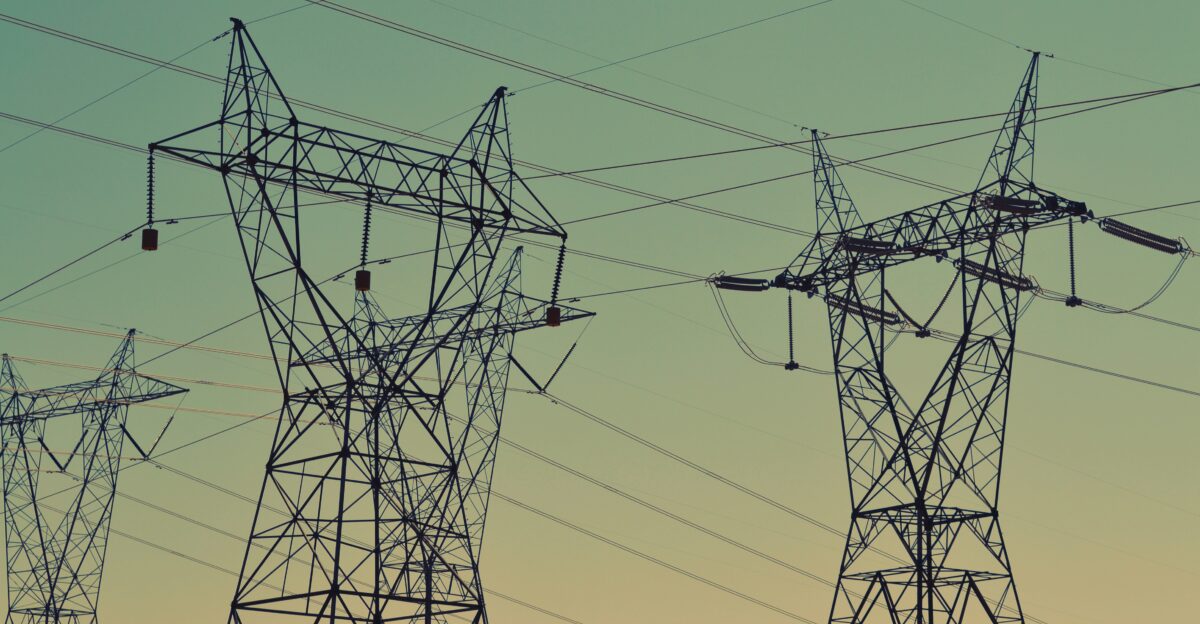
The cumulative impact of these strikes is stark: Ukraine’s energy system is now meeting only about 60 percent of national electricity demand, according to government statements and independent reporting. Authorities have declared an energy emergency and centralized crisis management, with former prime minister Denys Shmyhal put in charge of the energy ministry’s response.
Rolling blackouts are being imposed across the country, with priority given to keeping hospitals, water systems and critical transport links powered. To fill the gap, Ukraine is ramping up electricity imports from neighboring countries and urging citizens and businesses to cut consumption wherever possible. Even with these measures, officials warn that without rapid repairs and additional foreign support, further capacity losses could force deeper and longer outages as winter continues.
Kyiv’s Strikes Hit Back

Ukraine has made clear it will not confine its response to defensive measures alone. Using domestically produced long-range drones, Kyiv has struck oil refineries, ammunition depots and power infrastructure inside Russia and in occupied Ukrainian territories like Zaporizhzhia. Military officials argue these attacks are aimed at reducing Moscow’s ability to fund and fuel its war, as well as disrupting the infrastructure feeding Russian forces at the front.
The blackout affecting more than 200,000 consumers in Russian-controlled Zaporizhzhia was presented by Ukrainian commentators as proof that Moscow cannot shield its own rear areas from the same tactics it uses against Ukraine’s cities. However, human rights advocates caution that the growing focus on energy targets by both sides risks normalizing strikes that blur the line between military and civilian infrastructure.
Zelenskyy’s Frustration And Resolve

Facing yet another winter of bombardment, Zelenskyy has sharpened his message to foreign partners, warning that delays in aid are being felt directly in Ukrainian homes and hospitals. In recent addresses, he has spoken of an energy emergency and called for “more protection, first and foremost more missiles for air defense systems,” while thanking countries that have already sent additional batteries.
Inside Ukraine, his government faces growing pressure to show progress on both defending infrastructure and securing a path to peace, even as opposition voices question whether Western promises will arrive in time.
Push For Talks Amid The Bombing
Even as missiles and drones fall, diplomatic efforts have not halted. Ukrainian envoys have held meetings with U.S. officials in recent weeks, discussing a draft multi-point peace framework intended to outline possible conditions for ending hostilities and securing Ukraine’s sovereignty.
These talks come against a backdrop of shifting politics in Washington, where the Trump administration has signaled interest in exploring options to reduce the risk of an open-ended conflict, even as it continues to supply arms and financial support.
Racing To Repair And Adapt

On the ground, Ukraine is rushing to repair what it can while adapting to the threat of more strikes. Teams of engineers and utility workers fan out after each attack, rewiring lines in snow and ice, often under the risk of renewed bombardment. Authorities are deploying mobile generators to critical sites and expanding networks of public “warming centers” where residents can charge phones, drink hot tea and find temporary shelter from the cold.
To stabilize the grid, the government is pushing to increase domestic generation capacity and has ordered state companies to secure larger volumes of imported electricity for the 2025–26 heating season. Officials and foreign partners are also exploring more decentralized energy solutions, such as solar panels and small-scale backup systems for hospitals and schools, to reduce reliance on large, vulnerable power plants.
Experts Warn Of A Long Winter
Security and energy experts warn that without a substantial boost to Ukraine’s air defenses and energy resilience, the pattern of winter “terror campaigns” is likely to continue. Analysts at CSIS argue that Russia’s approach, massing inexpensive drones to saturate defenses, has already shifted the balance, making it harder and more expensive for Ukraine to protect every critical site.
“Surviving drone saturation attacks in the age of autonomy and attrition requires more than exquisite systems and intermittent aid packages,” one CSIS report concluded, calling for layered, sustainable defenses and deeper strikes on drone production networks. Energy specialists add that each new round of attacks compounds existing damage, making future repairs slower and more costly, especially while fighting continues near key industrial hubs.
Sources:
Al Jazeera, “Two killed, dozens wounded in large Russian drone attacks across Ukraine”, 18 Jan 2026
Prismedia/Investing.com syndication, “Ukraine’s grid meets only about 60% of demand after fresh strikes”, 16 Jan 2026
Reuters, “Ukraine able to meet only 60% of electricity need after …”, 16 Jan 2026
Center for Strategic and International Studies (CSIS), “The New Salvo War: Russia’s Evolving Punishment Campaign”, 8 Jul 2025
Republic World, “2 Killed, Dozens Injured Overnight In Russian Drone Strikes Across Ukraine”, 17 Jan 2026