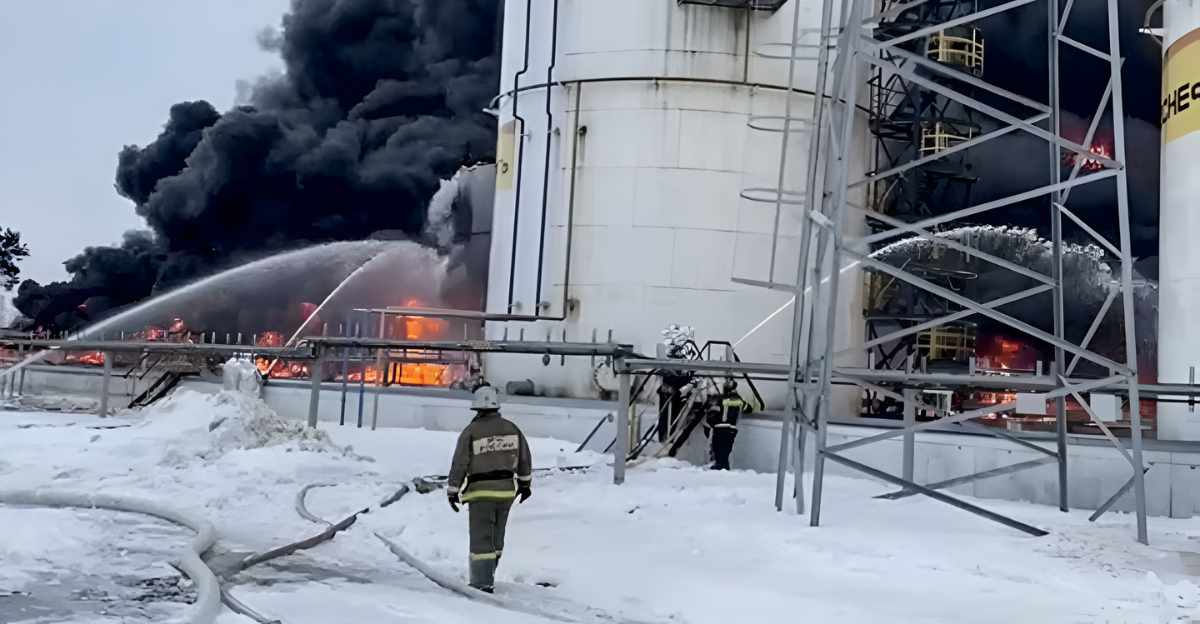
By late September, a new kind of crisis gripped Sevastopol: drivers waited in long lines at the few gas stations still open, while nearly half the peninsula’s pumps stood empty. The cause was not a supply chain hiccup or routine maintenance, but a wave of Ukrainian drone strikes that had battered oil refineries deep inside Russia, forcing Moscow to halt fuel exports and triggering the most visible energy shortage since the war began.
Drone Strikes Upend Russia’s Oil Heartland
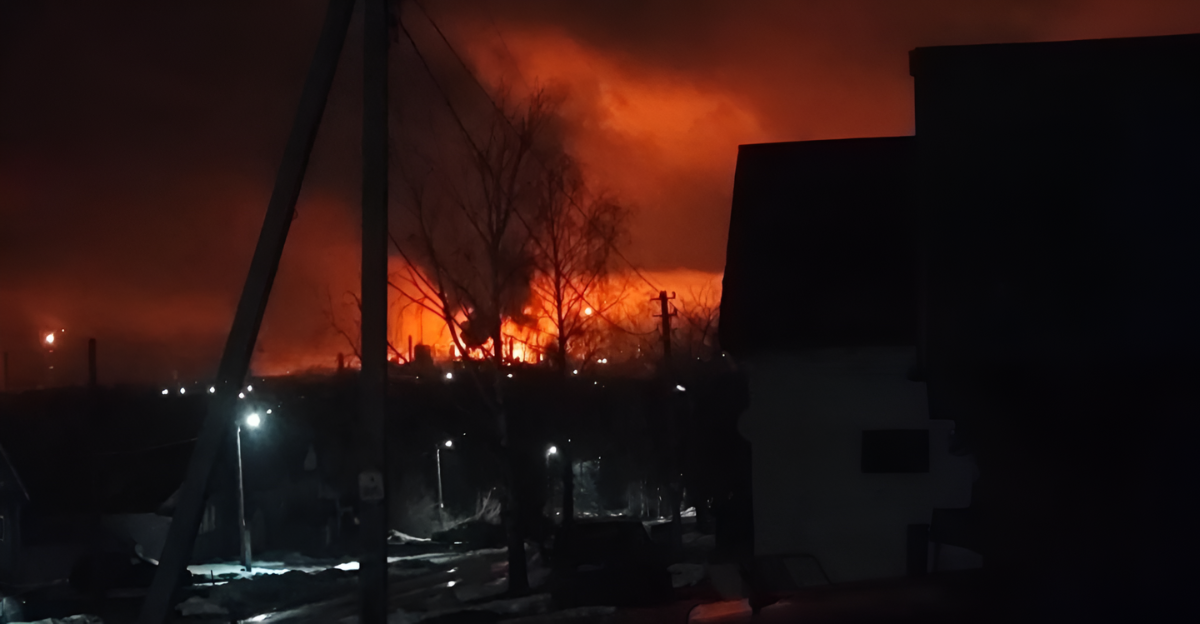
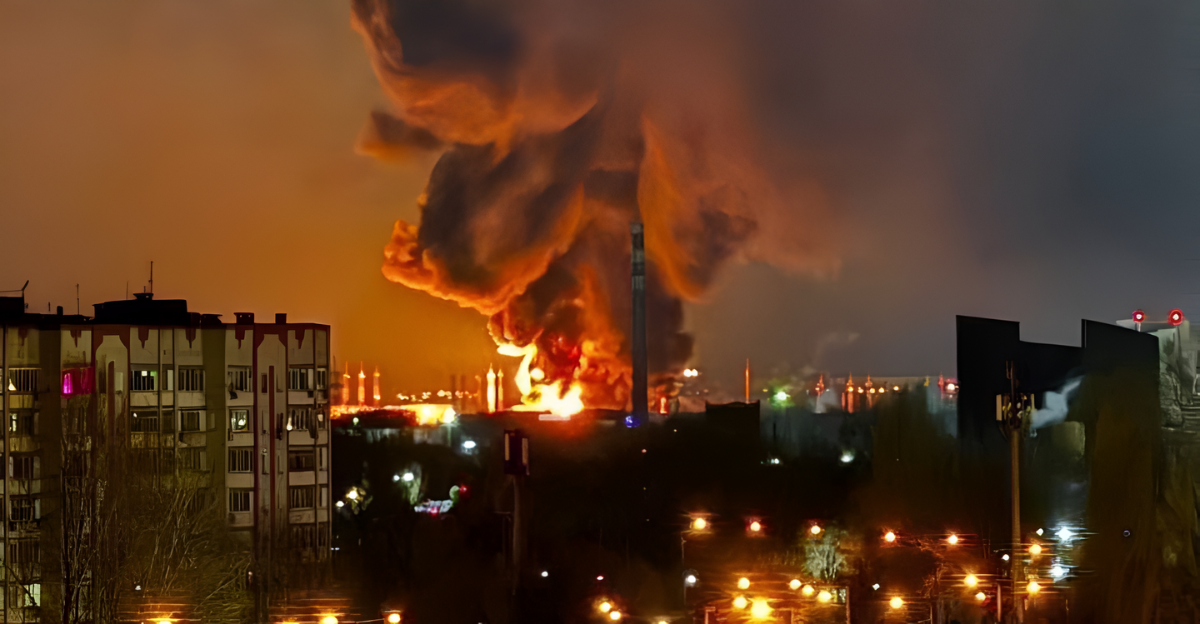
Since late summer, Ukrainian drones have repeatedly targeted Russian refineries, including major plants near Moscow, Bashkortostan, and the Volga region. Satellite imagery and local reports confirmed extensive fires and shutdowns, with some days seeing as much as one-fifth of Russia’s refining capacity knocked offline. The attacks marked the deepest refinery damage of the conflict, disrupting fuel production at a scale not previously seen.
In response, Russian Deputy Prime Minister Alexander Novak announced a sweeping ban on gasoline exports, later extending it to diesel for non-producers. The Kremlin’s stated aim was to stabilize domestic supplies ahead of winter, but analysts noted the move was a rare public admission of economic strain. Energy analysts highlighted the severity of the disruption, noting this was the first time the government had acknowledged the scale of the problem.
Supply Chains Fracture, Local Hardship Grows
With refineries offline, Russia’s internal fuel distribution network faltered. Regions reliant on long-haul shipments, such as Crimea and the Mari El Republic, were hit hardest. While pipeline-fed exports by major producers continued to ports, reseller exports—typically managed by trading intermediaries—were abruptly frozen, slashing about a quarter of Russia’s usual seaborne diesel supply.
In Crimea, the impact was immediate and severe. By early October, nearly half of gas stations had run dry. Sevastopol, the peninsula’s largest city, reported that all gasoline grades had vanished from most stations. Prices soared significantly in a single month, and rationing became the norm. Local residents described the frustration as drivers waited hours for limited fuel, with scenes reminiscent of the early days of the war.
Major retailers in Moscow also imposed restrictions, capping bulk purchases and limiting jerry-can fills to prevent panic buying. In southern Russia, residents queued for hours, with some stations limiting sales to just 10 liters per customer. For a country that exported 31 million tons of diesel last year, the sight of empty pumps was a stark reversal.
Global Markets Feel the Shock
Russia produces about 86 million metric tons of diesel annually and exports roughly 31 million, making it one of the world’s largest diesel suppliers. The sudden freeze on reseller exports threatened to remove up to 1.9 million tons of diesel from global markets over three months—enough to power millions of trucks and ships. The diesel futures premium over Brent crude increased to multi-week highs, as traders braced for prolonged Russian outages and tightening global stockpiles.
The last comparable spike occurred during the 2022 energy crisis, underscoring the world’s continued dependence on Russian fuel. Major importers such as Turkey, Brazil, and several African nations scrambled to secure alternative supplies. Turkey, for example, pivoted rapidly to Indian and Saudi suppliers, but the sudden demand surge strained inventories and pushed up local prices. Energy analysts noted a realignment of diesel trade flows from the Black Sea to the Arabian Gulf.
Domestic Fallout and Economic Strain
Inside Russia, rationing spread quickly. Farmers in southern regions reported restrictions on fuel deliveries during harvest, while transport firms delayed shipments. Independent retailers, cut off from refinery allocations, shut down pumps entirely. Long-haul truckers in many towns parked their vehicles for lack of diesel, turning local shortages into nationwide supply-chain headaches.
The government faced a difficult balancing act: protecting domestic stability while preserving export revenue. The partial export ban temporarily lowered internal prices but came at the cost of billions in lost foreign earnings. Analysts suggested that authorities prioritized military logistics and strategic reserves over civilian use, a pattern consistent with wartime fuel management.
Inflation accelerated as domestic fuel prices climbed more than 40% since January, driving up logistics costs for agriculture and manufacturing. Globally, importers faced steeper transportation expenses and energy inflation, particularly in Europe and Asia.
Strategic Vulnerability and the Road Ahead
The strikes exposed a critical vulnerability in Russia’s energy system: while crude oil output remained robust, refinery downtime translated directly into consumer pain. By forcing Moscow to ration fuel and ban exports, Ukraine’s drone campaign had, for the first time, visibly bent Russia’s energy backbone.
Nowhere was this more apparent than in Crimea, where shortages and price spikes underscored the region’s dependence on mainland supply—a weakness Ukrainian planners exploited with precision. Globally, every refinery outage and export freeze rippled outward, tightening diesel markets and raising costs for consumers from Europe to Africa.
As winter approaches and the export ban remains in place, both Russia and the world face a test of resilience. Each new drone strike compounds refinery downtime and public frustration. For millions across Eurasia, diesel is not just fuel but a lifeline for heating, transport, and livelihoods. The crisis has revealed that in the era of drone warfare, even the world’s energy giants are not immune to disruption—and the consequences are felt far beyond the battlefield.