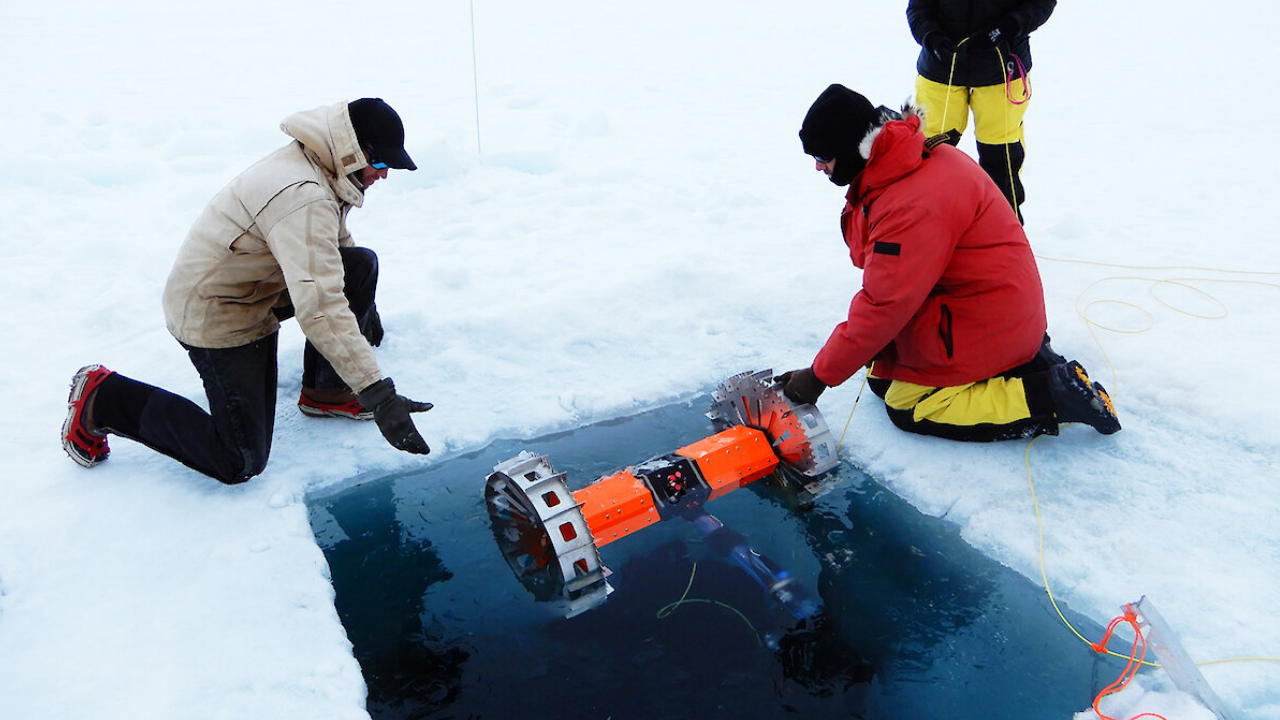
A robotic ocean instrument drifted beneath frozen Antarctic ice shelves for eight months, gathering data from a region humans had never explored. Scientists wanted important oceanographic readings. Instead, they got nothing—silence from the depths.
The Argo float, roughly the size of a torpedo, had to resurface every five days and send temperature and salt measurements to satellites. But beneath the Denman and Shackleton ice shelves, those messages stopped coming.
The silence sent a message itself: something strange was happening in the world’s most isolated ocean cavity. For scientists tracking sea level rise, the long silence meant something huge awaited—something that would change how we understand Antarctica’s future.
The Continent That Shouldn’t Melt
Antarctica holds roughly 917 billion cubic miles of ice—enough to raise global sea levels by 190 feet if it all melted. Yet, East Antarctica, the continent’s largest section, has long seemed stable and protected from the warming that threatens the West Antarctic ice sheets.
Climate scientists have spent decades creating models of worst-case polar scenarios, focusing funding and concern on what appeared to be more fragile glaciers. East Antarctica represented the “sleeping giant”—vast, moving slowly, and seemingly resistant to rapid changes.
This belief shaped decades of climate policy, risk planning, and coastal building. However, one robot’s journey challenged that comfortable story, revealing that this stable, distant ice sheet had hidden weak spots that science had overlooked. The impact reached far beyond scientific papers.
The Canyon Beneath the Ice
Denman Glacier sits above the world’s deepest land canyon, dropping nearly 11,500 feet below sea level—deeper than Mount Everest stands tall. This geography creates a unique glaciological risk: as ice thins from above, the cavity below fills with ocean water, which can destabilize the entire glacier underneath.
Scientists refer to this as “basal melt.” Warm ocean water rises, hits the ice ceiling, and melts it from below. The deeper the canyon, the more water piles up. The narrower the ocean opening, the more at-risk the system becomes to small temperature rises.
Denman’s setup—a massive glacier hanging over a deep pit—made it theoretically dangerous. But theory differs from proof. No one had directly measured what really happened in that hidden cavity. That changed in December 2025.
Racing to Measure the Unmeasured
Australia’s CSIRO launched the Denman mission because the stakes rose. East Antarctic ice loss was accelerating, yet oceanographers lacked direct measurements from the most vulnerable areas. Traditional research ships cannot break through thick pack ice around Denman Glacier.
Submarines cost too much and risk too much in these waters. Satellites see ice surface changes but cannot observe what happens beneath the ice shelf. The Argo float program—a global network of 4,000+ autonomous profiling machines—offered an answer.
These robotic instruments dive to 6,600 feet, measure temperature and salt at hundreds of depths, then float back up to broadcast findings. CSIRO scientists equipped it with advanced sensors and released it into the Antarctic coastal currents, hoping it would drift beneath Denman and send the necessary data.
The Intrepid Float’s Lucky Drift

In April 2024, the Argo float entered Antarctic waters. For months, it worked normally, resurfacing every five days as planned. Then, by pure chance—researchers later called it lucky—it drifted into the cavity beneath Denman Glacier. Once stuck beneath the ice shelf, the float could not exit.
Instead of dying there, it began an amazing eight-month trip, gathering nearly 200 temperature and salt measurements from seafloor to ice shelf top, sending data every five days before resurfacing in December 2025. Dr. Steve Rintoul from CSIRO said, “We got lucky—our bold float drifted beneath the ice and spent eight months gathering profiles from seafloor to ice base every five days, giving us new observations.”
What he saw shocked everyone: warm water—ocean water warmed by open seas—touched the cavity beneath Denman. The glacier was exposed.
A Glacier at the Tipping Point
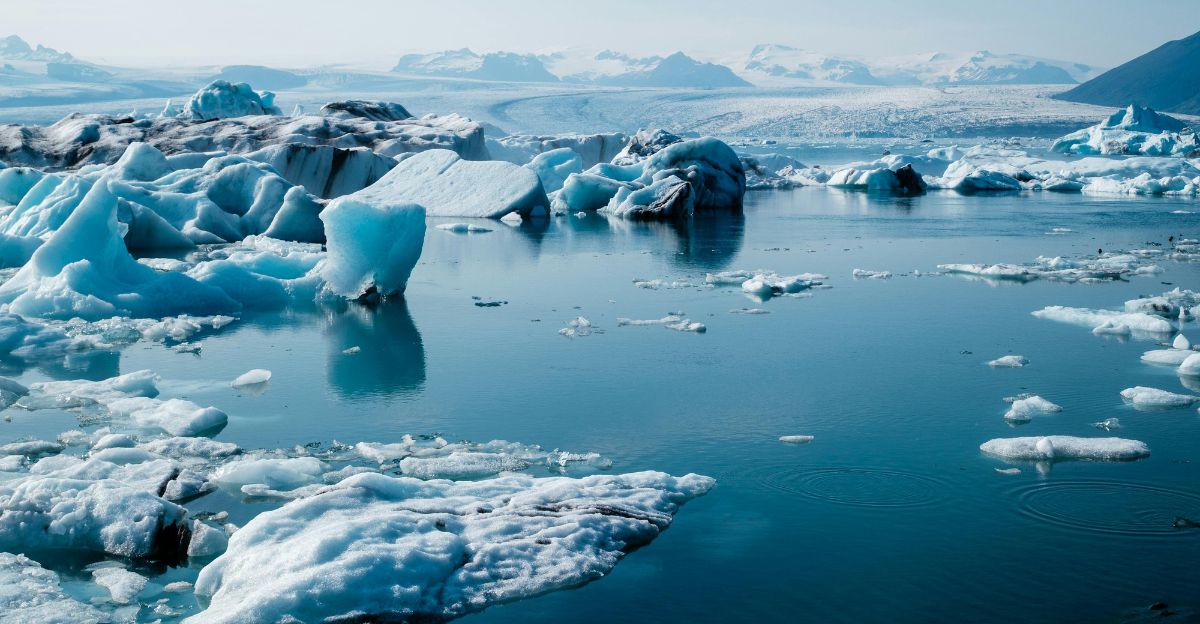
Warm water beneath Denman Glacier poses a real, measurable danger. If ocean temperatures rise slightly, basal melt rates could accelerate rapidly, thinning the glacier from below and possibly causing what glaciologists call “rapid and irreversible collapse.”
Denman holds ice equal to roughly 5 feet of global sea level rise—more than any other single glacier except Greenland. Even a partial collapse would change coastal flood risk worldwide. Unlike West Antarctic glaciers, which have retreated steadily for decades, Denman seemed stable. The Argo float data showed that this assumption was wrong.
The Shackleton Ice Shelf, located nearby and also studied by the float, showed no evidence of warm water exposure—meaning the danger was only at Denman, but serious. The glacier’s position—hanging over the deepest canyon, now confirmed to be connected to warm ocean water—made it a possible trigger for larger problems in East Antarctica.
What 5 Feet Means to Coastal Cities
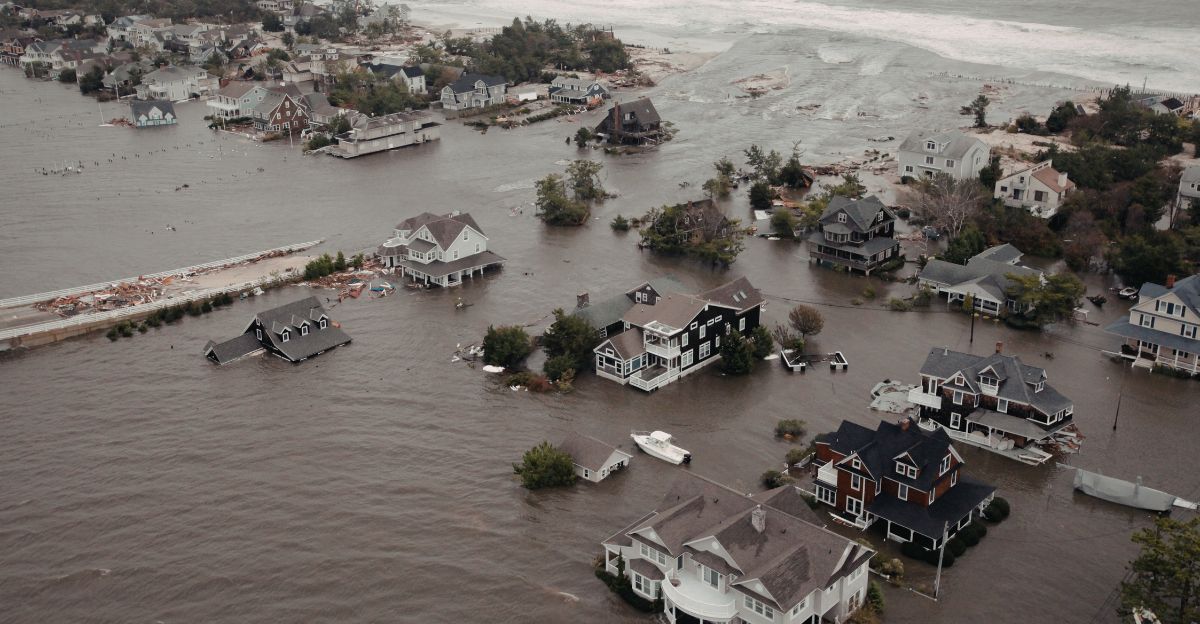
Five feet of sea level rise may seem small in climate change discussions. In reality, it completely reshapes coastal areas. Miami Beach, which already floods on high tides, would see permanent submersion of neighborhoods with thousands of people.
New York City’s subway system, which sits at sea level in many areas, would require hundreds of billions of dollars to lift or seal its tunnel doors. Amsterdam, Rotterdam, and Venice—cities built on water management systems—would face never-before-seen adaptation tests. Globally, approximately 40% of the human population lives within 62 miles of coastlines. Those 3+ billion people live in places where sea level rise changes infrastructure, farming, and livability.
Insurance and real estate buyers already factor in future floods, with coastal property values reflecting the danger of climate change. The Argo float’s finding that Denman Glacier risks faster melting turns abstract climate models into real geographic danger.
The $14 Trillion Question
Separate research has modeled the cost of uncontrolled sea level rise. In 2018, the UK’s National Oceanography Centre published a study in Environmental Research Letters, showing that by 2100, under worst-case scenarios, yearly global coastal flood costs could reach $14 trillion—roughly 13% of global GDP at the time.
This covers damage to buildings, lost farmland, forced relocation, and disaster response. The United States owns a big share of global coastal property value. Yet, US-only forecasts differ: studies estimate $42 billion to $400 billion for seawall building costs, and up to $1 trillion in property damage under a 3-foot rise scenario.
The $14 trillion is clearly a global number, demonstrating its impact across all regions. But the cause—sea level rise—hits everywhere. Any faster Antarctic ice loss, including from Denman Glacier, contributes to global sea rise and these financial forecasts.
Why the Timing Matters Now
The Argo float’s findings came at a critical point in climate science. The IPCC (Intergovernmental Panel on Climate Change) has just raised its forecasts for East Antarctic ice loss, acknowledging that it does not know for certain about glacier stability. NASA and ESA satellite data revealed a surprising speed-up in Denman’s retreat over the past decade.
Computer models of ice shelf action were being revised to show greater danger. Against this rising concern, the Argo float provided the first direct ocean evidence that the phenomenon modelers feared—warm water beneath East Antarctic ice shelves—was real, not just a theory.
The float’s timing was fortunate, but it also reveals a larger shift: robotic systems were beginning to reach places beyond science. This mission’s success would likely spark more deployments beneath other weak glaciers, turning East Antarctica from a data-bare frontier into a watched zone. Science and policy both would shift.
The Collateral Wake-Up: Insurance Markets and Infrastructure Bonds

Behind the science and policy shifts ran a quieter but equally big force: money markets began repricing coastal danger. Insurance firms, whose business depends on accurate hazard assessment, began revising risk totals as East Antarctic instability transitioned from theory to a measured fact.
Government bonds financing coastal building faced small downward pressure as long-term risk math shifted. Real estate in high-risk coastal zones—property worth trillions worldwide—showed the first signs of what climate economists call “stranded asset” dynamics: property whose future value became uncertain.
The Argo float’s published data and climate conference talks provided investors with proof that they could not skip. Pension funds, insurance firms, and large investment pools began ordering climate risk reports, shifting money away from long-term coastal development plans. The robot’s eight-month dive beneath Antarctic ice initiated a slow but steady revaluation of global coastal property values.
Polar Researchers Confront Uncertainty
The Argo float’s success highlighted a troubling gap in climate science resources: the accidental nature of its mission. CSIRO scientists had not planned this float to break into Denman’s cavity. It drifted beneath the ice shelf by accident.
This realization sparked both happiness and frustration in the polar science world. Big research programs suddenly faced a hard question: how much did they know about East Antarctica’s risk after decades of satellite work and models? Glaciologists held fast meetings to ask what other ice shelves might hide warm water.
Polar researchers noted the irony: humans spent billions on Antarctic study tools, yet the biggest recent finding came from a robot that got lost—and found something major. The University of Tasmania’s Australian Antarctic Program Partnership received more funding requests from world partners. But the deeper frustration remained: science still relied too much on luck.
Funding Surge and Mission Redesign

Within weeks of the Argo float’s return in December 2025, funding groups across Australia, Europe, and North America started approving more proposals for similar deployments beneath other East Antarctic ice shelves. The UK’s Natural Environment Research Council, Japan’s JAMSTEC, and the US National Science Foundation each announced larger budget allocations for polar ocean research.
The message was clear: robotic systems could reach places standard research boats cannot. A second point was also important: repeated missions could replace accidental discoveries. Study groups began building next-generation Argo floats with longer batteries, deeper diving power, and new sensors for spotting not just heat and salt, but also oxygen levels, nutrients, and hint chemicals that indicate melt speeds.
CSIRO stated that it would deploy five additional floats beneath different East Antarctic ice shelves by 2027. The Australian Antarctic Program Partnership has established new partnerships with Sweden, Germany, and South Korea. One robot’s lucky drift had shifted the worldwide focus of polar science and its funding priorities.
East Antarctica’s Reckoning Begins

The most significant outcome of the Argo float finding was a major shift in how climate scientists and officials assess the East Antarctic ice sheets. Old risk reports put them as “stable but worth watching.” The fresh sorting, based on ocean proof, was “apt to rapid shift.”
Antarctic ice core data reveal the continent’s past, marked by times of dramatic collapse caused by a warm ocean, interspersed with ages of stillness. Denman Glacier’s current warm-water touch suggested it might be entering a shift time. Scientists stress they cannot yet predict when or how fast collapse might happen—the timeframe could be dozens of years or hundreds.
However, the odds of a “no big shift” scenario decreased significantly. Policy groups began refreshing sea level rise plans. Insurance officials asked firms to explain coastal property values. City planners in Miami, Shanghai, Jakarta, and Mumbai ordered fresh risk reports. The Argo float did not create these weak spots; it merely confirmed what hard models had long said and now proved with direct evidence.
Skeptics and Cautionary Voices

Not every person saw the Argo float finding with alarm. Some glaciologists warned that eight months of data, while new, were too brief to show long-term shifts. Water temperatures fluctuate up and down every year and decade; one float’s readings could show brief warmth, not a lasting shift.
Others noted that even if basal melt sped up, ice sheets move slowly—dozens of years before you could see faster glacier retreat. A small group of researchers questioned the study’s interpretation of the float’s path and facts, although peer review in Science Advances had already thoroughly checked the work.
Money experts said that coastal defense, rather than stopping it, made good sense in many spots—that buildings could rise or be lifted to match the expected water rise. These opposing views didn’t dominate the news but rather influenced science writing and policy discussions. They did something useful: they made scientists say exactly what the data showed, versus what it implied, and what remained truly unknown.
What Happens Next?
The Argo float surfaced, sent its data, and shut down. The robot will not drift again. Yet its eight-month trip set off shifts in study, science, and funding that will shape polar climate work for the next decade.
Now the real question: did the data show the start of Denman Glacier’s end or just a moment in an up-and-down pattern? To answer that, workers must return by plan, not by luck. New Argo floats are being built. Sea models are getting the fresh data. Climate runs are restarting. Insurance firms adjust danger models.
Coastal cities plan shifts. And beneath the ice, warm water continues to do its work, melting a glacier that holds 5 feet of global sea level rise. The robot’s word was not instant peril but confirmed weakness. What we do with this proof will set the stage if Denman Glacier’s future plays out in centuries or decades.
Sources:
- Science Advances, Circulation and ocean–ice shelf interaction beneath the Denman Glacier, December 4, 2025
- CSIRO Official Statement, December 2025
- CSIRO News, Adrift like Shackleton: Robot float survives Antarctic ice, December 5, 2025
- NASA Jet Propulsion Laboratory, Huge East Antarctic Glacier Especially Susceptible to Climate Impacts, 2020
- CNN, Flooding from sea level rise could cost our planet $14.2 trillion, July 30, 2020
- University of Tasmania Antarctic Program partnership announcements, December 2025