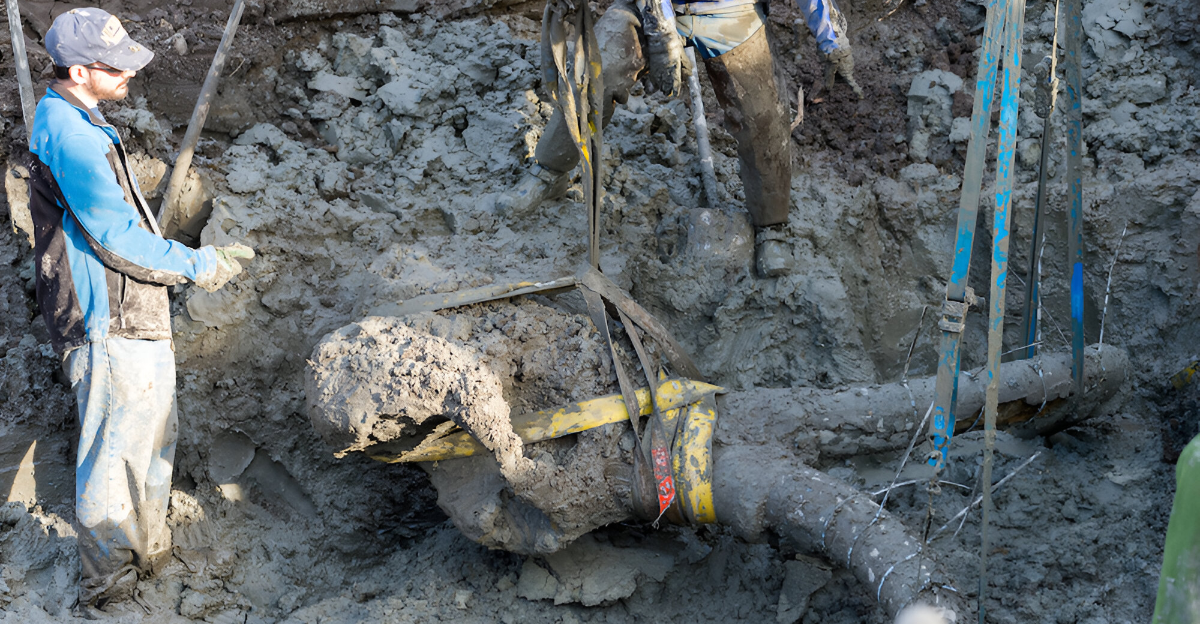
On what seemed like an ordinary day of roadwork, crews working on the S17 Piaski–Hrebenne highway in southeastern Poland were stunned by something entirely out of place. Large bones started to emerge from the soil. At first, many thought it might be animal remains from modern times, but a closer look suggested something far older.
Instead of carrying on, workers immediately halted the machines and reported the find to heritage authorities. At that moment, the team had no idea that they were at the start of a discovery that could reshape what we know about Poland’s ancient history.
Layers Revealed
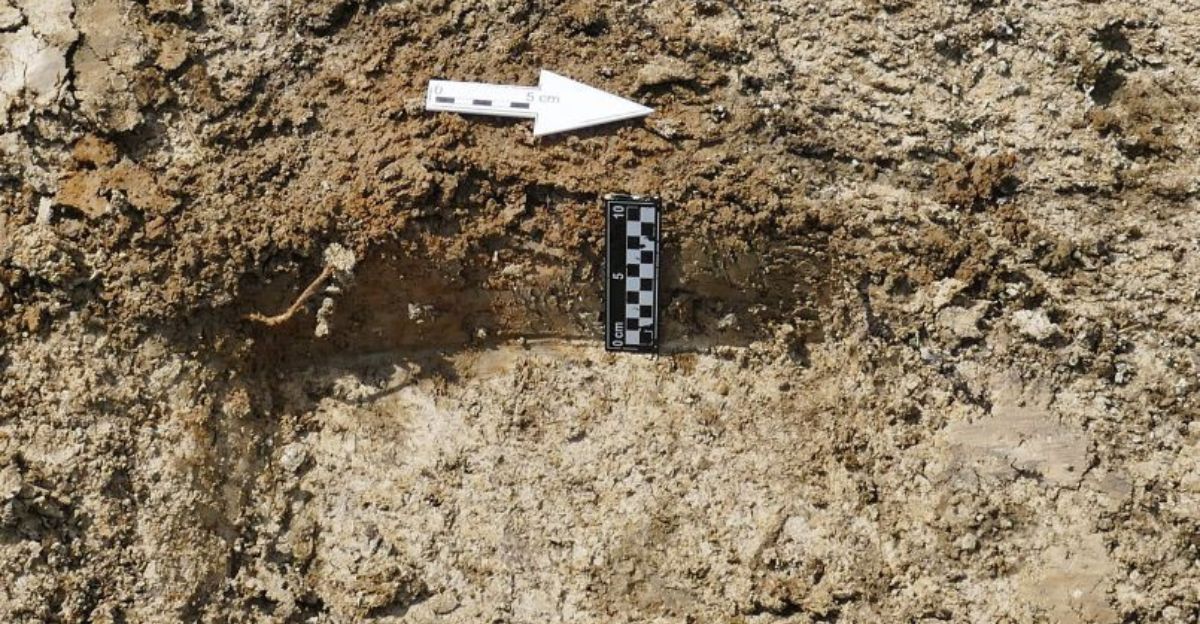
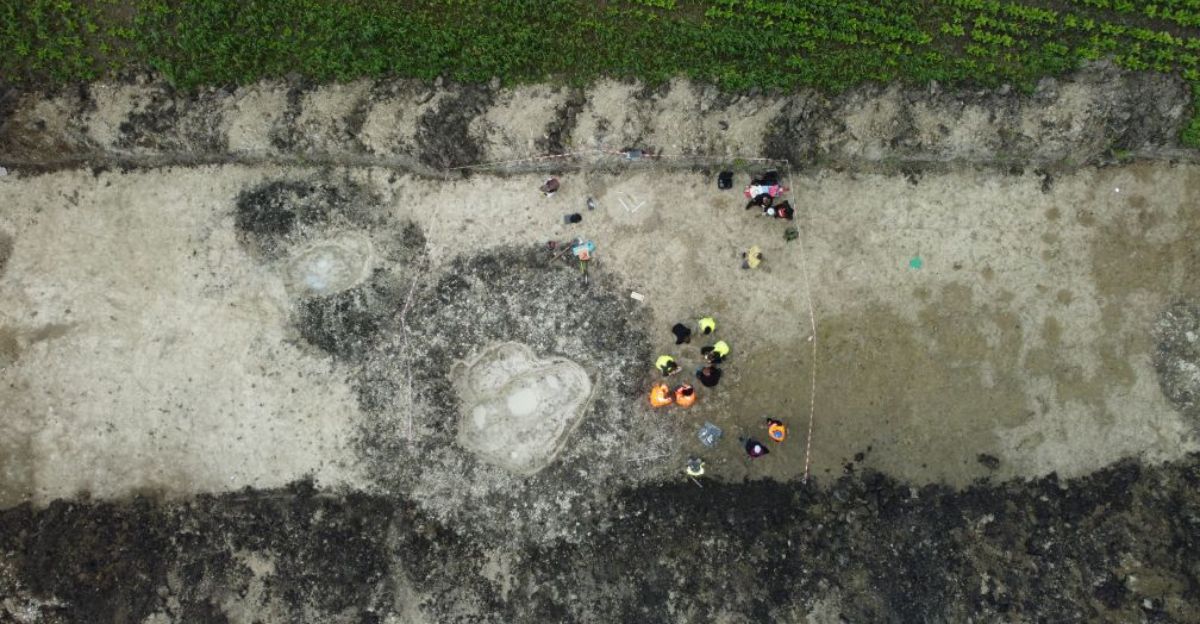
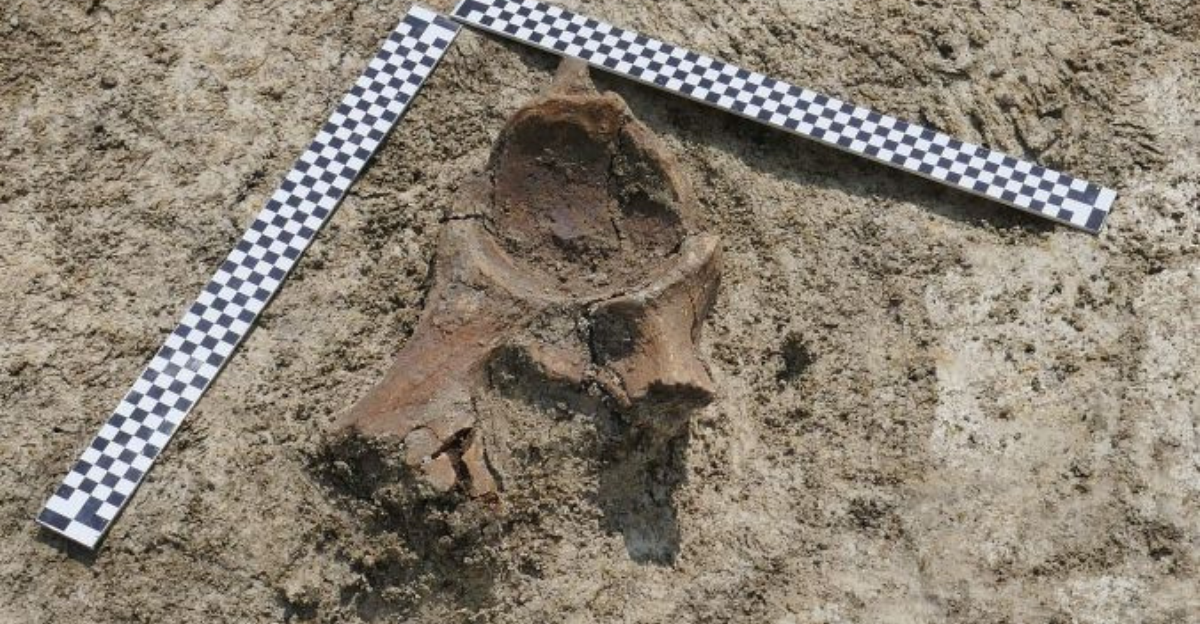
After securing the zone, scientists carefully uncovered layers beneath the surface near the village of Łabunie in Zamość County. Large bone fragments like parts of tusks and even a pelvis section were found. The size alone immediately set experts talking about Ice Age giants, most likely woolly mammoths or forest elephants. The more they uncovered, the clearer it became that this was no small find.
Local officials reacted quickly, guarding the area against disturbance and calling in further equipment and staff. The discovery mobilized paleontologists and archaeologists, since understanding such a site requires analyzing the bones, soil, and historical context. “Each bone is a fragment of a story that has been buried for millennia,” one archaeologist remarked.
Roadwork Pause
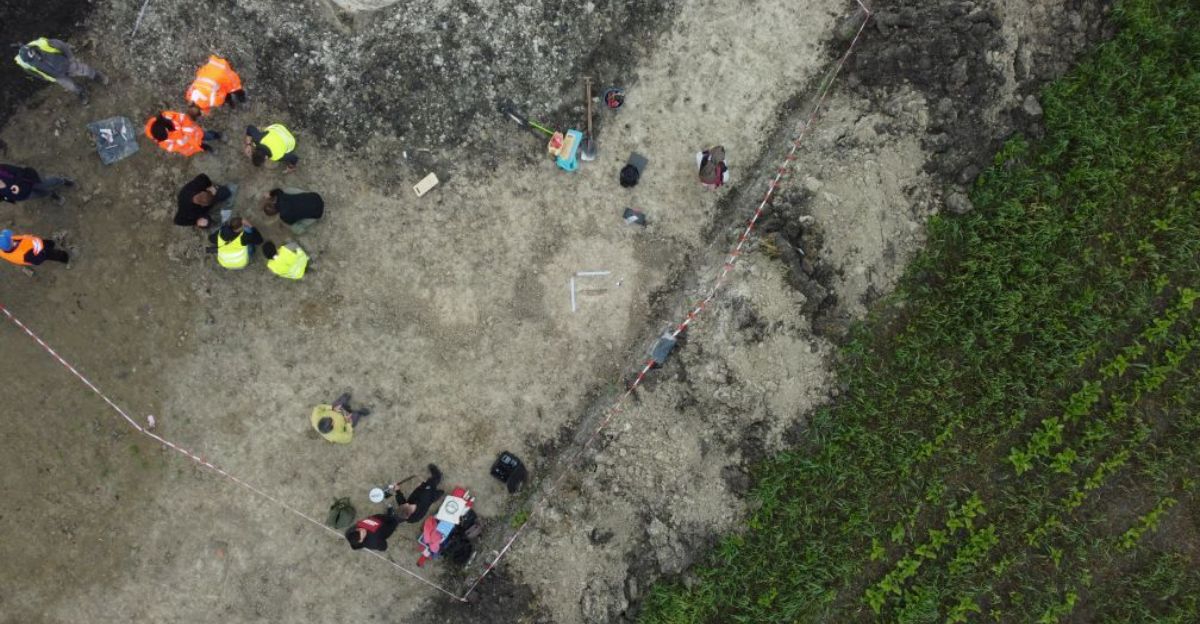
Polish law is clear: if construction crews encounter potential prehistoric remains, all work must be paused. That rule went into effect immediately in Zamość County. The General Directorate for National Roads and Motorways (GDDKiA) communicated with the Provincial Heritage Conservator to assign specialists the responsibility.
Some construction workers even took part by helping scientists dig under strict guidance, a rare case of builders turning into unexpected assistants in uncovering history. “We must first understand and protect what lies beneath before continuing above,” one conservator explained.
Past Meets Present
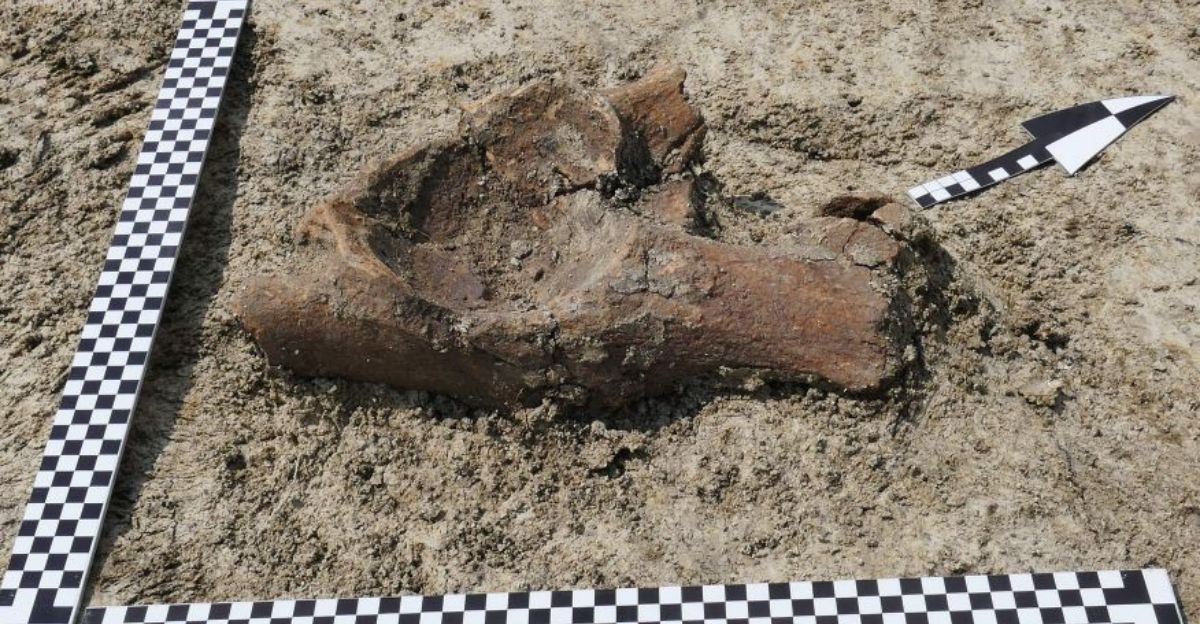
Archaeologists soon confirmed that the bones were from animals that had roamed Poland more than 10,000 years ago during the Pleistocene epoch. Likely woolly mammoths or perhaps forest elephants, these animals embodied the frozen landscapes and vast tundras of the Ice Age.
For scientists, the site became a window into Ice Age ecology, providing a rare chance to learn about the environment, the climate, and the animals of that vanished world. For Poles living nearby, it was surreal to think that their daily drive to work passed directly over where mammoths once foraged.
The Mammoth Discovered

The specific pieces that were found, namely a 15.7 inches chunk of pelvis and a 13.7 inches tusk, were confirmed by experts as highly likely belonging to a woolly mammoth or possibly a forest elephant. A paleozoologist, Dr. Kamila Waszczuk explained, “These creatures lived in these fields almost 12,000 years ago before a warming climate pushed them to extinction.”
The finds were not simply left in the open. They were immediately transferred into conservation, as delicate prehistoric bones must be stabilized to prevent crumbling and decay.
Regional Excitement
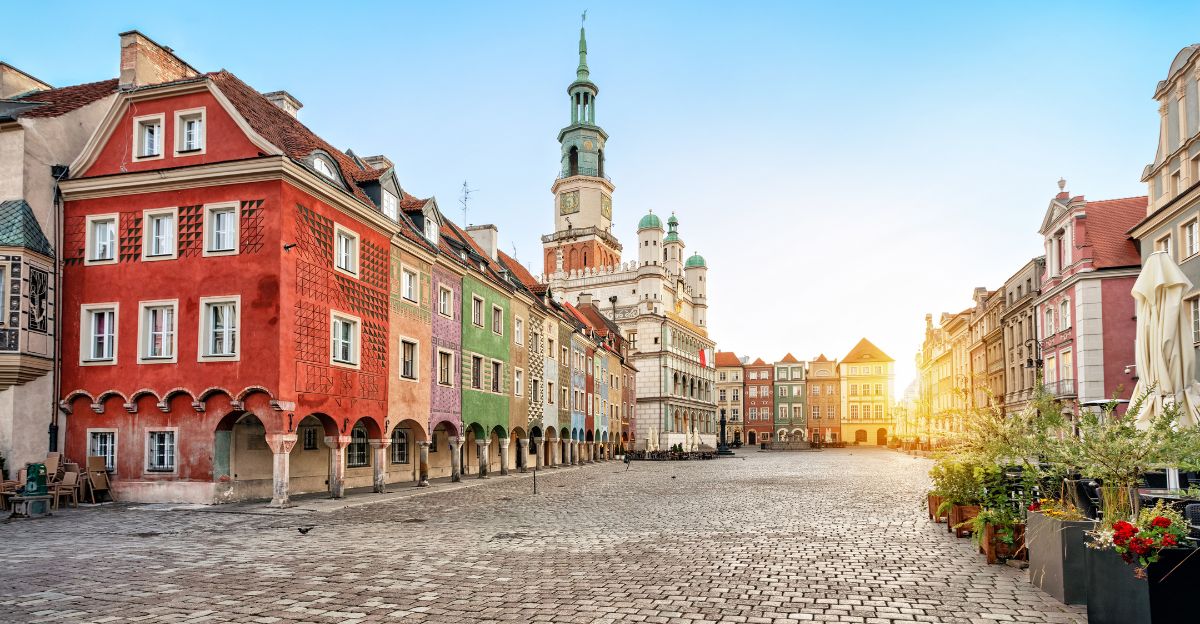
News of the mammoth bones spread rapidly, shining a spotlight not just on Zamość County but across Poland. Local communities, schools, and families were excited to learn that their countryside was now part of Europe’s prehistoric story. Curious residents lined the site’s perimeter, hoping for a glimpse of ongoing work. Teachers brought groups of schoolchildren to watch carefully orchestrated digs, turning an ordinary roadside into a living classroom.
Local officials expressed pride, saying the moment showed “how our small region is home to some of Europe’s most ancient legacies”. Scientists patiently handled waves of media and community questions, using the opportunity to teach about Ice Age ecosystems and what the loss of mammoths suggests about climate and environment.
Ancient Connections
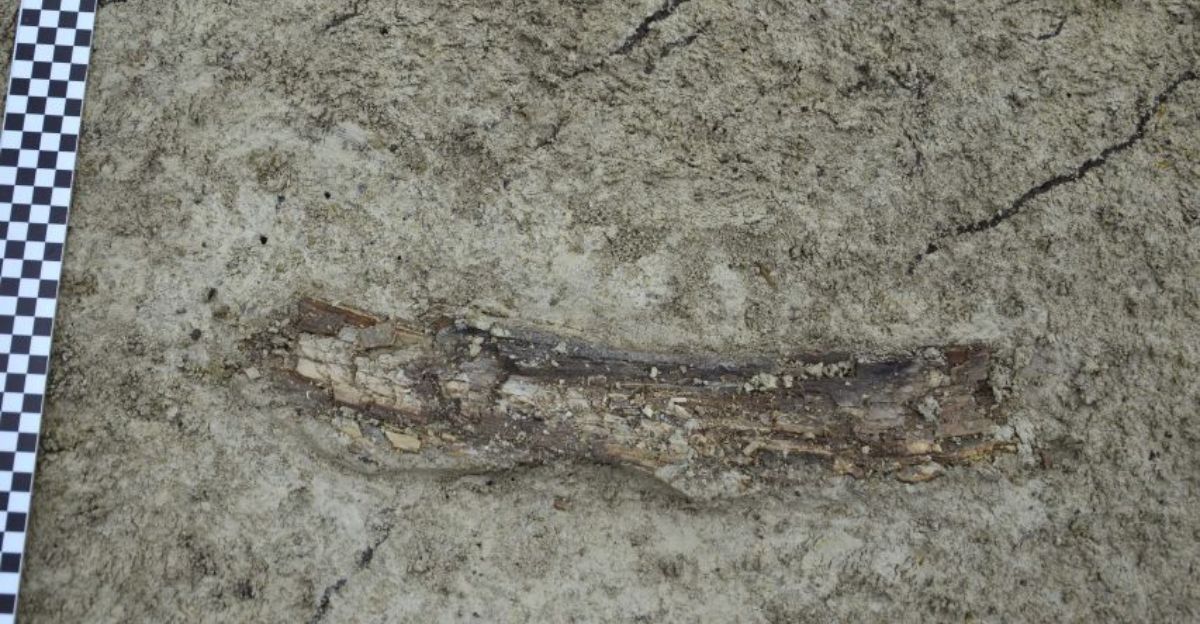
As excavations widened, the discoveries multiplied, and they weren’t limited to just mammoths. More than 250 additional archaeological features came to light: ancient dwellings, farming pits, and even a medieval well from the 14th–15th centuries. Suddenly, the site revealed centuries stacked upon centuries of history.
Archaeologists pieced together evidence showing that people had lived and worked in the area for many generations, adapting it to their needs in vastly different eras. The mammoth story was thrilling enough, but now the ground spoke of medieval farmers, Neolithic burial rituals, and long-forgotten settlements. Museums in the region immediately began planning new exhibits to showcase these layers of heritage, combining prehistoric, medieval, and early modern history into a single narrative for the public.
Experts Weigh In
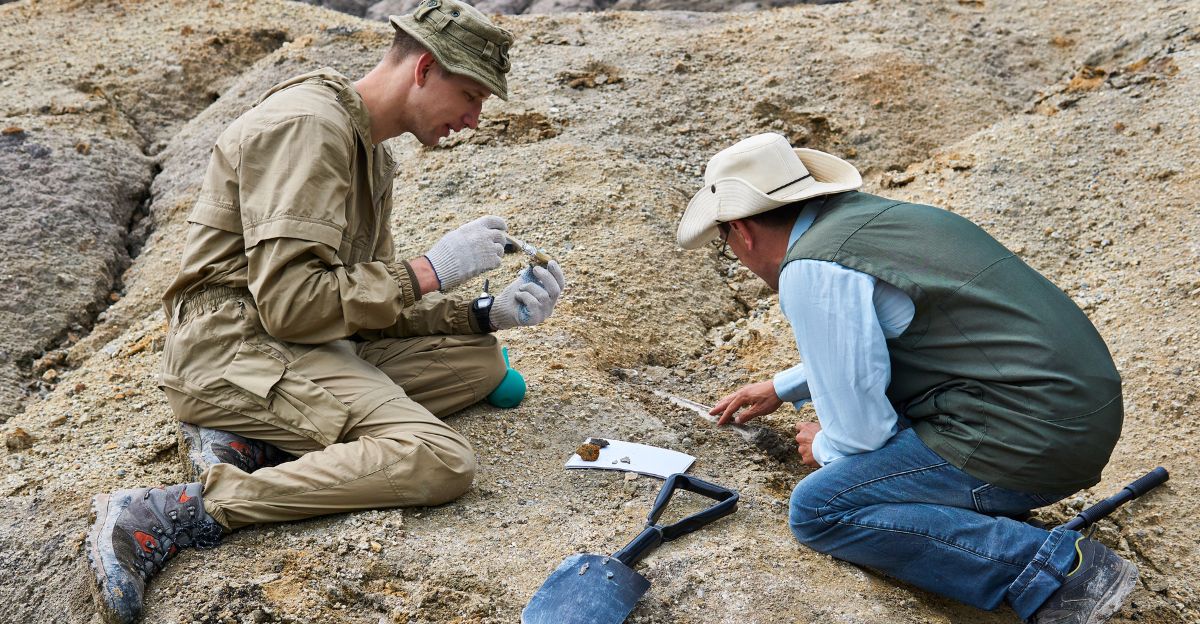
Specialists, including Dr. Rafał Niedźwiadek from Maria Curie-Skłodowska University (UMCS), outlined how rare and scientifically valuable such a mammoth find really is. “Each discovery like this helps us reconstruct Poland’s Ice Age,” he explained. Previous finds of this type have revealed key lessons about climate shifts and animal migrations, and this site promises the same.
Once the bones arrived at UMCS laboratories, advanced studies began that could help pin down whether the animal was a woolly mammoth, a southern mammoth, or a forest elephant. Scientists also hope to extract DNA or identify markings indicating human interaction with the animal.
Ecological Ripples

Mammoths thrived across Europe, including Poland, until around 12,000 years ago, and their extinction ties directly to the rapid warming that ended the Ice Age. As conditions shifted, habitats like vast grassy plains shrank, forcing the last populations into smaller and smaller ranges. Many scientists connect their decline with this ecological pressure, alongside human hunting in some regions.
The Zamość find offers the chance to test these ideas with new data. “Climate change has always reshaped life, and mammoth extinction shows us how ecosystems collapse under rapid shifts,” one researcher notes. Reconstructing the ecological ripple that ended the mammoths may help modern science anticipate how large animals adapt, migrate, or disappear in today’s changing world.
Corded Ware Cup
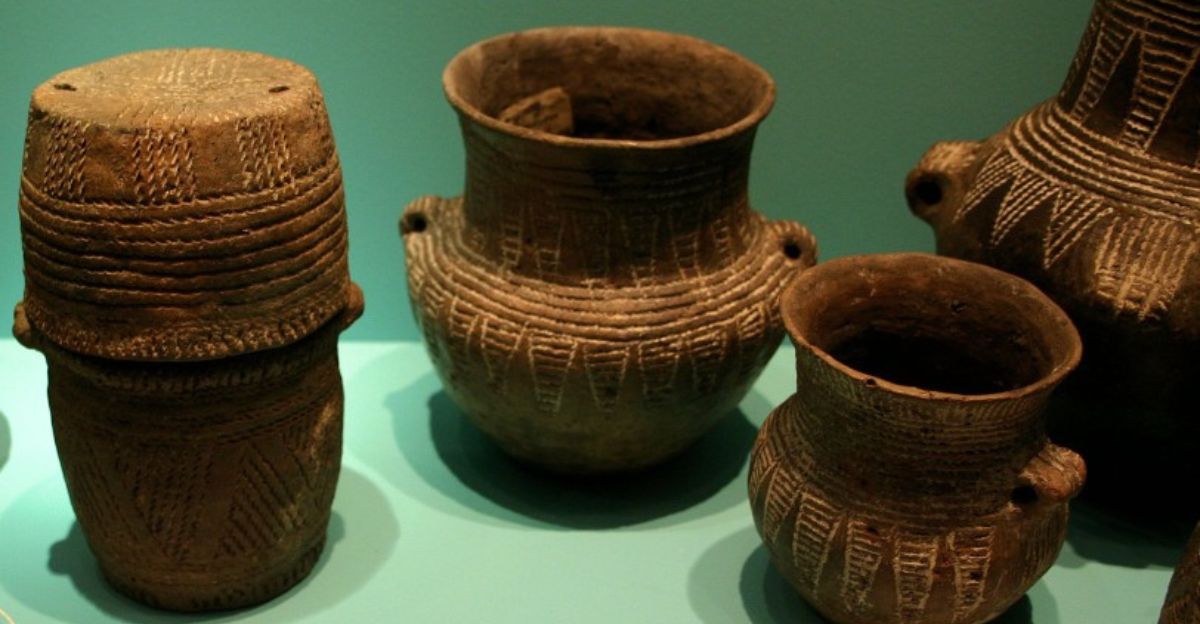
The mammoth was not the site’s only surprise. Archaeologists also uncovered a rare Neolithic pot, a “Corded Ware cup,” dated between 2500 and 1900 BC. Its flat bottom and grooved sides are trademarks of the Corded Ware culture, one of Europe’s most influential prehistoric communities. Even more striking was that the cup was discovered near human bones, strongly suggesting it was linked to a burial.
This revealed that the site not only held the remains of lost animals but also captured the rituals and traditions of ancient humans. “These cups are symbols of shared prehistoric culture spanning much of Europe,” explained archaeologist Dr. Marcin Piotrowski
Preservation Efforts
Construction was suspended indefinitely, and all attention turned to recording and safeguarding the finds. Preservation efforts included detailed mapping of each artifact, bone, or pottery fragment to document their context. Nothing could be removed without proper recording, since the smallest object might carry crucial significance. Teams also ensured that the public could follow the story safely.
Controlled visits and media broadcasting allowed outsiders to witness progress without disturbing the fragile work surfaces. This transparent approach both educated and inspired, demonstrating Poland’s strict but proud heritage laws. “It is not only about saving objects, but saving knowledge,” one conservator remarked.
Scientific Ownership

Once the remains were stabilized, custody shifted to experts at Maria Curie-Skłodowska University, where teams began carrying out more advanced tests. From radiocarbon dating to paleogenomic sequencing, each scientific method adds a new detail to the bigger picture.
By housing the remains in an academic institution, multiple groups of experts can analyze them in coordinated projects. “Only through multidisciplinary input can we understand both the creature and its world,” one coordinator explained. The bones now form part of a chain of scientific custody, where research is shared, results are peer-reviewed, and connections are made to international databases about Ice Age animals.
Official Statements

Soon after the discovery gained headlines, officials from GDDKiA and the regional government praised the road workers for their vigilance. “Without their attention, this piece of Poland’s past would still be buried,” said one conservator in a public announcement. The authorities highlighted how proper cooperation between industries and heritage specialists had turned potential loss into a major gain for science.
Workers often overlooked in heritage discoveries became unlikely heroes. Their alertness and decision to pause created the opportunity that followed. Officials stressed training and awareness as critical tools, but recognized that human judgment on the ground made the biggest difference that day.
Policy Response
In the weeks following the discovery, local authorities acknowledged that such finds might become more common as construction pushes into undeveloped territories. Calls arose to strengthen crew training and build awareness of what to look for underground. Updated guidelines are now being considered to make archaeological evaluation a proactive step of infrastructure projects, not just an emergency response.
Discussion centers on stronger partnerships between building companies and archaeologists from early planning phases. New rapid-response teams might also be created to assist developments across culturally sensitive zones. “What happened in Zamość County is a reminder that the ground is layered with history, and we can plan accordingly.”
What Comes Next?

For now, the remains are undergoing scientific analysis in controlled labs. Scientists are optimistic that radiocarbon testing and genetic sequencing might reveal more insights into mammoth populations, their diets, and migration patterns. DNA recovery is difficult, but if achieved, it would allow direct comparisons with other European mammoth finds, piecing together how these animals adapted over time.
Meanwhile, officials suggest that more remains may still lie hidden nearby, given the region’s reputation for archaeological richness. This has fueled ongoing debate in government circles: should all major infrastructure projects in Poland be paired with archaeological surveys before breaking ground?
Regulatory Close-Up

The Zamość find did not remain a local story, it pushed policy debates at the national level. Hearing sessions began in regional committees about ensuring such discoveries are better integrated into construction planning. Some voices argued strongly for mandatory radar or ground-scanning techniques before projects, which would alert builders to any prehistoric layers hidden just below the soil.
Such reforms require investment but could prevent costly work stoppages and heritage loss. Researchers see these proposals as a turning point. The Zamość mammoth bones may eventually be remembered less for their tusks than for how they helped reshape laws, putting heritage protection at the heart of Poland’s infrastructure planning.
Industry Crossroads
Mining, energy, and agriculture often disturb underground layers, and all have faced instances where heritage discoveries forced new protocols. Companies are increasingly expected to manage risks to archaeological remains as part of project planning. Road construction firms across Europe are revising training guidelines to include heritage stewardship, turning it into risk management as necessary as safety procedures.
For industries often driven by speed and efficiency, this shift signals a new recognition that history is not an obstacle but an asset.
Public Reaction

With social media, the story spread faster than scientists could respond. Soon, videos and pictures of the tusk fragments went viral, sometimes coupled with wild claims. This confusion prompted researchers like Dr. Niedźwiadek to step forward, correcting the record. Scientists used livestreams, interviews, and regular updates to keep communication transparent, turning widespread speculation into an opportunity for education.
Correct information reassured people and rooted fascination in facts rather than myths. “The best antidote to misinformation is openness,” Dr. Niedźwiadek commented. While viral attention can sometimes cloud research, it also underscores how curious the public is about prehistoric life.
Historical Echoes
Past discoveries, like the famous Kraków Spadzista Street site, revealed thousands of mammoth bones over decades of careful study. Those earlier finds provided lessons and a blueprint for proceeding with the Zamość case. Comparing the two shows just how much heritage practices have evolved.
Yet, despite this progress, tensions remain. Large projects often still meet resistance when history slows them down. “What began with a chance spade in Kraków decades ago now continues with construction crews in Zamość,” noted a 2010 academic article.
So What Now?
By combining engineering, science, and law, the country proved it could expand roads while protecting hidden treasures. “Heritage is not in the way of development—it is a partner to it,” said HeritageDaily. The bones are now preserved, studied, and celebrated, while the highway will eventually be completed, carrying cars over a place where mammoths once roamed.