
A staggering economic shift is happening right under our noses, and most Americans don’t even realize it. Income losses are surging—but not because of layoffs or job cuts. The real culprit operates quietly through agriculture, trade networks, and energy markets.
This unseen force has already cost the U.S. economy 12% of its income. What’s driving this hidden crisis, and why is it just now being recognized?
Staggering Scale Emerges
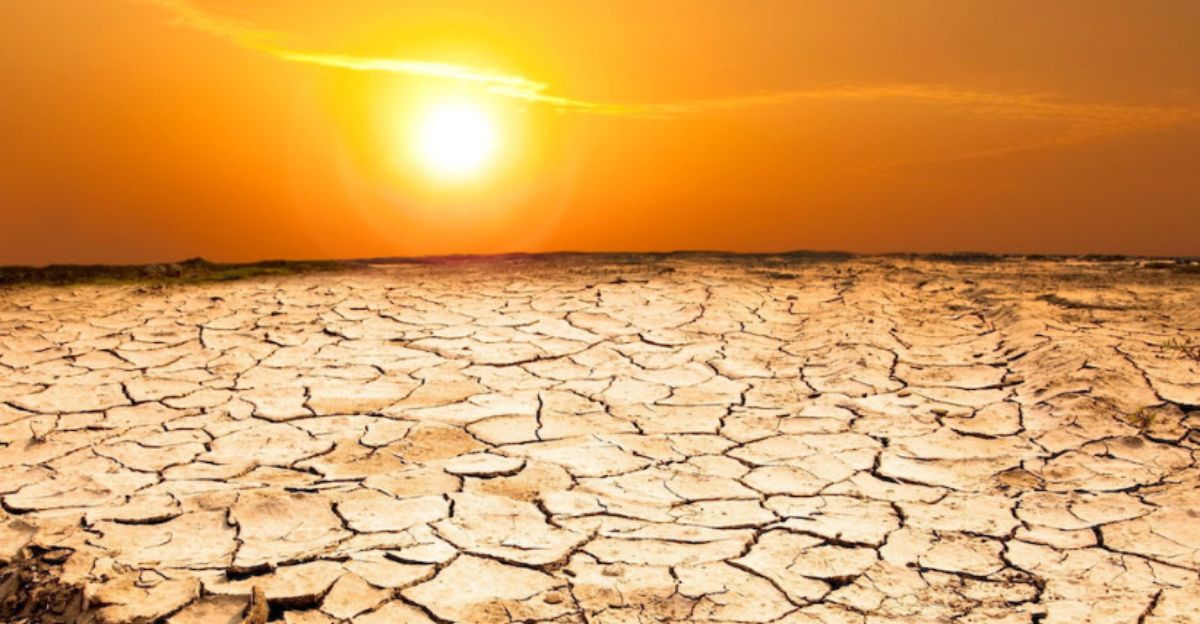
The economic impact is enormous—an estimated $3.5 trillion is lost annually based on the central estimate, with the true impact likely ranging from $2.5 to $4.6 trillion when accounting for uncertainty around temperature impacts (confidence interval: 2% to 22% of income). This scale represents an ongoing economic headwind comparable to major systemic economic challenges.
While every household feels the effects, the damage is not distributed equally. The Great Plains and Midwest bear the brunt, but no state is untouched. What once seemed like isolated regional issues now reveals itself as a nationwide economic event.
Decades of Warming Data
Spanning over 50 years, weather and economic data from U.S. counties form the backbone of this revelation. By tracking daily temperatures alongside personal income records, researchers found systematic income losses due to rising temperatures.
This detailed, decade-long approach had rarely been attempted at a national scale.
The Hidden Pressure Builds
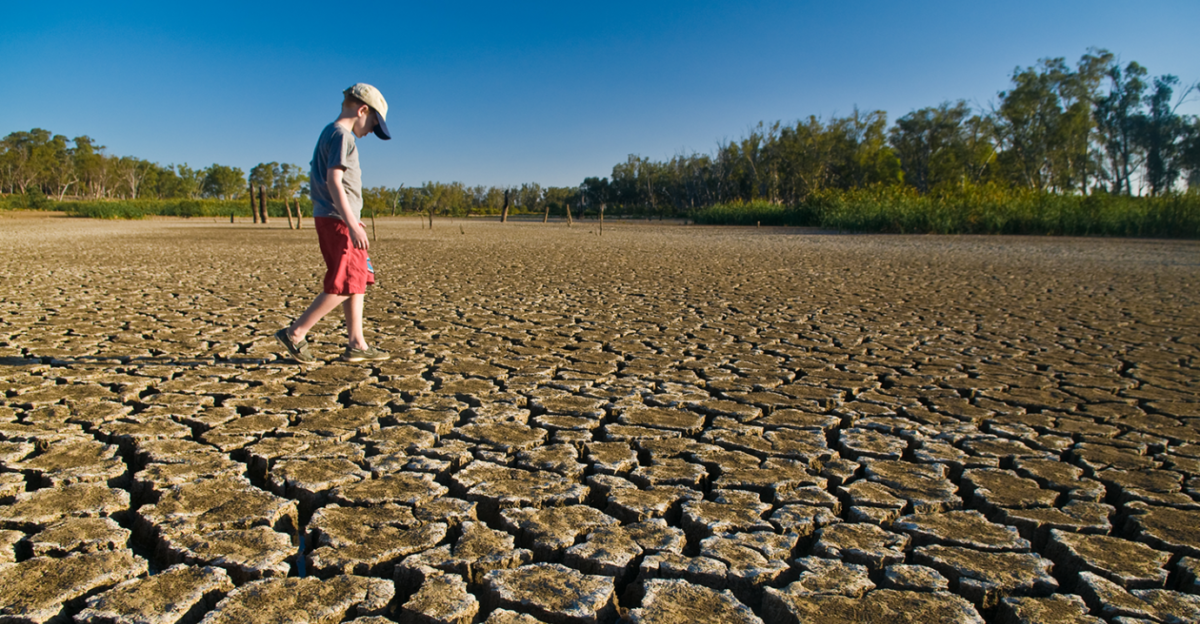
At first, the income loss seemed small—less than 1%. But when researchers accounted for temperature lag effects and regional economic connections, the scale shifted dramatically.
Heat waves, even in distant states, trigger cascading effects across the economy, spreading through supply chains and labor markets. The impact is far greater than originally calculated.
12 Percent Income Collapse

The findings show that U.S. income has already been reduced by a staggering 12%—approximately $3.5 trillion annually based on the central estimate—since 1970. This loss is directly tied to temperature shifts across the nation.
As economists now realize, what was once seen as speculative is now undeniable: climate change is already eroding economic vitality.
The 12% figure reflects the cumulative effect of income losses over 50 years (1969–2019) when accounting for temperature persistence and trade spillovers. In recent years alone, routine temperature shifts are reducing annual U.S. income by an estimated 0.32% through local temperature effects (95% confidence interval: −0.17% to 0.82%).
The Great Plains Crisis

The Great Plains and Midwest are hit the hardest. Daily heat exposure decreases agricultural productivity, shrinks crop yields, and raises energy demands.
Climate data shows these regions experience disproportionate impacts, with the Great Plains experiencing income losses concentrated in heavily exposed agricultural areas. What happens here doesn’t stay here—regional economic decline ripples through national trade networks, affecting every U.S. state.
Agricultural Foundation Crumbles

In farming communities, temperatures are directly impacting yields, labor capacity, and crop prices. In the Midwest, warmer summers have led to a measurable decrease in agricultural output.
Livestock is stressed by heat, while irrigation needs rise. These sector-specific losses trickle down to affect local economies—and ultimately national prices.
Trade Networks Amplify the Shock

The U.S. is no longer isolated by state borders. As one region’s agricultural or industrial output drops due to temperature stress, other regions feel the economic impact.
A heat wave in the Midwest can send shockwaves through supply chains, disrupting production and raising costs in states far away. The effect is now national, not regional.
Mild Climate, Lingering Losses

Even regions with relatively mild climate shifts are suffering. While the East experiences less severe temperature changes, the interconnected nature of energy and trade means that no region is immune.
This paradox highlights how climate economics operates differently from traditional models, with national economic pain despite localized weather stability.
Some Winners, Mostly Losers

While some northern regions, like Alaska, may see benefits from longer growing seasons and reduced heating costs, these gains are small compared to the nationwide losses.
The aggregate effect remains sharply negative, with a few pockets of benefit overshadowed by widespread economic harm across agricultural and trade-dependent areas.
Researcher Insights
Derek Lemoine highlighted that climate economics has been drastically underestimated. Previous research only focused on isolated sectors like agriculture and energy, missing how climate change affects the entire economy.
“If we can’t figure out what climate change is already costing us with the data we have, projecting the future becomes almost hopeless,” Lemoine said. By failing to recognize the systemic interconnections, policymakers missed the true economic threat posed by rising temperatures.
The Leadership Vacuum in Climate Economics

Few government agencies or economic forecasters have integrated climate change into GDP projections or income estimates. While the Treasury and Federal Reserve acknowledge climate risks, they lack models that incorporate the full economic impact.
Lemoine’s work highlights a critical gap in policy, as climate scientists and economists have failed to collaborate on a unified framework.
Academic Recognition Accelerates

Leading academic institutions including Yale, MIT, and Stanford have ongoing programs in climate economics research, building on frameworks like Lemoine’s that measure systemic rather than sectoral impacts.
The 12% finding aligns with growing academic recognition that climate change operates through economy-wide mechanisms including trade networks, labor markets, and energy systems—not just isolated sectors like agriculture.
Expert Skepticism on Solutions Lingers

While mitigation strategies could reduce future losses, experts warn that the warming already embedded in the system will continue to depress incomes for decades.
The scale of necessary adaptation—transforming infrastructure, agriculture, and energy systems—requires enormous investment. Can governments mobilize resources at the necessary scale?
Can We Reverse Course?

If 12% of U.S. income has already been lost, how much more will be at risk as temperatures continue to rise? With confidence intervals ranging from 2% to 22% and temperature change expected to accelerate through mid-century, income losses could compound significantly beyond the current 12% baseline.
The next decade will determine if policymakers treat this as an urgent economic emergency or continue with gradual, incremental adaptation.
Political Economy

For decades, climate change was seen as a distant, isolated environmental issue. Now, the undeniable impact on income and economic productivity forces a shift in policy.
The data is clear: rising temperatures are not just an environmental threat, but a national economic issue. How will political systems respond to this growing challenge?
International Implications

As climate impacts are felt globally, the U.S. is at a disadvantage compared to countries with proactive climate policies. European agriculture faces similar stresses, and Asian manufacturing deals with rising energy costs.
However, nations with aggressive climate action may edge ahead in global competitiveness, making U.S. adaptation policies a strategic issue.
Legal Exposure

This study provides pension funds, corporate boards, and financial institutions with quantifiable evidence of climate’s financial materiality. Legal frameworks increasingly require fiduciaries to consider documented climate risks in investment decisions.
With economic impacts now measurable, claims of uncertainty no longer shield decision-makers from scrutiny on climate-related financial risks.
Generational Equity

The income loss disproportionately affects younger generations, who will enter labor markets with compressed lifetime earnings. Retirees may escape some of the direct pressure but face erosion of their assets.
The study forces us to reckon with uncomfortable questions about fairness and the intergenerational burden of climate change.
Economics Can No Longer Ignore Climate

The 12% loss in U.S. income marks a fundamental shift in how we view climate change. No longer can it be treated as an isolated environmental issue.
It is now a central concern in economic modeling, with the potential to shape future policy and financial decisions. The question now becomes: how will we account for these already-embedded costs in the future?
Sources:
Lemoine, Derek. 2025. “Climate change has already made the United States poorer.”
University of Arizona News. 2025. “Climate change’s hidden price tag: a drop in our income.” December 2, 2025.
Feng, A., et al. 2021. “We Are All in the Same Boat: Cross-Border Spillovers of Climate Risk Through International Trade and Supply Chain Linkages.”
Feng, A., et al. 2023. “Cross-Border Spillovers of Climate Shocks Through International Trade.”
Environmental Defense Fund (EDF). 2022. “How Climate Change Will Impact U.S. Corn, Soybean and Wheat Yields in the Midwest.”
University of Alaska Fairbanks & Arctic Focus. 2024. “Climate change could enable Alaska to grow more of its own food.”
Columbia University School of International and Public Affairs (SIPA). 2019. “How Climate Change Impacts the Economy.”