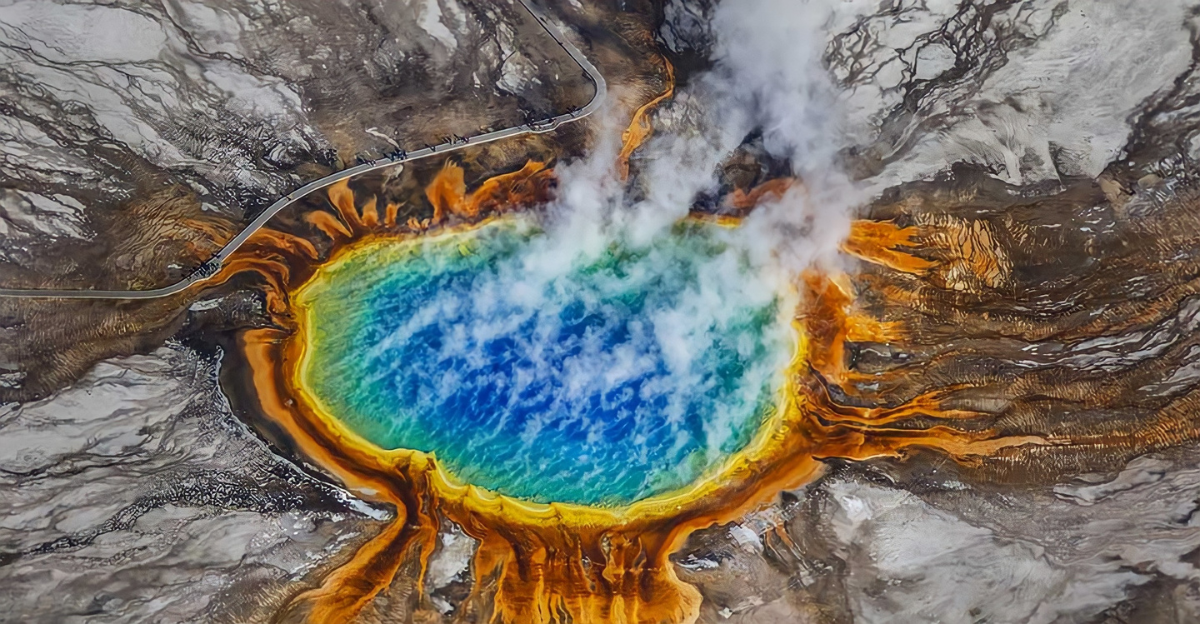
Scientists at the University of New Mexico have made a significant breakthrough that completely changes what we know about Yellowstone, one of the world’s most dangerous volcanoes.
They finally created the most precise map of the magma chamber under Yellowstone using advanced seismic imaging. Like a lid, they found a sharp boundary about 2.4 miles beneath the ground.
This discovery, published in Nature in April 2025, helps explain how the volcano works and why it hasn’t erupted recently. It marks one of the most significant advances in volcano monitoring in decades.
Massive Seismic Mapping Effort
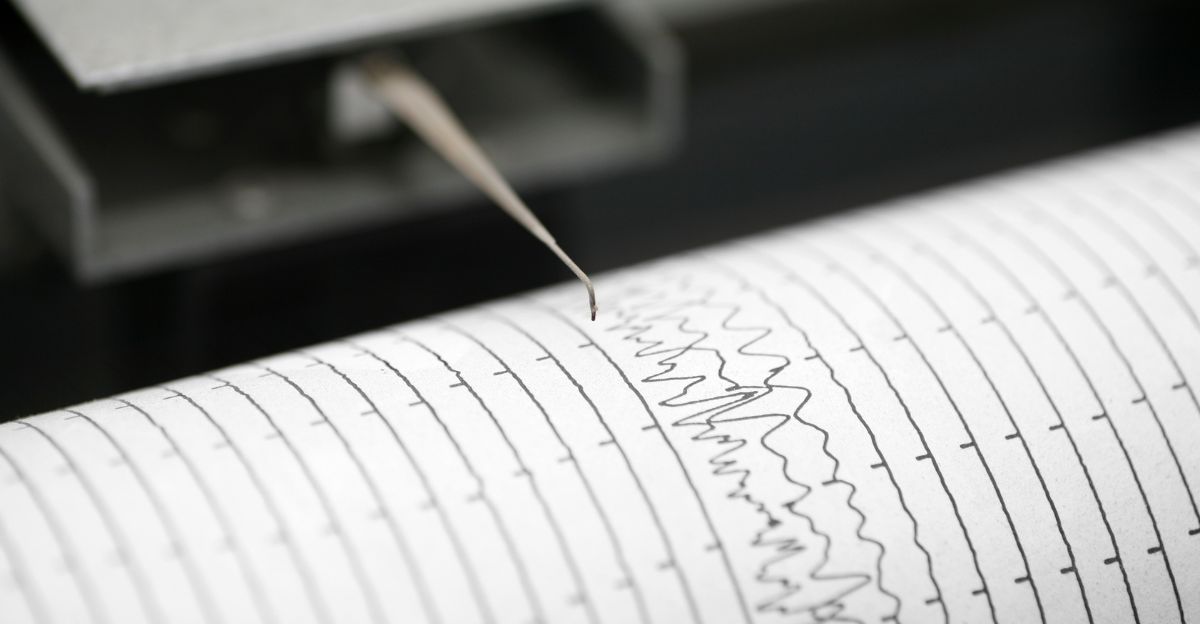
The team had to go big to conduct this research. Over 600 seismometers were spread throughout the park.
At night, a 53,000-pound truck made tiny “earthquakes” by vibrating the ground to help scientists map what’s under Yellowstone without hurting its precious wildlife or landscape.
Work was only allowed at special sites along the road, and the research took place during the COVID-19 pandemic, making it even more complicated.
They collected millions of seismic readings to build their picture of what lies beneath the park.
A Supervolcano’s Hidden Strength
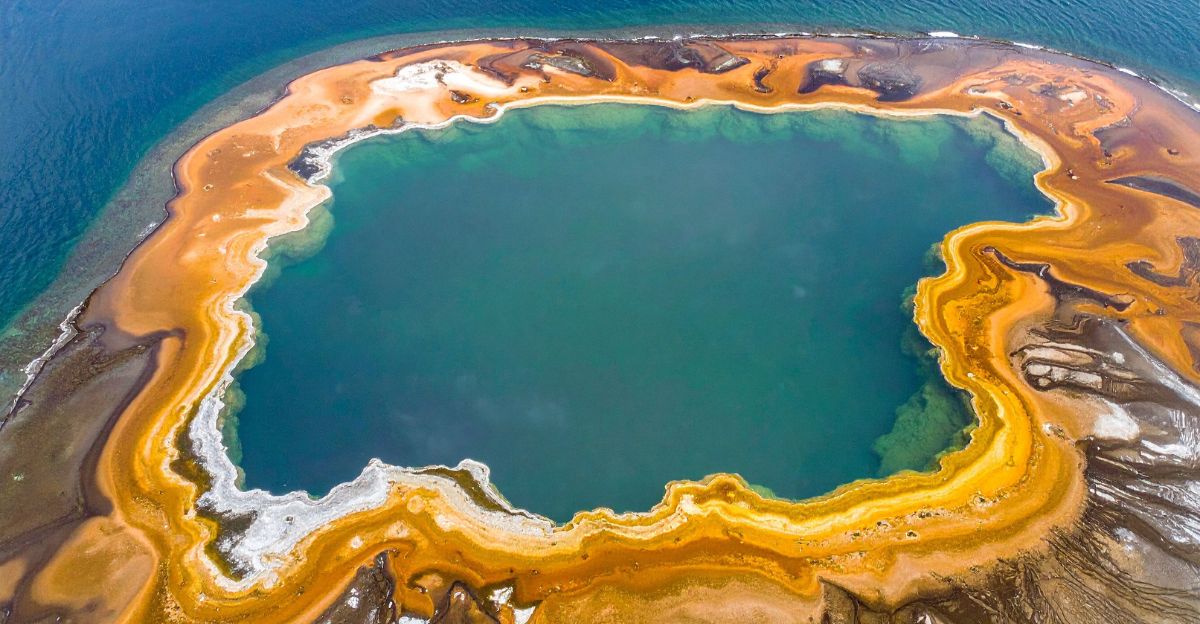
Yellowstone sits on top of a supervolcano, one of Earth’s most potent. Underneath the park is a chamber of molten rock big enough to fill the Grand Canyon eleven times.
The park’s famous caldera formed after a gigantic eruption over 631,000 years ago, an eruption so powerful it blasted out 240 cubic miles of material.
For years, scientists knew magma was down there but couldn’t pinpoint its exact shape or depth, with estimates ranging from 3 to 8 kilometers. That uncertainty made it hard to say how risky Yellowstone really is today.
Mega-Eruptions That Shaped a Continent
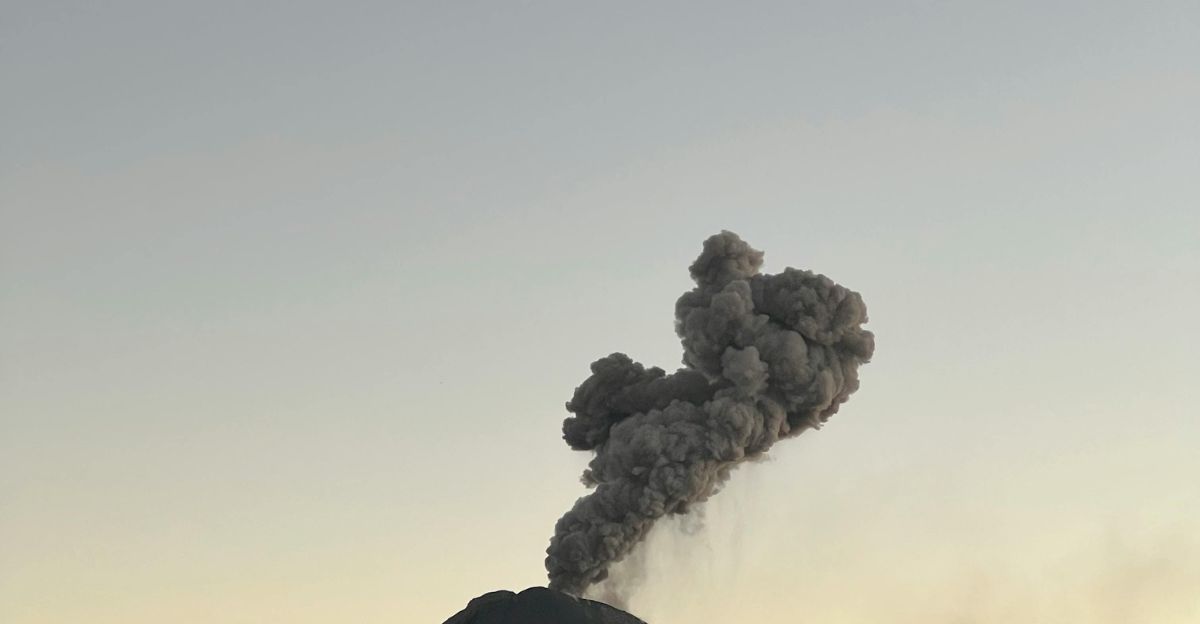
Three mega-eruptions mark Yellowstone’s story. The first, 2.1 million years ago, covered almost 6,000 square miles with ash that even reached Missouri, dwarfing the Mount St. Helens eruption by a factor of 6,000.
There was another massive eruption 1.3 million years ago, and the last caldera-forming eruption 631,000 years ago.
Since then, there have been around 80 more minor volcanic eruptions, with the most recent lava flow 70,000 years ago. These events reshaped the region and affected the world’s climate.
Discovery of the Magma Cap
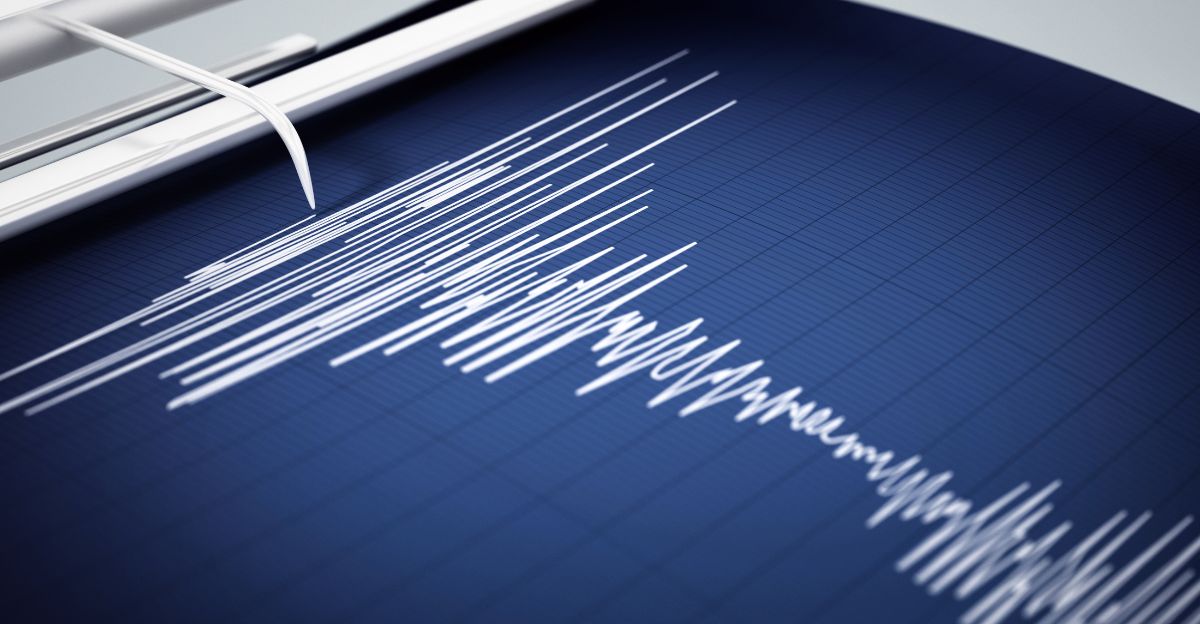
The researchers’ key finding is a “volatile-rich cap” about 3.8 kilometers down. This cap is made of partially melted rock mixed with many gas bubbles.
It acts like a thick, natural lid on the massive magma reservoir, trapping heat and pressure underneath. Brandon Schmandt and his team made the first sharp images of this layer using innovative new techniques.
“Seeing such a strong reflector at that depth was a surprise,” Schmandt said. The precise boundary shows something very special is going on at exactly that depth.
Closer Eye on Yellowstone Safety
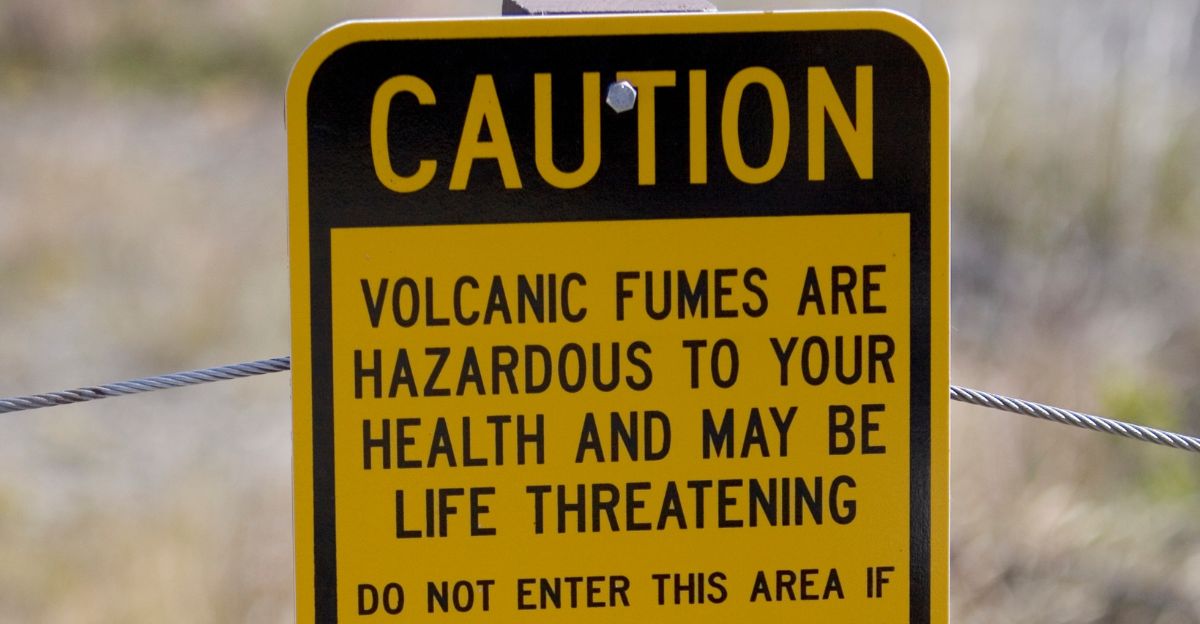
This discovery matters a lot to Wyoming and nearby states. Yellowstone brings in over 4 million visitors annually, and many communities depend on the park for tourism.
Now, with a better picture of where dangerous volcanic gases build up, scientists can offer more accurate warnings.
The Yellowstone Volcano Observatory uses this new data to improve safety measures and disaster plans. Officials are now better able to decide what to do if the volcano shows signs of unrest in the future.
Everyday Impacts for Locals and Visitors
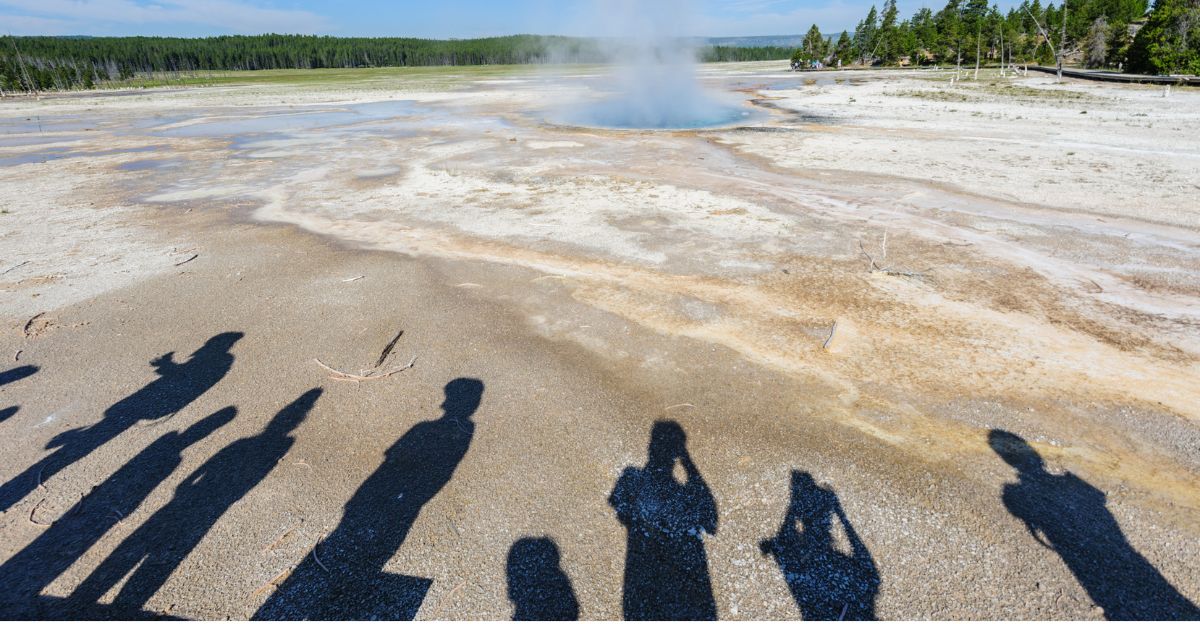
This is actually good news for people living and working around Yellowstone. Scientists know the volcano constantly releases steam by venting gas through geysers and hot springs.
That’s a natural release valve that keeps pressure from building dangerously. Guides, rangers, and residents can confidently tell concerned visitors that all those geysers and steam vents mean the volcano releases energy safely, not getting ready to blow.
However, dangerous steam explosions can still happen at the surface, so some risks remain.
Worldwide Lessons for Volcanology
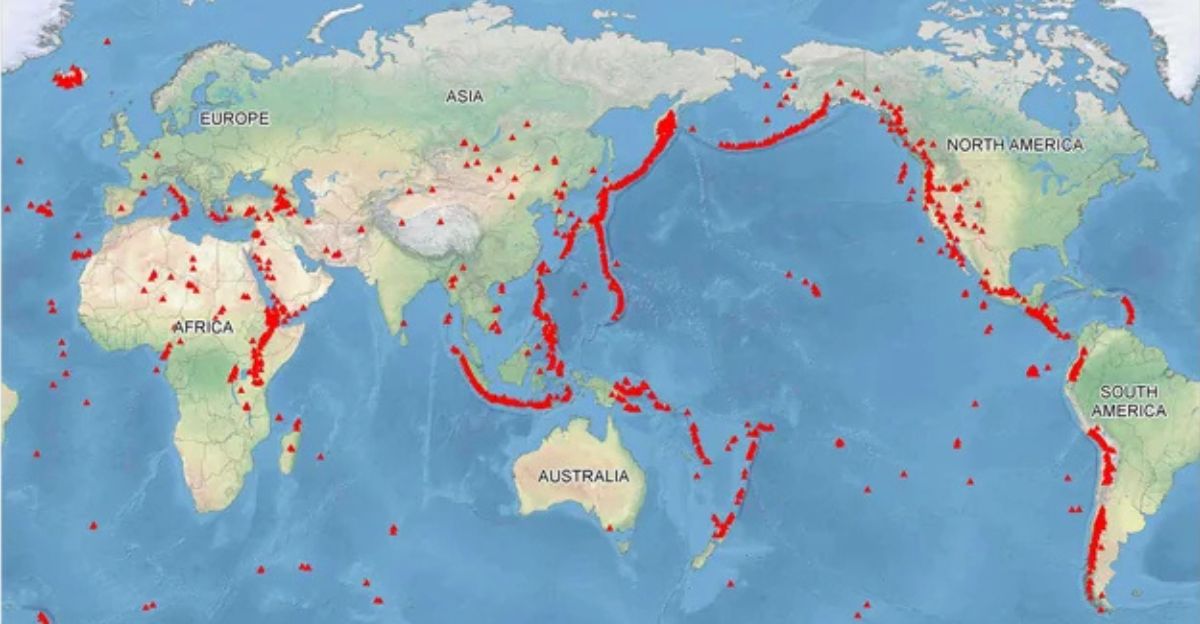
The methods used at Yellowstone could help other countries, too. Right now, 46 volcanoes around the world are continuously erupting.
This wave-equation imaging technique can safely map volcanoes like Mount Vesuvius in Italy, which threaten millions of people, or Indonesia’s many active volcanoes.
By sharing this technology, volcano observatories worldwide can improve their safety systems and help save lives with earlier warnings.
A Leap Forward in Volcano Science

This discovery is a significant step forward in volcano science. In the past, most predictions about volcanoes were based on indirect signs or models.
Still, scientists now have authentic, high-resolution images showing where the magma is and how it behaves. This technology isn’t just suitable for monitoring eruptions. It can also help us safely store carbon underground, find new geothermal energy sources, or better predict earthquakes.
Colleges and research centers everywhere are starting to teach this new science, so the knowledge spreads fast.
Yellowstone’s Natural Pressure Valve
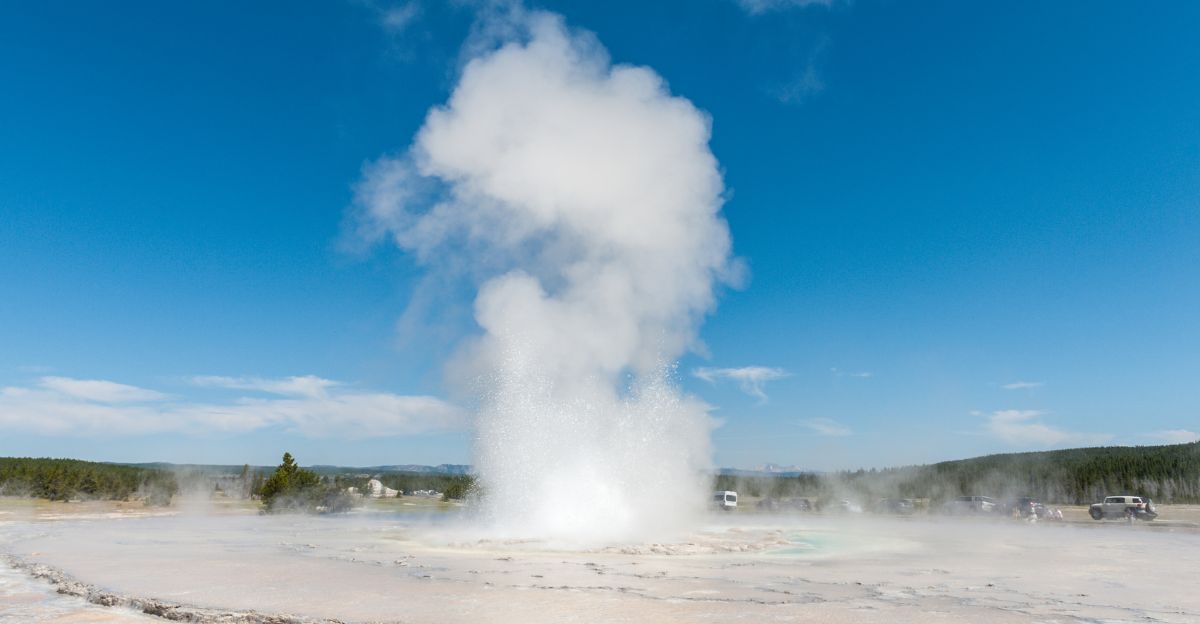
One of the most essential parts of the discovery is how the magma cap works, like a pressure cooker with a safety valve.
The cap is porous, with tiny holes filled with gas bubbles and melted rock. About half the space is gas, and the other half is melted rock.
This setup lets volcanic gas escape slowly instead of building up all at once, making scenes like Yellowstone’s Old Faithful possible, not catastrophic eruptions.
“The system is efficiently venting gas through cracks and channels,” said Tobias Fischer, a process key to Yellowstone’s ongoing stability.
Cracking the Data Challenge
It wasn’t easy to get these results. When the researchers first looked at their data, they saw noise, a mess of scattered seismic waves.
Chenglong Duan, who led the data crunching, spent months tweaking new algorithms to filter out the mess and focus only on meaningful signals. “When you see noisy, challenging data, don’t give up,” Duan said.
This persistence paid off, showing how powerful computers and smart problem-solving are now crucial for scientific breakthroughs.
Collaboration Makes Breakthroughs Possible

The discovery is also a story of teamwork. Scientists from Rice University, the University of New Mexico, the University of Utah, and the University of Texas at Dallas worked together, even during COVID-19 and despite park restrictions.
The National Science Foundation funded the project, and Jamie Farrell guided the team through tricky park rules. Scientists working on other dangerous volcanoes worldwide are following this teamwork model.
New Tech for Earth’s Deep Secrets
This research pushed the boundaries in studying the ground beneath our feet. The team used a controlled-source approach, making their own tiny earthquakes at known spots and times to map what’s below precisely.
Their new seismic imaging method turns hard-to-understand data into clear pictures of underground rock layers.
This technology isn’t just for volcanoes; it’s now used to find oil, study geothermal energy, and ensure the safety of storing carbon underground.
Raising the Bar for Volcano Monitoring

This discovery opens new doors for tracking volcanoes more closely than ever. Scientists could spot warning signs of trouble much earlier by watching for changes around the 3.8 km magma cap boundary.
The Yellowstone Volcano Observatory is already adding this information to its monthly updates.
New plans now exist for reacting if the gas “safety valve” is blocked or if more melt starts rising toward the surface, giving people nearby more time to get to safety if needed.
What’s Next?

Scientists are now focused on how this magma cap changes over time. They want to see if the same “lid” exists at other supervolcanoes and learn how changing weather or groundwater could affect volcanic stability.
There’s also hope that new machine learning tools can help spot subtle changes in the volcano almost in real time.
Updating Rules and Emergency Plans
U.S. government agencies are updating safety rules and plans based on the new findings. The National Park Service is making new visitor safety guides, especially after recent hydrothermal explosions.
The USGS is revising its rating of Yellowstone’s risk for big explosions, and FEMA is examining regional disaster plans.
Congress has even called for hearings to decide how much to invest in more high-tech volcano monitoring nationwide.
Geothermal Energy Without the Risk
The detailed mapping of Yellowstone’s heat is helping energy companies figure out where to drill for geothermal power without risking an eruption.
This technology is used in the western U.S. and volcanic countries like Iceland and Indonesia, where clean geothermal energy is crucial for the power grid and climate goals.
Science vs. Public Panic
As news spread about the discovery, some people online thought it meant Yellowstone was about to erupt. Sensational headlines used words like “alarming,” fueling social media panic.
Scientists quickly stepped in with public education efforts, explaining that the opposite is true: the volcano is stable and safely “breathing.”
Schools and museums are updating displays to explain how the volcano works and why it is not an immediate danger.
What History Teaches About Volcanic Advances

Every time science advances, it changes how people stay safe from volcanoes. After Mount St. Helens blew up in 1980, the U.S. built modern volcano observatories.
The Pinatubo eruption in the Philippines in 1991 showed why international research matters. In 2010, Iceland’s Eyjafjallajökull eruption stopped global air travel, showing the risk to modern life.
With this breakthrough at Yellowstone, scientists worldwide are better equipped to prevent disasters and help people stay safe.
How Knowledge Keeps Us Safe
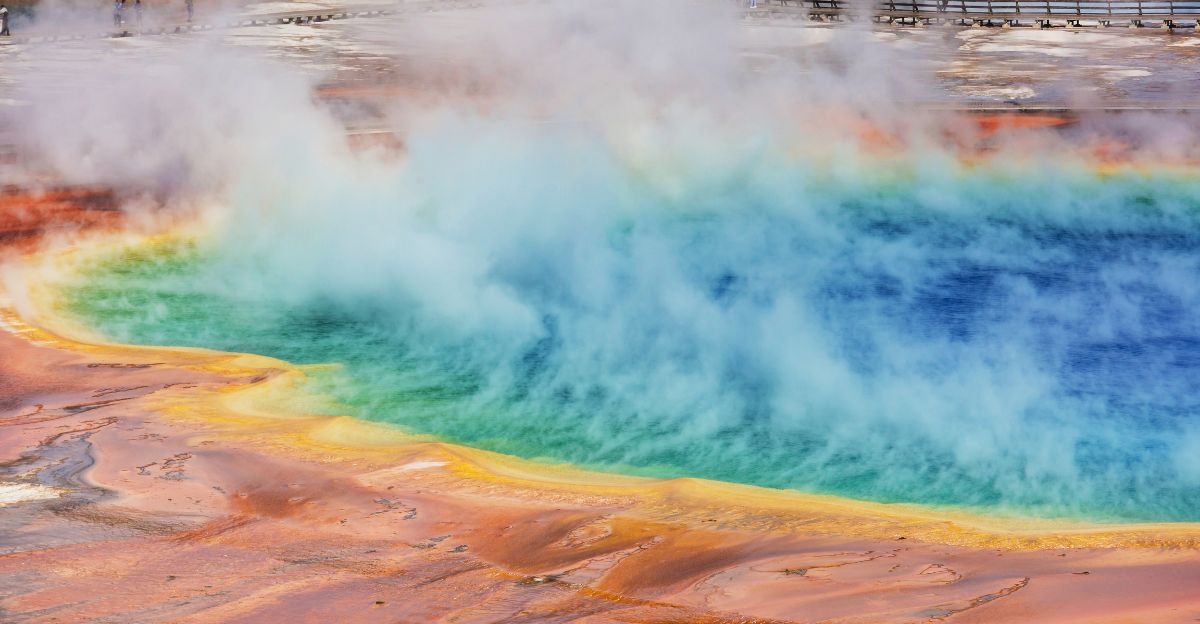
This discovery changes how we watch and understand one of Earth’s most feared volcanoes.
Yellowstone is not “about to erupt”; it has a built-in system for releasing pressure, and the risk of a giant eruption is still extremely low, about 1 in 700,000 yearly.
Most importantly, this work proves that innovative science and new technology can make the planet safer, not by causing panic, but by providing better information, monitoring, and preparedness for whatever nature brings next.