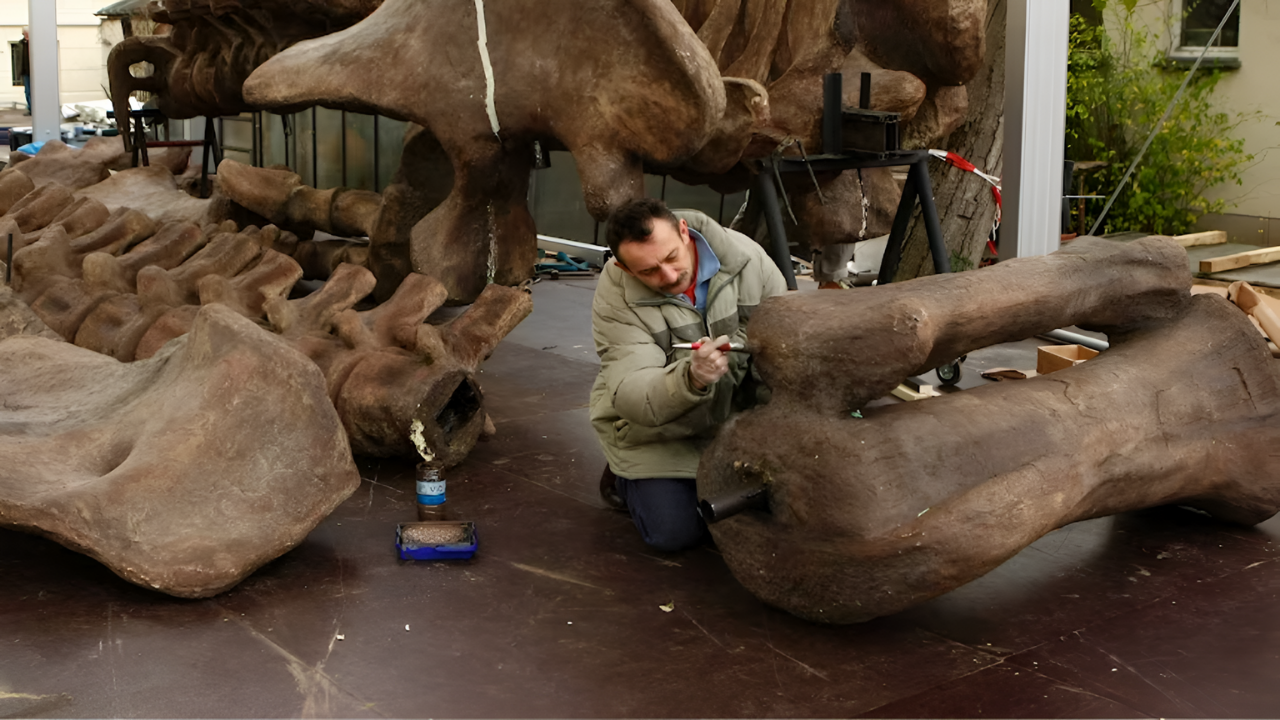
In the red mudstone hills of southwest China, scientists have uncovered a remarkable dinosaur that is changing how they understand life in the Jurassic Period. The fossil, a long-necked species called Mamenchisaurus sanjiangensis, was found in the Upper Shaximiao Formation near Chongqing and dates back about 160 million years. This discovery is not only impressive for the dinosaur’s size but also for what it tells scientists about ancient geography. For years, many believed East Asia was separated from the rest of the world by an inland sea, isolating its wildlife. The new fossil evidence, however, suggests those prehistoric boundaries may have been more open, allowing animals like these massive plant-eaters to move and evolve across continents.
Researchers say this finding, along with other recent discoveries of long-necked sauropods in China and Africa, is prompting a major scientific rethink. The idea that East Asia was once a cut-off island continent during the Jurassic now appears to be fading, replaced by a picture of a more connected global ecosystem.
Rethinking Asian Isolation
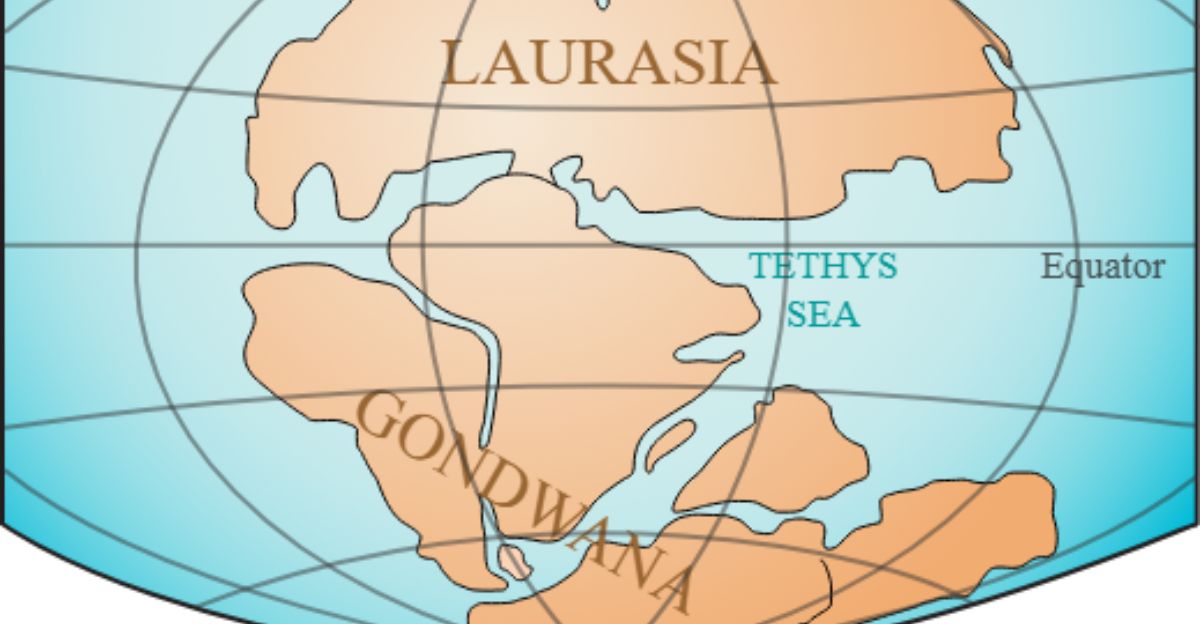
For decades, scientists supported what was known as the East Asian Isolation Hypothesis. This theory suggested that a shallow inland sea west of the Ural Mountains separated East Asia from the rest of Laurasia and Gondwana, the two supercontinents that made up Pangaea. Because of that supposed divide, paleontologists believed that certain advanced sauropods, called neosauropods, could not reach East Asia. Instead, China’s fossil beds appeared full of mamenchisaurids, a group of very long-necked sauropods that seemed unique to the region.
But over the past ten years, that narrative has begun to crumble. New fossil discoveries and more accurate dating of Chinese rock layers indicate that these mamenchisaurid-rich fossil sites are actually older than once thought, some from a time when land bridges still connected much of Pangaea. Even more surprising, fossils of neosauropods have now been found in East Asia from earlier than scientists expected. This means differences between Asian and Western dinosaurs might come from gaps in the fossil record, not real geographic barriers.
Dinosaurs with Extraordinary Necks
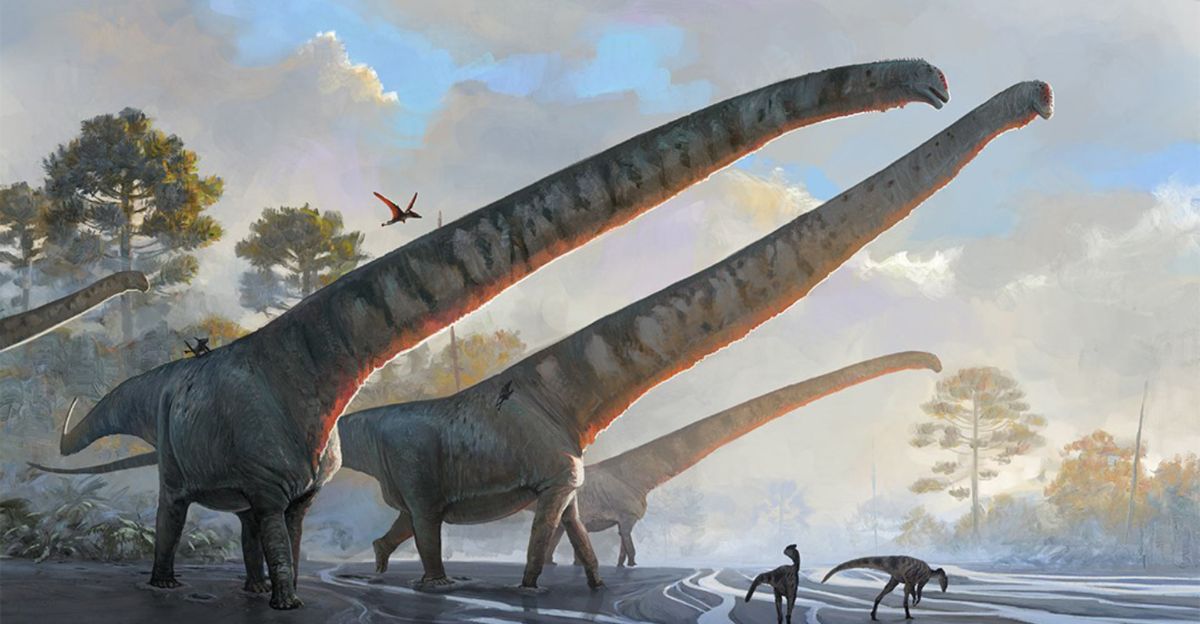
Sauropods were the largest land animals in Earth’s history, known for their giant bodies, tree-trunk legs, and famously elongated necks. Among them, the mamenchisaurids of China took neck length to an extreme. One of the most striking examples is Mamenchisaurus sinocanadorum, studied in detail by paleontologist Andrew J. Moore in 2023. His team estimated its neck reached around 15 meters, almost 50 feet—making it the longest known dinosaur neck. That’s longer than a city bus and about six times the length of a giraffe’s neck.
The bones of these dinosaurs were full of air spaces, meaning up to three-quarters of the neck vertebrae’s volume was empty. This honeycomb-like design made the bones both strong and light, similar to how modern birds’ skeletons are built for flight. Long ribs running down the neck acted like supportive braces, helping to stabilize this enormous but lightweight structure. The newly discovered M. sanjiangensis shows the same evolutionary adaptations, confirming that this lightweight architecture was common in the group.
In China’s Chongqing region, M. sanjiangensis was found almost completely intact, with neck, back, and tail bones all preserved in reddish mudstone. Its features reveal a mix of traits, some typical of classic mamenchisaurids, others closely resembling those of neosauropods. The similarity between the two groups suggests they might have shared habitats and competed for the same resources, rather than existing in isolation.
Interestingly, similar fossils have turned up far from Asia. In 2019, fossils from Tanzania were reexamined and identified as Wamweracaudia keranjei, a mamenchisaurid outside of Asia. This find expanded the known range of these dinosaurs across continents, again challenging earlier ideas about how separate these ecosystems were.
A More Connected Jurassic World
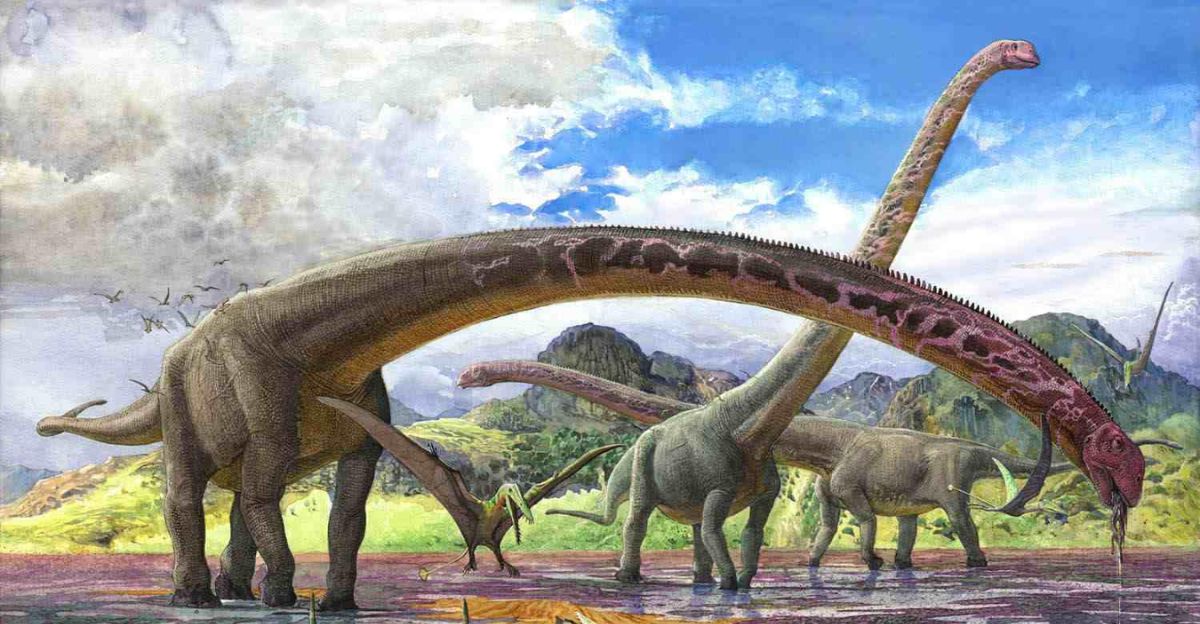
Several groundbreaking Chinese discoveries have added to this shifting picture of a connected prehistoric world. In 2018, paleontologist Xu Xing and his team described Lingwulong shenqi from Ningxia, identifying it as both the oldest known diplodocoid and the first found in East Asia. Another species, Dashanpusaurus dongi, turned out to be the earliest known macronarian, another branch of the neosauropods, discovered in the same general region. Together, these fossils show that different kinds of sauropods were living side by side in East Asia long before any supposed barriers could have formed.
Modern analyses now suggest that major sauropod families had spread widely across Pangaea by around 174 million years ago. This means that rather than developing separately, East Asia’s mamenchisaurids likely evolved while sharing space, and perhaps competing, with other sauropod lineages. Some scientists suggest that the mamenchisaurids’ unusually long necks might have helped them dominate local ecosystems by reaching vegetation other species could not.
Still, there’s much left to uncover. Many known specimens are incomplete, and the exact age of some rock layers, like those of the Upper Shaximiao Formation, remains debated. Uneven exploration across China has also created patchy fossil records, making some periods appear less diverse than they actually were. Researchers now believe that missing fossils, not isolation, may explain most of the regional differences.
As new digs continue and technology improves, paleontologists expect to uncover more evidence about how these enormous creatures evolved and spread. Some even predict that new mamenchisaurids will be found with necks surpassing today’s record-holders. The latest discoveries from Chongqing’s red hills suggest that the Jurassic world was far more connected, and competitive than once imagined, with long-necked giants roaming freely across continents that were still bound together as one ancient Earth.
Sources
Scientific Reports, A new mamenchisaurid sauropod dinosaur from the upper jurassic of Southwest China reveals new evolutionary evidence from East Asian eusauropods, 25 Nov 2025
Nature Communications, A new Middle Jurassic diplodocoid suggests an earlier dispersal and diversification of sauropod dinosaurs, 23 Jul 2018
Stony Brook University, New Fossil Analysis Reveals Dinosaur with Record-Holding 15-Meter-Long Neck, 14 Mar 2023
Sci.News, Paleontologists Discover New Species of Mamenchisaurid Dinosaur in China, 2 Dec 2025
Journal of Systematic Palaeontology, Mamenchisaurus sinocanadorum neck length analysis, 14 Mar 2023
PubMed/PMC, A new mamenchisaurid sauropod dinosaur from the upper jurassic of Southwest China, 25 Nov 2025